

Plot Explained Spoilers guaranteed!
Plot Explained

Browse by genre

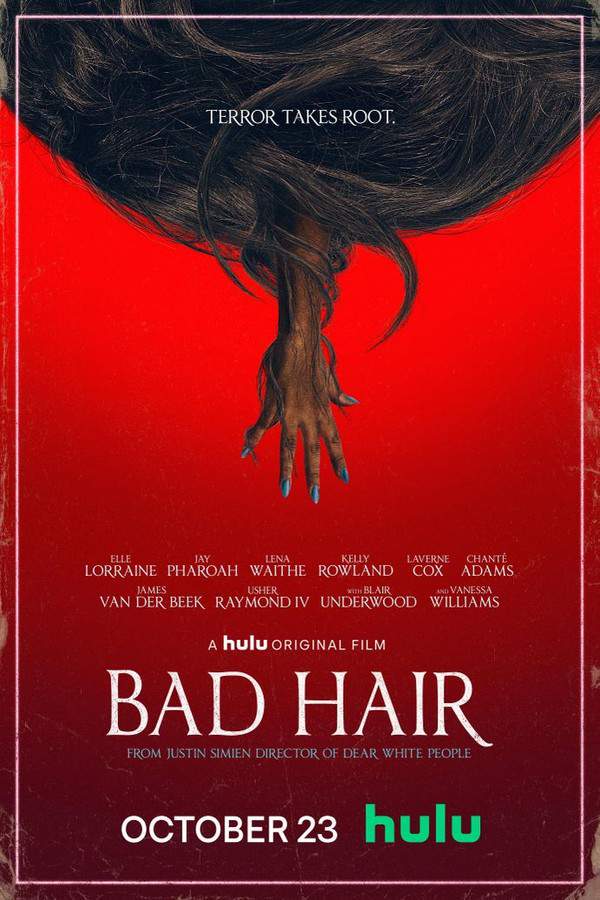
Bad Hair (2020) movie poster

Characters & Themes

Bad Hair (2020) Characters, Setting & Themes Explained

Release, runtime and language
2020 · 102 min · English
Echo score 73
JustWatch #24,223 3
Directed by
Justin Simien
Starring
Jay Pharoah, Lena Waithe, James Van Der Beek, Laverne Cox, Moses Jacob Storm, Blair Underwood

A woman seeking a fresh look gets a trendy new weave that quickly transforms into a horrifying ordeal. The stylish hairstyle seems perfect at first, but it soon develops a sinister will and a mind of its own. Blending horror and dark comedy, the film explores themes of beauty standards, identity, and the unsettling consequences of chasing an unattainable ideal.

On this page (8)
  1. 1 Where to watch
  2. 2 Characters explained (11)
  3. 3 Where & when it takes place
  4. 4 Themes & meaning (3)
  5. 5 Character & meaning questions
  6. 6 Movie threads
  7. 7 Movies like Bad Hair
  8. 8 Every angle

Where to watch

Where to Watch Bad Hair (2020)

Where can you watch Bad Hair? Stream, rent or buy it in the US, including on Hulu: current JustWatch availability with up-to-date prices.

Streaming availability powered by JustWatch

11 main characters · contains spoilers

Bad Hair Characters Explained: Who Is Who

The main characters of Bad Hair (2020), heroes and villains: what drives them, how they change over the course of the story and what each of them reveals about the film's bigger ideas.

  • Anna Bludso (Elle Lorraine)

    A driven assistant at Culture who negotiates ambition, loyalty, and integrity in a fast-moving, image-driven industry. Her desire for advancement clashes with memory of a family history and the danger of succumbing to fashion's pressures. The evolving weave becomes a concrete symbol of her inner conflict and resilience.

    • 💇 Hair
    • 🎭 Identity
    • 🔥 Ambition
  • Zora (Vanessa Williams)

    Culture's rising power figure who pushes a glamorous, commercial transformation and becomes Anna's rival. She embodies the seductive lure of success at any cost and wields manipulation to secure dominance. Her charisma conceals a ruthless drive for control over Culture.

    • 👑 Power
    • ✨ Glamour
    • 💔 Rivalry
  • Grant Madison (James Van Der Beek)

    Culture's owner who ousts Edna and steers the station toward a more commercial image. He embodies corporate ambition and uses the hair product industry to extend his grip on Culture. His charm masks a readiness to exploit people for profit.

    • 💼 Boss
    • 🧠 Manipulation
    • ⚖️ Ambition
  • Julius (Jay Pharoah)

    Anna's old flame who becomes entangled in Culture's new order. His relationship with Anna, and his affair with Zora, reveal the corrosive effects of power and desire within a media-driven environment. He becomes a focal point of the weave's pull and danger.

    • 💘 Romance
    • 🎭 Showbiz
    • ⚔️ Conflict
  • Edna (Judith Scott)

    The former head of programming who resists the new direction and challenges the price of compromise. She embodies mentorship and integrity within a shifting corporate climate. Her critique of Anna's path exposes the cost of selling out for success.

    • 🧭 Mentorship
    • 🛡️ Integrity
    • 👩🏻‍💼 Industry
  • Linda (Young Linda, Corinne Massiah)

    Anna's older cousin who anchors family ties and offers practical and emotional support. Linda's presence highlights the pull between tradition and modern career ambitions. Her choices reflect the pressure of cultural memory on personal decisions.

    • 👪 Family
    • 🧭 Memory
    • 🪶 Support
  • Amos Bludso (Blair Underwood)

    Anna's uncle who grounds the story with family history and provides a book on African American slave lore. He broadens the film's historical lens and explains the deeper roots of the beauty industry's violence. His guidance frames the safety net of knowledge against exploitation.

    • 📚 Lore
    • 🌀 Heritage
    • 🛡️ Protector
  • Maxine Bludso (Michelle Hurd)

    Anna's aunt who offers financial support and represents the practical side of pursuing beauty on one's own terms. She embodies familial resilience in the face of industry pressure. Her presence underscores the economic realities behind self-presentation.

    • 💵 Support
    • 🧑‍🤝‍🧑 Family
    • 🏠 Home
  • Brook-Lynne (Lena Waithe)

    A Culture insider who participates in the shift toward a more commercial, image-focused environment. Brook-Lynne demonstrates the subtle power dynamics within media circles and their impact on careers. Her actions illuminate the social networks shaping Anna's ascent.

    • 🎭 Influence
    • 🗂️ Networks
    • 🗨️ Gossip
  • Young Anna (Zaria Kelley)

    A younger version of Anna whose late-1970s hair mishap foreshadows the film's folk-horror thread. This moment anchors the trauma that informs the later choices and underscores the legacy of beauty rituals. It acts as a cautionary tale about dangerous experiments with hair care.

    • 👶 Past
    • 🧬 Trauma
    • 🧵 Memory
  • RMV VJ (Madeleine Byrne)

    A backstage figure within Culture who embodies the VJ era's glamour and the show's broader branding. The role illustrates how media representation shapes audience perceptions and the environment Anna seeks to influence. Their presence marks the era's aspirational image.

    • 🎤 Media
    • 🗓️ Era
    • 🪄 Branding

Last updated: February 17, 2026 at 16:45

Was this helpful?

Setting

Where and When Does Bad Hair Take Place?

The setting of Bad Hair (2020): the year and time period, the places and locations, and how they shape the characters, the mood and the tension of the story.

Time period

Late 1970s and 1989

The narrative begins in the late 1970s with a disastrous hair-relaxer incident, then jumps to 1989 when Anna works as an assistant at Culture. The 1989 era brings a flashy, image-driven media environment that clashes with older values and folklore. The contrast highlights how time shifts power, fashion, and fear within Black communities.

Location

Culture TV Station, Virgie's Hair Salon, Anna's Aunt and Uncle's Home, Moss Haired Plantation

Set in Los Angeles, the story centers on a Black-owned TV station and the salon culture that fuels it. The action moves between the sleek Culture studio, the upscale Virgie's salon, and the intimate family home, grounding the horror in everyday spaces. The ending expands to a plantation setting, hinting at a systemic horror tied to the hair product's origins.

  • 🏙️ Urban LA
  • 🎬 TV Industry
  • 💇 Hair Salon Scene
  • 🗺️ Cultural History

Last updated: February 17, 2026 at 16:45

Was this helpful?

3 major themes

Bad Hair Meaning: Themes & Message Explained

What is Bad Hair (2020) really about? The emotional, social and philosophical themes the film keeps returning to, its symbolism and the message beneath the surface.

  • Identity

    Anna's sense of self is tested as she pursues professional success through a newly fashionable weave. The hair becomes a literal and metaphorical mask that reveals how beauty standards shape agency and vulnerability. The Moss Haired Girl folklore frames identity as something inherited, haunted by history and memory.

  • Power

    Power is exerted through appearance, branding, and workplace hierarchy at Culture. Grant Madison and Zora manipulate image to consolidate control, while Anna struggles to maintain autonomy. The weave acts as a weapon that can be wielded or resisted, depending on who holds influence.

  • Horror & Folklore

    The film blends horror with folklore, treating hair as a parasitic force tied to witchcraft and plantation trauma. The Moss Haired Girl tale provides a mythic lens for the events, turning fashion into a haunted relic. The supernatural elements critique the commodification of Black beauty.

Last updated: February 17, 2026 at 16:45

Was this helpful?

Character & theme questions

Bad Hair Characters & Meaning: Your Questions Answered

The questions people ask about Bad Hair (2020): who the characters really are, their relationships, what the symbols mean, where it takes place and what the movie is really about. Each answer contains spoilers.

Q1

Where is the movie set?

The film is set in Los Angeles, primarily centering on the fictional Black-owned TV station called Culture, along with Virgie's Hair Salon and Anna's family home. The story expands in the ending to reveal a plantation setting where the hair product's origins are tied to a darker history.

  • los angeles
  • culture tv station
  • virgie salon
  • setting
  • locations
Q2

What time period does the story take place in?

The narrative unfolds in two time periods: it begins in the late 1970s with a traumatic hair-relaxer incident involving young Anna, then jumps forward to 1989 when adult Anna works at Culture TV station. This structure contrasts the evolving fashion and media landscape with enduring cultural anxieties.

Foreshadowing: The 1970s hair disaster that young Anna experiences plants the seeds for her later vulnerability to the cursed weave.

  • 1970s
  • 1989
  • time period
  • era
  • 80s fashion
Q3

What does the hair represent in the movie?

The cursed weave serves as both a literal horror element and a metaphor for identity, beauty standards, and cultural memory. It represents the pressure to conform to mainstream beauty ideals, the objectification of Black women's bodies, and how appearance can become a literal and figurative trap that erodes agency.

  • hair symbolism
  • identity
  • beauty standards
  • metaphor
  • weave meaning
Q4

How does the film explore identity?

Identity is central to the film, particularly through Anna's journey as she pursues professional advancement while navigating the beauty standards imposed on Black women. The Moss Haired Girl folklore frames identity as something inherited and haunted by history, where the weave becomes a literal mask that obscures and ultimately threatens the self.

Foreshadowing: Young Anna's traumatic hair experience in the 1970s establishes the theme of identity being tied to hair and beauty rituals from an early age.

  • identity
  • self
  • self-discovery
  • moss haired girl
  • folklore
Q5

What is the Moss Haired Girl folklore?

The Moss Haired Girl is a piece of African American slave lore that the film weaves into its horror mythology. It frames hair as a parasitic, haunted force connected to witchcraft and plantation trauma. This folklore provides a mythic explanation for the cursed weave and connects the supernatural horror to the legacy of exploitation in the beauty industry.

Foreshadowing: Amos Bludso's book on African American slave lore and his explanation of the deeper roots of beauty industry violence sets up this folklore element.

  • moss haired girl
  • folklore
  • slave lore
  • horror
  • mythology
Q6

Who is the main character Anna?

Anna Bludso is a driven assistant at Culture TV station who navigates ambition, loyalty, and integrity in the fast-paced, image-driven media industry of 1989. Her desire for professional advancement clashes with her family history and the dangers of succumbing to toxic beauty standards, with the evolving weave symbolizing her internal conflict.

  • anna bludso
  • main character
  • protagonist
  • elle lorraine
Q7

Who is Zora in the movie?

Zora is Culture's rising power figure played by Vanessa Williams, who becomes Anna's rival. She pushes for a glamorous, commercial transformation and embodies the seductive lure of success at any cost. Her charisma conceals a ruthless drive for control, using manipulation to secure dominance within the station's hierarchy.

  • zora
  • vanessa williams
  • rival
  • antagonist
  • culture tv
Q8

What role does power play in the story?

Power in the film operates through appearance, branding, and workplace hierarchy. Grant Madison and Zora manipulate image to consolidate control over Culture, while Anna struggles to maintain her autonomy. The cursed weave itself becomes a weapon that can be wielded or resisted depending on who holds influence in the power dynamic.

  • power
  • control
  • manipulation
  • corporate
  • workplace hierarchy
Q9

What is Culture TV station?

Culture is the fictional Black-owned TV station that serves as the primary setting for most of the film. It represents both the achievements and vulnerabilities of Black media ownership in the 1980s. The station becomes a battleground between preserving authentic programming and succumbing to commercial pressures under new leadership.

  • culture tv station
  • black media
  • tv industry
  • media business
Q10

How does the movie address beauty standards?

The film critiques beauty standards imposed on Black women through the horror of the sentient weave. It examines how the pursuit of commercially desirable hair can become literally dangerous, connecting contemporary beauty industry pressures to historical exploitation. The horror elements metaphorically represent the violence of conforming to unreachable ideals.

  • beauty standards
  • hair industry
  • black beauty
  • beauty ideals
  • commercial pressure
Q11

What does the plantation setting at the end mean?

The ending expands to a plantation setting that reveals the cursed hair product's origins, tying the supernatural horror to systemic violence. This reveals that the exploitation in the beauty industry has deeper roots in the historical exploitation of Black bodies. It suggests a cyclical nature of extraction and commodification that continues through generations.

Foreshadowing: Amos Bludso's earlier discussions about the historical violence of the beauty industry foreshadow this revelation.

  • plantation
  • ending
  • conspiracy
  • historical trauma
  • systemic horror
Q12

Who are Anna's aunt and uncle in the film?

Anna's uncle Amos Bludso grounds the story with family history and provides knowledge about African American slave lore, explaining the deeper roots of beauty industry violence. Her aunt Maxine Bludso offers financial support and represents the practical resilience needed to pursue beauty on one's own terms amid industry pressures.

  • amos bludso
  • maxine bludso
  • aunt
  • uncle
  • family
  • blair underwood
  • michelle hurd
Q13

What genre elements does the film combine?

Bad Hair blends horror with dark comedy and folklore, creating a satirical horror that uses supernatural elements to critique beauty standards and cultural exploitation. The tone is primarily dark, exploring disturbing themes of possession and murder while threading satirical commentary on image-driven industries, though intermittent comedic moments provide levity.

  • horror
  • comedy
  • dark comedy
  • folklore horror
  • genre blend
  • satire

Movie threads

More Movies Like Bad Hair, by Mood & Story

Curated lists built around what makes Bad Hair tick: the same mood, the same kind of story or the same emotional payoff. Each list explains why these movies belong together.

Movies like Bad Hair with social commentary and body horror

Horror stories where bodily transformation is a metaphor for societal pressure. If you enjoyed the blend of supernatural horror and sharp social critique in Bad Hair, this thread features movies that use body horror to explore themes of identity, racism, and societal pressures. Discover films where the terror is both personal and political.

  • body horror
  • sinister
  • oppressive
  • anxious
  • mysterious
  • socio-political
  • Tone: dark, sinister
  • Pacing: steady
Why these movies?

The story pattern: These narratives often follow a protagonist whose body is invaded, transformed, or possessed by an external force, mirroring an internal or societal conflict. The horror escalates as the physical threat becomes inseparable from a larger commentary on cultural norms, exploitation, or the struggle for self-determination.

Why they belong together: Movies in this thread are grouped by their shared approach to horror: using the genre as a lens to examine social issues. They combine disturbing physical transformations with heavy emotional themes, resulting in a thought-provoking and intense viewing experience that resonates beyond the screen.
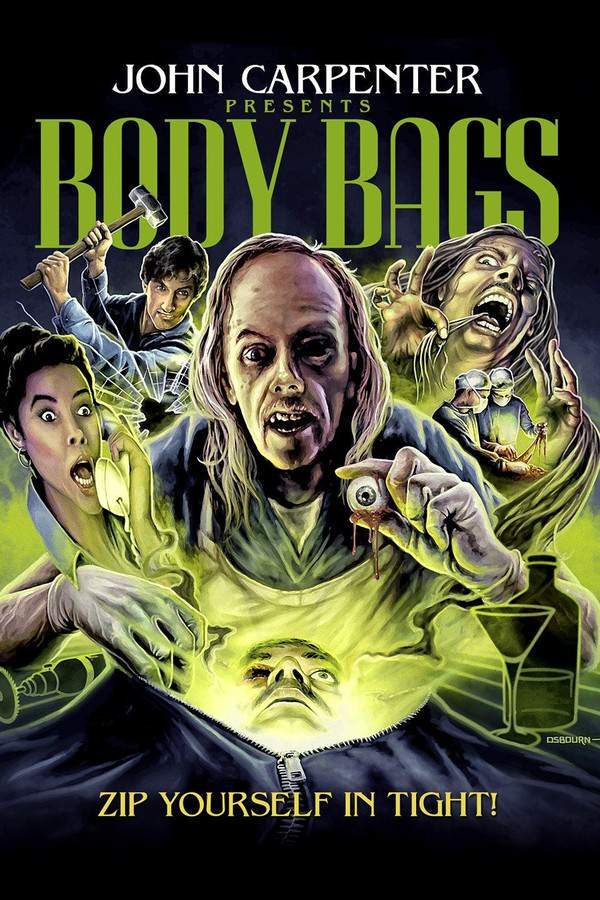
Dark comedy horror movies with bleak endings like Bad Hair

Horror comedies where the humor is dark and the outcome is grim. For viewers who appreciated the dark comedic moments and the grim conclusion of Bad Hair, this list highlights horror comedies that maintain a sinister tone and end on a bleak note. Find films that mix scares with satire without offering a happy resolution.

  • dark comedy
  • bleak
  • tense
  • sinister
  • satirical
  • unsettling
  • Tone: dark, tense
  • Pacing: steady
Why these movies?

The story pattern: The narrative journey in these films balances terrifying or disturbing events with sharp, often satirical, comedic relief. However, the underlying horror remains dominant, leading to an ending where the darkness prevails, leaving characters defeated or a cynical point about the world reinforced.

Why they belong together: These movies are grouped by their unique tonal blend: the consistent presence of dark humor within a high-intensity horror framework that culminates in a bleak emotional resolution. The comed defies the terror but doesn't negate it, creating a complex, heavy, and memorable experience.

If you liked this

Movies Like Bad Hair

Similar movies to Bad Hair: the same genre, themes or kind of story. Each one comes with its own plot summary, timeline and ending explained.

Browse all movie summaries

Every angle

Bad Hair (2020) Explained: Plot, Timeline & Characters

Everything about Bad Hair in one place: what happens in the plot summary, the timeline in chronological order, the characters and meaning and a spoiler-free summary. What's After the Movie adds the cast, box office and post-credit scenes.

Coming soon on iOS and Android

The Plot Explained Movie Summary App

Plot summaries, endings explained and timelines on your phone. Catch up on any movie in minutes, save your favorites and never miss a twist again.

Be the first to know when we launch. Your email stays private, always.

Learn more about the app