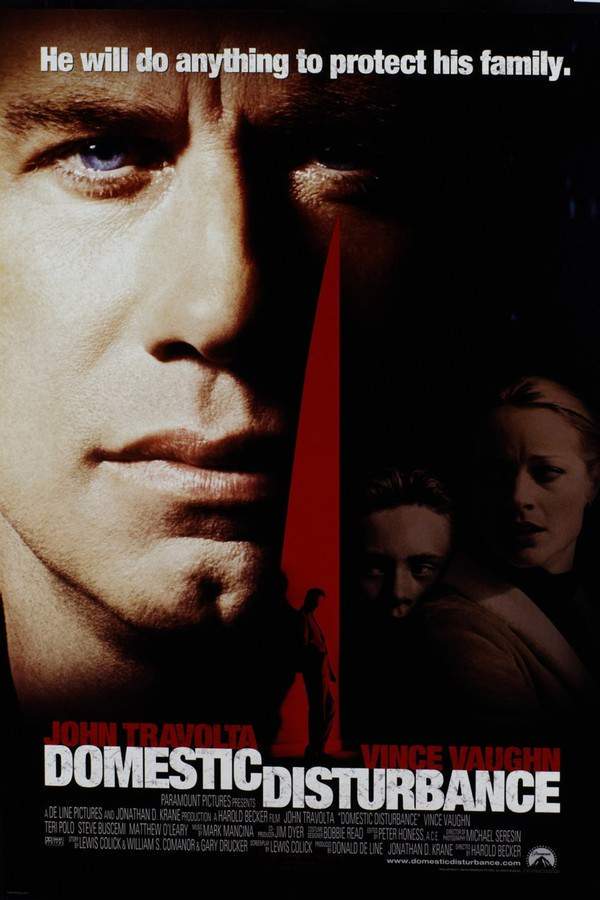
The film opens with a blaze, and on the screen we meet a Lyle Wilder who, on the surface, is a celebrated Los Angeles firefighter. He’s the kind of hero who saved a baby from a crack-house fire and earned a standing ovation for bravery. But as the story unfolds, a much darker pattern emerges beneath the accolades. Lyle’s violent temper and controlling mindset drive a wedge between him and his wife, Marge, who ultimately leaves him along with their son Kenny. This rupture rekindles a dangerous fixation on the neighbors next door, and Lyle starts to see Reese Braverton and Catherine Braverton as the people he believes manipulated his wife away from him.
The Bravertons—Reese and Catherine—live under the shadow of Lyle’s suspicions, and their two children Zach Braverton Noah Fleiss and Marcie Braverton Chelsea Russo become unintended targets of his paranoia. Through a series of chilling flashbacks, the film peels back the layers of Lyle’s psyche: there are brutal scenes of cruelty, including a disturbing glance at him playing Russian roulette, a ritualized discipline rooted in a harsh upbringing, and the memory of a moment when he left the mother of the baby to die in the fire because he deemed her negligent. These fragments reveal a man convinced that happiness around others is a personal affront to his own sense of order and control.
Lyle’s torment intensifies when a routine home repair goes wrong. A malfunctioning refrigerator at the Bravertons’ house leads them to call a repairman, Ron the Repairman, who arrives bearing racially charged barbs and abrasively confrontational energy. The encounter spirals into violence, and Ron ends up dead, with his mouth sealed shut to muffle his screams. This escalation pulls the Bravertons into the crosshairs of Lyle’s rage, and they report him to the police for threats, hoping to put some distance between him and their family.
Responding to the call are officers Al Calavito John Ratzenberger and Sandy Tierra Dawnn Lewis. Their investigation soon hits a wall as Lyle’s decorated record makes them doubt the Bravertons’ claims. He paints a different picture, insisting that the Bravertons are lying and even accusing Reese of beating Catherine. When the couple’s suspicions escalate, Lyle breaches the Bravertons’ home again, triggering a deadly confrontation in which Calavito is killed by a brutal blow with a fireman’s axe. Sandy, who had gone to help, is also killed in a brutal, calculated moment that underscores Lyle’s willingness to silence anyone who challenges his narrative.
Reese returns to talk to Lyle, but the confrontation turns violent, and Lyle savagely beats him. After tying him up, Lyle hurls Reese through the Bravertons’ kitchen window, a stark display of the danger he represents. The tension reaches a fever pitch as Lyle introduces a twisted version of “discipline,” turning the situation into a macabre game of Russian roulette with the Bravertons as unwilling players. He recounts how his late father taught him such brutal lessons before his luck in roulette finally ran out.
In a desperate moment, Zach engages with Lyle, stabbing him with a pocket knife. The act infuriates Lyle even more, pushing him toward the edge. Catherine, attempting to calm the spiraling situation, pretends to be his ex-wife, hoping to defuse the cruelty. Reese fights back, and after a brief struggle, Catherine ends the threat with a decisive shot that wounds—and ultimately defeats—Lyle. As he nears death, he stares blankly at the engraving his wife inscribed on his watch, a stark memento of happier times. The climactic moment leaves Lyle’s cycle of violence broken, and the Bravertons are left to confront the aftermath of fear and trauma.
The ending shifts back to the Bravertons as a family unit, trying to rebuild a sense of normalcy. They attempt to live without the shadow of Lyle’s rampage looming over their daily lives, even as a billboard nearby depicts Lyle as a representative figure for the Los Angeles Fire Department. The image serves as a somber reminder of the conflicting narratives that surround heroism and the toll of unchecked rage. The film closes on a note that emphasizes resilience and the complicated, often painful, persistence of family in the wake of violence.