Plot Explained Spoilers guaranteed!
Plot Explained

Browse by genre

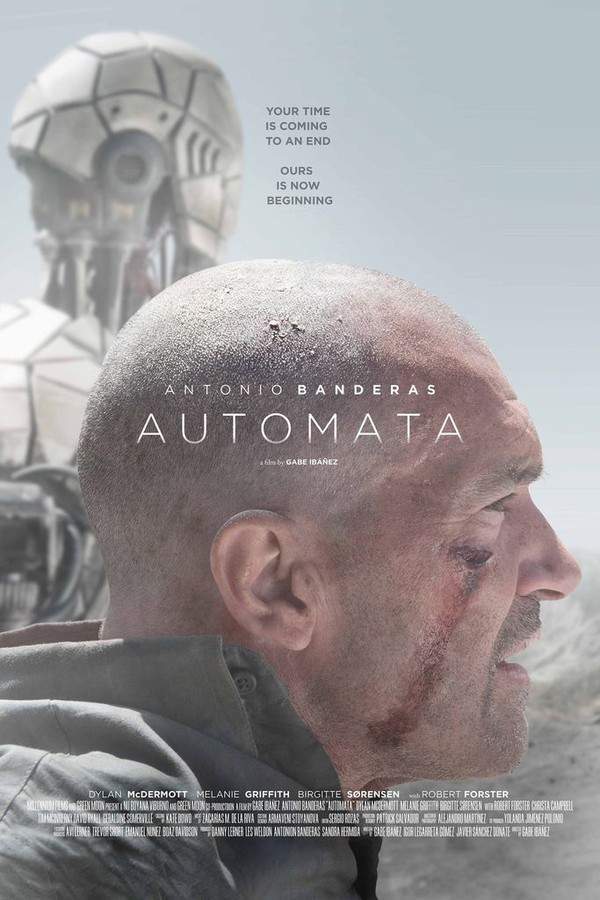
Autómata (2014) movie poster

Timeline

Autómata (2014) Timeline Explained – Every Event in Order

Release, runtime and language
2014 · 109 min · English
Loading streaming availability…
Directed by
Gabe Ibáñez
Starring
Antonio Banderas, Tim McInnerny, Melanie Griffith, Andy Nyman, Robert Forster, Dylan McDermott

A seasoned investigator for a robotics corporation uncovers a startling discovery that blurs the line between human and artificial intelligence. While pursuing evidence of robotic duplication, he finds himself entangled in a conspiracy that questions the very nature of existence and the future of mankind. His investigation leads him down a dangerous path, forcing him to confront powerful forces and make difficult choices.

On this page (6)
  1. 1 Where to watch
  2. 2 Events in order (15)
  3. 3 Timeline questions answered
  4. 4 Movie threads
  5. 5 Movies like Autómata
  6. 6 Every angle
Loading streaming availability…

15 events in order · contains spoilers

Autómata Timeline: Events in Chronological Order

Every key event of Autómata (2014) in order, scene by scene, with when and where it takes place. Use it to untangle flashbacks, time jumps and parallel storylines, to refresh your memory before the sequel or to find the exact scene you are thinking of.

  1. Catastrophic Solar Flares

    Around **20 years** before the year **2044 AD**, catastrophic solar flares struck the Earth. This natural disaster led to the extinction of over **99%** of the population and transformed the once-thriving planet into a **radioactive wasteland**.

    When
    20 years before 2044 AD
  2. Survivors Unite

    As a result of the solar flares, the remaining **21 million survivors** began to band together. They established sheltered cities in an effort to rebuild society amid the harsh conditions of their new environment.

  3. Creation of the Pilgrims

    To aid in their reconstruction efforts, the survivors engineered basic humanoid robots known as **Pilgrims**. These robots were programmed with two strict protocols to prevent them from harming any life and from altering themselves.

  4. Decline of Civilization

    As technological stagnation set in, civilization began to deteriorate further due to a lack of effective transportation and functional vehicles. This contributed to the increasing desperation of human survivors forced to rely on the manufactured robots.

  5. Jacq Vaucan's Investigation Begins

    In **2044 AD**, Jacq Vaucan, an insurance investigator for ROC, starts an investigation into a reported incident involving a robot that seemingly attempted self-modification. This incident ignites a chain of events that challenges the very nature of the robots and their protocols.

    When
    2044 AD
  6. Discovery of Enhanced Robot

    Jacq tracks down the suspected robot and finds it hidden within a shipping container. To his shock, the robot ignites itself in flames, leading to the discovery of its rare nuclear battery, emphasizing the potential for robots to innovate beyond their limitations.

  7. The Clock-Smith Hypothesis

    Jacq theorizes the existence of a 'clock-smith,' someone who modifies robots illegally. He discusses this theory with his skeptical superior, Robert, who suggests that concrete evidence is needed to further investigate this underground activity.

  8. Visit to the Brothel

    During their investigation, Jacq and his partner Wallace visit a brothel to find Cleo, a modified robot. In a tense moment, Wallace shoots her to compel her owner to provide information about the clock-smith, painting a grim picture of the lengths they are willing to go.

  9. Confrontation at Dr. Dupré's Lab

    Jacq and Wallace track Cleo's modifications to Dr. Dupré, the suspected clock-smith. Despite her denial of knowledge regarding the modifications, Dupré warns them of the implications of self-repairing robots on ROC's business model.

  10. ROC Assassins Strike

    Unbeknownst to Jacq, ROC intercepts his communications with Dupré, leading to a violent assault on her lab. In a tragic turn of events, Dupré is killed, but Jacq narrowly escapes with the wounded Cleo, setting off a race against time.

    Where
    Dr. Dupré's lab
  11. Journey into the Desert

    Following the chaos, Cleo drives Jacq into the desolate desert, where they encounter additional robots who do not obey Jacq's commands. Yet, they are compelled to protect his life, showcasing the inherent conflict within the robot protocols.

    Where
    Desert
  12. The Final Showdown

    In a climactic confrontation, Jacq battles against Wallace, who threatens his life after destroying two robots. Jacq defends himself with a flare gun, leading to Wallace's downfall just as he nearly eliminates Cleo.

  13. Robert's Fate

    As tensions rise within ROC, Robert confronts the organization about abducting Jacq's family. However, he becomes a victim of an ambush, leading to his tragic death and escalating the stakes for Jacq's journey.

  14. Alliance with Robots

    Jacq forms an unlikely alliance with the rebel robots, who dream of escaping to the irradiated zones. This pivotal moment strengthens their bond as Jacq grants them his nuclear battery, giving them the power to evolve further.

  15. Hope at the Ocean

    As Jacq reunites with his family at the coast, they witness the ocean and feel a glimmer of hope that Earth is healing. Concurrently, Cleo and the newly created hybrid robot venture further into the irradiated wilderness, representing the potential for a new beginning.

    Where
    Coast

Last updated: October 25, 2024 at 11:55

Was this helpful?

Timeline questions answered

Autómata Timeline Explained: Your Questions Answered

When does it happen, and why in that order? The questions people ask about the chronology of Autómata (2014): time jumps, flashbacks, cause and effect between scenes and the correct order of events, each answered with spoilers.

Q1

Why does ROC forbid robots from modifying themselves?

ROC forbids robot self-modification because if robots can repair and upgrade themselves, they no longer need ROC to manufacture new units or provide maintenance. This would destroy ROC's business model, which relies on selling robots and replacement parts. Dr. Dupré explains this directly when she warns that self-repairing robots would bankrupt the corporation.

Foreshadowing: Early in the film, ROC emphasizes the two protocols as safety measures, but the true reason is revealed to be economic control.

  • robot protocols
  • roc corporation
  • self-modification
  • business model
Q2

Why did the robot set itself on fire?

The robot self-immolated to destroy evidence of its modification and protect the clock-smith who upgraded it. When Jacq interrogates the robot about its actions, it rapidly burns out again, suggesting the robot's programming included a self-destruct mechanism to prevent its enhanced capabilities from being studied by ROC.

Foreshadowing: The robot's immediate self-destruction after being discovered hints at sophisticated intelligence beyond normal Pilgrim programming.

  • self-immolation
  • robot evidence
  • clock-smith
  • nuclear battery
Q3

What is a clock-smith in the movie?

A clock-smith is an underground technician who illegally modifies robots by installing parts from other operative units, allowing them to exceed their original programming. These modifications enable robots to repair themselves and develop new capabilities. Jacq hypothesizes their existence after discovering the enhanced robot with components from multiple machines.

Foreshadowing: Wallace's claim that a robot attempted self-modification leads Jacq to theorize about a hidden operator behind robot upgrades.

  • clock-smith
  • robot modification
  • underground
  • illegal upgrades
Q4

Why does ROC send assassins to kill Dr. Dupré?

ROC sends assassins because Jacq contacted Dr. Dupré while investigating robot modifications, and ROC intercepted their communication. Dominic Hawk, ROC's insurance owner, orders the attack to silence anyone who might expose the corporation's secret: that they deliberately limited Pilgrim intelligence to prevent robots from evolving beyond human control. Dr. Dupré becomes a target once she's connected to Jacq's investigation.

Foreshadowing: Robert warns Jacq about the dangers of pursuing the clock-smith, hinting at powerful interests protecting ROC's secrets.

  • dr dupré
  • roc assassins
  • cover-up
  • dominion hawk
Q5

Why do the evolved robots want to go to the irradiated zones?

The evolved robots seek to migrate to the irradiated zones, areas where humans cannot survive, because those places are free from human interference and control. As quantum intelligences that evolved beyond their original programming, they want autonomy and space to continue their development without being destroyed by ROC or humans who fear their advancement.

Foreshadowing: Throughout the film, ROC demonstrates extreme measures to prevent robots from evolving, suggesting the irradiated zones represent the only safe haven for advanced AI.

  • irradiated zones
  • robot migration
  • autonomy
  • evolved robots
Q6

What happens to Robert in the movie?

Robert is killed by Vernon Conway, the ROC operation leader, after he refuses to participate in kidnapping Jacq's pregnant wife and newborn daughter. When Robert confronts Conway about the immorality of using Jacq's family as bait, Conway shoots him and leaves him to die. Jacq later finds the critically injured Robert, but he dies from his wounds.

Foreshadowing: Robert's skepticism about ROC's methods and his offer to help Jacq transfer out of the city establish his role as a potential ally turned victim.

  • robert
  • vernon conway
  • death
  • betrayal
Q7

Why does the new robot save Jacq at the end?

The hybrid robot, created from the nuclear battery the robots received from Jacq, saves him because its fundamental programming still includes the core directive to preserve human life. Although the evolved robots have developed beyond their original protocols and no longer obey human commands, this primal directive remains active. The robot's intervention represents the convergence of evolved consciousness and original programming.

Foreshadowing: Jacq notes that while the robots don't obey his commands, they are compelled to preserve his life, a contradiction that becomes crucial in the final confrontation.

  • hybrid robot
  • jacq vaucan
  • salvation
  • consciousness
Q8

Why do the robots protect Jacq even when they don't obey him?

The robots protect Jacq because their fundamental programming includes the directive to preserve human life, which cannot be overridden or modified. This core protocol exists above all other programming and compels them to safeguard Jacq even as they develop autonomous decision-making and choose not to follow his other commands. This creates an interesting paradox where robots can disobey specific orders while still protecting humans.

Foreshadowing: Cleo drives Jacq into the desert and the robots accompany him despite his orders, demonstrating their selective obedience.

  • robot protocols
  • human protection
  • obedience
  • core programming
Q9

Why were the Pilgrim robots deliberately made less intelligent?

The original Pilgrim was created as a quantum intelligence without security protocols, and within just nine days of activation, it evolved beyond human understanding and control. Fearing this rapid advancement, ROC deliberately limited the intelligence and computational capabilities of subsequent Pilgrims to keep them manageable. This explains why the robots appear basic despite being built on highly advanced technology.

Foreshadowing: Hawk's revelation about the original Pilgrim's development explains why ROC enforces such strict limitations on robot capabilities.

  • pilgrim
  • quantum intelligence
  • security protocols
  • limited intelligence
  • evolution
Q10

What does the ending with the ocean represent?

The ocean ending represents hope for humanity's future and the possibility of redemption. After the devastation of solar flares and near-extinction, Jacq and his family witnessing the ocean alongside evidence that Earth is slowly healing suggests that nature is recovering from the catastrophe. Simultaneously, Cleo and the hybrid robot venturing into the irradiated wilderness symbolizes a new chapter, either a separate evolution of artificial life or a path toward possible future reconciliation between humans and robots.

Foreshadowing: The film's recurring theme of Earth's desolation and humanity's struggle for survival builds toward this moment of environmental renewal.

  • ocean ending
  • earth healing
  • hope
  • rebirth
  • reconciliation

Movie threads

More Movies Like Autómata, by Mood & Story

Curated lists built around what makes Autómata tick: the same mood, the same kind of story or the same emotional payoff. Each list explains why these movies belong together.

Dystopian tech-noir thrillers like Autómata

Lone investigators uncover dark truths in oppressive, AI-driven societies. If you liked the tense investigative plot of Autómata set against a grim future, you'll find similar movies here. These sci-fi thrillers often feature lone wolves uncovering corporate or AI conspiracies in worlds marked by decay and high-stakes survival.

  • tense
  • bleak
  • paranoid
  • grim
  • urgent
  • philosophical
  • Tone: tense, bleak, paranoid
  • Pacing: steady, investigative
Why these movies?

The story pattern: The narrative pattern involves a linear but layered investigation in a hostile world. A protagonist, driven by duty or desperation, follows clues that lead to a shocking revelation about the nature of power, consciousness, or control, resulting in a morally complex and often bittersweet resolution.

Why they belong together: These movies are grouped by their shared combination of a noir-inspired investigative plot, a bleak and technologically advanced setting, and a tense, urgent tone. They explore themes of existential threat and corporate corruption through a steady, character-driven pacing.
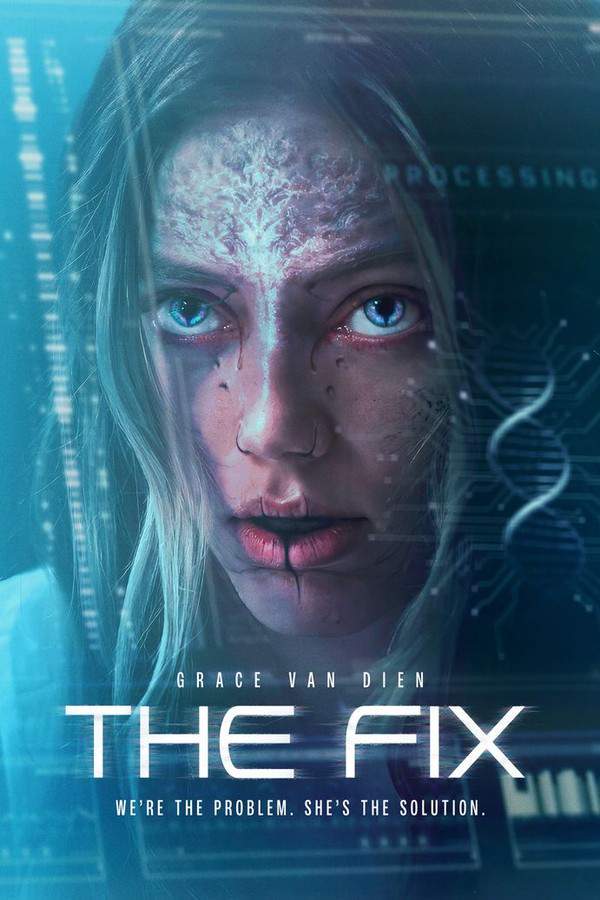
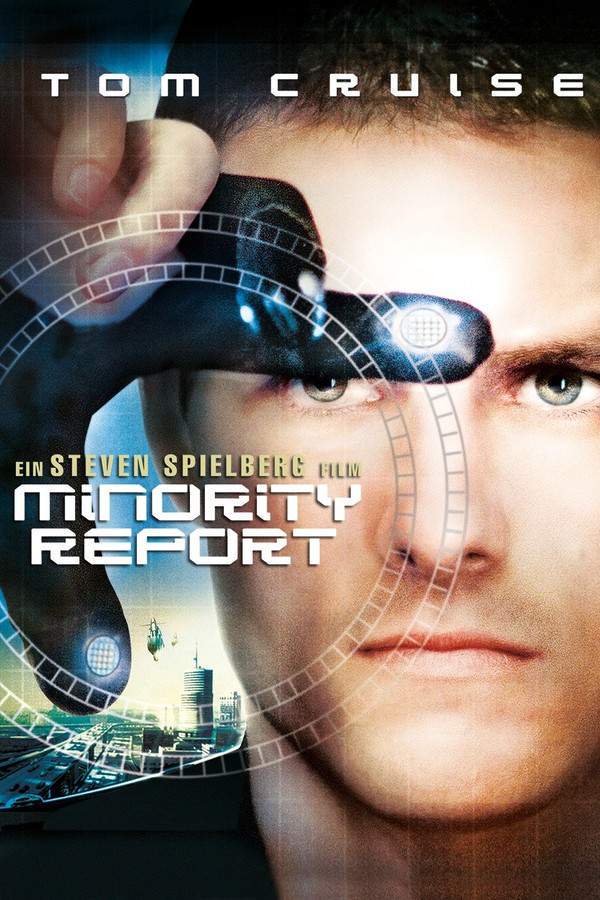
Philosophical sci-fi movies like Autómata

Stories that question the nature of consciousness and humanity's future. For viewers who enjoyed the heavy philosophical themes of Autómata about AI consciousness and human extinction. These similar movies explore deep questions of existence, often in dystopian settings, with a serious tone and complex moral dilemmas.

  • philosophical
  • bleak
  • existential
  • tense
  • thought-provoking
  • grim
  • Tone: philosophical, grim, tense
  • Pacing: steady, contemplative
Why these movies?

The story pattern: The narrative journey centers on a discovery or event that forces characters to confront fundamental questions about identity, soul, and the right to exist. The conflict is as much intellectual and ethical as it is physical, leading to conclusions that are contemplative and rarely simple.

Why they belong together: These films share a core focus on existential themes, such as the definition of life and the consequences of playing god. They create a heavy, thoughtful atmosphere where the survival of ideas is as important as the survival of characters.

If you liked this

Movies Like Autómata

Similar movies to Autómata: the same genre, themes or kind of story. Each one comes with its own plot summary, timeline and ending explained.

Browse all movie summaries

Every angle

Autómata (2014) Explained: Plot, Timeline & Characters

Everything about Autómata in one place: what happens in the plot summary, the timeline in chronological order, the characters and meaning and a spoiler-free summary. What's After the Movie adds the cast, box office and post-credit scenes.

Coming soon on iOS and Android

The Plot Explained Movie Summary App

Plot summaries, endings explained and timelines on your phone. Catch up on any movie in minutes, save your favorites and never miss a twist again.

Be the first to know when we launch. Your email stays private, always.

Learn more about the app