Plot Explained Spoilers guaranteed!
Plot Explained

Browse by genre

Atlas Shrugged: Part I (2011) movie poster

Timeline

Atlas Shrugged: Part I (2011) Timeline Explained – Every Event in Order

Release, runtime and language
2011 · 97 min · English
Loading streaming availability…
Starring
Grant Bowler, Taylor Schilling
Budget
$20M

Once, life was wonderful, but the world was falling apart. Factories closed, goods transportation ceased, containers emptied, and those responsible disappeared. The lights went out, cities grew cold, and only misery remained. No one knew how to stop it or understood why, except for one woman: the manager of a once-powerful transcontinental railroad company. She suspects the answer lies in a remarkable invention created by a man who claimed he could halt the world's engine. Her mission is to find him and uncover the truth behind the escalating crisis.

On this page (7)
  1. 1 Where to watch
  2. 2 Events in order (15)
  3. 3 Timeline questions answered
  4. 4 The book behind the movie
  5. 5 Movie threads
  6. 6 Movies like Atlas Shrugged: Part I
  7. 7 Every angle
Loading streaming availability…

15 events in order · contains spoilers

Atlas Shrugged: Part I Timeline: Events in Chronological Order

Every key event of Atlas Shrugged: Part I (2011) in order, scene by scene, with when and where it takes place. Use it to untangle flashbacks, time jumps and parallel storylines, to refresh your memory before the sequel or to find the exact scene you are thinking of.

  1. Economic Crisis in the U.S.

    In 2016, the United States experiences a severe economic depression characterized by industrial disasters and rampant resource scarcities. Gasoline prices skyrocket to an unprecedented $37 per gallon, forcing citizens to rely primarily on the ailing railroad system for transportation.

    When
    2016
    Where
    United States
  2. Rise of the Pirates

    Amid the chaos, a band of pirates led by the notorious Ragnar Danneskjold begins to attack aid ships at sea. The looting exacerbates the dire situation, leaving the government struggling to maintain order and provide for its citizens.

    Where
    At Sea
  3. Government Intervention

    In a desperate attempt to stabilize the economy, the government passes draconian laws to freeze prices and prevent layoffs. These measures create further complications for businesses, leading to widespread discontent in the industrial sector.

    Where
    United States
  4. Crisis on the Rio Norte Line

    A catastrophic incident occurs on the Rio Norte line of Taggart Transcontinental, prompting CEO James Taggart to neglect his duties. This failure leads to a growing rift between him and his determined sister, Dagny Taggart, who seeks to take action.

    Where
    Rio Norte Line
  5. Dagny's Rebellion

    In defiance of her brother's incompetence, Dagny Taggart begins replacing the aging tracks on the Rio Norte line with new rails made from the revolutionary Rearden Metal. This decision reflects her commitment to restoring the railroad’s efficiency and reliability.

    Where
    Taggart Transcontinental
  6. Meeting Hank Rearden

    Dagny meets Hank Rearden, the visionary behind the creation of Rearden Metal. Realizing the potential of their partnership, they strike a deal to work together, both understanding how integral they are to combating the failing economy.

    Where
    Taggart Transcontinental Headquarters
  7. Political Manipulation

    Wesley Mouch, an opportunistic lobbyist, conspires with James Taggart and others to manipulate laws that eliminate competition for Taggart Transcontinental. This backdoor maneuvering underlines the corruption ripping through the political fabric of society.

    Where
    Washington D.C.
  8. Confrontation with Ellis Wyatt

    Dagny confronts Ellis Wyatt, a Colorado oil magnate frustrated by the current partnership mandates imposed by the government. Wyatt's reluctance highlights the growing tension between individual ambition and regulatory constraints.

    Where
    Wyatt's Oil Fields
  9. Francisco d'Anconia's Return

    Dagny encounters her former lover, Francisco d'Anconia, who presents a façade of a carefree billionaire. Beneath the surface, he is secretly engaged in dubious investments, which causes Dagny to grapple with old feelings amidst the economic turmoil.

    Where
    Social Gathering
  10. Familial Turmoil for Hank Rearden

    Hank Rearden faces challenges at home as he navigates his successful career alongside family discontent. The friction culminates at a dinner party where personal and professional conflicts collide, particularly regarding the Rearden Metal bracelet.

    Where
    Rearden Home
  11. Decline of Talent and Stock

    As Dagny and Rearden strive to restore the Rio Norte Line, talented employees begin abandoning their jobs, illustrating a growing disillusionment with the system. A damning report by Dr. Robert Stadler damages Rearden Metal's reputation, leading to a nosedive in their company's stock.

    Where
    Taggart Transcontinental Headquarters
  12. Formation of the John Galt Line

    Seeking independence, Dagny decides to create her own railway, naming it the John Galt Line in defiance against society's apathetic attitude. This new venture represents her commitment to innovation and her refusal to accept mediocrity.

    Where
    Taggart Transcontinental
  13. Completion of the John Galt Line

    Despite facing numerous bureaucratic hurdles, Dagny and Rearden successfully complete the John Galt Line ahead of schedule. This achievement underscores their tenacity in a system designed to stifle innovation and highlights their growing partnership.

    Where
    John Galt Line
  14. Discovering the Prototype Motor

    During their investigations, Dagny and Rearden uncover an abandoned prototype motor that holds the potential to revolutionize energy use. This discovery fuels their search for the brilliant inventor responsible, intensifying the tension between ambition and bureaucratic choke points.

    Where
    Research Facility
  15. Ellis Wyatt's Desperation

    Dagny receives shocking news about a disaster at Wyatt's oil fields, which are now engulfed in flames. His haunting message declaring, 'I am leaving it as I found it. Take over. It's yours,' signifies a pivotal moment in the battle against a system that crushes ambition.

    Where
    Wyatt's Oil Fields

Last updated: October 25, 2024 at 11:45

Was this helpful?

Timeline questions answered

Atlas Shrugged: Part I Timeline Explained: Your Questions Answered

When does it happen, and why in that order? The questions people ask about the chronology of Atlas Shrugged: Part I (2011): time jumps, flashbacks, cause and effect between scenes and the correct order of events, each answered with spoilers.

Q1

Why does Dagny Taggart leave Taggart Transcontinental to build her own railway?

Dagny leaves Taggart Transcontinental after her brother James and the board consistently block her efforts to modernize the Rio Norte line. When Dr. Robert Stadler releases a false report condemning Rearden Metal, Taggart's stock plummets, and Dagny decides she can no longer work within a system designed to fail. She forms her own company to complete the Rio Norte line using Rearden Metal, naming it the John Galt Line as a defiant response to the phrase 'Who is John Galt?' that represents society's apathy toward meaningful achievement.

Foreshadowing: The phrase 'Who is John Galt?' has been used throughout the film to dismiss important questions, making Dagny's naming choice a direct challenge to that apathy.

  • john galt line
  • dagny taggart
  • railroad
  • taggart transcontinental
  • independence
Q2

What makes Rearden Metal so valuable in the movie?

Rearden Metal is a revolutionary alloy invented by Hank Rearden that is both stronger and lighter than traditional steel. This makes it ideal for railroad tracks because it can handle heavier loads while requiring less maintenance. Dagny specifically chooses it to replace the aging tracks on the Rio Norte line, and the government views it as a threat because its success would expose the inadequacy of existing infrastructure and prove that private innovation can solve problems the state cannot.

  • rearden metal
  • hank rearden
  • invention
  • railroad tracks
  • innovation
Q3

Why are talented workers quitting and disappearing in Atlas Shrugged?

Throughout the film, skilled professionals like Owen Kellogg resign from their positions despite lucrative offers, representing a silent strike by productive individuals against a system that punishes success. These disappearances foreshadow the larger movement led by John Galt, who advocates that productive people should withdraw their labor from a society that confiscates their achievements through excessive regulation and taxation. The film suggests this is why the economy continues to collapse despite individual efforts to save it.

Foreshadowing: The mysterious departures build toward the reveal that a organized movement of the most capable people is abandoning a society that demeans their contributions.

  • owen kellogg
  • talent strike
  • disappearing workers
  • economic collapse
  • productivity
Q4

Why does Ellis Wyatt burn his oil fields?

Ellis Wyatt sets fire to his oil fields as a final act of protest against the government's increasingly oppressive regulations. After the Equalization of Opportunity Bill forces him to surrender his business to state control and new legislation restricts rail freight, Wyatt sees no point in continuing to produce wealth that will be confiscated. His message 'I am leaving it as I found it. Take over. It's yours' is a declaration that he will not contribute to a system that destroys the fruits of his labor. This marks the beginning of the industrialists' strike that defines the film's climax.

  • ellis wyatt
  • oil fields
  • strike
  • protest
  • california
Q5

What does 'Who is John Galt?' mean in the movie?

'Who is John Galt?' is a phrase used throughout the film to dismiss important questions or deflect responsibility, representing society's collective apathy toward understanding complex issues. When Dagny names her railway the John Galt Line, she reclaims the phrase as a badge of honor, asserting that she will pursue meaningful answers and achievements while others retreat into passivity. The question becomes central to the story as Dagny searches for the mysterious inventor of a prototype motor, suggesting John Galt may be the brilliant mind behind the technology that could save the world.

  • john galt
  • phrase meaning
  • society
  • apathy
  • mystery
Q6

Why does Francisco d'Anconia refuse to fund Dagny's railway?

Francisco d'Anconia appears to be a carefree playboy but is secretly one of the leaders of the strike by productive individuals. He refuses to fund Dagny's John Galt Line because he believes that helping her succeed would delay the necessary collapse of the current system. His billions invested in Mexican ore mines are part of a deliberate plan to withdraw capital from a dying economy. His refusal to help Dagny, despite their past relationship, demonstrates the difficult choice faced by those participating in the strike: letting the world fail to prove the danger of statism.

  • francisco d'anconia
  • funding
  • refusal
  • strike
  • motivation
Q7

What is the Equalization of Opportunity Bill and how does it affect Rearden?

The Equalization of Opportunity Bill is a draconian law that forces successful business owners to surrender their assets and profits to the state for 'redistribution.' Hank Rearden is compelled to divest many of his companies under this law, though he retains his steel production specifically to complete the John Galt Line. The bill represents the government's systematic attempt to dismantle private enterprise and seize the fruits of individual achievement, which drives more productive people to join the strike.

  • equalization of opportunity bill
  • law
  • hank rearden
  • government regulation
  • confiscation
Q8

What is the prototype motor that Dagny and Rearden discover?

Dagny and Rearden discover an abandoned prototype motor that could revolutionize energy production if perfected. Their investigation leads them to Eugene Lawson, who directs them to engineer Jed Starnes, but they learn the brilliant inventor has already vanished, likely joining the strike of productive minds. The motor represents the potential solution to the world's energy crisis, but its creator has withdrawn it from a society unworthy of its benefits. This search drives much of the film's second half as Dagny seeks the genius who could save civilization.

  • prototype motor
  • energy
  • invention
  • jed starnes
  • revolution
Q9

Why are Dagny and Hank Rearden drawn to each other?

Dagny and Hank Rearden share a deep mutual respect for each other's abilities and achievements. Both are committed to practical excellence and refuse to accept the economic decline around them. Their collaboration on the Rio Norte line creates a romantic connection built on shared values of individualism and productivity. The film develops their relationship alongside their professional partnership, culminating in a romantic moment after they successfully complete the John Galt Line ahead of schedule.

  • dagny taggart
  • hank rearden
  • romance
  • partnership
  • mutual respect
Q10

Why does James Taggart oppose his sister Dagny's efforts?

James Taggart is motivated by jealousy and ideological opposition to progress. As CEO of Taggart Transcontinental, he resents Dagny's competence and the attention she receives for her ideas. Politically, he aligns with the statist forces that are destroying the economy, believing that maintaining power matters more than saving the company. His collaboration with Wesley Mouch to pass anti-competitive laws reveals he would rather see Taggart Transcontinental survive through government protection than through genuine innovation.

  • james taggart
  • dagny taggart
  • brother
  • rivalry
  • opposition
Q11

Why does Dr. Robert Stadler release a false report against Rearden Metal?

Dr. Robert Stadler, head of the State Science Institute, releases a damning report condemning Rearden Metal despite lacking scientific validity. His motivation stems from jealousy and political pressure, he resents Rearden's success as a self-made inventor and fears retribution from the government if he doesn't comply. The false report causes Taggart Transcontinental's stock to plummet and represents how state-controlled institutions attack independent achievement. This betrayal illustrates the film's theme that intellectuals often serve power rather than truth.

  • dr robert stadler
  • state science institute
  • false report
  • rearden metal
  • attack
Q12

Why does Lillian Rearden despise the Rearden Metal bracelet?

Lillian Rearden views the Rearden Metal bracelet as a symbol of her husband's pride and his prioritization of work over family. At the dinner party, she openly mocks the gift and uses it to further alienate Hank from his family. Her contempt reflects the broader theme that the film presents: that productive individuals often face hostility not only from society but from those closest to them. Dagny defends the bracelet as an achievement worthy of pride, directly challenging Lillian's dismissive attitude.

  • lillian rearden
  • bracelet
  • family conflict
  • pride
  • hank rearden
Q13

Who are the pirates led by Ragnar Danneskjold?

Ragnar Danneskjold is a pirate who attacks aid ships at sea, looting supplies during the economic crisis. While seemingly a criminal figure, the film presents him as part of the broader narrative of individuals taking extreme measures against a corrupt system. His attacks exacerbate the government's inability to manage the crisis, adding to the chaos that forces more productive people to abandon their properties. The pirate attacks represent another symptom of societal collapse rather than a central plot element.

  • ragnar danneskjold
  • pirates
  • sea
  • attacks
  • chaos
Q14

What is Wesley Mouch's role in the conspiracy against Dagny?

Wesley Mouch is an opportunistic lobbyist who initially represents Hank Rearden before betraying him to join a conspiracy with James Taggart and Orren Boyle. His role is to manipulate laws and regulations to eliminate competition, specifically targeting the Phoenix-Durango railroad to ensure Taggart Transcontinental's dominance. Mouch represents the crony capitalism that pervades the film's government, using state power to reward friends and destroy enemies rather than allowing free markets to function.

  • wesley mouch
  • lobbyist
  • conspiracy
  • taggart transcontinental
  • phoenix-durango

Movie threads

More Movies Like Atlas Shrugged: Part I, by Mood & Story

Curated lists built around what makes Atlas Shrugged: Part I tick: the same mood, the same kind of story or the same emotional payoff. Each list explains why these movies belong together.

Movies about dystopian industrial collapse like Atlas Shrugged: Part I

Stories of business leaders fighting systemic decay in a failing world. If you enjoyed the tense corporate struggle against a decaying system in Atlas Shrugged: Part I, you'll find similar stories here. These movies explore themes of individualism versus collectivism, economic collapse, and the fight to preserve innovation in a world falling apart.

  • tense
  • urgent
  • defiant
  • thought provoking
  • oppressive
  • melancholic
  • Tone: tense, defiant, melancholic
  • Pacing: steady, deliberate
Why these movies?

The story pattern: Narratives typically follow protagonists, often industrialists or leaders, as they confront a series of systemic failures and political obstacles. The plot unfolds through a sequence of professional and ideological setbacks, building towards a climax that questions the very foundations of society, often with an uncertain or bittersweet resolution.

Why they belong together: Movies are grouped here for their shared setting of a crumbling dystopia, their focus on high-stakes ideological conflicts, and their tense, urgent mood driven by political and economic pressure.
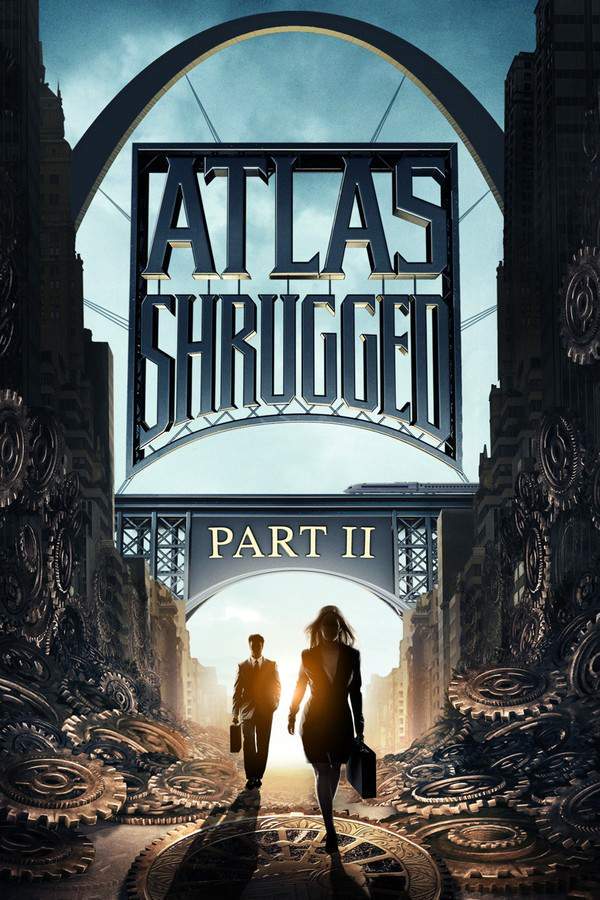
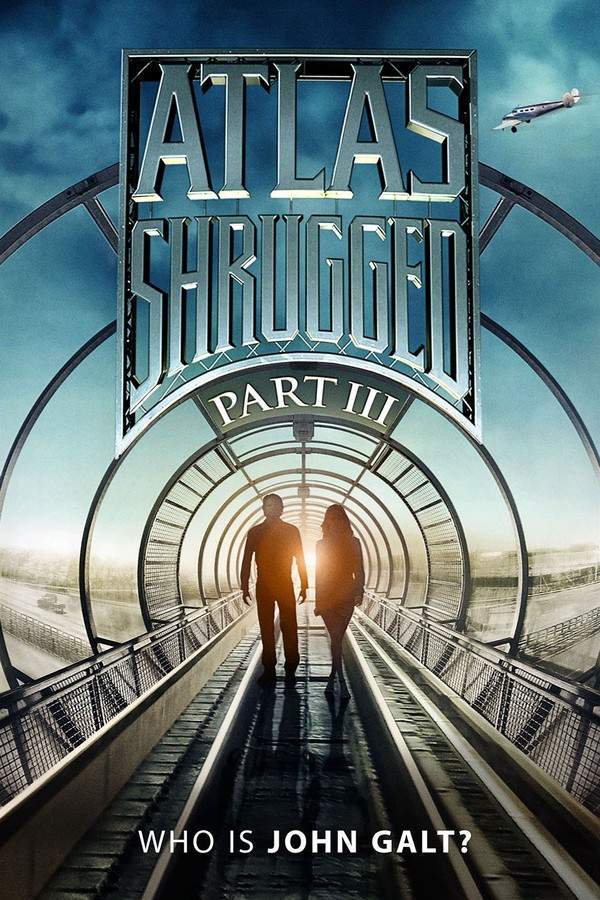
Movies about intellectual resistance like Atlas Shrugged: Part I

Character-driven stories where the main battle is one of ideas and principles. For viewers who liked the philosophical struggle and themes of individualism in Atlas Shrugged: Part I, this collection features movies where characters fight oppressive systems with their minds and convictions, not just their actions.

  • thought provoking
  • defiant
  • tense
  • philosophical
  • frustrating
  • ideological
  • Tone: tense, thought provoking, defiant
  • Pacing: steady, character-driven
Why these movies?

The story pattern: The story revolves around a central philosophical conflict, pitting individualist ideals against collectivist or corrupt systems. The protagonist's journey is one of intellectual awakening and steadfast resistance, facing challenges that test their beliefs. The resolution often emphasizes moral victory over clear-cut triumph, leaving a bittersweet feeling.

Why they belong together: These films share a core focus on ideological battles, a tone of tense intellectual struggle, and a protagonist defined by their unwavering principles in the face of systemic pressure.

If you liked this

Movies Like Atlas Shrugged: Part I

Similar movies to Atlas Shrugged: Part I: the same genre, themes or kind of story. Each one comes with its own plot summary, timeline and ending explained.

Browse all movie summaries

Every angle

Atlas Shrugged: Part I (2011) Explained: Plot, Timeline & Characters

Everything about Atlas Shrugged: Part I in one place: what happens in the plot summary, the timeline in chronological order, the characters and meaning and a spoiler-free summary. What's After the Movie adds the cast, box office and post-credit scenes.

Coming soon on iOS and Android

The Plot Explained Movie Summary App

Plot summaries, endings explained and timelines on your phone. Catch up on any movie in minutes, save your favorites and never miss a twist again.

Be the first to know when we launch. Your email stays private, always.

Learn more about the app