Plot Explained Spoilers guaranteed!
Plot Explained

Browse by genre

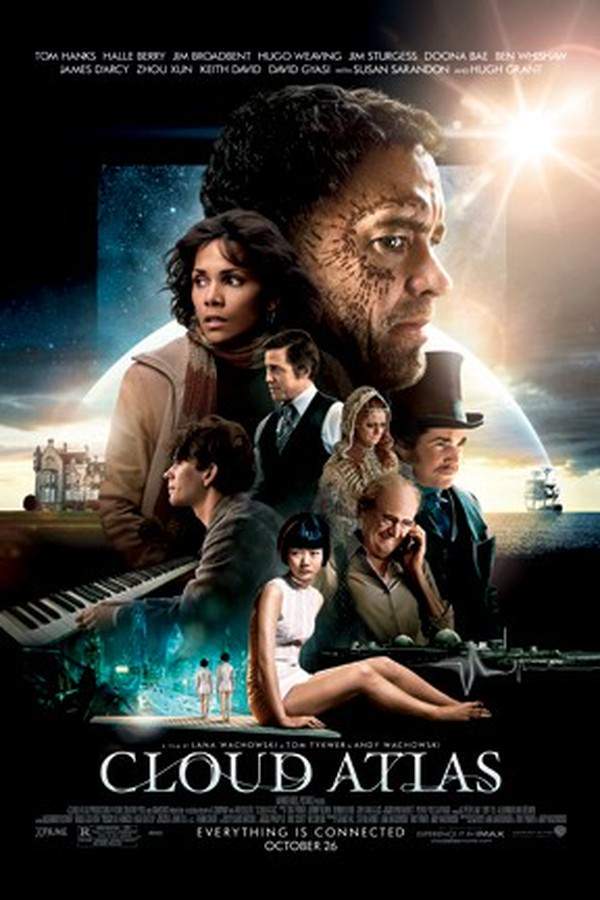
Cloud Atlas (2012) movie poster

Plot Summary

Cloud Atlas (2012) Plot Summary Explained

Release, runtime and language
2012 · 172 min · English
JustWatch #2,731 11
Directed by
Lana Wachowski, Tom Tykwer
Starring
Tom Hanks, Hugo Weaving, Halle Berry, Hugh Grant

Across six historical periods, the lives of different individuals become unexpectedly linked. The story follows a soul's journey through reincarnation, exploring themes of connection, consequence, and transformation. From a 19th-century Pacific voyage to a futuristic dystopian Korea, acts of kindness and rebellion ripple through time, influencing the fates of those involved. Love, sacrifice, and the pursuit of freedom intertwine in a complex narrative of drama, action, and mystery.

On this page (7)
  1. 1 Where to watch
  2. 2 What happens: full plot
  3. 3 Plot questions answered
  4. 4 The book behind the movie
  5. 5 Movie threads
  6. 6 Movies like Cloud Atlas
  7. 7 Every angle

Where to watch

Where to Watch Cloud Atlas (2012)

Where can you watch Cloud Atlas? Stream, rent or buy it in the US, including on YouTube TV, Amazon Video and Apple TV Store: current JustWatch availability with up-to-date prices.

Streaming availability powered by JustWatch

Full plot summary · contains spoilers

What Happens in Cloud Atlas: Full Plot Summary

The whole story of Cloud Atlas (2012) explained, from the opening scene to the final frame: every key event, every twist and what it all adds up to. Read it as a quick recap before the sequel, to check a scene you missed, or to finally understand what really happened.

This film intricately weaves together the tales of six souls across different timelines, highlighting the profound connections among their lives and the transformative impacts they have on one another's journeys.

The first narrative centers around Adam Ewing (played by Jim Sturgess), a lawyer from the early 1800s whose family profits from the slave trade. Tasked with negotiating a contract for Maori slaves, he embarks on a voyage across the Pacific. It is during this trip that he rescues Autua (portrayed by David Gyasi), a native man fleeing servitude. However, Ewing finds himself in peril as he realizes that he is being poisoned by his trusted physician, Dr. Henry Goose (played by Tom Hanks). With Autua's help, Ewing escapes his dire fate, and through this experience, he undergoes a significant change in perspective regarding the native people. Ultimately, Adam and his wife renounce the slave trade and decide to join the abolitionist movement.

The second storyline is a tragic tale of Robert Frobisher (portrayed by [Ben Whishaw]), a young composer in the 1930s who attaches himself to the older composer, Vyvyan Ayrs (played by Jim Broadbent). While working together, Frobisher stumbles upon Adam Ewing's journal and begins to read it but never finishes. His complicated relationship with Ayrs deteriorates as he begins a romantic affair with Ayrs’ wife. Ayrs, feeling threatened by Frobisher’s talent, uses his authority to suppress Frobisher's work and reputation. After a heated confrontation leads to Ayrs being shot, Frobisher spirals into despair and ultimately takes his own life, leaving behind the Cloud Atlas Sextet, which resonates through time.

In the third narrative, we meet Luisa Rey (played by Halle Berry), a tenacious journalist in the 1970s who encounters Rufus Sixsmith (James D'Arcy) during a breakdown in an elevator. Sixsmith, now an esteemed physicist, attempts to warn her about a conspiracy linked to a failing nuclear reactor. His untimely death triggers Rey's investigative instincts, revealing that his research holds the key to exposing a grave danger. She teams up with Isaac Sachs (played by Tom Hanks), only to find herself targeted by the CEO Lloyd Hooks (portrayed by Hugh Grant) and his assassin Bill Smoke (played by Hugo Weaving). With courage and resolve, Rey ultimately publishes her findings, leading to the reactor's closure.

The fourth story shifts to Timothy Cavendish (playing by Jim Broadbent), a modern-day publisher whose underwhelming career takes a turn when a crime committed by a book's author thrusts him into the limelight. As Cavendish's new fame brings unexpected challenges, including threats from the author's associates, he finds himself trapped in what he believes to be a hotel, but is actually a nursing home. Together with fellow residents, he devises a daring escape plan, which later becomes the basis for a best-selling memoir.

The fifth thread follows Sonmi-451 (Doona Bae), a clone in a dystopian future who strives to break free from her life as a fast-food worker in Neo Seoul. Awakening to her potential, she is inspired by remnants of the past and embarks on a quest for knowledge and freedom, leading her to a revolutionary group. Here, she learns that her existence is not destined for servitude but can be a catalyst for change. In a final act of defiance, Sonmi broadcasts a manifesto, implicating her own sacrifice to ignite a movement against oppression.

Lastly, the sixth story explores the life of Zachry (played by Tom Hanks), a tribesman in a post-apocalyptic Hawaii who becomes entwined with Meronym (played by Halle Berry), an outsider seeking new beginnings. As Zachry confronts his inner fears and past regrets concerning a tragic event involving his family, he learns from Meronym about the broader truths of existence. Their journey is fraught with danger, culminating in a struggle against ruthless attackers and ultimately leading to a rebirth for Zachry and his people.

Throughout the film, the quote from Sonmi-451 resonates profoundly: > "Our lives are not our own. From womb to tomb, we are bound to others, past and present. And by each crime and every kindness, we birth our future." This statement encapsulates the essence of the film's exploration of interconnectedness and the legacy of our choices across time.
Last updated: November 03, 2024 at 22:25

Was this helpful?

Plot questions answered

Cloud Atlas Plot Explained: Your Questions Answered

The questions people ask most about Cloud Atlas (2012): what happens in the confusing scenes, why the characters do what they do, the twists, hidden details and what the ending means. Each answer contains spoilers.

Q1

How are the six different storylines in the film connected?

The six narratives are connected through reincarnation, the same souls appear in each timeline, making different choices that ripple across centuries. Adam Ewing's act of kindness toward Autua inspires the abolitionist movement, which influences Robert Frobisher's composing, which becomes the Cloud Atlas Sextet that Luisa Rey discovers, which inspires Sonmi-451's rebellion, which eventually leads to the post-apocalyptic world where Zachry lives.

Foreshadowing: The recurring motif of the birthmark (a comet shape) appears on characters across all timelines, hinting at their shared soul.

  • reincarnation
  • souls
  • timelines
  • connected stories
  • interconnectedness
Q2

Why does Robert Frobisher kill himself?

Frobisher is driven to suicide after his creative work is suppressed by Vyvyan Ayrs, who feels threatened by his talent. After a confrontation where Frobisher accidentally shoots Ayrs, he descends into despair over his damaged reputation, lost love, and inability to escape his circumstances. The weight of these failures leads him to take his own life, leaving behind the Cloud Atlas Sextet.

Foreshadowing: Frobisher's early obsession with the Ewing journal and his statement about artists being 'canaries in the coal mine' foreshadow his tragic fate.

  • robert frobisher
  • suicide
  • vyvyan ayrs
  • cloud atlas sextet
  • depression
Q3

Why does Adam Ewing abandon the slave trade?

Adam's transformation occurs when he rescues Autua from servitude and nearly dies from being poisoned by Dr. Henry Goose. Witnessing Autua's kindness and experiencing betrayal from a white colleague forces Adam to confront the moral corruption in his profession. After escaping, he and his wife decide to join the abolitionist movement, rejecting their family's involvement in slavery.

Foreshadowing: Adam's initial discomfort with the slave contract and his growing friendship with Autua plant the seeds of his moral awakening.

  • adam ewing
  • autua
  • abolitionist
  • slave trade
  • transformation
Q4

What is Sonmi-451's manifesto and why is it important?

Sonmi-451's manifesto is a broadcast in which she condemns her existence as a clone designed for servitude. She reveals the truth about how clones are treated in Neo Seoul and uses her sacrifice to spark a revolution against the oppressive regime. Her message, that our lives are bound to others and that every kindness or crime births our future, becomes the philosophical core that resonates through all timelines.

Foreshadowing: Her awakening is triggered by learning about past humans who fought for freedom, including hints of previous rebel movements.

  • sonmi-451
  • manifesto
  • clone rebellion
  • neo seoul
  • sacrifice
Q5

Why is Timothy Cavendish trapped in a nursing home?

Cavendish is tricked into entering what he believes is a hotel but is actually a nursing home controlled by his nephew's associates. After publishing a book by a violent author who committed murder, Cavendish becomes a target. His 'associates' trick him into the facility to silence him, and he only escapes by banding together with other residents to devise a daring plan.

Foreshadowing: The book's themes about confinement and escape foreshadow Cavendish's own imprisonment.

  • timothy cavendish
  • nursing home
  • imprisonment
  • escape
  • pubisher
Q6

What is the nuclear reactor conspiracy that Luisa Rey uncovers?

Physicist Rufus Sixsmith warns Luisa about a catastrophic safety failure at a nuclear power plant owned by CEO Lloyd Hooks. The reactor is at risk of meltdown, threatening thousands of lives. Luisa investigates after Sixsmith is murdered, eventually publishing the findings that lead to the reactor's closure and exposing Hooks's criminal negligence.

Foreshadowing: Sixsmith's earlier work in physics and his coded messages hint at the danger he discovered.

  • luisa rey
  • nuclear reactor
  • lloyd hooks
  • conspiracy
  • rufus sixsmith
Q7

Why does Zachry struggle to trust Meronym?

Zachry harbors guilt over a past cowardice that led to his brother-in-law's death. When Meronym, a technologically advanced outsider, arrives seeking to record the tribe's history, Zachry sees her as a threat to his people's way of life. His internal struggle represents the tension between fear of change and the possibility of redemption through facing his past.

Foreshadowing: Zachry's haunting dreams and his tribe's wariness of 'Prescients' establish the conflict before Meronym arrives.

  • zachry
  • meronym
  • tribe
  • hawaii
  • trust
  • redemption
Q8

Why do the same actors appear as different characters across timelines?

The casting deliberately uses the same actors in different roles to emphasize that the six stories depict the same souls reincarnated through time. Tom Hanks appears as Dr. Henry Goose, Lloyd Hooks, and Zachry; Halle Berry plays Luisa Rey and Meronym; Jim Broadbent portrays Vyvyan Ayrs and Timothy Cavendish. This stylistic choice visually reinforces the theme of interconnected identities.

Foreshadowing: The recurring birthmark on different characters played by the same actors visually connects their souls.

  • cast
  • actors
  • reincarnation
  • multiple roles
  • tom hanks
  • halle berry
Q9

What is the Cloud Atlas Sextet and why does it matter?

The Cloud Atlas Sextet is Robert Frobisher's musical composition created during his troubled time with Vyvyan Ayrs. The piece consists of six movements representing different emotional states across time. Frobisher sends the score to Adam Ewing (who never receives it), but the music resonates through subsequent stories, ultimately inspiring Luisa Rey's investigation and Sonmi-451's awakening, showing how art transcends time.
Foreshadowing: Frobisher's description of the sextet as 'a sound I can trust' hints at its enduring importance.

  • cloud atlas sextet
  • robert frobisher
  • music
  • composition
  • art
Q10

Why are the storylines shown in a non-chronological order?

The interwoven, non-linear structure is a deliberate stylistic choice to emphasize the film's theme of interconnectedness across time. By jumping between timelines, the editing creates thematic links between stories, a peaceful scene in one timeline cuts to chaos in another, highlighting how actions echo through centuries. This structure mirrors how the soul's journey works: not linear but cyclical.
Foreshadowing: The film's opening and closing scenes mirror each other, suggesting a cyclical rather than linear narrative.

  • non-linear
  • editing
  • structure
  • timelines
  • chronology

Movie threads

More Movies Like Cloud Atlas, by Mood & Story

Curated lists built around what makes Cloud Atlas tick: the same mood, the same kind of story or the same emotional payoff. Each list explains why these movies belong together.

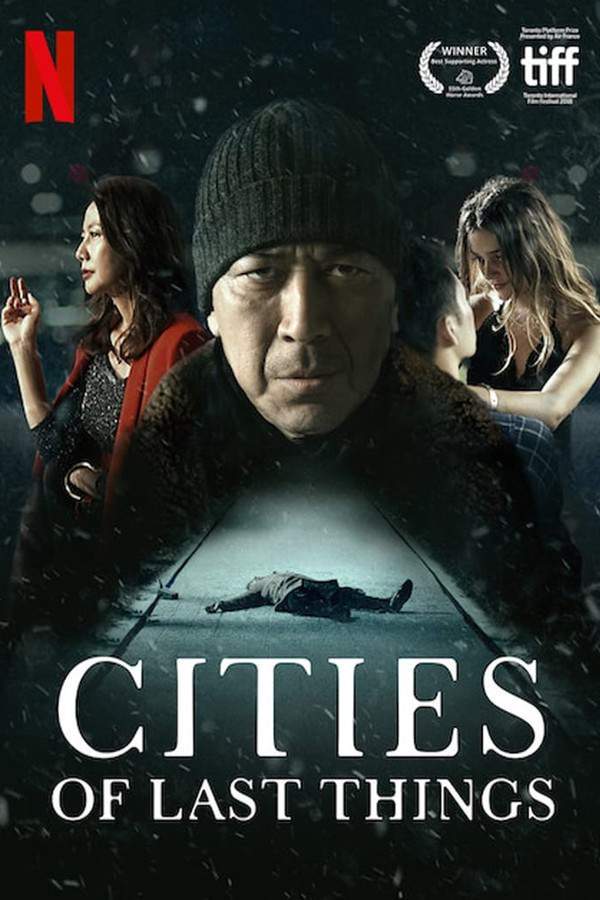
Epic Interwoven Timelines like in Cloud Atlas

Stories where past, present, and future collide across generations. Discover movies like Cloud Atlas that feature complex, multi-era narratives. If you enjoyed the intricate weaving of past, present, and future stories, you'll find similar epic-scale films here that connect characters and themes across time.
  • epic
  • thought-provoking
  • fateful
  • soulful
  • complex
  • melancholic
  • Tone: thought-provoking, bittersweet, epic
  • Pacing: variable, contemplative
Why these movies?

The story pattern: Stories in this thread unfold non-linearly, often following separate but thematically linked narratives. The journey involves piecing together the hidden connections between characters and events across different time periods, revealing a larger, unified message about consequence and legacy.

Why they belong together: These films are grouped by their ambitious narrative structure, which demands active viewing to uncover the threads that bind their disparate stories. They share a focus on grand themes like fate, cause and effect, and the enduring impact of human actions.

Soulful Dystopian Revolutions like in Cloud Atlas

Hopeful uprisings against oppressive systems, fueled by legacy and connection. Find movies similar to Cloud Atlas that blend dystopian settings with soulful themes of rebellion and legacy. If you were moved by Sonmi-451's story and the idea of hope transcending oppression, explore these spiritually charged science fiction dramas.

  • revolutionary
  • hopeful
  • soulful
  • dystopian
  • anxious
  • fateful
  • Tone: bittersweet, hopeful, revolutionary
  • Pacing: variable, tense
Why these movies?

The story pattern: The narrative follows a character or group awakening to the injustice of their world. Their rebellion is not just political but philosophical, often sparked by discovering a legacy from the past. The journey is one of profound sacrifice, aiming to plant a seed of hope for a distant future.

Why they belong together: These movies are united by a specific tone that merges the grimness of dystopia with a deeply hopeful, almost spiritual core. They focus on the idea that rebellion is an act of faith whose impact may only be realized generations later.

If you liked this

Movies Like Cloud Atlas

Similar movies to Cloud Atlas: the same genre, themes or kind of story. Each one comes with its own plot summary, timeline and ending explained.

Browse all movie summaries

Every angle

Cloud Atlas (2012) Explained: Plot, Timeline & Characters

Everything about Cloud Atlas in one place: what happens in the plot summary, the timeline in chronological order, the characters and meaning and a spoiler-free summary. What's After the Movie adds the cast, box office and post-credit scenes.

Coming soon on iOS and Android

The Plot Explained Movie Summary App

Plot summaries, endings explained and timelines on your phone. Catch up on any movie in minutes, save your favorites and never miss a twist again.

Be the first to know when we launch. Your email stays private, always.

Learn more about the app