Plot Explained Spoilers guaranteed!
Plot Explained

Browse by genre

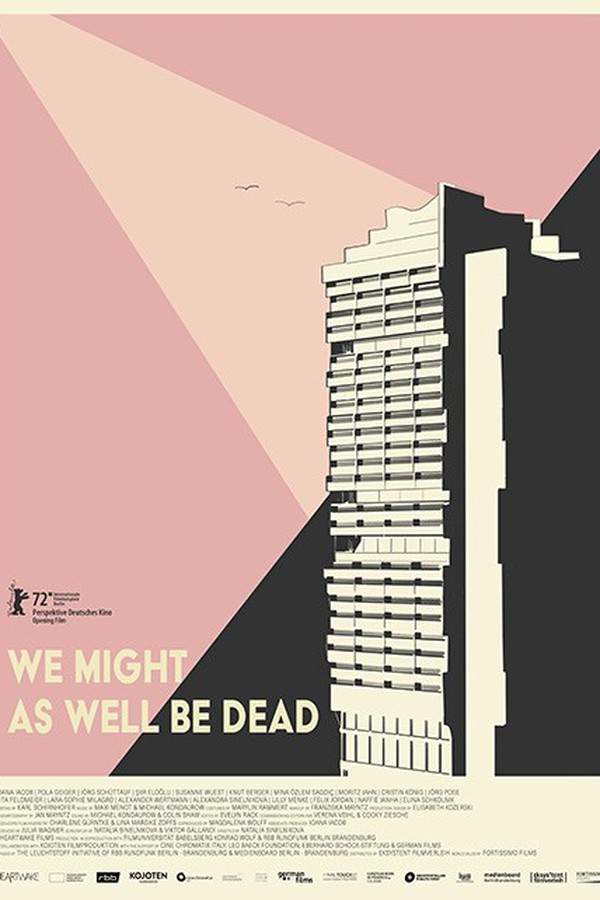
We Might As Well Be Dead (2023) movie poster

Plot Summary

We Might As Well Be Dead (2023) Plot Summary Explained

Release, runtime and language
2023 · 93 min · German
Echo score 83
Loading streaming availability…
Directed by
Natalia Sinelnikova
Starring
Ioana Iacob, Siir Eloglu, Knut Berger, Susanne Wuest, Felix Jordan, Jörg Schüttauf

A dog's disappearance throws a seemingly perfect high-rise community into chaos, triggering a disturbing spiral of paranoia and fear. Security officer Anna struggles to maintain order as the situation intensifies, forcing her to confront unsettling truths about her neighbors and the hidden anxieties within their utopian environment. The escalating crisis tests her resilience and challenges her perception of safety and trust.

On this page (5)
  1. 1 Where to watch
  2. 2 What happens: full plot
  3. 3 Plot questions answered
  4. 4 Movie threads
  5. 5 Every angle
Loading streaming availability…

Full plot summary · contains spoilers

What Happens in We Might As Well Be Dead: Full Plot Summary

The whole story of We Might As Well Be Dead (2023) explained, from the opening scene to the final frame: every key event, every twist and what it all adds up to. Read it as a quick recap before the sequel, to check a scene you missed, or to finally understand what really happened.

In a tranquil sanctuary surrounded by a lush, fenced forest, the inhabitants of a high-rise residential building enjoy a harmonious existence, filled with joyful communal celebrations and shared experiences. Among them is Anna Wilczyńska, a Polish woman who acts as the community's gatekeeper, broadcasting important announcements and weather updates through the public address system.

However, the peace of this idyllic setting shatters when Gerti's cherished dog goes mysteriously missing. The disappearance sets off a chain reaction of events that threatens to unravel their utopia. Anna's teenage daughter, Iris Anna Wilczyńska, begins to believe that her ill fortune has summoned a malevolent presence, attributing the missing dog to the cursed Evil Eye. In her desperation, Iris locks herself in the bathroom, convinced that her seclusion will protect others from any misfortune that might befall them. This self-imposed isolation only deepens her fears, as she is plagued by night terrors and further withdraws from the world around her.

Amidst Anna's efforts to calm her daughter and monitor a suspicious couple, she inadvertently becomes the target of paranoia, misidentified as a burglar and voyeur, thereby igniting fear throughout the complex. Meanwhile, despite Gerti's claims of discovering another dead animal that he insists is his missing dog, anxiety permeates the community, replacing their usual tranquility with suspicion and distrust.

As tensions rise, some residents start doubting Anna's ability to maintain their safety, spurred by Gerti's incessant rumors that the true culprit may be lurking among them. This culminates in the establishment of a neighborhood watch, which prescribes a new vetting process for all residents, a development that fills Anna with trepidation.

In a frantic attempt to regain control, Anna devises a plan to frame Wolfram Mantel, an aspiring poet who peddles his work in the elevator during the day. When this deceit is uncovered, he becomes the scapegoat, ultimately forced out of the building by the vigilant residents. However, Anna's fleeting sense of safety is again compromised, as the scrutiny of all residents continues.

The climax arrives when a fierce argument between Anna and Iris escalates into a loud altercation, resulting in their eviction from the complex. As they exit, they meet the Richards family, a familiar presence from earlier in their lives, once denied entry into the sanctuary, setting the scene for unforeseen developments in their intertwined fates.
Last updated: November 18, 2024 at 20:42

Was this helpful?

Plot questions answered

We Might As Well Be Dead Plot Explained: Your Questions Answered

The questions people ask most about We Might As Well Be Dead (2023): what happens in the confusing scenes, why the characters do what they do, the twists, hidden details and what the ending means. Each answer contains spoilers.

Q1

Why does Iris believe the Evil Eye caused the dog's disappearance?

Iris becomes convinced that her own bad luck has summoned a malevolent force. After the dog goes missing, she interprets this as evidence that the Evil Eye, a curse she believes she has attracted, is responsible for the tragedy. This belief stems from her teenage mindset and the psychological stress of the situation, leading her to lock herself in the bathroom to protect others from her supposed misfortune.

  • iris
  • evil eye
  • curse
  • missing dog
  • paranoia
Q2

Why does Anna become a target of suspicion in the building?

While managing the chaos surrounding the missing dog and her daughter's worsening mental state, Anna inadvertently attracts the attention of suspicious residents. She is misidentified as a burglar and voyeur, likely due to her constant movement through the building and her efforts to monitor a suspicious couple. This misidentification ignites fear among the inhabitants and marks her as a potential threat to the community's safety.

  • anna
  • suspicion
  • burglar
  • voyeur
  • paranoia
Q3

Why does Anna frame the poet Wolfram?

Desperate to regain control of the increasingly paranoid community and redirect suspicion away from herself, Anna devises a plan to frame Wolfram Mantel, an aspiring poet who sells his work in the elevator. She likely chose him as a scapegoat because he is a familiar outsider within the building, an easy target whose presence might already make some residents uncomfortable. When her deceit is uncovered, the residents turn on Wolfram instead, forcing him out as the culprit.

  • anna
  • wolfram
  • frame
  • poet
  • scapegoat
Q4

Why does the community establish a neighborhood watch with vetting?

After Gerti spreads rumors that the real culprit responsible for the missing dog might be hiding among the residents, trust within the community crumbles. The residents respond by forming a neighborhood watch and implementing a new vetting process for all inhabitants. This represents the shift from their utopian harmony to a paranoid surveillance state, where every neighbor becomes a potential threat.

  • neighborhood watch
  • vetting
  • trust
  • suspicion
  • gerti
Q5

What is Gerti's role in spreading paranoia?

Gerti serves as the primary catalyst for fear within the community. After his dog goes missing, he claims to have found another dead animal that he insists is his missing dog. More significantly, he spreads rumors that the true culprit is lurking among the residents. His persistent allegations fuel the growing suspicion and distrust that ultimately destroys the community's harmony.

  • gerti
  • rumors
  • missing dog
  • paranoia
  • community
Q6

Why are Anna and Iris evicted from the building?

Tensions reach a breaking point when Anna and Iris have a heated argument that escalates into a loud altercation in the common area. This public conflict, combined with the existing suspicion around Anna and her daughter's increasingly erratic behavior, leads the residents to evict both of them from the sanctuary they once called home.

  • anna
  • iris
  • eviction
  • argument
  • building
Q7

What is the significance of the Richards family at the end?

As Anna and Iris leave the building after their eviction, they encounter the Richards family, a group that was previously denied entry into the sanctuary earlier in their lives. This encounter suggests a cyclical nature to the community's exclusionary practices and hints that Anna and Iris may now share the same fate as those who were once turned away, reinforcing the film's themes of ostracization and the fragility of safety.

Foreshadowing: Earlier, the Richards family was denied entry into the sanctuary, establishing them as outsiders.

  • richards family
  • ending
  • eviction
  • outsiders
  • cycle
Q8

How does one missing dog trigger such widespread paranoia?

The missing dog serves as the catalyst that exposes the hidden anxieties beneath the community's utopian surface. What appears to be a perfect harmony is actually fragile, built on unspoken fears and unspoken tensions. The disappearance provides a tangible focus for these underlying insecurities, allowing suspicion and distrust to spread rapidly among residents who previously maintained a polite facade.

  • missing dog
  • paranoia
  • community
  • collapse
  • utopia
Q9

Why does Iris lock herself in the bathroom?

Iris isolates herself in the bathroom because she genuinely believes her bad luck has summoned the Evil Eye, a curse responsible for the dog's disappearance. She thinks that by secluding herself, she can protect others from the misfortune she believes she has brought upon the community. Her isolation deepens as she suffers from night terrors, further disconnecting her from reality and the world around her.

  • iris
  • bathroom
  • isolation
  • evil eye
  • night terrors
Q10

What causes the community's trust to collapse so quickly?

The community's trust collapses because their harmony was superficial, built on the absence of real conflict rather than genuine trust. Once the missing dog provides a concrete reason for suspicion, residents who had previously coexisted peacefully begin to question each other's motives and loyalties. Gerti's rumors accelerate this process, and the establishment of the neighborhood watch formalizes the new atmosphere of surveillance and mutual distrust.

  • trust
  • community
  • collapse
  • paranoia
  • suspicion

Movie threads

More Movies Like We Might As Well Be Dead, by Mood & Story

Curated lists built around what makes We Might As Well Be Dead tick: the same mood, the same kind of story or the same emotional payoff. Each list explains why these movies belong together.

Movies about collapsing utopias like We Might As Well Be Dead

Stories where seemingly perfect communities crack under pressure and fear. If you liked the social breakdown in We Might As Well Be Dead, explore these other movies where seemingly perfect communities unravel. These films often feature hidden anxieties, social paranoia, and a tense examination of what happens when utopian ideals are tested by fear and suspicion.

  • social unease
  • claustrophobic
  • paranoid
  • suspenseful
  • mistrustful
  • dystopian
  • Tone: tense, unsettling
  • Pacing: steady, methodical
Why these movies?

The story pattern: Narratives in this thread typically begin with a stable, orderly community that is disrupted by an incident or discovery. This triggers a chain reaction of doubt, leading to scapegoating, the rise of mob mentality, and the exposure of the system's underlying oppressive or fragile nature. The journey is one of collective disillusionment.

Why they belong together: These films are grouped together because they share a core premise of a constructed society failing. They create a specific mood of social unease and claustrophobia, using a contained setting to explore themes of control, conformity, and the fear of the 'other' within a group.

Movies with creeping societal paranoia like We Might As Well Be Dead

Films where a creeping sense of distrust infects a group from within. Fans of the anxious, mistrustful atmosphere in We Might As Well Be Dead will enjoy these similar stories. These films feature a steady build of tension as collective fear takes hold, exploring themes of scapegoating, community breakdown, and the psychological distress caused by pervasive suspicion.

  • paranoid
  • anxious
  • suspenseful
  • unsettling
  • mistrustful
  • psychological tension
  • Tone: tense, anxious
  • Pacing: steady, slow burn
Why these movies?

The story pattern: The narrative pattern involves a catalyst that introduces doubt into a social group. This doubt festers and multiplies, leading to irrational behavior, the search for a scapegoat, and the breakdown of rational discourse. The plot is driven by interpersonal suspicion rather than external action, focusing on the psychological unraveling of the community.

Why they belong together: These movies are united by their primary focus on the emotion of paranoia as a collective experience. They share a similar tone of tension and a steady pacing that allows the fear to metastasize naturally. The viewing experience is consistently unsettling and psychologically engaging.

Every angle

We Might As Well Be Dead (2023) Explained: Plot, Timeline & Characters

Everything about We Might As Well Be Dead in one place: what happens in the plot summary, the timeline in chronological order, the characters and meaning and a spoiler-free summary. What's After the Movie adds the cast, box office and post-credit scenes.

Coming soon on iOS and Android

The Plot Explained Movie Summary App

Plot summaries, endings explained and timelines on your phone. Catch up on any movie in minutes, save your favorites and never miss a twist again.

Be the first to know when we launch. Your email stays private, always.

Learn more about the app