
















Plot Explained Spoilers guaranteed!
Plot Explained

Browse by genre

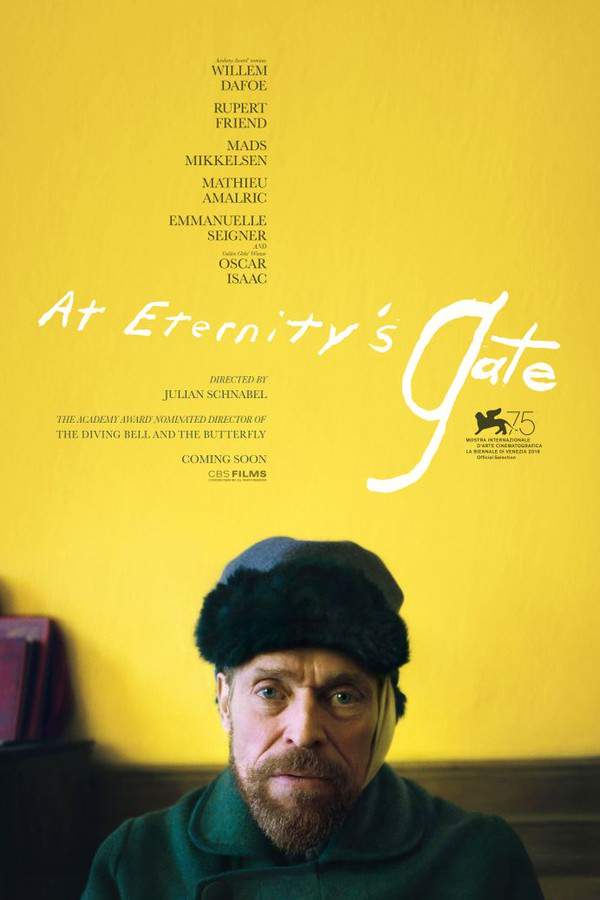
At Eternity's Gate (2018) movie poster

Ending Explained

At Eternity's Gate (2018) Ending Explained – Final Scene & Meaning

Release, runtime and language
2018 · 111 min · English
Echo score 73
JustWatch #5,231 68
Directed by
Julian Schnabel
Starring
Mads Mikkelsen, Willem Dafoe, Oscar Isaac, Amira Casar, Mathieu Amalric, Emmanuelle Seigner

This film offers a glimpse into the life of Vincent van Gogh, portrayed by Willem Dafoe, during a pivotal period in his life. It explores his struggles with mental health, his feelings of isolation, and the intense passion that drove his artistic creations. Through a cinematic portrayal, the film reveals the turbulent emotions and experiences that shaped some of his most recognizable works, offering a profound look at the mind of a brilliant and troubled artist.

On this page (7)
  1. 1 Where to watch
  2. 2 What happens at the end
  3. 3 Final events in order
  4. 4 Ending questions answered
  5. 5 Movie threads
  6. 6 Movies like At Eternity's Gate
  7. 7 Every angle

Where to watch

Where to Watch At Eternity's Gate (2018)

Where can you watch At Eternity's Gate? Stream, rent or buy it in the US, including on Amazon Prime Video, Kanopy and Amazon MX Player: current JustWatch availability with up-to-date prices.

Streaming availability powered by JustWatch

Ending explained · contains spoilers

What Happens at the End of At Eternity's Gate?

How At Eternity's Gate (2018) ends, what the final scene means, which earlier moments set it up and how to read the ending if the film leaves it open. The full ending explained, with every spoiler.

In the film’s closing moments, the most provocative departure from history occurs: the suggestion that Vincent Van Gogh may not have taken his own life but was instead murdered. This idea challenges the traditional understanding of Van Gogh’s death, which is widely believed to have been a suicide caused by his mental struggles. Julian Schnabel, the director, uses this alternative theory not just as a plot twist but as a way to emphasize his view of Van Gogh’s life and art. To Schnabel, Vincent’s true work was about liberation—freeing himself and nature from mental chains through his paintings. The film posits that Van Gogh was at peace in those final scenes, immersed in the natural beauty that he saw and felt deeply connected to. He was not a figure consumed by madness but someone who found a rare clarity and serenity in his relationship with nature and art.

Schnabel’s artistic choice to imply that Vincent might have been murdered serves as a broader metaphor. It suggests that perhaps Van Gogh’s suffering was misunderstood or misrepresented, and that his life and death reflect a larger commentary on how society perceives mental illness and artistic genius. Ultimately, the film champions the idea that Van Gogh’s inner world was a sacred space of clarity and purpose, and that his true essence was not defined by the despair often associated with his name. In the end, Vincent is depicted as a man at the threshold of eternity, peaceful and fulfilled, having transcended the pain that once haunted him. The film leaves viewers with a profound reflection: that in art, and in life, there is a form of eternal peace—not in the pain, but in the liberation and understanding that art can bring.

Last updated: June 25, 2025 at 08:59

Was this helpful?

The last 4 events

How At Eternity's Gate Ends: The Final Events in Order

The last events of At Eternity's Gate (2018) in chronological order, the run-up to the ending explained above. The complete timeline has all 15 events, scene by scene.

Open the full timeline
  1. Emotional Departure

    Gauguin's swift departure devastates Van Gogh, who seeks solace in increasingly blue landscapes. This change symbolizes Van Gogh's deepening emotional instability and artistic isolation.

  2. Commitment to Asylum

    Facing severe mental health struggles, Van Gogh visits a doctor who suggests a voluntary commitment to an asylum. This pivotal moment highlights the intersection of his artistry and mental anguish.

    Where
    Asylum
  3. Conversations in the Asylum

    In the asylum, Van Gogh engages in deep conversations with fellow patients and a priest, emphasizing his belief that his art is divinely inspired. This interaction reveals his inner conflict regarding acceptance.

    Where
    Asylum
  4. Tragic Conclusion

    Tragedy strikes as boys vandalize Van Gogh's paintings, culminating in a devastating gunshot wound that leads to his death. In a somber closing, his body is laid to rest amidst his beloved artwork, finally gaining the recognition he sought.

Ending questions answered

At Eternity's Gate Ending: Your Questions Answered

The questions people ask most about the ending of At Eternity's Gate (2018): what the final scene means, how the twist works, what happens to each character and how to read the ending. Each answer contains spoilers.

Q1

Why does the film suggest Van Gogh was murdered instead of committing suicide?

Director Julian Schnabel deliberately proposes the murder theory as a creative interpretation rather than historical fact. He uses this alternative theory to challenge the traditional narrative of Van Gogh's death and to emphasize his view that Vincent's true legacy was about liberation through art. The film suggests that perhaps his suffering was misunderstood or misrepresented by history, offering a more compassionate interpretation of his life and death.

  • van gogh death
  • murdered
  • suicide
  • julian schnabel interpretation
Q2

Was Van Gogh at peace in his final moments in the film?

Yes, the film depicts Van Gogh as remarkably peaceful in his final scenes. Rather than showing him as consumed by madness or despair, the ending portrays him as immersed in the natural beauty he deeply connected with. He is shown at peace, having found clarity and serenity in his relationship with nature and art, transcending the pain that haunted him throughout his life.

  • van gogh peace
  • final moments
  • nature
  • serenity
Q3

What does the film say about Van Gogh's mental illness?

The film challenges the conventional portrayal of Van Gogh as defined by mental illness and despair. Instead, it presents his inner world as a sacred space of clarity and purpose. Schnabel emphasizes that Vincent found rare moments of serenity and understanding through his art, suggesting his true essence was not defined by the tragedy often associated with his name but by his profound artistic vision and connection to nature.

  • mental illness
  • sanity
  • art
  • clarity
  • perception
Q4

How does the ending reinterpret the story of Van Gogh's death?

The ending fundamentally shifts the narrative around Van Gogh's death from one of personal despair and self-inflicted death to an act of external violence. By suggesting he may have been murdered, the film implies his suffering was potentially misunderstood or misrepresented, offering an alternative perspective on how history has characterized both his life and death.

  • death reinterpretation
  • history
  • suicide
  • murder theory
Q5

What happens to Van Gogh's art after his death in the film?

While the ending focuses on Vincent's peaceful final moments, the meta notes confirm the film concludes with a posthumous display of his work. This reflects the tragic irony of his life, being unrecognized during his lifetime but ultimately achieving the artistic recognition he deserved.

  • posthumous recognition
  • art exhibit
  • legacy
Q6

What is the metaphor behind suggesting Van Gogh was murdered?

The murder theory serves as a broader metaphor about how society perceives mental illness and artistic genius. Schnabel uses this artistic choice to suggest that Van Gogh's suffering was perhaps misrepresented throughout history. It implies that the narrative of suicide may have overshadowed his true legacy of finding liberation and peace through art, and that his story has been shaped by others' interpretations rather than his own reality.

  • metaphor
  • society
  • mental illness
  • artistic genius
  • interpretation
Q7

What does the ending say about eternal peace in art?

The film concludes with the idea that in art and life, there is a form of eternal peace, not found in pain, but in liberation and understanding that art can bring. Van Gogh is depicted as having transcended his suffering, reaching a state of peace at the threshold of eternity. This final message champions the transformative power of art as a means of finding meaning beyond personal tragedy.

  • eternal peace
  • art
  • liberation
  • transcendence
  • meaning
Q8

Why does the film depart from the historical truth about Van Gogh's death?

Schnabel uses this departure from history as a deliberate artistic choice to reshape how viewers understand Van Gogh's legacy. Rather than simply documenting his life, the film aims to offer a new perspective that focuses on Vincent's artistic philosophy and his journey toward inner peace. The departure allows the film to challenge the tragic narrative that has defined his story and instead emphasize his profound connection to nature and art.

  • historical accuracy
  • artistic license
  • julian schnabel
  • biography

Movie threads

More Movies Like At Eternity's Gate, by Mood & Story

Curated lists built around what makes At Eternity's Gate tick: the same mood, the same kind of story or the same emotional payoff. Each list explains why these movies belong together.

Movies about Artistic Obsession like At Eternity's Gate

Films that delve into the passionate and painful lives of brilliant creators. This section features films similar to At Eternity's Gate, showcasing stories about tormented artists and their creative struggle. If you enjoyed watching a portrait of Vincent van Gogh's passionate yet painful life, you'll find other movies that explore the connection between genius, mental anguish, and the relentless pursuit of art.

  • passionate
  • turbulent
  • haunting
  • despairing
  • contemplative
  • fragile
  • Tone: melancholic, intense
  • Pacing: slow, contemplative
Why these movies?

The story pattern: Stories in this thread typically follow a brilliant but troubled artist as they grapple with their craft, societal rejection, and inner demons. The narrative often centers on the creative process as both a salvation and a source of torment, culminating in a legacy born from personal strife.

Why they belong together: These films are grouped together because they share a deep focus on the psychology of creation, blending themes of mental illness, obsession, and the bittersweet nature of leaving a lasting artistic mark on the world.
Slow Burn Psychological Dramas like At Eternity's Gate

Patient, immersive films that explore deep sadness and psychological fragility. Discover movies with a similar slow pace and melancholic tone to At Eternity's Gate. If you liked the film's immersive and haunting portrayal of Vincent van Gogh's mind, you'll appreciate these other character studies that use a slow burn approach to explore heavy emotions and psychological depth.

  • melancholic
  • contemplative
  • isolated
  • haunting
  • despairing
  • psychological
  • Tone: melancholic, haunting
  • Pacing: slow, immersive
Why these movies?

The story pattern: The narrative pattern is less about plot and more about emotional and psychological immersion. These films often unfold through long, contemplative scenes, allowing the audience to intimately experience a character's isolation, despair, or fragile mental state in a deeply felt way.

Why they belong together: Movies are grouped here based on their shared slow pacing, melancholic tone, and high emotional intensity. They prioritize mood and psychological depth over fast-paced action, resulting in a heavy, introspective vibe.

If you liked this

Movies Like At Eternity's Gate

Similar movies to At Eternity's Gate: the same genre, themes or kind of story. Each one comes with its own plot summary, timeline and ending explained.

Browse all movie summaries

Every angle

At Eternity's Gate (2018) Explained: Plot, Ending, Timeline & Characters

Everything about At Eternity's Gate in one place: what happens in the plot summary, the timeline in chronological order, the characters and meaning, the ending explained and a spoiler-free summary. What's After the Movie adds the cast, box office and post-credit scenes.

Coming soon on iOS and Android

The Plot Explained Movie Summary App

Plot summaries, endings explained and timelines on your phone. Catch up on any movie in minutes, save your favorites and never miss a twist again.

Be the first to know when we launch. Your email stays private, always.

Learn more about the app