Plot Explained Spoilers guaranteed!
Plot Explained

Browse by genre

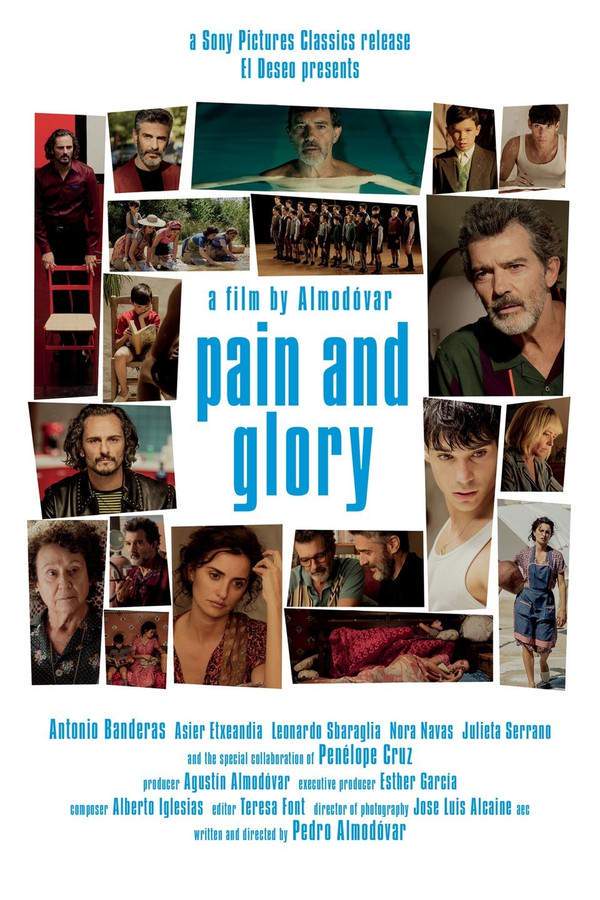
Pain and Glory (2019) movie poster

Plot Summary

Pain and Glory (2019) Plot Summary Explained

Release, runtime and language
2019 · 113 min · Spanish
Echo score 89
Directed by
Pedro Almodóvar
Starring
Antonio Banderas, Julieta Serrano, Penélope Cruz, Agustín Almodóvar, Asier Etxeandia, Asier Flores
Budget
$10.8M

As a filmmaker confronts failing health, long-buried memories resurface, transporting him back to formative years. He recalls childhood summers in 1960s Valencia, a passionate first love in 1980s Madrid, and the subsequent heartbreak. Driven to write, Salvador seeks comfort and understanding, exploring themes of creativity, loss, and the enduring power of memory as he searches for meaning and connection.

On this page (7)
  1. 1 Where to watch
  2. 2 What happens: full plot
  3. 3 Plot questions answered
  4. 4 Movie threads
  5. 5 Movies like Pain and Glory
  6. 6 Categories
  7. 7 Every angle

Where to watch

Where to Watch Pain and Glory (2019)

Where can you watch Pain and Glory? Stream, rent or buy it in the US, including on Amazon Video, Apple TV Store and Fandango At Home: current JustWatch availability with up-to-date prices.

Streaming availability powered by JustWatch

Full plot summary · contains spoilers

What Happens in Pain and Glory: Full Plot Summary

The whole story of Pain and Glory (2019) explained, from the opening scene to the final frame: every key event, every twist and what it all adds up to. Read it as a quick recap before the sequel, to check a scene you missed, or to finally understand what really happened.

"Pain and Glory" intricately explores the life of a film director, Salvador Mallo, portrayed by the talented Antonio Banderas, through two compelling narrative arcs. On one side, we meet Salva as a melancholic artist in his 50s, whose past successes now contrast starkly with his current solitude, affliction, and lack of creative spark. In this present-day narrative, we witness his struggles with health issues and emotional despair. Conversely, we are transported back to his youth, where an affectionate bond with his mother, Jacinta, depicted by Penélope Cruz, unfolds. In her unwavering dedication, she goes to great lengths to provide him with education and an escape from the grips of poverty.

The film adeptly alternates between these two timelines, presenting vivid glimpses of Salva's life. We see him excel as a young choir soloist in a Catholic school, while in the present, he rekindles a connection with Alberto Crespo, a former actor who was once pivotal in his journey. After a staggering 32 years of silence, their reunion leads Salva to discover heroin, which he views as a relief for his chronic migraines and back pain. During one particularly vulnerable moment, while in a drug-induced stupor, Salva’s computer yields "Adicción" - a candid narrative revealing his poignant three-year romance with Marcelo, another heroin user.

Simultaneously, in his younger years, Salva’s family relocates to a new village in search of a brighter future, yet they find themselves living in a cave with dismal conditions. At just nine years old, he forges a friendship with Eduardo, a village laborer in his twenties, who agrees to teach Salva how to read and write in exchange for his help on the cave’s wall.

In the present, tensions arise when Salva inadvertently offends Alberto by criticizing his acting abilities. In a bid to mend their fractured relationship, he offers him the rights to "Adicción." This gesture inspires Alberto to create a theatrical performance that showcases Salva's monologue with breathtaking emotional depth. One fateful night, an audience member becomes visibly affected — revealing himself to be Federico, the Marcelo from "Adicción," and the love of Salva's life. Their reconnection leads to a powerful night of reminiscing, allowing Salva to contemplate giving up his recent habit.

This emotional catharsis grants Salva a sense of relief from his depression; however, he continues to grapple with chronic back pain and a persistent choking sensation that raises concerns for Mercedes, his capable assistant and perhaps secret love. Additionally, the wounds of losing his beloved mother linger heavily on his heart, as he reflects on their complex relationship amid his life’s triumphs.

As the story progresses, Salva and Eduardo strengthen their bond, culminating in a moment where Eduardo captures a portrait of his young friend. In a poignant scene, after finishing a tile wall for Jacinta, Eduardo exposes himself to wash, leading to a profound moment that causes young Salva to faint from the overwhelming heat and emotions.

Ultimately, these two narratives converge as Salva strives to reclaim his life and seek out medical help. He endures a procedure to remove a mass in his throat that signals a shift towards recovery. In a twist of fate, Mercedes uncovers an art exhibit showcasing the portrait of young Salva, leading him to purchase the piece adorned with a heartfelt inscription that solidifies the connection they once shared.

This revelation serves as a pivotal moment for Salva, which ignites a new wave of inspiration, spurring him to commence his new project titled "The First Desire." In a captivating conclusion, we recognize that the entire storyline set in the '50s is not merely a journey into Salva’s past, but instead offers a deep exploration into the future — culminating in the creation of his film, where he achieves closure through the cherished memories of his childhood and his bond with Eduardo.

Last updated: November 16, 2024 at 14:05

Was this helpful?

Plot questions answered

Pain and Glory Plot Explained: Your Questions Answered

The questions people ask most about Pain and Glory (2019): what happens in the confusing scenes, why the characters do what they do, the twists, hidden details and what the ending means. Each answer contains spoilers.

Q1

Why does Salvador start using heroin?

Salvador begins using heroin after reconnecting with Alberto Crespo, a former actor from his past. After 32 years of separation, Alberto introduces him to heroin, which Salvador views as relief for his chronic migraines and back pain. This marks the beginning of his descent into addiction during a period of creative stagnation and physical suffering.

  • salvador mallo
  • heroin
  • addiction
  • alberto crespo
  • chronic pain
Q2

Who is Federico and how is he connected to Salvador?

Federico is revealed to be Marcelo, the love of Salvador's life with whom he had a three-year romance in the 1980s Madrid. Marcelo was also a heroin user, and their relationship ended heartbreak. When Salvador writes 'Adicción' about this relationship, Federico attends the theatrical adaptation and reveals his identity to Salvador, allowing them to reconnect after decades apart.

  • federico
  • marcelo
  • addiccion
  • love story
  • past romance
Q3

What is the nature of Salvador's relationship with Eduardo?

At nine years old, Salvador forms a profound friendship with Eduardo, a village laborer in his twenties who teaches him to read and write in exchange for help on the cave wall. Their bond is mentorship-based but evolves into something emotionally significant. Eduardo is the one who captures the portrait of young Salvador that becomes central to the film's emotional resolution.

Foreshadowing: The film later reveals that Eduardo's portrait of young Salvador becomes a pivotal piece that Salvador purchases at an art exhibit, providing him with closure.

  • eduardo
  • childhood friend
  • cave
  • mentorship
  • portrait
Q4

What is 'Adicción' and why is it important?

'Adicción' is a narrative that Salvador writes while under the influence of heroin. It reveals his three-year romance with Marcelo, another heroin user. The story becomes significant because it leads to a theatrical adaptation by Alberto, which in turn brings Marcelo back into Salvador's life. This cathartic process helps Salvador confront his past and begin healing.

  • addiccion
  • narrative
  • marcelo
  • heroin
  • confession
Q5

What happens in the cave scene with Eduardo?

After Eduardo finishes a tile wall for Salvador's mother Jacinta, he exposes himself to wash in the cave's heat. This moment creates overwhelming emotions in young Salvador, causing him to faint. The scene represents a formative, confusing sexual awakening for the nine-year-old, marking a significant moment in his emotional development.

  • cave
  • eduardo
  • childhood
  • emotional awakening
  • heat
Q6

Why does Salvador undergo surgery for a throat mass?

Salvador undergoes a procedure to remove a mass in his throat, which serves as a turning point in his recovery journey. This medical intervention represents his decision to take control of his declining health and begin healing. The procedure signals his shift away from self-destructive behavior and toward reclaiming his life.

  • throat mass
  • surgery
  • health
  • recovery
  • medical procedure
Q7

What is the significance of Salvador buying the portrait?

Mercedes discovers an art exhibit featuring Eduardo's portrait of young Salvador and tells Salvador about it. Moved by this discovery, Salvador purchases the piece, which bears a heartfelt inscription. This moment represents a tangible connection to his past and Eduardo, providing him with emotional closure and a sense of wholeness.

  • portrait
  • art exhibit
  • mercedes
  • eduardo
  • closure
Q8

What is 'The First Desire' and what does it represent?

'The First Desire' is Salvador's new project that he begins working on after experiencing emotional healing. The film reveals that the entire childhood storyline set in the 1950s is not merely memory but rather Salvador's film within the film, the story he is creating. This represents his creative revival and the closure he achieves by transforming his cherished memories into art.

  • the first desire
  • new project
  • creative revival
  • film within film
  • closure
Q9

How do the present-day and childhood timelines connect?

The film alternates between Salvador's present-day struggles with health, addiction, and grief, and his childhood memories of poverty, his mother's sacrifice, and his friendship with Eduardo. The two timelines converge when it becomes clear that the childhood narrative is being transformed by Salvador into his film 'The First Desire', showing that his past is not just memory but the source of his artistic inspiration.

  • timelines
  • childhood
  • present day
  • memory
  • film project
Q10

What was Salvador's relationship with his mother like?

Salvador shares a deep, complex bond with his mother Jacinta, who dedicated herself to providing him with education and an escape from poverty. In his flashbacks, he remembers her working tirelessly, even moving the family to a new village in search of better opportunities. The grief of losing her weighs heavily on Salvador throughout the film, contributing to his depression.

  • jacinta
  • mother
  • childhood
  • grief
  • sacrifice
Q11

Why does Salvador offer the rights to 'Adicción' to Alberto?

Salvador inadvertently offends Alberto by criticizing his acting abilities. To mend their fractured relationship after 32 years of separation, Salvador offers him the rights to 'Adicción'. This gesture not only repairs their friendship but also inspires Alberto to create the theatrical performance that brings Marcelo back into Salvador's life.

  • alberto crespo
  • addiccion
  • rights
  • friendship
  • reconciliation

Movie threads

More Movies Like Pain and Glory, by Mood & Story

Curated lists built around what makes Pain and Glory tick: the same mood, the same kind of story or the same emotional payoff. Each list explains why these movies belong together.

Autobiographical artist stories like Pain and Glory

Intimate films exploring a creator's turbulent relationship with their craft and memories. If you enjoyed the reflective, personal journey in Pain and Glory, you might like these other movies about artists. This list features similar introspective dramas that explore the creative process, memory, and the life events that shape an artist's work, often with a melancholic and intimate tone.

  • autobiographical
  • introspective
  • melancholic
  • nostalgic
  • cathartic
  • intimate
  • Tone: melancholic, reflective, intimate
  • Pacing: slow, contemplative
Why these movies?

The story pattern: Narratives in this thread are often non-linear, moving between pivotal moments from the past and a present-day struggle with creative block, fame, or personal crisis. The plot is driven by reflection and memory, culminating in a deeper understanding or a bittersweet reconciliation with the past.

Why they belong together: Movies are grouped here because they share a deeply personal, often melancholic, exploration of an artist's life. They prioritize emotional depth and character study over plot, using a slow, reflective pace to examine the roots of creativity and the weight of memory.

Bittersweet memory journeys like in Pain and Glory

Slow, emotional voyages through the past that lead to a poignant present. Find movies similar to Pain and Glory that explore themes of memory and nostalgia. These films often feature a slow pace and a heavy emotional weight, using flashbacks to piece together a character's life, leading to a cathartic and bittersweet ending much like the journey in Pain and Glory.

  • nostalgic
  • melancholic
  • bittersweet
  • reflective
  • cathartic
  • somber
  • Tone: melancholic, nostalgic, bittersweet
  • Pacing: slow, deliberate
Why these movies?

The story pattern: The narrative structure alternates between timelines, using memories not just as flashbacks but as active components of the present-day character's emotional state. The conflict is often internal—a struggle with regret, understanding, or acceptance—resolved through the act of remembering itself.

Why they belong together: These films are connected by their use of memory as a central narrative device, a melancholic and reflective tone, and a deliberate pacing that allows the emotional weight of the past to fully resonate. They consistently conclude with a bittersweet sense of closure.

If you liked this

Movies Like Pain and Glory

Similar movies to Pain and Glory: the same genre, themes or kind of story. Each one comes with its own plot summary, timeline and ending explained.

Browse all movie summaries

Categories

Movie Lists Featuring Pain and Glory

Pain and Glory appears in these hand-built movie categories. Each one groups movies by a specific mood, theme or story type, with their plot summaries and endings explained.

View all movie categories

Every angle

Pain and Glory (2019) Explained: Plot, Timeline & Characters

Everything about Pain and Glory in one place: what happens in the plot summary, the timeline in chronological order, the characters and meaning and a spoiler-free summary. What's After the Movie adds the cast, box office and post-credit scenes.

Coming soon on iOS and Android

The Plot Explained Movie Summary App

Plot summaries, endings explained and timelines on your phone. Catch up on any movie in minutes, save your favorites and never miss a twist again.

Be the first to know when we launch. Your email stays private, always.

Learn more about the app