Plot Explained Spoilers guaranteed!
Plot Explained

Browse by genre

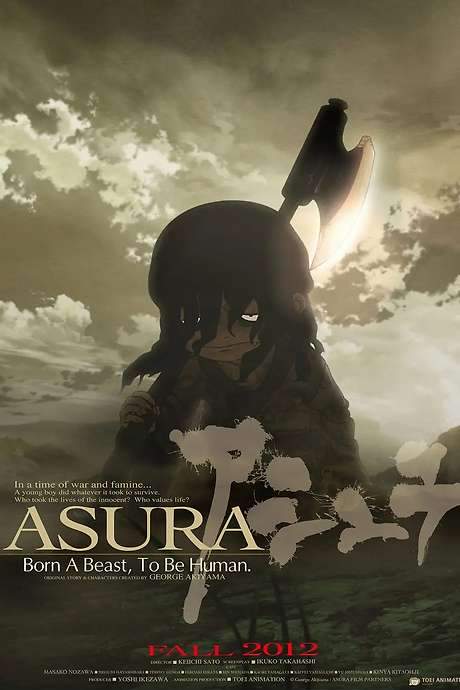
Asura (2012) movie poster

Timeline

Asura (2012) Timeline Explained – Every Event in Order

Release, runtime and language
2012 · 76 mins · Japanese
Loading streaming availability…
Directed by
Keiichi Sato
Starring
Megumi Hayashibara, Bin Shimada, Taiten Kusunoki, Hiroaki Hirata, Masako Nozawa, Kappei Yamaguchi

Abandoned in the harsh wilderness outside Kyoto, a feral orphan struggles to survive, driven by instinct and rage. His existence changes when he encounters civilization, forcing him to confront his primal nature and learn to control the beast within, while seeking a place in a world he doesn't understand.

On this page (5)
  1. 1 Where to watch
  2. 2 Events in order (13)
  3. 3 Timeline questions answered
  4. 4 Movie threads
  5. 5 Every angle
Loading streaming availability…

13 events in order · contains spoilers

Asura Timeline: Events in Chronological Order

Every key event of Asura (2012) in order, scene by scene, with when and where it takes place. Use it to untangle flashbacks, time jumps and parallel storylines, to refresh your memory before the sequel or to find the exact scene you are thinking of.

  1. Birth amid famine

    In a famine-ravaged Kyoto, a mother living in poverty gives birth to a child who is soon abandoned. The harsh conditions of mid-15th-century Japan set the scene for a brutal journey. The story follows a boy who is left to survive in a barren world.

    When
    mid-1450s
    Where
    Kyoto, Japan
  2. Found by a Buddhist monk

    Eight years after his birth, the boy roams the countryside armed with an axe. He is discovered by a Buddhist monk who defeats him and chooses to name him Asura. The monk provides shelter, teaches him a Buddhist chant, hoping he would understand it someday, and then leaves him at the roadside.

    When
    childhood, a few years after birth
    Where
    roadside in the countryside
  3. First violent encounter with Shichiro's group

    Asura later encounters Shichiro and his four companions carrying a log toward a village. He is repelled by Shichiro when he attacks them, and later, in a village, confronts local boys who demand payment. After rocks are thrown and he is struck, Asura kills the leader in a fit of rage.

    When
    shortly after meeting the monk
    Where
    road and nearby village
  4. Pursued by Jito; fall from a cliff

    Jito, the father of the boy who was killed, pursues Asura after the confrontation. Asura falls off a cliff onto a pile of corpses, narrowly escaping capture. The fall marks a turning point in his exile from society.

    When
    soon after the previous event
    Where
    edge of a cliff near the village
  5. Taken in by Wakasa

    Wakasa, a girl from the village, finds Asura and offers him shelter in an abandoned hut. She gives him food and teaches him how to speak, gradually forming a deep attachment. He becomes drawn to her, often following her into the village.

    When
    soon after the fall
    Where
    abandoned hut near the village
  6. Jealousy and expulsion

    One rainy night, Asura sees Wakasa with Shichiro discussing leaving the village. Consumed by jealousy, he attacks Shichiro with his axe. Wakasa, horrified by his actions, orders him to leave and he wanders back into solitude.

    When
    one rainy night
    Where
    village outskirts
  7. Mudslide destroys the village; monk tests him

    Shortly after his departure, a massive mudslide devastates the village, killing many. The monk reappears and speaks to Asura in the human tongue learned from Wakasa. The monk cuts off his own arm to provoke Asura to eat it, but Asura misreads the gesture and runs away.

    When
    after departure, during disaster
    Where
    village site
  8. Scarcity and rescue attempt

    Famine worsens and Wakasa's father is urged to sell her, but refuses. Shichiro brings what food he can, while Wakasa and her father lie dying at home. Asura kills one of Jito's horses to feed them, though Wakasa refuses, thinking it is human flesh.

    When
    during famine
    Where
    Wakasa's home
  9. Jito's chase and the bridge

    Seeing Wakasa's worsening condition, Asura kills Jito's horse to provide meat, provoking a chase with villagers who brandish torches. He escapes their pursuit and is driven onto a rope bridge.

    When
    during pursuit
    Where
    near Wakasa's home and bridge
  10. Bridge set ablaze; fall into river

    Villagers burn the rope bridge to trap Asura, sending him plunging into the river far below. He survives the fall and disappears into the cold water. The community's fear of him hardens into a myth.

    When
    during chase
    Where
    rope bridge over river
  11. Winter and Wakasa's death carried away

    Winter comes with snow and silence; Shichiro and village boys carry Wakasa's body on a cart, unknowingly passing Asura who has survived. The barren landscape gives way to a grim quiet as the season holds.

    When
    winter following events
    Where
    outskirts of village, through snowy countryside
  12. Redemption as monk; carving Buddha

    Some time later, the monk's voice speaks about the beauty of life as Asura, now grown into an adult and a redeemed Buddhist monk. He carves a wooden Buddha statue, marking his transformation and spiritual path. The scene hints at a hopeful future beyond his tormented past.

    When
    years later, adulthood
    Where
    monastery or temple
  13. Post-credits: fertile land and city

    In a reflective post-credits scene, the land is shown rich and fertile again as white doves circle a city. The cycle of famine and war has given way to peace and renewal.

    When
    post-credits
    Where
    city

Last updated: October 09, 2025 at 16:09

Was this helpful?

Timeline questions answered

Asura Timeline Explained: Your Questions Answered

When does it happen, and why in that order? The questions people ask about the chronology of Asura (2012): time jumps, flashbacks, cause and effect between scenes and the correct order of events, each answered with spoilers.

Q1

Why does the Buddhist monk cut off his own arm?

The monk cuts off his own arm as a desperate test to push Asura toward humanity. Seeing that Asura has reverted to animalistic survival instincts after being expelled by Wakasa, the monk hopes the shocking act of self-sacrifice will provoke Asura to eat the flesh and thus accept a human bond. However, Asura misreads the gesture as madness and runs away in confusion, missing the monk's intended lesson.

Foreshadowing: Earlier, the monk taught Asura a Buddhist chant about compassion, hinting at his belief that sacrifice can awaken the human spirit.

  • monk
  • arm
  • sacrifice
  • test
  • humanity
  • Buddhist
Q2

Why do the villagers pursue Asura so aggressively after he kills Jito's horse?

The villagers were already hostile toward Asura ever since he killed Jito's son earlier. When Asura kills Jito's horse to feed the dying Wakasa and her father, it provides the villagers with justification to pursue him as a dangerous outlaw. Jito had already placed a bounty on the boy, and the community views him as a feral threat that must be eliminated.

Foreshadowing: Asura's earlier murder of the village boy leader established him as a target for the community.

  • village
  • chase
  • horse
  • Jito
  • bounty
Q3

Why does Asura kill the village boy leader?

Asura kills the village boy in a moment of uncontrolled rage. When the village boys block his path and throw rocks at him, being struck triggers his primal instinct. Unlike a typical child, Asura has no experience with restraint or compassion, so he reacts with lethal violence, a direct consequence of his feral upbringing.

Foreshadowing: Earlier, the Buddhist monk named him Asura after a violent deity, foreshadowing his capacity for destruction.

  • killing
  • village boy
  • rage
  • violence
  • Jito's son
Q4

What happens to Wakasa? Does she die?

Yes, Wakasa dies. In the winter following the bridge incident, Asura watches from hiding as Shichiro and the village boys carry Wakasa's dead body on a cart through the snowy countryside. She died from the famine and hardship that plagued the village, and her death represents the loss of the only person who showed Asura genuine compassion.

Foreshadowing: Earlier scenes showed Wakasa and her father lying dying from starvation, with Asura's failed attempt to help by providing horse meat.

  • Wakasa
  • death
  • body
  • cart
  • winter
  • famine
Q5

Why does the Buddhist monk leave Asura after naming him?

The monk leaves Asura at the roadside after teaching him a Buddhist chant, believing he has done what he can for the boy at that moment. The monk hopes that the chant plant a seed of spirituality that might grow later, but he cannot force Asura's transformation. The monk returns at key moments throughout Asura's life, suggesting he never fully abandoned the boy but believed some lessons could only be learned through hardship.

Foreshadowing: The monk tells Asura he hopes one day the boy will understand the meaning of the chant.

  • monk
  • leave
  • abandon
  • chant
  • Buddhist
  • road
Q6

How does Asura survive falling from the burning bridge into the river?

The film does not explicitly explain how Asura survives. After the villagers burn the rope bridge, he falls into the river below and disappears beneath the water. The film simply shows him emerging later, scarred and transformed, having endured the winter. This survival serves the narrative by allowing his eventual redemption as a monk, suggesting his animalistic resilience mirrors his capacity for spiritual transformation.

Foreshadowing: Asura has already survived falling onto a pile of corpses from an earlier cliff, establishing his uncanny ability to endure deadly situations.

  • bridge
  • fall
  • river
  • survive
  • winter
  • scar
Q7

Why does Asura become a Buddhist monk at the end?

Asura's transformation into a monk represents his ultimate redemption. After witnessing Wakasa's death, surviving the bridge fall, and living through years of isolation, the teachings the Buddhist monk planted in his childhood finally take root. The chant about the beauty of life that the monk spoke becomes meaningful as Asura chooses to embrace compassion over the primal rage that defined his existence. His carving of a wooden Buddha statue symbolizes his acceptance of the humanity he once rejected.

Foreshadowing: The monk's chant about life and beauty, taught in childhood, returns to guide Asura toward peace.

  • monk
  • redemption
  • Buddha
  • carving
  • peace
  • transformation
Q8

Why does Asura attack Shichiro with his axe?

Asura attacks Shichiro out of jealousy and fear. On a rainy night, Asura watches Wakasa meet with Shichiro to discuss leaving the village together. Asura, who has formed an intense attachment to Wakasa and doesn't understand human relationships, perceives Shichiro as a rival threatening his only bond. His animalistic response is to eliminate the perceived threat with violence, which horrifies Wakasa and leads her to banish him.

Foreshadowing: Wakasa had been teaching Asura to speak and introducing him to human emotions, but his jealous reaction shows how far he still is from understanding them.

  • jealousy
  • Shichiro
  • axe
  • attack
  • Wakasa
  • rainy night
Q9

Why does Wakasa refuse the horse meat Asura brings her?

Wakasa refuses the horse meat because she believes it is human flesh. In the desperate famine, Asura kills one of Jito's horses to provide food for the dying Wakasa and her father. However, Wakasa is too suspicious and traumatized to accept it, convinced that Asura, with his violent history, has killed a person rather than an animal. This misunderstanding prevents Asura from helping the person he loves most.

Foreshadowing: Earlier, Wakasa had taught Asura to speak and trust humans, but her refusal shows how his reputation has poisoned her ability to accept his intentions.

  • horse meat
  • refused
  • Wakasa
  • human flesh
  • famine
  • misunderstanding
Q10

What causes the mudslide that destroys the village?

The mudslide is a natural disaster that occurs during the period of extreme famine and hardship. The summary describes it as a "colossal mudslide" that devastates the village, killing many residents. While not explicitly stated, the environmental devastation of the era, floods, droughts, and famine, has likely destabilized the land. The disaster creates a pivotal moment where Asura and the monk meet again, and it also resets the social order that had been hunting him.

Foreshadowing: The opening establishes floods and environmental catastrophes as the defining forces shaping this era of Japanese history.

  • mudslide
  • village
  • disaster
  • famine
  • destruction

Movie threads

More Movies Like Asura, by Mood & Story

Curated lists built around what makes Asura tick: the same mood, the same kind of story or the same emotional payoff. Each list explains why these movies belong together.

Redemption through primal hardship like in Asura

Stories of feral characters or outcasts finding humanity through brutal survival. Discover movies similar to Asura, featuring feral characters and brutal survival stories that lead to spiritual redemption. If you enjoyed the journey from animalistic rage to a hard-won peace, these films about nature versus nurture and finding light in darkness will resonate.

  • primal
  • brutal
  • redemptive
  • melancholic
  • somber
  • harsh
  • Tone: dark, melancholic, redemptive
  • Pacing: steady, character-driven
Why these movies?

The story pattern: These narratives follow a character—often a feral child, outcast, or primal survivor—whose life is defined by instinct and violence. The plot centers on their collision with civilization or a mentor figure, triggering an internal struggle between their savage nature and the possibility of connection. The journey is arduous, marked by loss and hardship, but culminates in a form of redemption or self-discovery, however bittersweet.

Why they belong together: Movies are grouped here for their shared focus on the extreme tension between primal instinct and civilized humanity. They deliver a heavy emotional experience through unflinching depictions of survival, and share a common narrative arc of a damaged individual seeking, and often finding, a painful but meaningful form of redemption.

Bleak historical survival epics like Asura

Grim period stories where characters battle nature and society just to stay alive. Find movies like Asura that depict brutal survival in a historical context. If you were captivated by the unflinching portrayal of famine, isolation, and the fight for life in a bygone era, these grim period dramas and survival stories will deliver a similarly powerful and somber experience.

  • bleak
  • brutal
  • harsh
  • melancholic
  • somber
  • historical
  • Tone: dark, bleak, somber
  • Pacing: steady, episodic
Why these movies?

The story pattern: The narrative pattern involves characters contending with a specific historical period's extreme hardships, such as famine, plague, or war. The plot is a linear, steady progression of survival challenges, where every decision carries life-or-death consequences. The focus is less on grand historical events and more on the intimate, visceral experience of enduring them, often leading to a conclusion that acknowledges the cost of survival.

Why they belong together: These films are united by their immersive, bleak historical settings and their primary focus on the physical and psychological toll of survival. They share a high intensity, a dark tone, and a heavy emotional weight, creating a cohesive vibe of somber perseverance against a backdrop of historical tragedy.

Every angle

Asura (2012) Explained: Plot, Timeline & Characters

Everything about Asura in one place: what happens in the plot summary, the timeline in chronological order, the characters and meaning and a spoiler-free summary. What's After the Movie adds the cast, box office and post-credit scenes.

Coming soon on iOS and Android

The Plot Explained Movie Summary App

Plot summaries, endings explained and timelines on your phone. Catch up on any movie in minutes, save your favorites and never miss a twist again.

Be the first to know when we launch. Your email stays private, always.

Learn more about the app