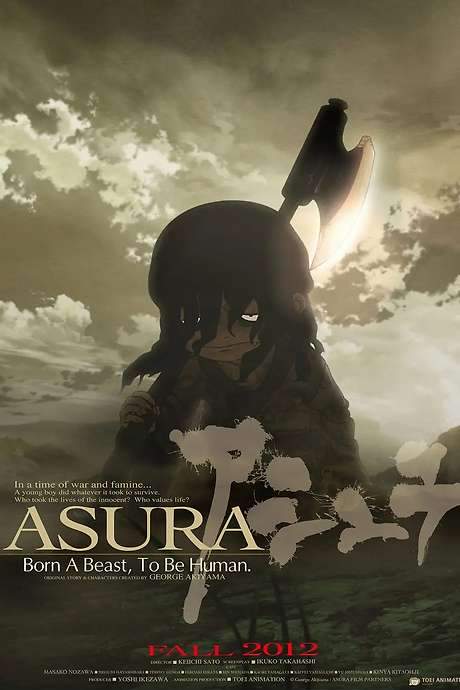
In mid-15th-century Japan, floods, droughts, and famine have scoured Kyoto into a barren, unforgiving landscape, setting the stage for a conflict that would reshape the nation. Between 1459 and 1461, more than 80,000 people perish, and the air itself seems heavy with hardship and loss. From this brutal backdrop, a baby is born to a starving, impoverished mother who abandons him, a moment that marks the quiet beginning of a harsh, sprawling odyssey.
Eight years pass, and the boy grows into a feral figure, roaming the countryside with an axe and preying on those he encounters. He strikes first at a Buddhist monk, only to be checked by the monk’s calm defense. The monk offers mercy, providing temporary food and shelter, and names the child Asura Masako Nozawa; he also teaches a Buddhist chant, hoping that one day the boy might grasp its meaning. The monk’s kindness is a fragile beacon in a landscape where hunger often overrides humanity, and after a time, he departs, leaving the boy on the roadside with more questions than answers.
Eight years later, the trouble-wrought world widens as a man named Shichiro [Hiroaki Hirata] leads four boys who haul a massive log toward their village. Asura attacks the group, but is repelled by Shichiro’s strength and restraint. He follows them as they attempt to pass through a village, where a group of local boys blocks the way and demands payment. The village boys hurl rocks, and when Asura is struck, he erupts in anger and kills the leader, a brutal moment that signals how far the boy has fallen from any semblance of childhood.
The dead boy’s father, Jito, gives chase, driving Asura to tumble from a cliff onto a pile of corpses. In the aftermath, Asura is found and taken in by Wakasa, a girl from the village who offers shelter and food in an abandoned hut. She visits regularly, bringing nourishment and teaching him how to speak. A powerful bond forms; Asura becomes deeply attached to her, often slipping into the village to watch her from the shadows.
One rainy night, Asura waits outside as Wakasa meets Shichiro to discuss leaving the village. In a moment born of jealousy and fear, Asura attacks Shichiro with his axe. Wakasa is horrified by the violence and insists he depart, sending the feral boy back into the wilderness. Not long after, the village is struck by a colossal mudslide, a calamity that the monk witnesses with a heavy heart. The disaster creates a new chance for reckoning, as Asura again meets the monk, now speaking in the human tongue he learned from Wakasa and cursing himself for being born.
In a stark, mortifying gesture, the monk chops off his own arm, hoping to rouse Asura toward humanity. The act unsettles the boy, who does not understand the motive and runs away in confusion. The following months grow even darker as food becomes scarcer. Wakasa’s father is pressed to sell her, but he refuses; Shichiro shows what he can by sharing what he has, yet desperation pushes him to steal from others. Wakasa and her father lie dying in their home, and in a cruel turn, Asura kills Jito’s horse and presents the flesh to them as food—though they refuse to accept it, certain it’s human. Jito issues a bounty to capture the boy, and the villagers—torches aloft—give chase across the land.
The pursuit ends on a rope bridge, where Asura fights for his life and then tumbles into the river below as the bridge erupts in flames. Winter sweeps across the land, and the pursuit seems to fade into memory until winter’s chill reveals a harsher truth: Asura, miraculously alive, has endured the fall. A cart bears Wakasa’s body through the snow, its passengers unaware that Asura, scarred and transformed, has survived the ordeal just out of sight.
Time moves forward, and the monk’s words return with a quiet grace, praising the beauty of life as Asura—now grown into a redeemed figure—has become a Buddhist monk himself, carving a wooden statue of Buddha with patient hands. The film closes on a vision of renewal: the land restored to fertility, white doves circling above a city that once again seems to hold hope, a post-credit reminder that even in a world scarred by devastation, new life can emerge from the ashes.