Plot Explained Spoilers guaranteed!
Plot Explained

Browse by genre

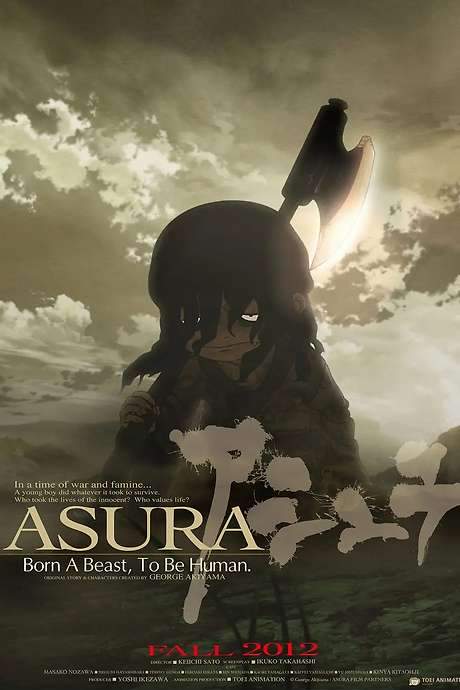
Asura (2012) movie poster

Characters & Themes

Asura (2012) Characters, Setting & Themes Explained

Release, runtime and language
2012 · 76 mins · Japanese
Loading streaming availability…
Directed by
Keiichi Sato
Starring
Megumi Hayashibara, Bin Shimada, Taiten Kusunoki, Hiroaki Hirata, Masako Nozawa, Kappei Yamaguchi

Abandoned in the harsh wilderness outside Kyoto, a feral orphan struggles to survive, driven by instinct and rage. His existence changes when he encounters civilization, forcing him to confront his primal nature and learn to control the beast within, while seeking a place in a world he doesn't understand.

On this page (8)
  1. 1 Where to watch
  2. 2 Characters explained (5)
  3. 3 Character relationship map
  4. 4 Where & when it takes place
  5. 5 Themes & meaning (4)
  6. 6 Character & meaning questions
  7. 7 Movie threads
  8. 8 Every angle
Loading streaming availability…

5 main characters · contains spoilers

Asura Characters Explained: Who Is Who

The main characters of Asura (2012), heroes and villains: what drives them, how they change over the course of the story and what each of them reveals about the film's bigger ideas.

  • Asura (Masako Nozawa)

    A boy abandoned by poverty who devolves into a cannibalistic hunter, Asura’s early violence is driven by hunger and neglect. Guided by a monk’s teachings and his bond with Wakasa, he gradually learns language and compassion, though his past actions leave a lasting shadow. By the end he evolves into a mature, redeemed monk who carves a Buddha statue, signaling inner transformation.

    • 🪓 Violent origin
    • 🧭 Quest for language
    • 🕊️ Redemption
  • Wakasa (Megumi Hayashibara)

    A compassionate village girl who shelters Asura and teaches him to speak, giving him his first sense of belonging. Her pity and care anchor his remaining humanity amid the chaos. She ultimately becomes a casualty of the era’s brutality as the village collapses under hardship and violence.

    • 💖 Caregiver
    • 🗣️ Language mentor
    • 🕯️ Hope
  • Shichirou (Hiroaki Hirata)

    A protective figure who leads a group and helps sustain Wakasa, he embodies a pragmatic survivor who tries to care for others in a harsh world. His interactions with Asura reveal the thin line between generosity and desperation in feudal society. His actions influence Asura’s path at key moments of crisis.

    • 🛡️ Protector
    • 🧭 Guide
    • 🧱 Survivor
  • Monk (Kinya Kitaoji)

    A Buddhist figure who rescues Asura and offers spiritual guidance, the monk introduces the boy to faith and ritual. He embodies a paradoxical mercy—sacrificing his own arm to teach Asura a crucial lesson about humanity—pushing the boy toward introspection and redemption.

    • 🧘‍♂️ Spiritual guide
    • 🪶 Sacrifice
    • 🕯️ Mentor
  • Jito

    The father of the boy killed by Asura who offers a bounty for his capture, representing the violent backlash against survival-driven violence. He embodies the ruthless aspect of the era’s feudal society and the villagers’ fear of danger.

    • 🏷️ Villager authority
    • 🗡️ Revenge seeker

Last updated: October 28, 2026 at 20:50

Was this helpful?

5 characters · 6 connections · contains spoilers

Asura Character Relationship Map

Who is connected to whom in Asura: family, love, friendships, rivalries and hidden ties, colour-coded. Pick a character to see their side of the story, or a connection to see what brings two characters together.

AAsuraMasako NozawaWWakasaMegumi HayashibaraSShichiroHiroaki HirataMMonkKinya KitaojiJJito

Last updated: October 28, 2026 at 20:50

Was this helpful?

Setting

Where and When Does Asura Take Place?

The setting of Asura (2012): the year and time period, the places and locations, and how they shape the characters, the mood and the tension of the story.

Time period

1459–1461

The events unfold during a famine-stricken mid-15th‑century Kyoto, a period of social collapse and looming civil strife. The era is marked by epidemics, the erosion of law, and widespread hunger that pushes people toward desperate acts. The narrative sits at the dawn of Japan’s greatest civil conflict, using this window to explore survival and transformation.

Location

Kyoto, Japan

In the mid-15th century, Kyoto is transformed into a barren wasteland by floods, drought and famine. The city’s once-thriving streets become deserted as disease and hunger cut through the population; more than 80,000 people perish between 1459 and 1461. This harsh backdrop shapes the film’s sense of danger and scarcity, framing the journeys of Asura and the other survivors. The setting emphasizes a civilization on the brink, where humanity struggles to endure.

  • 🏯 Historic Kyoto
  • 🌾 Famine-ravaged landscape
  • ⚔️ Feudal Japan

Last updated: October 28, 2026 at 20:50

Was this helpful?

4 major themes

Asura Meaning: Themes & Message Explained

What is Asura (2012) really about? The emotional, social and philosophical themes the film keeps returning to, its symbolism and the message beneath the surface.

  • Redemption

    The story tracks Asura’s brutal beginnings and his gradual moral awakening. A Buddhist monk and the human connections he forms with Wakasa steer him toward language, compassion, and a sense of purpose. The final image of the redeemed Asura carving a Buddha statue signals the possibility of renewal after violence.

  • Survival

    Famine, drought, and the collapse of society drive every decision. Characters must forage, barter, or steal just to stay alive, often blurring lines between mercy and desperation. The landscape itself mirrors this struggle, with scarcity shaping identity and choices.

  • War & Chaos

    The backdrop of a country on the edge of civil war saturates the narrative with danger and brutality. Violence becomes a currency of power, and even acts of mercy are tested by hunger and distrust. The cycle of attack and defense accelerates Asura’s drift toward barbarity and then back toward humanity.

  • Language & Identity

    Wakasa teaches Asura to speak, and the monk’s chants offer him a path to meaning beyond mere survival. Language becomes a bridge from feral instinct to social being, enabling him to articulate suffering, longing, and repentance. The transformation hinges on the power of words to rehumanize a boy shaped by a brutal landscape.

Last updated: October 28, 2026 at 20:50

Was this helpful?

Character & theme questions

Asura Characters & Meaning: Your Questions Answered

The questions people ask about Asura (2012): who the characters really are, their relationships, what the symbols mean, where it takes place and what the movie is really about. Each answer contains spoilers.

Q1

What historical period is depicted in Asura?

Asura is set in mid-15th century Kyoto, specifically during the famine years of 1459 to 1461. This period saw over 80,000 deaths from disease and hunger, transforming the city from a thriving center into a barren wasteland. The era marks the beginning of Japan's most devastating civil conflict, the Ōnin War, providing a brutal backdrop for the story.

  • kyoto
  • 1459
  • 1461
  • famine
  • muromachi period
  • historical japan
Q2

Where does Asura take place?

The film is set primarily in and around Kyoto, Japan, during a period of catastrophic famine. The story contrasts the ruined city streets with the harsh wilderness outside the city gates. This stark contrast between civilization's collapse and the untamed natural world mirrors Asura's internal struggle between his feral nature and his capacity for humanity.

  • kyoto
  • japan
  • setting
  • wilderness
  • feudal japan
Q3

What role does survival play in Asura?

Survival is the dominant theme driving every character decision in Asura. The extreme famine forces people to forage, barter, or steal to stay alive, often blurring the lines between mercy and desperation. The harsh landscape mirrors this struggle, with scarcity shaping identity and forcing morally ambiguous choices that define the film's dark tone.

  • survival
  • famine
  • desperation
  • hunger
  • scarcity
Q4

How does Asura achieve redemption?

Asura's redemption comes through the Buddhist monk's guidance and his bond with Wakasa, who teaches him language and compassion. Starting as a feral, cannibalistic hunter driven by hunger, he gradually learns morality and purpose. The final image of the redeemed Asura carving a Buddha statue signals the possibility of renewal after violence, completing his transformation from beast to spiritual being.

Foreshadowing: The monk's sacrifice of his own arm early in the film establishes the possibility of redemption through selflessness.

  • redemption
  • buddhism
  • transformation
  • monk
  • spiritual renewal
Q5

Why is language important to Asura's character development?

Language serves as the bridge from Asura's feral instinct to his becoming a social being. Wakasa teaches him to speak, enabling him to articulate suffering, longing, and repentance for the first time. This transformation from animalistic existence to using words rehumanizes him, allowing him to process his violent past and ultimately pursue a path toward meaning beyond mere survival.

  • language
  • identity
  • wakasa
  • speech
  • transformation
Q6

How does the era's violence shape the story?

The film takes place at the dawn of Japan's greatest civil conflict, a time when violence becomes a currency of power. The backdrop of a society on the edge of war saturates the narrative with danger and brutality. Even acts of mercy are tested by hunger and distrust, creating a cycle of attack and defense that accelerates Asura's descent into barbarity before his eventual return to humanity.

  • war
  • civil conflict
  • onin war
  • feudal violence
  • chaos
Q7

Who is Asura in the film?

Asura is a feral orphan abandoned in the harsh wilderness outside Kyoto. Driven by hunger and neglect, he devolves into a cannibalistic hunter. His journey spans from brutal violence to redemption as he encounters a Buddhist monk and the compassionate Wakasa, who teach him language and compassion. By the film's end, he transforms into a mature, redeemed monk who carves a Buddha statue, symbolizing his inner transformation.

  • asura
  • orphan
  • feral
  • cannibal
  • protagonist
Q8

Who is Wakasa and what is her significance?

Wakasa is a compassionate village girl who shelters Asura and teaches him to speak, giving him his first sense of belonging and humanity. Her pity and care anchor his remaining humanity amid the chaos of famine-stricken Kyoto. Tragically, she becomes a casualty of the era's brutality as the village collapses under hardship and violence, making her death a pivotal moment in Asura's emotional journey.

  • wakasa
  • village girl
  • compassion
  • mentor
  • caretaker
Q9

What role does the Buddhist monk play?

The Buddhist monk rescues Asura from his feral existence and offers spiritual guidance, introducing the boy to faith and ritual. He embodies paradoxical mercy by sacrificing his own arm to teach Asura a crucial lesson about humanity. This sacrifice pushes the boy toward introspection and sets him on the path toward redemption, representing the power of compassion in a brutal world.

  • monk
  • buddhism
  • spiritual guidance
  • sacrifice
  • mentor
Q10

Who is Shichirou in the story?

Shichirou is a protective figure who leads a group of survivors and helps sustain Wakasa during the famine. He embodies the pragmatic survivor who tries to care for others in a harsh world. His interactions with Asura reveal the thin line between generosity and desperation in feudal society, and his actions influence Asura's path at key moments of crisis.

  • shichirou
  • survivor
  • leader
  • protector
  • feudal society
Q11

Who is Jito and why is he vengeful?

Jito is the father of a boy killed by Asura during his feral period. He represents the violent backlash against survival-driven violence in the era. By offering a bounty for Asura's capture, he embodies the ruthless aspect of feudal society and the villagers' fear of dangerous outsiders. His pursuit of vengeance highlights the cycle of violence that pervades the famine-stricken world.

  • jito
  • vengeance
  • bounty
  • feudal justice
  • retribution
Q12

Is Asura a hopeful or bleak story?

While Asura's dominant tone is dark, marked by abandonment, primal rage, and a grim world, the film is not purely bleak. The ending is bittersweet: Asura finds peace and redemption through his transformation into a monk who carves a Buddha statue. This redemptive conclusion offers hope for renewal after violence, balanced against the immense suffering and loss, including the death of Wakasa, that he endures and witnesses.

  • tone
  • bittersweet
  • redemption
  • hope
  • dark themes

Movie threads

More Movies Like Asura, by Mood & Story

Curated lists built around what makes Asura tick: the same mood, the same kind of story or the same emotional payoff. Each list explains why these movies belong together.

Redemption through primal hardship like in Asura

Stories of feral characters or outcasts finding humanity through brutal survival. Discover movies similar to Asura, featuring feral characters and brutal survival stories that lead to spiritual redemption. If you enjoyed the journey from animalistic rage to a hard-won peace, these films about nature versus nurture and finding light in darkness will resonate.

  • primal
  • brutal
  • redemptive
  • melancholic
  • somber
  • harsh
  • Tone: dark, melancholic, redemptive
  • Pacing: steady, character-driven
Why these movies?

The story pattern: These narratives follow a character—often a feral child, outcast, or primal survivor—whose life is defined by instinct and violence. The plot centers on their collision with civilization or a mentor figure, triggering an internal struggle between their savage nature and the possibility of connection. The journey is arduous, marked by loss and hardship, but culminates in a form of redemption or self-discovery, however bittersweet.

Why they belong together: Movies are grouped here for their shared focus on the extreme tension between primal instinct and civilized humanity. They deliver a heavy emotional experience through unflinching depictions of survival, and share a common narrative arc of a damaged individual seeking, and often finding, a painful but meaningful form of redemption.

Bleak historical survival epics like Asura

Grim period stories where characters battle nature and society just to stay alive. Find movies like Asura that depict brutal survival in a historical context. If you were captivated by the unflinching portrayal of famine, isolation, and the fight for life in a bygone era, these grim period dramas and survival stories will deliver a similarly powerful and somber experience.

  • bleak
  • brutal
  • harsh
  • melancholic
  • somber
  • historical
  • Tone: dark, bleak, somber
  • Pacing: steady, episodic
Why these movies?

The story pattern: The narrative pattern involves characters contending with a specific historical period's extreme hardships, such as famine, plague, or war. The plot is a linear, steady progression of survival challenges, where every decision carries life-or-death consequences. The focus is less on grand historical events and more on the intimate, visceral experience of enduring them, often leading to a conclusion that acknowledges the cost of survival.

Why they belong together: These films are united by their immersive, bleak historical settings and their primary focus on the physical and psychological toll of survival. They share a high intensity, a dark tone, and a heavy emotional weight, creating a cohesive vibe of somber perseverance against a backdrop of historical tragedy.

Every angle

Asura (2012) Explained: Plot, Timeline & Characters

Everything about Asura in one place: what happens in the plot summary, the timeline in chronological order, the characters and meaning and a spoiler-free summary. What's After the Movie adds the cast, box office and post-credit scenes.

Coming soon on iOS and Android

The Plot Explained Movie Summary App

Plot summaries, endings explained and timelines on your phone. Catch up on any movie in minutes, save your favorites and never miss a twist again.

Be the first to know when we launch. Your email stays private, always.

Learn more about the app