Year: 1991
Runtime: 125 mins
Language: Russian
Director: Rustam Khamdamov
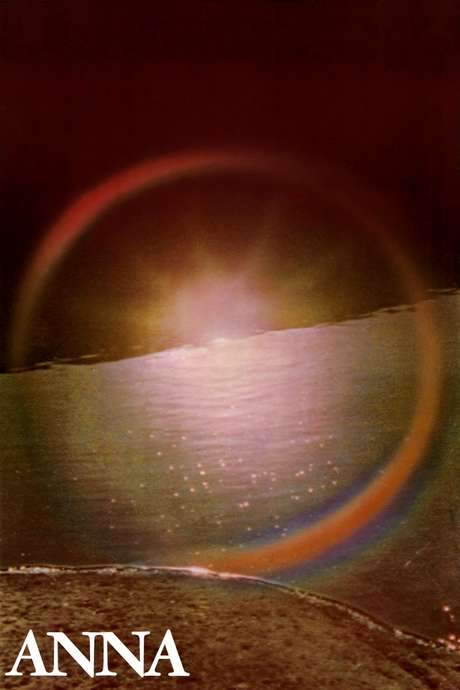
The film is notable for containing the complete surviving footage of Sergei Solovyov’s unfinished 1974 project Slave of Love, later remade by Nikita Mikhalkov. Its framing story follows a woman (Jeanne Moreau) released from 1940s Soviet prison camps, confronting a society that no longer recognizes her. Lush, surreal imagery dominates, making the plot secondary.
Get a spoiler-free look at Anna Karamazoff (1991) with a clear plot overview that covers the setting, main characters, and story premise—without revealing key twists or the ending. Perfect for deciding if this film is your next watch.
In the wake of the war, Leningrad is a city caught between the remnants of devastation and the fragile promise of a new order. Anna Aleksakhina steps out of a Soviet labor camp and into streets that feel both familiar and alien, where the echo of artillery still lingers in the air and everyday life is stitched together by communal apartments, public squares, and the lingering scent of rationed hope. Her return sets the stage for a meditation on a society that has moved on without her, leaving her to navigate a world that no longer remembers the shape of her past.
The film unfolds like a living canvas, drenched in lush, surreal imagery that blurs the line between memory and myth. Its visual language draws on the surviving footage of Sergei Solovyov’s unfinished Slave of Love, lending a dream‑like quality that makes the ordinary appear extraordinary. Light filters through cracked windows, shadows dance on soot‑blackened walls, and ordinary objects—clay‑splattered hands, a woman’s purse worn as a belt—take on an almost poetic symbolism. The mood is one of quiet mystery, inviting the audience to linger in each frame as if it were a tableau vivant.
Within this atmospheric tapestry, Anna encounters a parade of idiosyncratic figures who hover at the edges of her new reality. A young man carrying an imagined bow, a matriarchal grandmother whose home overflows with avant‑garde art, and a black German shepherd named Greta become silent companions on her tentative path. Their interactions are less about plot mechanics and more about the subtle exchanges that hint at hidden histories, unspoken loyalties, and the fragile threads that bind strangers together in a city still mending its soul.
Through its hypnotic visual style and the quiet determination of its heroine, the film offers a meditation on displacement, memory, and the search for belonging. Anna’s journey is less a linear narrative than a series of impressions, each one pulling the viewer deeper into a Leningrad that feels both hauntingly real and poetically imagined. The story lingers, leaving the audience to wonder how far a soul can stretch before it finally finds its place amidst the ruins.
Last Updated: December 03, 2025 at 23:35
Discover curated groups of movies connected by mood, themes, and story style. Browse collections built around emotion, atmosphere, and narrative focus to easily find films that match what you feel like watching right now.
Dreamlike journeys through psychological landscapes of loss and alienation.If you liked the dreamlike, melancholic atmosphere of Anna Karamazoff, explore other films that use surrealism to depict fractured psyches and emotional landscapes. These movies prioritize mood, symbolism, and artful imagery over straightforward plots, offering a similar immersive experience.
Narratives in this thread often follow protagonists grappling with profound loss, trauma, or a fractured sense of self. The story unfolds through a series of symbolic or vignette-like sequences rather than a tight plot, creating a journey that feels more psychological than physical. The central conflict is often internal, projected onto a world that feels unstable and dreamlike.
These films are grouped together because they share a core approach: using surrealism not just as a stylistic flourish, but as the primary lens to examine heavy themes like grief, memory, and alienation. They create a cohesive, melancholic vibe through slow pacing, complex imagery, and an emotional weight that lingers.
Characters navigating shattered realities after profound personal upheaval.For viewers who appreciated Anna Karamazoff's exploration of a character returning from trauma to an unrecognizable society, this thread features similar stories of psychological re-entry. These films share a complex, reflective tone and an ambiguous ending feel, focusing on the character's internal journey over external action.
The narrative pattern involves a protagonist returning from a life-altering event (war, imprisonment, etc.) to a changed world. Their journey is less about a clear goal and more about processing their trauma, often leading to morally complex actions and an inconclusive resolution. The plot is character-driven and psychologically complex, demanding audience interpretation.
These movies are connected by their focus on the ambiguous and complicated process of coping with severe trauma. They share a heavy emotional weight, a melancholic or bleak tone, and a narrative complexity that mirrors the fractured psyche of the protagonist, resulting in a similarly powerful and reflective viewing experience.
Don't stop at just watching — explore Anna Karamazoff in full detail. From the complete plot summary and scene-by-scene timeline to character breakdowns, thematic analysis, and a deep dive into the ending — every page helps you truly understand what Anna Karamazoff is all about. Plus, discover what's next after the movie.
Read a complete plot summary of Anna Karamazoff, including all key story points, character arcs, and turning points. This in-depth recap is ideal for understanding the narrative structure or reviewing what happened in the movie.
Track the full timeline of Anna Karamazoff with every major event arranged chronologically. Perfect for decoding non-linear storytelling, flashbacks, or parallel narratives with a clear scene-by-scene breakdown.
Discover the characters, locations, and core themes that shape Anna Karamazoff. Get insights into symbolic elements, setting significance, and deeper narrative meaning — ideal for thematic analysis and movie breakdowns.
Visit What's After the Movie to explore more about Anna Karamazoff: box office results, cast and crew info, production details, post-credit scenes, and external links — all in one place for movie fans and researchers.
Discover movies like Anna Karamazoff that share similar genres, themes, and storytelling elements. Whether you’re drawn to the atmosphere, character arcs, or plot structure, these curated recommendations will help you explore more films you’ll love.
Anna Karamazoff (1991) Scene-by-Scene Movie Timeline
Anna Karamazoff (1991) Movie Characters, Themes & Settings
Anna Karamazoff (1991) Spoiler-Free Summary & Key Flow
Movies Like Anna Karamazoff – Similar Titles You’ll Enjoy
Anna Karenina (2012) Movie Recap & Themes
Anna (2019) Plot Summary & Ending Explained
Anna (2014) Full Summary & Key Details
Anna Karenina. Vronsky’s Story (2017) Story Summary & Characters
Anna M. (2007) Ending Explained & Film Insights
Anna (1987) Detailed Story Recap
Anna Karenina (1911) Complete Plot Breakdown
Anna Karenina (1985) Plot Summary & Ending Explained
Anna (1993) Full Summary & Key Details
Anna Karenina (1961) Ending Explained & Film Insights
Anna Karenina (1967) Story Summary & Characters
Anna (1936) Full Movie Breakdown
Anna Karenina (1948) Story Summary & Characters
Forbidden Paradise (1924) Spoiler-Packed Plot Recap
Anna Karenina (1000) Movie Recap & Themes