Plot Explained Spoilers guaranteed!
Plot Explained

Browse by genre

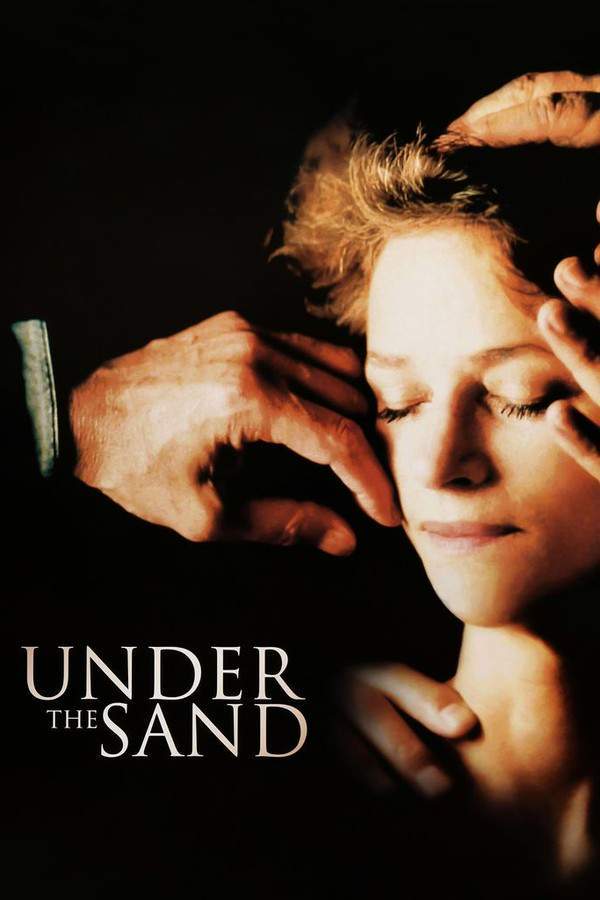
Under the Sand (2001) movie poster

Plot Summary

Under the Sand (2001) Plot Summary Explained

Release, runtime and language
2001 · 92 min · French
Loading streaming availability…
Directed by
François Ozon
Starring
Charlotte Rampling, Bruno Cremer

In the Landes region of western France, Marie and Jean have long enjoyed their annual summer vacations. Following Jean's sudden disappearance while swimming, leaving Marie alone on the beach, she is left devastated. The film portrays Marie’s poignant journey through grief, as she struggles to cope with the loss and clings to cherished memories of him. Reality and fantasy intertwine as she desperately seeks a sense of closure.

On this page (6)
  1. 1 Where to watch
  2. 2 What happens: full plot
  3. 3 Plot questions answered
  4. 4 Movie threads
  5. 5 Categories
  6. 6 Every angle
Loading streaming availability…

Full plot summary · contains spoilers

What Happens in Under the Sand: Full Plot Summary

The whole story of Under the Sand (2001) explained, from the opening scene to the final frame: every key event, every twist and what it all adds up to. Read it as a quick recap before the sequel, to check a scene you missed, or to finally understand what really happened.

Marie, an esteemed English professor at a university in Paris, has spent 25 blissful years married to her husband, Jean. Their life together takes them to a family-owned house in the beautiful Landes, where one fateful day, while Marie enjoys the sun, Jean goes for a swim—but he never returns. The tragic incident leaves no witnesses, and his body remains missing, leaving Marie grappling with the heavy uncertainty of his fate. It's unclear whether he has drowned or perhaps taken his own life.

Despite the grim circumstances, Marie adamantly refuses to accept her husband's death. After returning to Paris, she begins to experience strange visions of Jean, suggesting that he might still be with her, perhaps as an apparition. In her struggle to cope with this loss, she embarks on a secret affair, all the while denying the truth about Jean's disappearance.

However, her fragile mental state comes under scrutiny when the police from Landes reach out with news that a body has been recovered from a fisherman’s net. Concerned for her wellbeing, her friends attempt to support her, but Marie's heart remains steadfast, unable to love anyone else as she loved Jean. During a visit to her mother-in-law, who resides in a nursing home, she is met with rejection when expressing the possibility of Jean's suicide. Instead, her mother-in-law crudely suggests that Jean left her due to boredom and her inability to bear children.

Eventually, Marie feels compelled to return to Landes to confront the local authorities about Jean's disappearance. There, she learns that he likely drowned as he struggled against the undertow. However, identification proves challenging, as the body discovered shows significant signs of decay. A genetic test indicates a 90% match with his mother, and dental records seem to align, yet they are thwarted by the absence of skeletal fractures for identification purposes.

Determined to face the truth, Marie insists on viewing the body and is met with horror. A wristwatch found on the corpse seems to align with her description of Jean's, yet she vehemently denies its ownership. Haunted by her memories, she returns to the beach where he vanished, and in a surreal moment, she believes she sees a figure in the distance resembling Jean. In a desperate act fueled by love and grief, she runs towards what she hopes to be him, struggling to grasp onto the past amid the uncertainty of her present.
Last updated: November 08, 2024 at 16:41

Was this helpful?

Plot questions answered

Under the Sand Plot Explained: Your Questions Answered

The questions people ask most about Under the Sand (2001): what happens in the confusing scenes, why the characters do what they do, the twists, hidden details and what the ending means. Each answer contains spoilers.

Q1

Why does Marie refuse to accept that Jean is dead?

Marie cannot accept Jean's death because his body was never found, leaving her with no concrete proof of his fate. The uncertainty of not knowing whether he drowned or chose to take his own life creates a psychological hold on her. Her 25 years of blissful marriage and deep emotional investment make it psychologically impossible for her to let go without closure, leading her to maintain the belief that he might still be alive through her visions.

Foreshadowing: Early in the film, Jean's sudden disappearance without witnesses establishes the unresolved nature of his fate that haunts Marie throughout.

  • marie denial
  • jean death
  • grief acceptance
  • uncertain fate
Q2

Did Jean drown or commit suicide?

The film suggests Jean likely drowned while struggling against the undertow, as explained by authorities upon Marie's return to Landes. However, the possibility of suicide is never definitively ruled out. Marie's mother-in-law suggests he may have left out of boredom, and Marie herself wonders if he took his own life. The absence of his body initially and the subsequent decomposition that makes identification difficult both contribute to this enduring ambiguity.

Foreshadowing: Marie questions whether Jean drowned or possibly took his own life early in the film, establishing the central uncertainty of his fate.

  • jean suicide
  • jean drowning
  • undertow
  • cause of death
Q3

Why does Marie have visions of Jean after his disappearance?

Marie experiences visions of Jean as a psychological manifestation of her denial and inability to process his loss. These apparitions represent her mind's way of clinging to hope and maintaining an emotional connection with her husband. The film blurs reality and fantasy to show how grief can create perceptual disturbances, with Marie seeing Jean in Paris as part of her psychological struggle to confront or avoid the truth.

Foreshadowing: After returning to Paris, Marie begins experiencing strange visions of Jean, signaling her deteriorating grip on reality.

  • marie hallucinations
  • jean apparition
  • psychological denial
  • grief visions
Q4

Why does Marie start a secret affair while grieving for Jean?

Marie enters a secret affair as a way to physically cope with her loneliness while remaining emotionally tethered to Jean. She remains unable to fully embrace the new relationship, keeping it hidden and maintaining emotional distance from her lover. This paradox illustrates how grief can manifest in contradictory behaviors, seeking human connection yet being incapable of truly moving on.

Foreshadowing: The timeline shows Marie entering an affair after returning to Paris, while still experiencing visions of Jean.

  • marie affair
  • grief coping
  • emotional unavailability
  • denial behavior
Q5

Why does Jean's mother suggest he left because of boredom?

Jean;s mother, living in a nursing home, offers a harsh perspective when Marie visits seeking sympathy about the possibility of suicide. Instead of comforting Marie, she suggests Jean may have left out of boredom and frustration at Marie's inability to bear children. This cruel revelation adds to Marie's emotional turmoil, providing an alternative (though possibly bitter) explanation for Jean's disappearance that challenges Marie's idealized memory of their marriage.

Foreshadowing: During Marie's visit to her mother-in-law, this revelation adds a layer of doubt about the true nature of Jean and Marie's relationship.

  • jean mother
  • boredom
  • no children
  • marriage problems
Q6

Why does Marie deny the body is Jean despite the evidence?

Marie denies the recovered body is Jean even though a genetic test shows a 90% match with his mother and dental records align, because accepting the body would force her to confront the finality of his death. The absence of skeletal fractures for definitive identification gives her psychological permission to maintain denial. Additionally, seeing the decomposed remains is psychologically traumatic, and her mind rejects this reality as a protective mechanism against overwhelming grief.

Foreshadowing: The identification challenges with the body create the perfect circumstances for Marie's continued denial.

  • body identification
  • denial
  • genetic test
  • dental records
  • wristwatch evidence
Q7

What does Marie see at the end of the movie?

At the end of the film, Marie sees a figure in the distance on the beach where Jean disappeared that she believes resembles him. Given the film's consistent blending of reality and fantasy, and Marie's documented visions throughout, this figure is likely another hallucination or mirage, a projection of her desperate hope. She runs toward it in a final act of grief-driven desperation, unable to distinguish between wishful thinking and reality.

Foreshadowing: The film consistently blurs reality and fantasy through Marie's visions, making the final figure's ambiguous nature consistent with established narrative patterns.

  • beach scene
  • jean figure
  • hallucination
  • ambiguous ending
  • final scene
Q8

Why is the genetic test only a 90% match?

The genetic test shows a 90% match with Jean's mother rather than a definitive identification because the body is significantly decomposed. This incomplete genetic match, combined with the absence of skeletal fractures for comparison, prevents authorities from making a positive identification. The 90% match strongly suggests the body is Jean, but the uncertainty is enough for Marie to maintain her denial, and for the film to maintain its central ambiguity.

Foreshadowing: The identification challenges serve both the plot's need for uncertainty and Marie's psychological need to deny reality.

  • dna test
  • genetic match
  • body decomposition
  • identification problems
Q9

Why does Marie return to Landes to confront the authorities?

Marie returns to Landes because she feels compelled to face the truth about Jean's disappearance and seek closure. After receiving news from the police about the recovered body and facing rejection from her mother-in-law, she needs answers. This journey represents her attempt to move from denial toward acceptance, though the experience ultimately leaves her more disturbed as she confronts the physical reality of what happened.

Foreshadowing: The police contact about the body and the mother-in-law's harsh words drive Marie to seek answers in Landes.

  • landes authorities
  • closure
  • police report
  • return to beach
Q10

What is the significance of the wristwatch found on the body?

The wristwatch found on the recovered body aligns with Marie's description of Jean's watch, providing physical evidence that strongly suggests the body is indeed Jean. This detail is psychologically devastating for Marie because it represents concrete proof that directly contradicts her denial. Her adamant refusal to acknowledge the watch's connection to Jean is another manifestation of her inability to accept his death, choosing psychological protection over painful reality.

Foreshadowing: The wristwatch serves as the most tangible piece of evidence linking the body to Jean, making Marie's denial increasingly difficult to maintain.

  • wristwatch evidence
  • jean belongings
  • physical proof
  • identification clue
Q11

Why does the film leave Marie's fate ambiguous?

The film ends ambiguously because the director wants to reinforce the central theme of unresolved grief. Marie running toward the figure could represent continued delusion, a hopeful hallucination, or a choice to embrace uncertainty over painful truth. This ambiguity is intentional, it mirrors the unresolved nature of Jean's disappearance itself. The lack of closure reflects how grief often works: not in clean resolutions but in ongoing struggles between accepting loss and clinging to hope.

Foreshadowing: The entire narrative structure, with its blurred lines between reality and fantasy, builds toward this intentionally unresolved conclusion.

  • ambiguous ending
  • unresolved grief
  • film themes
  • psychological closure
  • hope vs reality

Movie threads

More Movies Like Under the Sand, by Mood & Story

Curated lists built around what makes Under the Sand tick: the same mood, the same kind of story or the same emotional payoff. Each list explains why these movies belong together.

Movies about Grief and Denial like Under the Sand

Stories where profound loss blurs the fragile line between memory and madness. If you were moved by the psychological exploration of grief in Under the Sand, you'll find similar films here. These movies portray characters grappling with loss, often slipping into denial and fantasy, creating a poignant and dreamlike viewing experience.

  • grieving
  • dreamlike
  • heartbreaking
  • introspective
  • somber
  • psychological
  • Tone: melancholic, introspective
  • Pacing: slow, contemplative
Why these movies?

The story pattern: The narrative pattern follows a protagonist after a profound loss, typically refusing to accept the truth. The story unfolds through their subjective perspective, where visions or imagined interactions with the deceased become a coping mechanism, leading to an ambiguous resolution about their mental state.

Why they belong together: These films are grouped by their intense focus on the psychology of mourning. They share a melancholic tone, slow pacing to savor the emotional depth, and a central theme of how love and loss can distort one's grip on reality.

Slow-Burn Psychological Dramas like Under the Sand

Character studies that unfold slowly, focusing on a fragile internal state. For viewers who appreciated the slow, introspective pacing of Under the Sand, this collection features similar character-driven dramas. These movies use a measured pace to delve deeply into the complex and often fragile mental states of their protagonists.

  • slow burn
  • introspective
  • quiet
  • somber
  • melancholic
  • character study
  • Tone: melancholic, somber, quiet
  • Pacing: slow, deliberate, atmospheric
Why these movies?

The story pattern: Stories in this thread are built around a central character's internal journey. The plot is secondary to the nuanced depiction of their thoughts, emotions, and psychological unraveling. The slow pacing mirrors the character's contemplative or stalled state of being.

Why they belong together: They are connected by a shared commitment to psychological realism and atmosphere. The slow pacing, medium but sustained intensity, and heavy emotional weight create a cohesive, immersive experience focused on human fragility.

Categories

Movie Lists Featuring Under the Sand

Under the Sand appears in these hand-built movie categories. Each one groups movies by a specific mood, theme or story type, with their plot summaries and endings explained.

View all movie categories

Every angle

Under the Sand (2001) Explained: Plot, Timeline & Characters

Everything about Under the Sand in one place: what happens in the plot summary, the timeline in chronological order, the characters and meaning and a spoiler-free summary. What's After the Movie adds the cast, box office and post-credit scenes.

Coming soon on iOS and Android

The Plot Explained Movie Summary App

Plot summaries, endings explained and timelines on your phone. Catch up on any movie in minutes, save your favorites and never miss a twist again.

Be the first to know when we launch. Your email stays private, always.

Learn more about the app