Plot Explained Spoilers guaranteed!
Plot Explained

Browse by genre

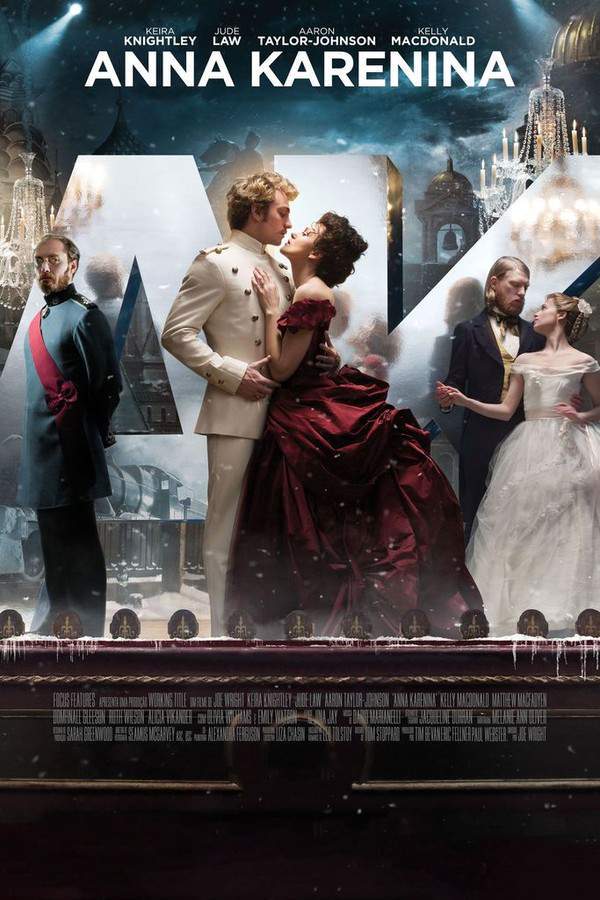
Anna Karenina (2012) movie poster

Plot Summary

Anna Karenina (2012) Plot Summary Explained

Release, runtime and language
2012 · 129 min · English
JustWatch #19,559 2
Directed by
Joe Wright
Starring
Keira Knightley, Jude Law, Matthew Macfadyen, Aaron Johnson

Set in 19th-century Russia, the story follows Anna Karenina, who risks everything for a passionate affair with the charismatic Count Vronsky. Her choices challenge the strict societal conventions of St. Petersburg, forcing her to confront an agonizing dilemma: duty to her family or the pursuit of personal happiness. Parallel to Anna’s dramatic journey, the story also explores the quiet struggles of farmer Levin, whose unrequited love for Princess Kitty offers a contrasting perspective on love and belonging.

On this page (7)
  1. 1 Where to watch
  2. 2 What happens: full plot
  3. 3 Plot questions answered
  4. 4 The book behind the movie
  5. 5 Movie threads
  6. 6 Movies like Anna Karenina
  7. 7 Every angle

Where to watch

Where to Watch Anna Karenina (2012)

Where can you watch Anna Karenina? Stream, rent or buy it in the US, including on Paramount Plus Essential, Paramount Plus Premium and Amazon Video: current JustWatch availability with up-to-date prices.

Streaming availability powered by JustWatch

Full plot summary · contains spoilers

What Happens in Anna Karenina: Full Plot Summary

The whole story of Anna Karenina (2012) explained, from the opening scene to the final frame: every key event, every twist and what it all adds up to. Read it as a quick recap before the sequel, to check a scene you missed, or to finally understand what really happened.

The film opens in 1874, during the peak of Imperial Russia, starting at the home of Prince Stepan "Stiva" Oblonsky, portrayed by Matthew Macfadyen, in Moscow. Stiva's wife, Princess Daria "Dolly" (played by Kelly Macdonald), discovers Stiva in a compromising situation with their governess, leading to a heart-wrenching confrontation. Dolly, filled with despair, expels Stiva from their home and forbids him to see her or their five children again.

Meanwhile, Stiva's sister, Anna Karenina, brilliantly brought to life by Keira Knightley, embarks on a journey to Moscow. Anna, a renowned socialite and the wife of a prominent Russian statesman, Alexi Karenin (played by Jude Law), arrives at her brother's plea to mend his fractured marriage with Dolly. Though Karenin allows Anna to travel, he cautions her against meddling in the affairs of others.

As the story unfolds, Anna encounters Stiva's friend, Konstantin Levin (played by Domhnall Gleeson), a wealthy landowner who struggles with his identity amidst Moscow's elite. Levin professes his love for Stiva's sister-in-law, Katerina "Kitty" Alexandrovna Shcherbatsky, portrayed by Alicia Vikander, yet she initially rejects him, secretly yearning for the affluent Count Alexi Vronsky (played by Aaron Johnson).

On a train to Moscow, Anna meets Vronsky's mother, Countess Vronskaya, notorious for her amorous escapades. As Levin grapples with feelings of inadequacy in society, Anna and Vronsky's paths cross, sparking an intense and immediate attraction. An unfortunate accident engulfs the train station in chaos, yet Vronsky endeavors to impress Anna by donating funds to the deceased man's family.

In a dramatic turn of events, Anna manages to persuade Dolly to reconcile with Stiva. That night at a lavish ball, Kitty shines while Vronsky's attention shifts towards Anna, creating an unspoken rivalry. Feeling guilty for drawing attention away from Kitty, Anna chooses to leave the festivities, only to be pursued by Vronsky, who adamantly declares his desire to be with her.

As their affair blossoms in St. Petersburg, Anna finds herself at the center of societal murmurs, grappling with her feelings and the repercussions of her choices. Vronsky's constant presence heightens Anna's internal conflict, ultimately leading her to a fateful decision amidst Russian aristocracy's harsh scrutiny.

The story takes a darker turn when Anna confides in Vronsky about an unexpected pregnancy and their clear love for each other. Yet tension escalates as her husband, Karenin, confronts the reality of Anna’s infidelity and considers divorce, a move fraught with social stigma and family repercussions.

As events spiral out of control, Levin, determined to win Kitty’s heart, remains true to his steadfast love for her, while Anna descends deeper into turmoil caused by betrayal, societal rejection, and impossible choices.

The climax of Anna and Vronsky’s relationship unfolds against a backdrop of heart-wrenching revelations, ultimately leading Anna to a tragic and irreversible decision as she contemplates her future on the train tracks, leaving behind the life she once knew.

In the end, Levin, transformed by love and the bonds of family, finds himself standing in the rain, enveloped in reflections of joy and sorrow as he embraces the life he treasures with Kitty and their newborn child. The narrative encapsulates profound themes of love, societal expectations, and the inexorable burdens of choices made, as families come together, and hearts mourn those lost.
Last updated: November 08, 2024 at 03:19

Was this helpful?

Plot questions answered

Anna Karenina Plot Explained: Your Questions Answered

The questions people ask most about Anna Karenina (2012): what happens in the confusing scenes, why the characters do what they do, the twists, hidden details and what the ending means. Each answer contains spoilers.

Q1

Why does Anna agree to help Stiva reconcile with Dolly?

Anna agrees to help Stiva because she genuinely cares about her family and believes in forgiveness. Despite Karenin's warning against meddling in others' affairs, Anna feels compelled to act as a mediator. This decision sets the chain of events in motion, her journey to Moscow leads her to meet Vronsky, fundamentally altering the trajectory of her life.

Foreshadowing: Anna's willingness to intervene in someone else's marriage foreshadows her own later transgression and the consequences she will face.

  • anna
  • stiva
  • dolly
  • reconciliation
  • family
Q2

Why does Vronsky lose interest in Kitty at the ball?

Vronsky's attention shifts from Kitty to Anna because he is immediately and powerfully attracted to Anna from their earlier encounter at the train station. At the ball, when he sees Anna, his fascination overrides his previous interest in Kitty. Anna's poise, beauty, and the mysterious quality of her captured Vronsky's attention completely.

Foreshadowing: The ball scene establishes the central love triangle that will drive the tragic events of the story.

  • vronsky
  • kitty
  • ball
  • attraction
  • anna
Q3

Why does Anna tell Vronsky about her pregnancy before telling Karenin?

Anna confides in Vronsky first because the pregnancy is proof of their shared affair and represents a tangible bond between them. She is torn between her growing love for Vronsky and her fear of the consequences. Telling Vronsky before her husband reflects her emotional allegiance to him and marks her commitment to their relationship, even as she dreads facing Karenin.

Foreshadowing: This confession solidifies Anna's trajectory toward choosing passion over propriety, setting up her eventual downfall.

  • pregnancy
  • vronsky
  • affair
  • confession
Q4

Why does Karenin hesitate to grant Anna a divorce?

Karenin initially refuses because granting a divorce would bring immense shame upon him and his family. In 19th-century Russian society, divorce carried severe social stigma and political consequences. Karenin also hopes Anna will abandon her affair and return to him, choosing to preserve his honor and family reputation above personal happiness.

Foreshadowing: Karenin's concern for societal standing over personal reconciliation hints at the cold, rigid world that will ultimately trap Anna.

  • karenin
  • divorce
  • society
  • shame
  • honor
Q5

Why does Anna abandon her son to be with Vronsky?

Anna chooses her passionate affair with Vronsky over her son because her desire for personal happiness and love overwhelms her sense of maternal duty. She becomes consumed by the affair and the intense emotions it awakens in her. However, her decision brings profound guilt, she struggles with the separation from her son throughout the film, and this internal conflict contributes heavily to her psychological deterioration.

Foreshadowing: Anna's abandonment of her son represents her first major break from conventional duty, foreshadowing her complete moral and social collapse.

  • son
  • sergei
  • abandonment
  • motherhood
  • vronsky
Q6

Why does Anna end her life on the train tracks?

Anna commits suicide because she is trapped in an impossible situation, her affair has ruined her socially, Vronsky is growing distant, and she feels utterly alone and unloved. The train, the site where she first met Vronsky, becomes symbolic. She sees her death as an escape from the relentless torment of jealousy, guilt, and societal rejection. Her final act is one of desperation and a twisted attempt to be remembered, as she throws herself in front of the very train that carried her toward her passionate affair.

Foreshadowing: The train station meeting with Vronsky in the opening act literally sets Anna on the path to her tragic end.

  • suicide
  • death
  • despair
  • rejection
  • train
Q7

Why does Levin succeed in love while Anna fails?

Levin succeeds because his love for Kitty is grounded in genuine respect, patience, and constancy, he does not demand reciprocation but simply waits and remains faithful. In contrast, Anna's affair with Vronsky is fueled by passion and obsession, which cannot sustain a fulfilling relationship. Levin's quieter, more virtuous approach aligns with societal expectations, while Anna's transgression invites ruin. Their contrasting fates illustrate the novel's theme that love rooted in duty and authenticity prevails over passionate but destructive desire.

Foreshadowing: The parallel storylines of Anna and Levin are established from the beginning, creating a moral contrast that culminates in their opposite endings.

  • levin
  • kitty
  • contrast
  • success
  • failure
  • love
Q8

Why does Dolly reconcile with Stiva after initially refusing?

Dolly eventually forgives Stiva because of Anna's heartfelt persuasion. Anna uses her own reasoning about forgiveness and family unity to convince Dolly that reconciliation is possible. Dolly's love for her husband and her practical need to maintain a household for her children also drive her decision, reflecting the social pressures women faced in maintaining marriages regardless of infidelity.

Foreshadowing: Dolly's reconciliation demonstrates that forgiveness within marriage is possible, though it comes with enduring pain, a stark contrast to Anna's ultimate rejection of her own marriage.

  • dolly
  • stiva
  • forgiveness
  • reconciliation
  • marriage
Q9

Why does Vronsky become distant from Anna after she leaves Karenin?

Vronsky becomes distant because the initial passionate intensity of their affair fades once it becomes a permanent, public arrangement. Anna's obsessive jealousy and constant need for reassurance wear on Vronsky. Additionally, the social consequences of her scandal begin to affect his standing. The weight of Anna's emotional instability and the loss of the forbidden nature of their relationship transforms their dynamic from exhilarating to suffocating.

Foreshadowing: Early signs of Vronsky's wavering commitment appear when he does not immediately respond to Anna's pregnancy confession, foreshadowing his eventual emotional withdrawal.

  • vronsky
  • distance
  • jealousy
  • passion
  • affair
Q10

Why does Russian high society reject Anna so harshly?

Russian high society rejects Anna because her affair violates the fundamental codes of their rigid social structure. While extramarital relationships existed discreetly, Anna's public affair with Vronsky is considered scandalous and immoral. The aristocracy values outward propriety above private behavior, and Anna's open transgression makes her an outcast. Her presence threatens the moral fabric of their world, leading to her systematic exclusion from social events and circles.

Foreshadowing: The ball scene establishes the importance of social standing, making the severity of Anna's eventual ostracism feel inevitable.

  • society
  • ostracism
  • scandal
  • rules
  • reputation
Q11

Why does Karenin's status as a statesman worsen Anna's situation?

Karenin's prominent political position makes Anna's affair a public scandal rather than a private matter. As a respected statesman, his honor is directly tied to his wife's behavior. This amplifies the social consequences exponentially, Anna's transgression is not just a personal failing but an embarrassment to a powerful public figure. The political dimension makes forgiveness and discretion impossible, sealing Anna's fate.

Foreshadowing: Karenin's elevated status is established early, making the severity of Anna's eventual downfall proportional and inevitable.

  • karenin
  • status
  • politics
  • scandal
  • power
Q12

Why does Kitty initially reject Levin's marriage proposal?

Kitty initially rejects Levin because she is infatuated with Vronsky, who represents the glamour and excitement of aristocratic life. Levin, a humble landowner, seems dull and unromantic in comparison to the dashing Count. Kitty dreams of a passionate romance, not the steady, sincere devotion Levin offers. Her youth and vanity blind her to Levin's genuine worth until she learns harsh lessons about love and reality.

Foreshadowing: Kitty's rejection of Levin for Vronsky parallels Anna's own choices, setting up the contrast between their ultimate fates.

  • kitty
  • levin
  • rejection
  • vronsky
  • infatuation

Movie threads

More Movies Like Anna Karenina, by Mood & Story

Curated lists built around what makes Anna Karenina tick: the same mood, the same kind of story or the same emotional payoff. Each list explains why these movies belong together.

Tragic Love Stories Like Anna Karenina

Passionate affairs that collide with rigid social conventions, ending in ruin. Explore movies like Anna Karenina, where intense romantic passion leads to a devastating downfall against a backdrop of strict societal rules. If you were captivated by the drama of forbidden love and its tragic consequences, these similar period dramas and romantic tragedies will resonate.

  • tragic
  • passionate
  • oppressive
  • societal pressure
  • anguished
  • melancholic
  • Tone: dark, tragic, oppressive
  • Pacing: steady, deliberate
Why these movies?

The story pattern: Stories in this thread typically follow a character who, driven by powerful desire, enters a forbidden relationship. The narrative builds tension as the affair is threatened by discovery and judgment, creating a claustrophobic atmosphere. The journey often escalates towards an emotionally devastating climax, such as social exile, mental anguish, or death, highlighting the high cost of choosing passion over propriety.

Why they belong together: These films are grouped by their shared focus on the destructive power of forbidden romance. They create a similar viewing experience defined by high emotional intensity, a dark and oppressive tone, and a heavy emotional weight stemming from the inevitable collision between individual happiness and collective norms.

Character-Driven Dramas of Moral Conflict Like Anna Karenina

Intimate portraits of characters unraveling under the weight of their choices. Find movies similar to Anna Karenina that center on a complex character's psychological unraveling. If you appreciated the intense, introspective focus on Anna's internal battle and tragic descent, these other heavy dramas exploring moral dilemmas and personal collapse will appeal to you.

  • introspective
  • psychological
  • anguished
  • melancholic
  • tragic
  • descent into madness
  • Tone: dark, introspective, melancholic
  • Pacing: steady, character-driven
Why these movies?

The story pattern: The narrative pattern here is an intimate, steady-paced character arc that moves from a state of stability or discontent into a period of transgression, followed by a prolonged and anxious downfall. The story is less about external action and more about charting the protagonist's increasing isolation, despair, and internal conflict as their world closes in around them.

Why they belong together: These movies share a compelling, melancholic vibe built from a high-intensity, introspective focus on a single character's painful journey. They are connected by a steady pacing that allows for deep psychological exploration, a dark tone, and a profound sense of sadness as we witness a human spirit crushed by impossible choices.

If you liked this

Movies Like Anna Karenina

Similar movies to Anna Karenina: the same genre, themes or kind of story. Each one comes with its own plot summary, timeline and ending explained.

Browse all movie summaries

Every angle

Anna Karenina (2012) Explained: Plot, Timeline & Characters

Everything about Anna Karenina in one place: what happens in the plot summary, the timeline in chronological order, the characters and meaning and a spoiler-free summary. What's After the Movie adds the cast, box office and post-credit scenes.

Coming soon on iOS and Android

The Plot Explained Movie Summary App

Plot summaries, endings explained and timelines on your phone. Catch up on any movie in minutes, save your favorites and never miss a twist again.

Be the first to know when we launch. Your email stays private, always.

Learn more about the app