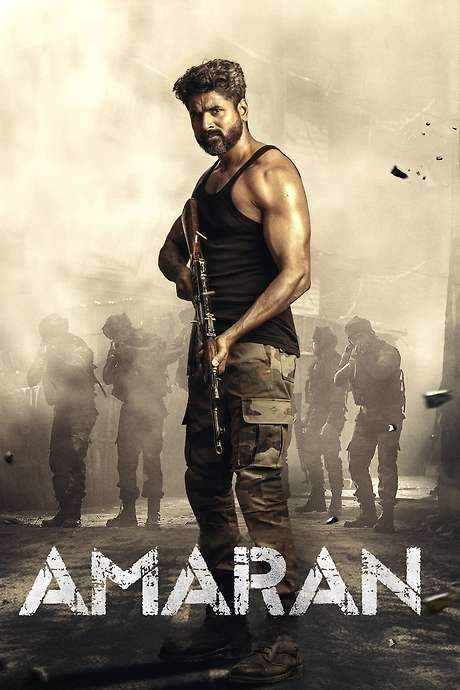
Indhu Rebecca Varghese, Sai Pallavi, the widow of Major Mukund Varadarajan, travels by plane to New Delhi to receive the Ashoka Chakra on her husband’s behalf. As the plane soars toward the capital, she quietly revisits the life she shared with Mukund and the dedication that shaped his military path, a celebration of a man who gave everything to his country. The film opens with this poignant frame and gradually builds a longer, more intimate portrait of love, duty, and sacrifice.
From his college days in Chennai, Major Mukund Varadarajan, Sivakarthikeyan, is shaped by a fierce respect for the Indian Armed Forces. In the same city, he meets Indhu, Sai Pallavi—a relationship that grows against a backdrop of family caution and religious differences. Their bond deepens as they navigate doubts about a soldier’s life and the obstacles posed by their families, but love prevails. After graduation, Mukund signs on with the Indian Army, trains at the Officers Training Academy in Chennai, and is commissioned as a lieutenant in the Rajput Regiment. The couple marries even as Indhu’s relatives remain wary, and soon they welcome a daughter into their growing family.
The story then shifts to Mukund’s posting as a major with the Rashtriya Rifles in Jammu and Kashmir, where the Indian Army battles insurgency on challenging terrain. He wrestles with his longing for home while building bridges with locals, using his position to seek information through social circles and civilian connections. His leadership earns him the respect of his soldiers and his commanding officer, Colonel Amit Singh Dabas. In one high-stakes moment, Mukund and his team confront militants led by Altaf Baba and, with the help of his fellow soldier Vikram Singh, Bhuvan Arora, he eliminates the threat and solidifies his reputation as a calm, capable commander who puts civilians first even in the heat of battle.
A subsequent counter-militancy operation unfolds in Qazipathri village, Shopian district, where Mukund leads a small unit tasked with neutralizing a group of armed terrorists hiding among civilians. He directs his men to safeguard noncombatants, a choice that shapes the tense, dusk-lit encounter. Mukund, alongside Vikram, advances into a safe house and engages the militants in a dangerous gunfight. All three militants are killed, but Mukund sustains a fatal wound. Despite urgent attempts to move him to medical care, he dies, leaving his regiment and his commanding officer devastated as they pay him their final respects.
The narrative returns to Indhu’s perspective as the film concludes with her performing Mukund’s last rites and, soon after, accepting the Ashoka Chakra from the President. The ending carries a bittersweet note of resilience: Indhu finds strength in the memory of a man who lived and died as a true soldier. The closing credits weave in actual footage from Mukund’s life and family, grounding the film in a real-world tribute to sacrifice and service.
Throughout, the film balances intimate memory with public honor, crafting a tribute that honors both a devoted spouse and a dedicated officer. The result is a sweeping, emotionally resonant portrait of courage, family, and national duty that invites reflection on what it means to serve—and to remember.