Plot Explained Spoilers guaranteed!
Plot Explained

Browse by genre

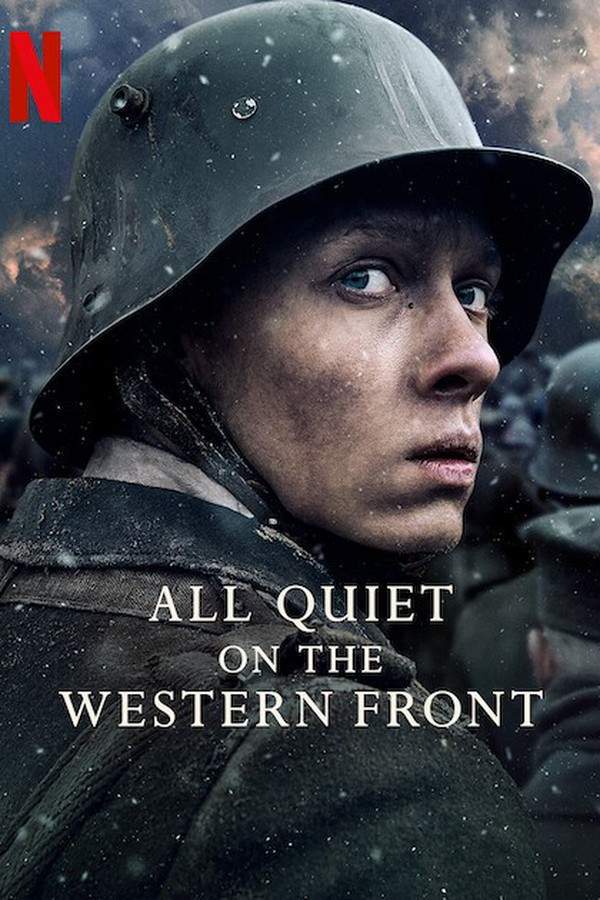
All Quiet on the Western Front (2022) movie poster

Timeline

All Quiet on the Western Front (2022) Timeline Explained – Every Event in Order

Release, runtime and language
2022 · 148 min · German
Echo score 75
Directed by
Edward Berger
Starring
Albrecht Schuch, Daniel Brühl, Aaron Hilmer, Adrian Grünewald, André Marcon, Andreas Döhler
Budget
$20M

Following the experiences of young German soldiers during World War I, this gripping drama portrays the devastating impact of war on idealism and hope. Through the eyes of Paul and his comrades, the film depicts the brutal realities of life in the trenches, as their initial enthusiasm transforms into despair and terror amidst the unrelenting chaos. Based on Erich Maria Remarque’s acclaimed novel, it offers a poignant and unflinching look at the horrors of the conflict.

On this page (4)
  1. 1 Events in order (14)
  2. 2 Timeline questions answered
  3. 3 Movie threads
  4. 4 Every angle

14 events in order · contains spoilers

All Quiet on the Western Front Timeline: Events in Chronological Order

Every key event of All Quiet on the Western Front (2022) in order, scene by scene, with when and where it takes place. Use it to untangle flashbacks, time jumps and parallel storylines, to refresh your memory before the sequel or to find the exact scene you are thinking of.

  1. Paul Joins the Army

    In 1917, intrigued by a patriotic speech, 17-year-old Paul Bäumer eagerly enlists in the Imperial German Army alongside his friends Albert, Franz, and Ludwig. They are unaware that they are donning the uniforms of fallen soldiers from a previous battle, fueled by a naive belief in the glory of war.

    When
    1917
  2. Deployed to Northern France

    After their enlistment, Paul and his friends are deployed to Northern France, specifically near La Malmaison. Here, they meet Stanislaus 'Kat' Katczinsky, an experienced soldier who tries to guide them through the harsh realities they are about to face.

    Where
    La Malmaison
  3. Tragedy Strikes

    During their first night in the trenches, the romanticized notions of war that Paul and his friends held are violently shattered when Ludwig is tragically killed by artillery fire. This serves as a harsh wake-up call to the grim realities of trench warfare on the Western Front.

    When
    1917
    Where
    Western Front
  4. A Farm Heist

    On November 7, 1918, Paul and Kat engage in a daring act of stealing a goose from a nearby farm to prepare a feast for their friends Albert, Franz, and Tjaden. This act serves as a fleeting moment of joy amidst the chaos and despair of war.

    When
    November 7, 1918
  5. Kat's Letter

    During the same evening, Kat, who struggles with literacy, asks Paul to read a letter from his wife. The letter reveals Kat’s profound fears about returning to normal life after the war, emphasizing the mental toll it has taken on the soldiers.

    When
    November 7, 1918
  6. Erzberger's Mission

    On November 9, Matthias Erzberger and the German delegation set out towards the Forest of Compiègne to negotiate a ceasefire. Meanwhile, Paul’s unit embarks on a grim mission to locate 60 missing recruits, discovering their tragic fate from a gas attack.

    When
    November 9, 1918
    Where
    Forest of Compiègne
  7. The Fateful Offensive

    That night, General Friedrichs orders an offensive before Allied reinforcements arrive. As Erzberger’s team reaches their destination, Paul’s regiment prepares for an impending attack, marking a moment of high tension as their fate hangs in the balance.

    When
    November 9, 1918
  8. Foch's Ultimatum

    On November 10, Supreme Allied Commander Ferdinand Foch presents the Germans with a stark ultimatum: accept the ceasefire terms within 72 hours. Despite fierce fighting and a temporary breach of the French lines, the German forces are soon repelled, leading to chaos.

    When
    November 10, 1918
  9. Betrayal and Chaos

    In the midst of battle, Paul witnesses the harrowing deaths of his friends: Franz becomes separated and is lost, and Albert is tragically killed by flames while trying to surrender. Paul is haunted by remorse as he confronts a dying French soldier in a crater.

    When
    November 10, 1918
  10. The Kaiser Abdictates

    As Erzberger is informed of Kaiser Wilhelm II's abdication, he is pressured to accept the Allies' conditions. Paul returns to his unit only to find a devastated Tjaden, who, facing amputation, is driven to take his own life, further deepening the tragedy of war.

  11. Armistice Day

    On November 11, at 11:00 AM, the armistice is scheduled to take effect. In a desperate act, Paul and Kat attempt to steal from a farm one last time, but disaster strikes when Kat is shot, succumbing before reaching medical assistance.

    When
    November 11, 1918
  12. Final Battle

    As General Friedrichs demands an attack commence just before the armistice, Paul fiercely combats French soldiers. In a chaotic moment, he is bayoneted from behind mere seconds before the clock strikes 11:00 AM, marking the end of combat.

    When
    November 11, 1918
  13. Paul's Death

    After being struck down, Paul stumbles out of the trenches to the sounds of celebration, symbolizing the end of conflict. Tragically, he dies from his wounds, highlighting the cruel irony of his fate just moments before peace is declared.

    When
    November 11, 1918
  14. Unrecorded Tragedy

    Following Paul’s death, a new recruit discovers his lifeless body, risking his own safety. Despite finding Franz’s scarf, he fails to retrieve Paul’s dog tag, leading to the somber fact that Paul’s death goes unrecorded, underscoring war’s devastating personal toll.

Last updated: November 16, 2024 at 16:09

Was this helpful?

Timeline questions answered

All Quiet on the Western Front Timeline Explained: Your Questions Answered

When does it happen, and why in that order? The questions people ask about the chronology of All Quiet on the Western Front (2022): time jumps, flashbacks, cause and effect between scenes and the correct order of events, each answered with spoilers.

Q1

Why does Paul kill the French soldier in the crater?

Panicked and overwhelmed by fear after being trapped in a crater during battle, Paul stabs the wounded French soldier in a desperate moment of self-preservation. The French soldier dies in Paul's arms, leaving him traumatized with guilt and begging for forgiveness from the corpse. This moment represents the brutal dehumanization war causes, Paul, who moments earlier was thinking about home, becomes a killer not out of hatred but out of panic and the instinct to survive.

  • paul bäumer
  • french soldier
  • crater
  • guilt
  • killing
Q2

Why does Tjaden commit suicide?

After being severely injured and learning he will lose his legs to amputation, Tjaden decides to take his own life rather than face a life of disability and suffering. He uses a fork that Paul and Kat had brought him to eat with, ending his own life in a tragic act of despair. The toll of war has broken him, and he sees death as preferable to a diminished existence.

  • tjaden
  • suicide
  • amputation
  • injury
  • despair
Q3

Why is Kat shot while stealing from the farm?

On November 11, Paul and Kat return to the farm to steal food one last time, believing the war will end soon. The farmer's son, vengeful over previous thefts, shoots Kat as they attempt to escape. Kat dies from the wound before reaching medical help. His death is tragically senseless, killed not in combat but in a desperate act to get food, just hours before the armistice takes effect.

  • kat
  • shot
  • farm
  • goose
  • death
Q4

Why does General Friedrichs order an attack right before the armistice?

General Friedrichs, desperate to achieve some kind of victory before the war ends, orders a final offensive set to begin at 10:45 AM on November 11, only 15 minutes before the armistice takes effect at 11:00 AM. This senseless attack reflects the military's refusal to accept defeat and their determination to send soldiers to their deaths even when peace is imminent. It exemplifies the futility and bureaucratic indifference that drive the war's tragic conclusion.

  • general friedrichs
  • offensive
  • armistice
  • attack
  • orders
Q5

Why does Paul's death go unrecorded?

After Paul is bayoneted and dies in the trenches just before 11:00 AM, a new recruit who Paul had earlier saved discovers his body. While the recruit finds Franz's scarf as a memento, he fails to retrieve Paul's dog tag, a metal identification disc worn by soldiers. Without the dog tag, Paul's death cannot be officially recorded, leaving him as another anonymous casualty in a war that claimed millions of lives.

  • paul
  • death
  • unrecorded
  • dog tag
  • recruit
Q6

Why do Paul and his friends wear uniforms of fallen soldiers?

When Paul and his friends enlist, they are unknowingly given uniforms taken from dead soldiers from previous battles. This dark detail symbolizes how the military machine treats soldiers as expendable resources, even their clothing is recycled from the dead. The boys wear these uniforms believing they represent glory, unaware they are literally wearing the remains of those who came before them.

  • uniforms
  • dead soldiers
  • enlistment
  • clothing
Q7

Why is Kat afraid to return to normal life after the war?

Kat, who struggles with illiteracy, asks Paul to read a letter from his wife that reveals his deep anxieties about civilian life. After years of violence and survival, Kat fears he cannot readjust to normal society or provide for his family. This moment exposes the psychological trauma soldiers face, war has changed them so profoundly that peace itself feels terrifying and unfamiliar.

  • kat
  • letter
  • postwar
  • fear
  • adjustment
Q8

Why do the 60 missing recruits die from gas?

Paul's unit is sent to locate 60 missing recruits who were sent to reinforce their position. The recruits are found dead after removing their gas masks prematurely, likely in panic or confusion. They likely thought the danger had passed or couldn't tolerate the masks any longer, only to discover the gas was still present. Their deaths represent the cruel randomness of trench warfare and how even simple decisions can be fatal.

  • recruits
  • gas
  • masks
  • death
  • trenches
Q9

Why does Albert die while trying to surrender?

During the chaotic battle on November 10, Albert attempts to surrender to the French forces, hoping to escape death. Instead, he is killed by a flamethrower that engulfs him in flames. His death underscores the futility of surrender in the chaos of war, neither side may see or honor the attempt to surrender, and the technology of war operates without mercy or discrimination.

  • albert
  • flamethrower
  • surrender
  • death
Q10

Why does Erzberger accept the Allied armistice terms?

Matthias Erzberger, representing Germany in the armistice negotiations, receives news that Kaiser Wilhelm II has abdicated. Field Marshal Paul von Hindenburg then commands Erzberger to accept the Allied conditions, which are harsh and non-negotiable. With Germany's leadership collapsing and military defeat certain, Erzberger has no choice but to sign, ending the fighting but cementing Germany's surrender.

  • erzberger
  • armistice
  • hindenburg
  • kaiser
  • surrender
Q11

What happens to Franz during the final battle?

During the November 10 battle, Franz becomes separated from his comrades and is lost in the chaos of the fighting and tank assault. He is never seen again after this point. Later, Tjaden gives Paul Franz's scarf as a keepsake, confirming Franz has died. His death, like so many in the war, is anonymous, he simply disappears in the turmoil of battle.

  • franz
  • death
  • separated
  • battle
  • scarf
Q12

Why does Paul join the army despite the risks?

Paul and his friends are motivated to enlist after a stirring patriotic speech from their school official. They genuinely believe in the glory and honor of war, seeing it as their duty to their country. This naive enthusiasm is typical of young men fed nationalist propaganda, the reality of trench warfare quickly destroys their romanticized notions when they lose Ludwig on their first night.

  • paul
  • enlist
  • patriotism
  • school
  • recruitment

Movie threads

More Movies Like All Quiet on the Western Front, by Mood & Story

Curated lists built around what makes All Quiet on the Western Front tick: the same mood, the same kind of story or the same emotional payoff. Each list explains why these movies belong together.

Grim War Dramas Like All Quiet on the Western Front

Stories that strip away glory to reveal the devastating human cost of conflict. If you were affected by the raw portrayal of conflict in All Quiet on the Western Front, explore these similar movies. This selection features intense, heavy dramas that depict the grim reality and futility of war, focusing on survival, trauma, and the erosion of innocence.

  • grim
  • devastating
  • brutal
  • sorrowful
  • oppressive
  • somber
  • Tone: bleak, devastating, somber
  • Pacing: steady, relentless
Why these movies?

The story pattern: Narratives in this thread typically follow ordinary individuals—often young and idealistic—thrust into the machinery of war. The arc is one of deconstruction, where initial beliefs are systematically dismantled by relentless brutality, leading to despair, trauma, or death, emphasizing the impersonal and cyclical nature of large-scale conflict.

Why they belong together: These films are grouped by their shared commitment to a bleak, uncompromising tone, high emotional intensity, and a sober focus on the devastating human experience of war. They prioritize emotional impact and thematic weight over conventional plot resolutions.

Movies About Lost Innocence Like All Quiet on the Western Front

Journeys where hope is crushed by harsh reality, leaving only the burden of survival. For viewers who appreciated the theme of shattered idealism in All Quiet on the Western Front, this list offers movies with similar heavy narratives. Discover stories focused on the traumatic loss of innocence and the heavy psychological toll of survival against overwhelming odds.

  • sorrowful
  • devastating
  • tragic
  • somber
  • grim
  • anxious
  • Tone: bleak, sorrowful, tragic
  • Pacing: steady, character-driven
Why these movies?

The story pattern: The narrative pattern involves a stark before-and-after contrast. We meet characters with hope and naivety, which are then systematically destroyed by an oppressive system or event—be it war, crime, or dystopia. The story charts their psychological deformation as they adapt to survive, often ending with them permanently scarred or hollowed out.

Why they belong together: These films are united by their exploration of a specific character arc: the tragic erosion of idealism. They share a heavy emotional weight, a bleak or bittersweet tone, and a focus on the internal, psychological cost of enduring extreme circumstances.

Every angle

All Quiet on the Western Front (2022) Explained: Plot, Ending, Timeline & Characters

Everything about All Quiet on the Western Front in one place: what happens in the plot summary, the timeline in chronological order, the characters and meaning, the ending explained and a spoiler-free summary. What's After the Movie adds the cast, box office and post-credit scenes.

Coming soon on iOS and Android

The Plot Explained Movie Summary App

Plot summaries, endings explained and timelines on your phone. Catch up on any movie in minutes, save your favorites and never miss a twist again.

Be the first to know when we launch. Your email stays private, always.

Learn more about the app