






Plot Explained Spoilers guaranteed!
Plot Explained

Browse by genre

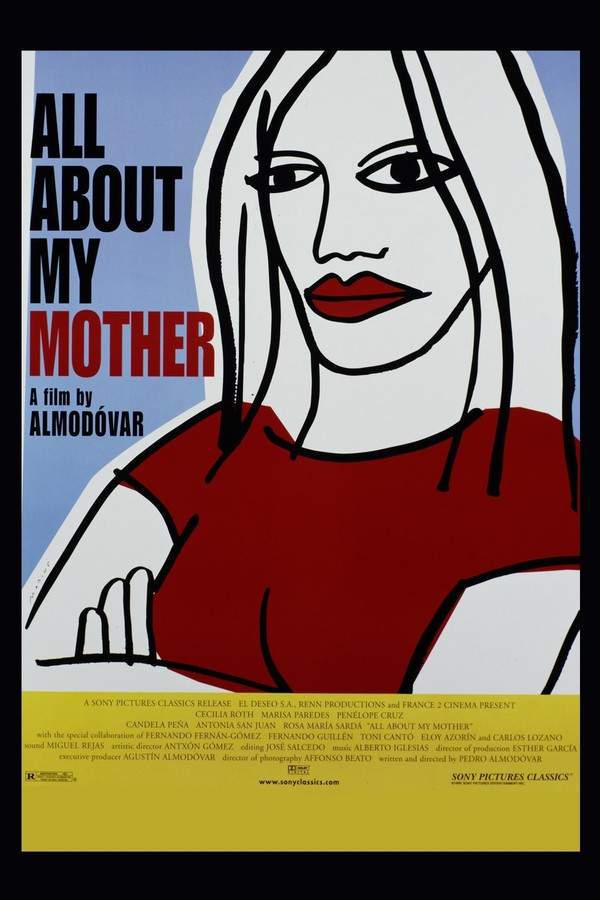
All About My Mother (1999) movie poster

Timeline

All About My Mother (1999) Timeline Explained – Every Event in Order

Release, runtime and language
1999 · 101 min · Spanish
Directed by
Pedro Almodóvar
Starring
Cecilia Roth, Marisa Paredes

Following the tragic death of her filmmaker son, a Barcelona mother sets out to find him a father he never knew. Her quest leads her to an English actress and a transgender woman, forging unexpected bonds and illuminating the complexities of love, family, and identity as she confronts her own grief and finds strength in the connections she makes.

On this page (6)
  1. 1 Where to watch
  2. 2 Events in order (12)
  3. 3 Timeline questions answered
  4. 4 Movie threads
  5. 5 Movies like All About My Mother
  6. 6 Every angle

Where to watch

Where to Watch All About My Mother (1999)

Where can you watch All About My Mother? Stream, rent or buy it in the US, including on Amazon Video, Apple TV Store and Fandango At Home: current JustWatch availability with up-to-date prices.

Streaming availability powered by JustWatch

12 events in order · contains spoilers

All About My Mother Timeline: Events in Chronological Order

Every key event of All About My Mother (1999) in order, scene by scene, with when and where it takes place. Use it to untangle flashbacks, time jumps and parallel storylines, to refresh your memory before the sequel or to find the exact scene you are thinking of.

  1. Esteban's Birthday Celebration

    Manuela, a dedicated mother, celebrates her son Esteban's 17th birthday in Madrid. The day is special as they prepare to attend a performance of Tennessee Williams' *A Streetcar Named Desire*, a treat Esteban has been eagerly looking forward to.

    When
    Birthday
    Where
    Madrid
  2. Tragic Accident

    After the play, as they wait outside for an autograph, Esteban makes a dash towards a taxi that is leaving. Unfortunately, in his excitement, he is struck by a car, resulting in a tragic and sudden death that leaves Manuela devastated.

    When
    Evening
    Where
    Madrid
  3. Journey to Barcelona

    In her quest for closure and understanding, Manuela travels to Barcelona to find Esteban's father, Lola, who is unaware he has a child. This journey symbolizes her effort to connect with her past while searching for answers.

    Where
    Barcelona
  4. Reunion with Agrado

    Upon arriving in Barcelona, Manuela reconnects with her old friend Agrado, who is also a transvestite. Agrado becomes a pillar of support for Manuela during her time of sorrow, helping her navigate this difficult period in her life.

    Where
    Barcelona
  5. Meeting with Rosa

    Manuela finds work through Agrado with Rosa, a nun struggling with her own hardships, including an unexpected pregnancy and a diagnosis of AIDS. Their friendship grows as they bond over their challenges, providing emotional support.

    Where
    Barcelona
  6. Another Performance of *A Streetcar Named Desire*

    Manuela attends yet another performance of *A Streetcar Named Desire*, where she unexpectedly encounters Huma, the actress her son had admired. This meeting brings back a flood of memories and emotions tied to Esteban's passion for the play.

    Where
    Barcelona
  7. Becoming a Caregiver

    During her time in Barcelona, Manuela takes on the role of caregiver for Rosa, who is facing the challenges of imminent motherhood while battling AIDS. Manuela's nurturing nature shines through as she supports Rosa through this difficult journey.

    Where
    Barcelona
  8. Rosa's Death

    Tragically, after giving birth, Rosa succumbs to AIDS, escalating Manuela's grief as she bears yet another profound loss. This moment underscores the severity of the struggles faced by the women in a world ravaged by illness and heartache.

    Where
    Barcelona
  9. Lola's Reappearance

    Shortly after Rosa's death, Lola reunites with Manuela. However, he is also suffering from AIDS, making their reunion even more poignant as they both face the devastating impacts of illness and loss together.

    Where
    Barcelona
  10. Lola Meets His Son

    In a heart-wrenching moment, Lola meets his newborn son for the first time, whom Manuela has named Esteban in honor of her deceased child. This encounter symbolizes the intertwining of loss and the hope of new beginnings amidst sorrow.

    Where
    Barcelona
  11. Return to Madrid

    Eventually, Manuela decides to return to Madrid, retracing her journey with a new baby in her arms. This return represents a significant transition in her life, filled with both loss and the promise of renewal.

    Where
    Madrid
  12. Symbol of Hope

    With her new baby son, Manuela symbolizes hope and resilience in the face of profound personal tragedy. Her story reflects the enduring cycle of life and the capacity to find strength amidst overwhelming heartbreak.

    Where
    Madrid

Last updated: November 04, 2024 at 00:41

Was this helpful?

Timeline questions answered

All About My Mother Timeline Explained: Your Questions Answered

When does it happen, and why in that order? The questions people ask about the chronology of All About My Mother (1999): time jumps, flashbacks, cause and effect between scenes and the correct order of events, each answered with spoilers.

Q1

Why does Esteban run after the taxi and get hit by a car?

After watching A Streetcar Named Desire, 17-year-old Esteban becomes excited when he sees one of the actresses leaving the theater. Eager to get an autograph from Huma, the lead actress he admires, he chases after the departing taxi. In his haste, he runs into the street without looking and is struck by a car, resulting in his instant death.

Foreshadowing: The play's themes of desire, obsession, and tragedy foreshadow Esteban's fate.

  • esteban death
  • taxi accident
  • huma Rojo
  • why esteban died
Q2

Why does Manuela travel to Barcelona to find Esteban's father?

After losing her son, Manuela seeks closure and a connection to his past. She travels to Barcelona to find Esteban’s biological father, who she kept secret from throughout his life. She wants to tell the father that he had a son, giving meaning to her loss by letting this man know he had a child.

  • manuela
  • barcelona
  • esteban father
  • lola
  • quest
Q3

Who is Esteban's father and why was he never in Esteban's life?

Esteban's father is Lola, a transgender woman who was a transvestite sex worker when Manuela knew her. Manuela never told Lola about the pregnancy because she left shortly after learning she was pregnant. Lola was unaware she had fathered a child and never met Esteban before his death.

  • lola
  • esteban father
  • transgender woman
  • unknown child
Q4

Who is Rosa and who is the father of her baby?

Rosa is a young nun who works at a church in Barcelona. She becomes pregnant after a secret relationship with Lola, the same transvestite who fathered Esteban's child. Rosa is three months pregnant when Manuela meets her and is also HIV positive, having contracted it from Lola.

  • rosa
  • nun
  • pregnant
  • lola baby
  • father
Q5

What happens to Rosa after she gives birth?

Rosa dies from AIDS-related complications shortly after giving birth to a healthy baby boy. Throughout her pregnancy, her health deteriorates despite Manuela's care. She passes away leaving the newborn without a mother, and Manuela takes responsibility for the child.

Foreshadowing: The film establishes Rosa's illness early, building to this tragic outcome.

  • rosa death
  • aids
  • died after childbirth
  • baby boy
Q6

Why does Lola also have AIDS?

Lola is HIV positive, having contracted the virus through her work as a sex worker before her transition. She unknowingly passed the virus to both Rosa and, years earlier, to Manuela, though only Rosa developed full-blown AIDS. Lola is also dying from AIDS when she reunites with Manuela in Barcelona.

  • lola
  • aids
  • hiv positive
  • transgender woman
  • illness
Q7

Why does Manuela name the baby Esteban?

When Rosa dies, the newborn needs a caretaker and a name. To honor her dead son whom she lost at the beginning of the film, Manuela names the baby Esteban. This act allows her to transform her grief into purpose, keeping her lost son's memory alive through caring for this child.

  • baby named esteban
  • manuela
  • memory
  • honor son
  • adopted baby
Q8

Why is Huma Rojo important to the story?

Huma Rojo is the actress who starred in A Streetcar Named Desire, the play Esteban loved and died trying to get her autograph. When Manuela attends the same play in Barcelona, she unexpectedly meets Huma. This connection allows Manuela to feel close to her son's dreams and passions, as Huma represents the artistic world Esteban admired.

Foreshadowing: Esteban's enthusiasm about seeing Huma in the play establishes her significance before his death.

  • huma Rojo
  • actress
  • streetcar named desire
  • esteban dream
  • barcelona
Q9

Who is Agrado and how does she help Manuela?

Agrado is a transvestite and old friend of Manuela from Madrid who now lives in Barcelona. When Manuela arrives in the city searching for Lola, Agrado becomes her guide and support system. She helps Manuela find work with Rosa and provides emotional companionship during her difficult journey.

  • agrado
  • friend
  • barcelona
  • support
  • transvestite
Q10

Why does Manuela return to Madrid with the baby at the end?

Manuela returns to Madrid, retracing her original journey with her son, but now carries a new baby in her arms. This return symbolizes hope and the cycle of life continuing despite profound loss. By taking on the role of mother to Esteban's half-brother, she finds meaning in her grief and a reason to go on living.

  • return to madrid
  • baby
  • ending
  • hope
  • renewal
  • cycle of life

Movie threads

More Movies Like All About My Mother, by Mood & Story

Curated lists built around what makes All About My Mother tick: the same mood, the same kind of story or the same emotional payoff. Each list explains why these movies belong together.

Movies about grief and found family like All About My Mother

Stories where profound loss leads to unexpected, nurturing communities. If you were moved by the way All About My Mother explores grief through the formation of a nontraditional family, you'll find similar stories here. These films depict characters navigating profound loss who find solace and strength in unexpected connections, creating hopeful and deeply human narratives.

  • grieving
  • tender
  • melancholic
  • hopeful
  • intimate
  • sorrowful
  • Tone: bittersweet, tender, melancholic
  • Pacing: steady, reflective, character-driven
Why these movies?

The story pattern: These narratives typically begin with a devastating, life-altering loss that sends a protagonist into emotional freefall. Their path to healing is not solitary; instead, they cross paths with other marginalized or broken individuals. Through shared vulnerability and mutual care, a new, chosen family emerges, offering a fragile but resilient hope that coexists with enduring sadness.

Why they belong together: These films are grouped together because they share a central thematic arc: moving from isolating grief to communal healing. They balance a heavy emotional weight with a tender, reflective tone, prioritizing intimate character studies over plot-driven action. The experience is defined by its bittersweet nature, acknowledging the permanence of loss while celebrating the redemptive power of connection.

Intimate identity melodramas similar to All About My Mother

Character-driven stories exploring complex identities within intimate settings. For viewers who appreciated the intimate exploration of identity, performance, and human connection in All About My Mother, this collection features similar character-driven dramas. These movies delve into the lives of artists, outsiders, and individuals questioning their roles in life, all with a steady, reflective pace.

  • reflective
  • intimate
  • melancholic
  • tender
  • character-driven
  • emotional
  • Tone: melancholic, reflective, intimate
  • Pacing: steady, deliberate, character-focused
Why these movies?

The story pattern: The narrative pattern revolves around a central character, often an artist or caregiver, whose sense of self is challenged. The story unfolds through their interactions with a small, vividly drawn ensemble of characters, each representing different facets of identity or performance. Conflicts are internal and interpersonal, focusing on revelations and acceptances rather than external action, building to an emotionally resonant conclusion.

Why they belong together: These films are united by their focus on the performance of identity in everyday life, their ensemble casts of nuanced characters, and their intimate, steady pacing. They share a melancholic yet tender mood, often involving themes of art, illness, and nontraditional relationships. The experience is defined by its reflective depth and emotional sincerity.

If you liked this

Movies Like All About My Mother

Similar movies to All About My Mother: the same genre, themes or kind of story. Each one comes with its own plot summary, timeline and ending explained.

Browse all movie summaries

Every angle

All About My Mother (1999) Explained: Plot, Timeline & Characters

Everything about All About My Mother in one place: what happens in the plot summary, the timeline in chronological order, the characters and meaning and a spoiler-free summary. What's After the Movie adds the cast, box office and post-credit scenes.

Coming soon on iOS and Android

The Plot Explained Movie Summary App

Plot summaries, endings explained and timelines on your phone. Catch up on any movie in minutes, save your favorites and never miss a twist again.

Be the first to know when we launch. Your email stays private, always.

Learn more about the app