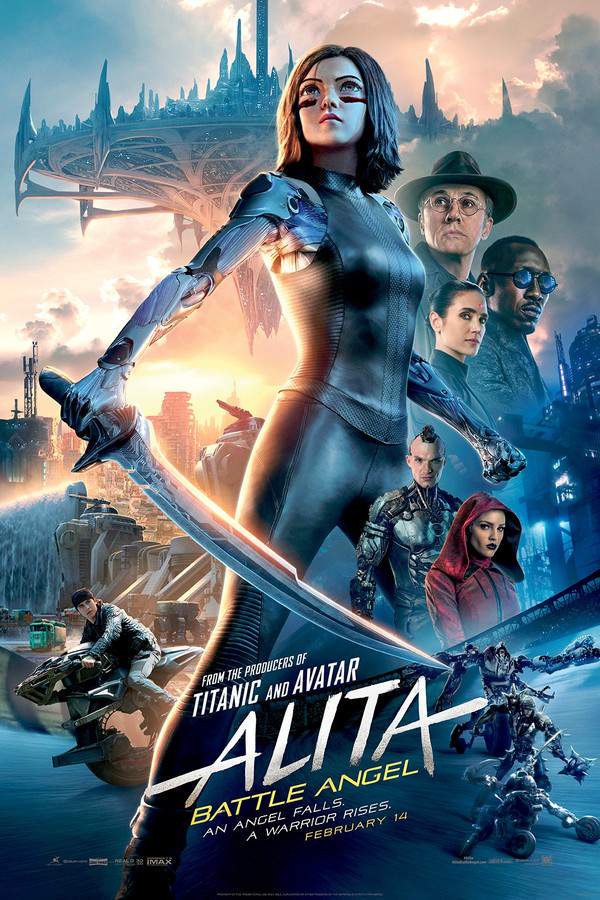
The ending of Alita: Battle Angel is defined not by a traditional resolution, but by a sudden shift in purpose that leaves the primary narrative conflict wide open. Following the tragic death of Hugo, who falls from the sky city of Zalem after being struck by a defense ring, Alita channels her grief into her rising career as a Motorball champion. In the film's final moments, she stands before a massive crowd in the arena, tears streaming down her face, and raises her blade toward the floating city above. This gesture is a direct, public challenge to Nova, the mysterious figure pulling the strings from above. As the camera reveals Nova’s face—played by Edward Norton—watching from Zalem, the screen fades to black.
This conclusion is jarring because it halts the story precisely when a typical blockbuster would begin its final act. Throughout the film, Alita navigates threats from various enemies, including the cyborg Grewishka and the crime lord Vector, only to discover that the true architect of her struggles is Nova. By ending the movie the instant Alita identifies her ultimate target, the film denies the audience the climactic showdown they have been primed to expect. Instead of a definitive victory, the finale serves as a "call to arms," signaling the start of a larger war rather than the conclusion of a battle.
The reason for this abrupt structure lies in the film's adaptation choices and its franchise ambitions. While the original 1993 anime concluded similarly with the tragedy of Hugo’s death, it offered a contained story where defeating the villain Vector provided a sense of closure. The live-action film, however, expands the scope by introducing Nova and the political machinations of Zalem early on. This expansion creates a narrative promise—that Alita will eventually confront the source of her world's corruption—that the film is unable to fulfill in a single runtime. Consequently, the movie functions largely as an elaborate setup for a sequel, prioritizing world-building and future plot threads over a standalone narrative arc.
Ultimately, the ending highlights Alita’s transition from innocence to determination. Hugo’s death is the catalyst that strips away her naivety, solidifying her identity as a warrior. While the story lacks a concrete resolution regarding the villain, the final image of Alita pointing her sword at the sky solidifies her agency; she is no longer a lost girl discovering the world, but a battle angel actively choosing her fight. The film concludes on a note of promise and defiance, leaving the audience with a character who is fully realized, even if her story is intentionally left unfinished.