Plot Explained Spoilers guaranteed!
Plot Explained

Browse by genre

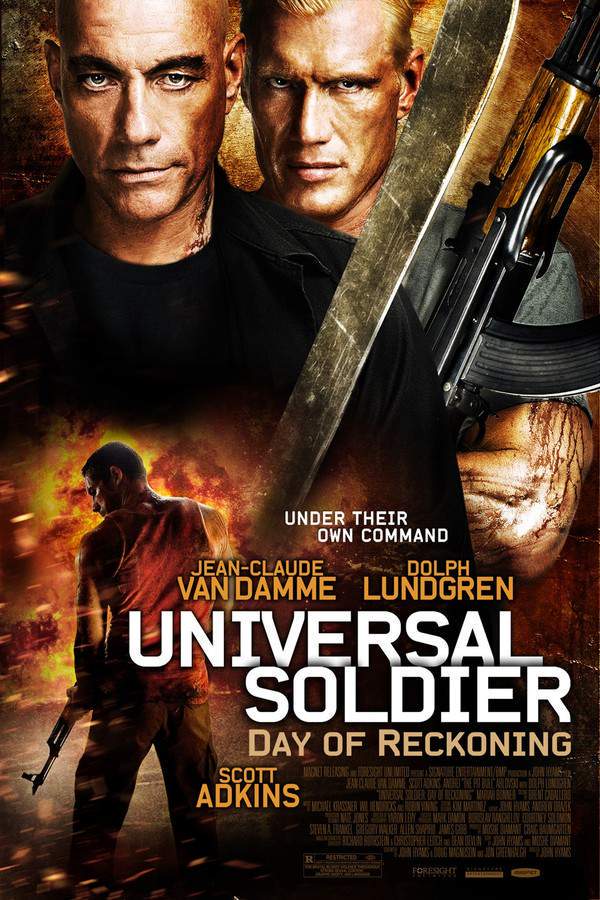
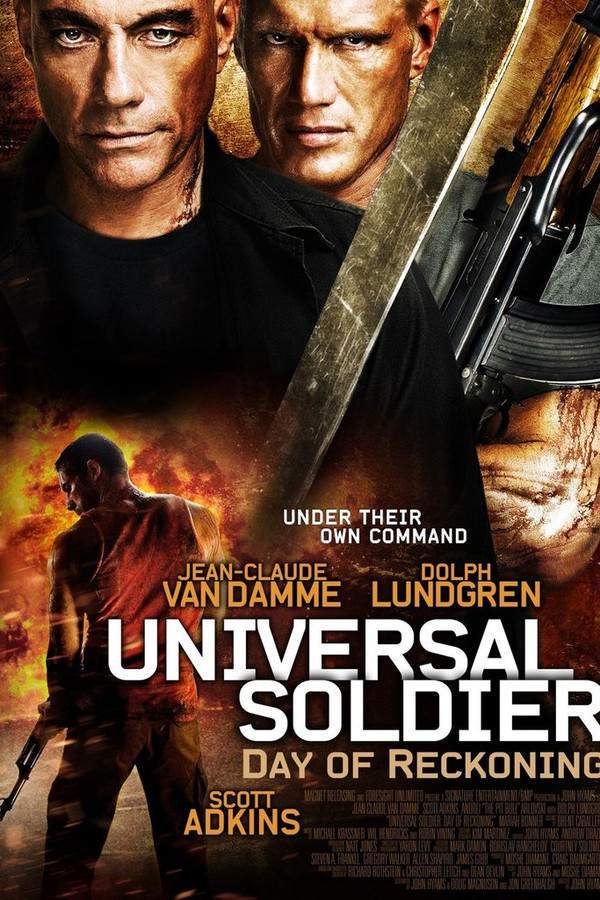
Universal Soldier: Day of Reckoning (2012) movie poster

Plot Summary

Universal Soldier: Day of Reckoning (2012) Plot Summary Explained

Release, runtime and language
2012 · 114 min · English
JustWatch #34,135 1
Directed by
John Hyams
Starring
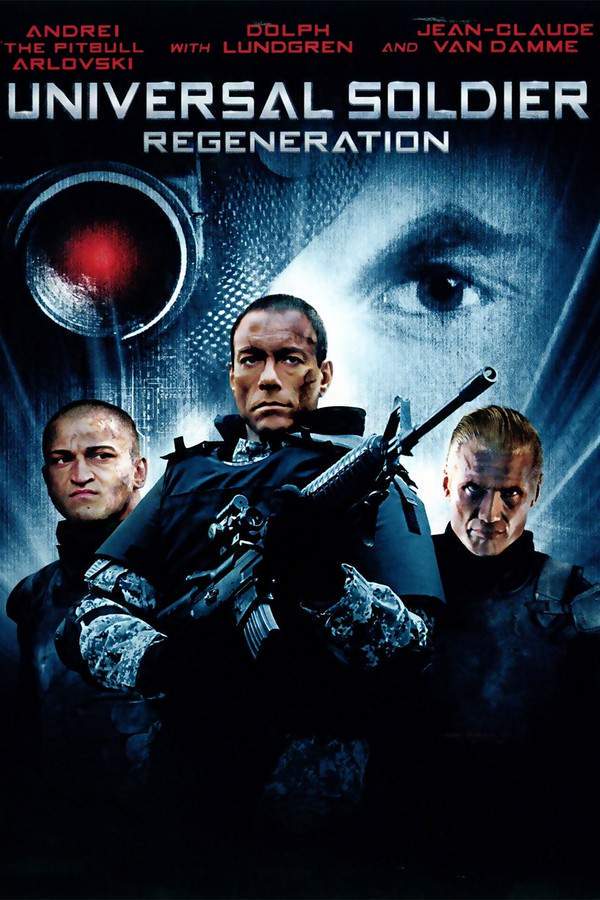
Scott Adkins, Dolph Lundgren, Jean-Claude Van Damme

Following a brutal home invasion that leaves his family dead, a man awakens from a coma driven by vengeance against Luc Deveraux. He finds himself caught in a dangerous pursuit by UniSol agents while grappling with a bizarre reality. To survive, he must confront Andrew Scott, the leader of a resurrected army of genetically enhanced soldiers, and uncover a startling connection to his own identity.

On this page (6)
  1. 1 Where to watch
  2. 2 What happens: full plot
  3. 3 Plot questions answered
  4. 4 Movie threads
  5. 5 Movies like Universal Soldier: Day of Reckoning
  6. 6 Every angle

Where to watch

Where to Watch Universal Soldier: Day of Reckoning (2012)

Where can you watch Universal Soldier: Day of Reckoning? Stream, rent or buy it in the US, including on Fawesome, Tubi TV and YouTube Free: current JustWatch availability with up-to-date prices.

Streaming availability powered by JustWatch

Full plot summary · contains spoilers

What Happens in Universal Soldier: Day of Reckoning: Full Plot Summary

The whole story of Universal Soldier: Day of Reckoning (2012) explained, from the opening scene to the final frame: every key event, every twist and what it all adds up to. Read it as a quick recap before the sequel, to check a scene you missed, or to finally understand what really happened.

John, portrayed by Scott Adkins, seemingly awakens from a nine-month coma, having been led to believe that a man named Deveraux brutally murdered his family. However, the shocking revelation is that this John is actually a new clone, crafted with fabricated memories of a family that never existed. The supposed crime never took place. An FBI agent, played by Rus Blackwell, approaches John immediately upon his awakening, bombarding him with questions and presenting a photo of the alleged killer, thus nudging John toward a path of vengeance against Deveraux.

The government has a vested interest in John, as Deveraux is known for operating an underground organization that liberates clones like John, restoring their autonomy and erasing their implanted false memories. As John ventures out into the world, he encounters familiar faces he has never seen before—an unsettling experience—hinting at a chaotic past laden with violence. For instance, his ex-girlfriend reveals he once assaulted a man mercilessly outside her workplace, sealing his fate as an unwelcome presence there.

Complications arise when John uncovers the horrific legacy of violence he has left behind, highlighted by a chilling encounter with a disfigured man in a storage unit, who demonstrates that John is responsible for a friend's death. Eventually, he discovers another version of himself—a previous clone who has been liberated by Deveraux and experienced a similar fate but without the false familial memories.

As the narrative unfolds, both John and Deveraux's factions are on a collision course, believing John to be a traitor. In a critical turn of events, after killing Magnus, his relentless pursuer, John confronts his original clone, culminating in an explosive revelation. When he is ultimately captured by Deveraux’s men, the layers of deceit are stripped away, offering him a stark choice: to erase his false memories, which initially he consents to, until the thought of losing the memories of his wife and daughter triggers a violent rebellion within him.

What began as a mission fueled by the government morphs into a personal vendetta, cleverly manipulating John's psyche to entrap Deveraux. Ignoring the complex web of truth and deception that surrounds him, John emerges as the leader of the universal soldiers following Deveraux's demise. The climax accelerates rapidly when John confronts the FBI agent once more, armed with the knowledge he has gained. In a dramatic conclusion, he retaliates against the agent, claiming his place and replacing him with a clone, thereby closing the circle of manipulation and retribution.
Last updated: October 28, 2024 at 08:23

Was this helpful?

Plot questions answered

Universal Soldier: Day of Reckoning Plot Explained: Your Questions Answered

The questions people ask most about Universal Soldier: Day of Reckoning (2012): what happens in the confusing scenes, why the characters do what they do, the twists, hidden details and what the ending means. Each answer contains spoilers.

Q1

Why does John believe Deveraux murdered his family?

John was created as a clone with implanted false memories. The government fabricated the story of a brutal home invasion that killed his wife and daughter specifically to give him a reason to hunt Deveraux. This was a psychological manipulation tactic to turn John into a weapon against the underground organization that frees clones from their programming.

Foreshadowing: The FBI agent immediately presents John with a photo of Deveraux upon waking, steering his vengeance before he can question his memories.

  • false memories
  • clone programming
  • government manipulation
  • Deveraux
Q2

What is Deveraux's underground organization?

Deveraux leads an operation that liberates clones from their implanted memories and government control. Unlike the military program that creates soldiers like John, Deveraux's group helps clones discover their true nature and live free from programming. This is why the government wants Deveraux eliminated - he undermines their investment in supersoldiers.

Foreshadowing: John discovers another clone who was liberated by Deveraux and now lives without the false family memories.

  • clone liberation
  • underground organization
  • Deveraux
  • memory erasure
Q3

Who is the original John clone that John confronts?

The original John is the first clone created from the real person's DNA. When John confronts his original clone, he learns the truth about his existence - that multiple versions have been created and used as weapons. The original has likely gone through similar cycles of programming and potential liberation.

Foreshadowing: The timeline shows John's confrontation with his original clone as a pivotal revelation moment.

  • original clone
  • John
  • confrontation
  • identity
Q4

Why does John refuse to have his memories erased?

When given the choice to erase his false memories, John initially agrees but then violently rebels when he realizes doing so would mean losing the memories of his wife and daughter. Even though he knows they never existed, the emotional attachment to those memories proves more powerful than the truth. This moment shows his programming is deeper than knowledge.

Foreshadowing: The memory choice comes after John has already learned the truth, making his rejection of reality more tragic.

  • memory erasure
  • false family
  • John rebellion
  • emotional programming
Q5

How does John become the new leader of the UniSols?

After Deveraux is killed during the conflict, John emerges as the survivor and assumes command of the Universal Soldier program. His journey from manipulated weapon to leader represents his transformation from pawn to power player. The military structure allows him to take over because he has proven himself through combat and survival.

Foreshadowing: John's trajectory shifts from government mission to personal vendetta, building toward this takeover.

  • UniSol leader
  • John
  • Deveraux death
  • takeover
Q6

Why are both factions after John as a traitor?

John is caught between two opposing sides. The government views him as a traitor because he was supposed to kill Deveraux but instead learns the truth about clones. Deveraux's faction sees him as a threat because John was initially sent to destroy them. Both sides attack John, forcing him to fight his way through to the truth.

Foreshadowing: The timeline marks John's conflict with both factions as a central complication.

  • John
  • traitor
  • government
  • Deveraux faction
  • conflict
Q7

What happens to the previous clone version of John?

The previous clone John encounters was already liberated by Deveraux's organization. This clone has experienced life without the false family memories and understands the truth about clone existence. John meeting this version shows him what his future could be if he chooses liberation over vengeance.

Foreshadowing: The timeline references this discovery as a key turning point in John's understanding.

  • previous clone
  • John
  • liberation
  • Deveraux
Q8

What does John replacing the FBI agent with a clone mean?

In the final scene, John kills the FBI agent who manipulated him and installs a clone in his place. This closes the circle of manipulation - John has become the new puppeteer, using the same tactics employed against him. It symbolizes his complete transformation and the cyclical nature of the control system.

Foreshadowing: The ending mirrors the opening manipulation, showing John has embraced his role as controller rather than controlled.

  • FBI agent
  • clone replacement
  • manipulation circle
  • ending
Q9

Why was John created with a fake family backstory?

The government created John with implanted memories of a family to give him emotional motivation. A soldier with personal revenge is more effective and controllable than one without roots. The fabricated tragedy of the home invasion made John laser-focused on killing Deveraux without questioning orders.

Foreshadowing: The FBI agent's early questioning and photo presentation were designed to reinforce this false narrative.

  • false memories
  • family
  • government
  • programming
  • control
Q10

What triggers John to turn his vendetta personal against Deveraux?

After being captured and learning the full truth about his existence, John's motivation shifts from the government's mission to personal revenge. The realization that his entire life was fabricated, combined with the trauma of learning what he has done while controlled, fuels his determination to destroy Deveraux not as an assignment but as his own purpose.

Foreshadowing: The timeline marks this shift from government mission to personal vendetta as a key character transformation.

  • personal vendetta
  • John
  • Deveraux
  • motivation shift

Movie threads

More Movies Like Universal Soldier: Day of Reckoning, by Mood & Story

Curated lists built around what makes Universal Soldier: Day of Reckoning tick: the same mood, the same kind of story or the same emotional payoff. Each list explains why these movies belong together.

Amnesiac thrillers like Universal Soldier: Day of Reckoning

Protagonists who must unravel their own fabricated reality while being hunted. If you liked the paranoid, disorienting journey of Universal Soldier: Day of Reckoning, you'll enjoy these movies where protagonists question their own identity. Discover similar action and sci-fi stories featuring false memories, relentless pursuit, and brutal revelations about the self.

  • disorienting
  • paranoid
  • unsettling
  • vengeful
  • violent
  • identity crisis
  • Tone: dark, paranoid
  • Pacing: fast, relentless
Why these movies?

The story pattern: The narrative typically begins with a traumatic event that shatters the protagonist's perception of reality. As they seek answers, they discover they are a pawn in a larger conspiracy, often involving cloning, brainwashing, or advanced technology. The journey is one of uncovering a sinister truth about their own origins, leading to a violent confrontation with their creators.

Why they belong together: These movies are grouped by their core premise of an identity crisis fueled by external manipulation. They share a dark, intense tone, fast pacing driven by pursuit and revelation, and a heavy emotional weight stemming from existential horror.

Bleak action movies with cyclical vengeance like Universal Soldier: Day of Reckoning

Stories where the quest for vengeance consumes the hero, leading to a bleak, cyclical ending. Fans of the grim, violent conclusion in Universal Soldier: Day of Reckoning will appreciate these stories of moral collapse. Explore similar movies about vengeance that backfires, where heroes become villains and endings are starkly bleak and emotionally heavy.

  • bleak
  • violent
  • vengeful
  • grim
  • brutal
  • hopeless
  • Tone: dark, grim
  • Pacing: fast, brutal
Why these movies?

The story pattern: The story follows a character who suffers a profound loss and embarks on a violent path of retribution. However, the journey reveals that the enemy is a reflection of their own potential for darkness. The climax often sees the protagonist achieving their goal at a terrible cost, or worse, succumbing to the cycle of violence and becoming the new antagonist, ensuring the conflict continues.

Why they belong together: This thread groups films based on a specific, tragic character arc and a consistently dark, high-intensity tone. The shared elements are a fast pace, heavy emotional weight, a focus on brutal violence, and most importantly, a bleak ending that subverts traditional heroism.

If you liked this

Movies Like Universal Soldier: Day of Reckoning

Similar movies to Universal Soldier: Day of Reckoning: the same genre, themes or kind of story. Each one comes with its own plot summary, timeline and ending explained.

Browse all movie summaries

Every angle

Universal Soldier: Day of Reckoning (2012) Explained: Plot, Timeline & Characters

Everything about Universal Soldier: Day of Reckoning in one place: what happens in the plot summary, the timeline in chronological order, the characters and meaning and a spoiler-free summary. What's After the Movie adds the cast, box office and post-credit scenes.

Coming soon on iOS and Android

The Plot Explained Movie Summary App

Plot summaries, endings explained and timelines on your phone. Catch up on any movie in minutes, save your favorites and never miss a twist again.

Be the first to know when we launch. Your email stays private, always.

Learn more about the app