Plot Explained Spoilers guaranteed!
Plot Explained

Browse by genre

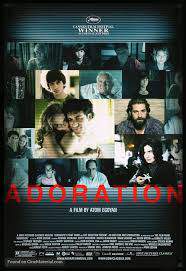
Adoration (2009) movie poster

Timeline

Adoration (2009) Timeline Explained – Every Event in Order

Release, runtime and language
2009 · 100 min · French
Loading streaming availability…
Directed by
Atom Egoyan

A French class assignment unexpectedly triggers a deep connection for Simon, who begins to question a past family tragedy. He reimagines a terrorist's story as his own, leading him to suspect his father's death wasn't an accident. As Simon investigates, a fabricated online persona exposes a startling revelation and ultimately leads to an unexpected, evolving family relationship.

On this page (6)
  1. 1 Where to watch
  2. 2 Events in order (14)
  3. 3 Timeline questions answered
  4. 4 Movie threads
  5. 5 Movies like Adoration
  6. 6 Every angle
Loading streaming availability…

14 events in order · contains spoilers

Adoration Timeline: Events in Chronological Order

Every key event of Adoration (2009) in order, scene by scene, with when and where it takes place. Use it to untangle flashbacks, time jumps and parallel storylines, to refresh your memory before the sequel or to find the exact scene you are thinking of.

  1. Simon’s Hospital Visit

    The film opens with young Simon visiting his dying grandfather in the hospital. This poignant moment is captured as Simon films their conversations, showcasing the bond they share and highlighting the grandfather's caring nature.

    Where
    Hospital
  2. Uncle Tom's Perspective

    Through Simon's eyes, his grandfather is wise and nurturing, contrasting sharply with Uncle Tom's racist views. This duality sets the stage for the familial tensions that Simon will have to navigate as the story unfolds.

  3. Grandfather's Accusation

    Simon's grandfather harbors deep resentment towards Simon’s father, claiming he intended to harm Simon’s mother during the car crash. This revelation introduces a complex layer of family history shrouded in anger and blame.

  4. Revelation of the Accident

    The film reveals that Simon's father's eye condition was the true cause of the crash, rather than the malicious intent his grandfather implied. This pivotal moment in the narrative connects the characters' perspectives and highlights the importance of understanding one’s past.

  5. French Class Assignment

    In high school, Simon's French teacher assigns a translation exercise based on a news article about an attempted airplane bombing. This assignment emerges as a catalyst for Simon to explore complicated themes of family, identity, and tragedy.

    Where
    High School
  6. Creating His Story

    Inspired by the article, Simon decides to rewrite it from the viewpoint of the child in the womb. This creative choice emphasizes Simon's desire to connect with his own lost family narrative and showcase his unique perspective.

  7. Presentation to the Class

    Simon presents his story in class, portraying himself as the unborn child of the woman involved in the bombing attempt. The reaction from his classmates varies, showcasing their mixed feelings about the dark narrative he creates.

    Where
    High School Classroom
  8. Internet Response

    Simon's story goes viral online, provoking responses of sympathy, anger, and even support. The diverse reactions he receives exacerbate his sense of alienation but also push him to confront his own identity.

    Where
    Internet
  9. Teacher's Silent Struggle

    Simon's French teacher remains silent about her connection to Simon's late father, contributing to the complexity of their interactions. This aspect of her character reveals hidden layers of grief and the impact of their shared past.

  10. Intertwining Narratives

    The intertwining of Simon's fabricated story with the truth of the car crash provides a means for all characters to confront their pasts. This merging of narratives serves as a powerful method for healing and understanding within the family.

  11. Simon's Alienation

    Simon experiences intense alienation as he grapples with the online responses to his made-up story about his father. This feeling ultimately prompts him to step away from the digital world and reassess his real-life connections.

  12. Facing the Past

    Choosing to disconnect from his online persona, Simon embarks on a journey to face the real issues he experienced as a child. This decision marks a crucial turning point in his quest for self-discovery and connections within his family.

  13. Reconnecting with Family

    The culmination of Simon's journey is marked by the piecing together of his fragmented family history. By revisiting painful memories, Simon and his relatives are able to confront their shared trauma and begin the healing process.

  14. Conclusion of the Story

    The film concludes with a powerful sense of resolution as Simon unites the disparate threads of his family's story. This Egoyanesque conclusion reinforces the importance of understanding and reconciling with one’s past.

Last updated: May 13, 2025 at 20:30

Was this helpful?

Timeline questions answered

Adoration Timeline Explained: Your Questions Answered

When does it happen, and why in that order? The questions people ask about the chronology of Adoration (2009): time jumps, flashbacks, cause and effect between scenes and the correct order of events, each answered with spoilers.

Q1

Why did Simon's grandfather blame his father for the car crash?

Simon’s grandfather harbored deep resentment toward Simon's father, believing that his son intentionally caused the car crash that killed Simon's mother. This belief stemmed from the grandfather's anger and grief over losing his son and daughter-in-law. However, the grandfather's accusation was based on incomplete information and personal blame rather than facts, as the true cause of the accident was his son's night blindness, not intentional wrongdoing.

Foreshadowing: Early scenes show the grandfather's intense bitterness whenever Simon's father is mentioned, hinting at the depth of his false conviction.

  • grandfather
  • blame
  • car crash
  • father
  • Simon's family
Q2

What actually caused the car crash that killed Simon's parents?

The car crash was caused by Simon's father's night blindness, a condition stemming from an eye problem that severely impaired his vision, especially in low light. This medical condition blinded him to the road ahead, making the accident inevitable rather than intentional. The revelation comes at the film's climax when Simon discovers this mitigating detail about his grandfather's night blindness.

Foreshadowing: The timeline reveals that the grandfather himself had the same eye condition, which becomes crucial to understanding the true cause of the tragedy.

  • night blindness
  • car crash
  • eye condition
  • cause
  • father
Q3

What is night blindness and how did it cause the accident?

Night blindness (nyctalopia) is a condition that severely limits one's ability to see in low light or darkness. Simon's father suffered from this eye problem, which made it impossible for him to see the road clearly on the night of the accident. This medical reality contradicts his father's initial portrayal as a malicious figure who intentionally harmed Simon's mother.

Foreshadowing: The grandfather's own night blindness is revealed later, connecting both father and grandfather through the same hereditary condition.

  • night blindness
  • eye condition
  • vision
  • accident cause
Q4

Why did Simon create a fictional story about the unborn child?

Simon used the French class assignment about an attempted airplane bombing as a way to process his own family trauma. By narrating the story from the perspective of the unborn child, he could explore themes of identity, loss, and being caught in circumstances beyond one's control. The creative exercise became an outlet for his grief and a way to reimagine his own father's story without directly confronting his painful reality.

Foreshadowing: The assignment arrives at a pivotal moment in Simon's life when he is grappling with questions about his family's past.

  • Simon
  • unborn child
  • French assignment
  • creative writing
  • identity
Q5

What was Simon's French teacher's connection to his father?

Simon’s French teacher had a personal relationship with his late father, she was his former girlfriend. She remained silent about this connection throughout the film, which explains her particular interest in Simon's work and her hesitation to disclose her relationship to the father who died in the same accident that orphaned Simon.

Foreshadowing: The teacher's unusual silence and emotional reaction to Simon's story hint at a deeper personal connection that is revealed later.

  • French teacher
  • connection
  • Simon's father
  • girlfriend
  • past relationship
Q6

Why did the online reaction to Simon's story upset him so much?

Simon was overwhelmed by the diverse and intense responses to his fabricated story, which ranged from sympathy for his fictional father as a suicide bomber toSupport from a racist skinhead who praised the act as heroic. This digital backlash intensified his sense of alienation, forcing him to confront how easily fiction can be mistaken for truth and how people project their own ideologies onto narratives without questioning their validity.

Foreshadowing: The mixed reactions begin immediately after Simon posts his story online, setting the stage for his growing disconnection.

  • online reaction
  • viral
  • alienation
  • responses
  • Simon's story
Q7

How did Simon's online story help him reconnect with his family?

Simon's fictional narrative became a catalyst for confronting the family's shared trauma. By blending his online story with the truth about the car crash, all characters were forced to reassess their versions of events and confront the denied past. This process of reassessment allowed healing to begin, as each character had to reconcile their beliefs about the accident with the actual truth.

Foreshadowing: The intertwining of narratives in the film's latter half mirrors how Simon's personal journey parallels his creative work.

  • family reconciliation
  • healing
  • truth
  • confronting past
  • Simon's journey
Q8

Why did Simon's grandfather change his story about the accident?

Simon’s grandfather initially claimed his son intentionally caused the crash, but this accusation was rooted in grief and anger rather than truth. After Simon discovers the grandfather's own night blindness condition, it becomes clear that the grandfather may have unconsciously projected his own medical history onto his deceased son, or simply needed someone to blame for the tragedy.

Foreshadowing: The grandfather's intense bitterness toward his son foreshadows the revelation that both men shared the same hereditary eye condition.

  • grandfather
  • changed story
  • accident
  • night blindness
  • blame
Q9

Why did Simon decide to disconnect from the internet?

Simon chose to step away from the digital world after experiencing the overwhelming and often toxic responses to his fictional story. The online reactions, from sympathy to outrage to inappropriate support, made him realize how easily narratives can be twisted and how alienated he had become from real human connection. This disconnection marked his commitment to facing real-life issues rather than living through fabricated online personas.

Foreshadowing: Simon's alienation peaks after reading the various extreme responses to his story, particularly the skinhead's supportive message.

  • disconnect
  • internet
  • Simon
  • alienation
  • digital world
  • real life

Movie threads

More Movies Like Adoration, by Mood & Story

Curated lists built around what makes Adoration tick: the same mood, the same kind of story or the same emotional payoff. Each list explains why these movies belong together.

Movies that use fiction to uncover truth, like Adoration

Characters who use invention to uncover painful, hidden family histories. This section gathers movies like Adoration, where characters invent stories to process trauma, leading them to question their past. If you were fascinated by how Simon's fictional narrative exposed family secrets, you'll find similar complex dramas about the search for identity through blurred realities.

  • contemplative
  • slow burn
  • reflective
  • complex
  • somber
  • investigative
  • Tone: melancholic, contemplative
  • Pacing: slow, deliberate
Why these movies?

The story pattern: The narrative pattern involves a character initiating a story-within-a-story, typically a lie or artistic fabrication, that serves as a catalyst for re-examining a buried personal or family trauma. As the fictional narrative gains traction, it forces confrontations with uncomfortable truths, creating a complex structure where memory, fiction, and reality become indistinguishable.

Why they belong together: Movies are grouped here for their shared focus on a specific narrative device: the use of fabrication as a means of discovery. They share a contemplative mood, a complex structure that plays with perspective, and a heavy emotional weight centered on grief, identity, and the elusive nature of truth.

Slow burn family reckoning dramas like Adoration

Slow-burn stories where confronting the past leads to a bittersweet new understanding. Explore movies similar to Adoration that feature a slow, intense examination of intergenerational trauma and grief. If you appreciated the film's heavy emotional weight and its focus on a quiet, melancholic reassessment of family history, you'll find other powerful dramas about confronting the past.

  • somber
  • melancholic
  • slow burn
  • reflective
  • heavy
  • contemplative
  • Tone: melancholic, somber, bittersweet
  • Pacing: slow burn, reflective
Why these movies?

The story pattern: The journey is internal and conversational, propelled by a protagonist's need to re-examine a foundational family narrative. The conflict is often psychological, arising from withheld secrets, unprocessed grief, or clashing perspectives on a shared tragedy. The resolution tends to be character-based, offering a new, complicated understanding rather than a simple solution.

Why they belong together: These films are united by a specific mix of a slow, deliberate pacing with a heavy emotional weight. They prioritize a melancholic, reflective tone and create a somber atmosphere, focusing on the profound impact of past trauma on present-day family dynamics and individual identity.

If you liked this

Movies Like Adoration

Similar movies to Adoration: the same genre, themes or kind of story. Each one comes with its own plot summary, timeline and ending explained.

Browse all movie summaries

Every angle

Adoration (2009) Explained: Plot, Timeline & Characters

Everything about Adoration in one place: what happens in the plot summary, the timeline in chronological order, the characters and meaning and a spoiler-free summary. What's After the Movie adds the cast, box office and post-credit scenes.

Coming soon on iOS and Android

The Plot Explained Movie Summary App

Plot summaries, endings explained and timelines on your phone. Catch up on any movie in minutes, save your favorites and never miss a twist again.

Be the first to know when we launch. Your email stays private, always.

Learn more about the app