Plot Explained Spoilers guaranteed!
Plot Explained

Browse by genre

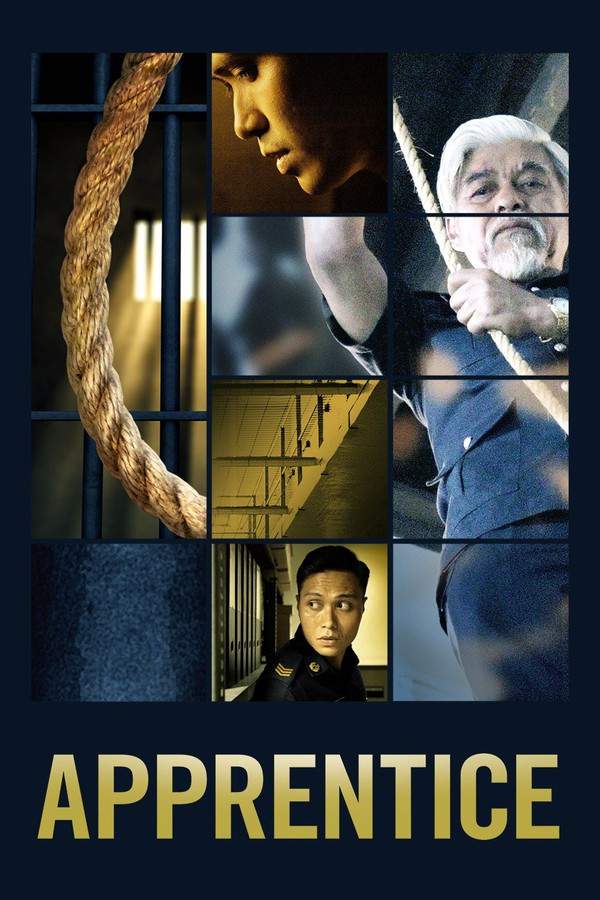
Apprentice (2017) movie poster

Plot Summary

Apprentice (2017) Plot Summary & Ending Explained

Release, runtime and language
2017 · 115 min · Malay
Directed by
Junfeng Boo

A young Malay correctional officer, Aiman, begins his training at a high-security prison, quickly discovering a world of hidden secrets and deeply buried scars. Assigned to learn from the experienced and mysterious executioner, Rahim, Aiman finds himself grappling with a moral crisis. His sense of duty is further complicated by a haunting family history that resurfaces, threatening to unravel his life and expose a dark truth within the prison walls.

On this page (6)
  1. 1 Where to watch
  2. 2 What happens: full plot
  3. 3 Plot questions answered
  4. 4 How it ends
  5. 5 Movie threads
  6. 6 Every angle

Where to watch

Where to Watch Apprentice (2017)

Where can you watch Apprentice? Stream, rent or buy it in the US, including on Hoopla, Kanopy and Cineverse: current JustWatch availability with up-to-date prices.

Streaming availability powered by JustWatch

Full plot summary · contains spoilers

What Happens in Apprentice: Full Plot Summary

The whole story of Apprentice (2017) explained, from the opening scene to the final frame: every key event, every twist and what it all adds up to. Read it as a quick recap before the sequel, to check a scene you missed, or to finally understand what really happened.

In this intense, character-driven drama set within a maximum-security facility, a newly transferred prison officer, Sergeant Aiman Yusof, is reassigned to Larangan Prison and placed in the workshop where rehabilitating inmates are given a chance to learn trades. Because of his vocational education background, he becomes the watchful observer and mentor to those who are rebuilding their lives behind bars, and he soon forms a quiet, almost mentor-like bond with Rahim, the prison’s seasoned Chief Executioner.

At home, Aiman’s life becomes complicated. He shares the strange, unsettling encounter with the hangman with his older sister Suhaila, a disclosure that strains their relationship. The siblings’ history is heavy: their father, Yusof Ibrahim, was sentenced to death thirty years earlier for murder, a fact that colored their upbringing under their grandfather Ibrahim Fazril. This family past informs a rift over Suhaila’s relationship with John, an Australian expat, and underscores Aiman’s growing unease with how work and personal history collide.

Within the prison, Joseph, Rahim’s former assistant, reveals he has stepped down because he could not bring himself to pull the lever during an execution. This admission clears a path for Aiman to become Rahim’s new apprentice, and their dynamic evolves into a steady, if unconventional, mentorship. As their trust deepens, Suhaila’s engagement to John arrives, and Aiman’s reaction is mixed at best. In a moment of spite, he tells Suhaila that he is now the hangman’s assistant, intensifying the family tension while silently confirming his commitment to the work.

Rahim passes on to Aiman the practical skills and hard-earned wisdom of the trade, and the two men cultivate a bond forged in shared duty and ethical debate. This is not a straightforward apprenticeship; it is a test of conscience as Aiman begins to understand what the execution process entails, the rituals around it, and the heavy responsibility it places on those who perform it.

The first-hand encounter with death marks a pivotal turning point. Aiman escorts a death-row inmate named Randy to the gallows, and Rahim offers the inmate words of solace before the moment of execution. The experience leaves Aiman shaken and restless; he attempts to call Suhaila, but the line is dead. Rushing home, he finds the house empty, and learns that Suhaila has presumably left for Australia with John, amplifying his sense of isolation.

Rahim’s own vulnerabilities surface when he reviews Aiman’s security clearance and discovers that Aiman’s father had been executed. Rahim notes that such a past should have disqualified him from the role, and a dispute erupts as Aiman argues that his father’s history should not dictate who he is or how others perceive him. Rahim accuses him of naivety, while Aiman pushes back against judgment and questions the ethics of executing criminals, all while recognizing the paradox of showing compassion in the act of delivering a swift death. The argument ends with a warning: disciplinary action could be imminent, and Aiman seems prepared to face the consequences for speaking out of turn.

As Rahim suffers a road accident and remains in critical condition, Assistant Superintendent James Tan assigns Aiman to lead an upcoming execution. This shift suggests a possible turning point in Aiman’s career, as the department signals that his future may depend on how he handles the next assignment. Morning arrives with a tense exchange as Suhaila calls to confirm whether Aiman will be charged for his actions, and she reassures him with a steady, supportive line:

> maybe not

With Rahim hospitalized and the clock ticking, the day of the execution looms. Aiman leads the condemned inmate toward the gallows, places the noose around the prisoner’s neck, and grips the lever that activates the trap doors. The moment arrives, but as Aiman’s hands hover over the controls, the screen fades to black, leaving the outcome—and perhaps the consequence of his choices—unseen.

This story stays grounded in its moral questions: duty versus humanity, the weight of family history, and the price of anonymity in a system that must decide who lives and who dies. It builds a careful portrait of Aiman’s internal struggle as he moves from newcomer to apprentice, from skeptic to cautious participant, and ultimately toward an ending that invites reflection on justice, compassion, and the quiet, irreversible finality of the execution chamber.

Last updated: October 09, 2025 at 16:23

Was this helpful?

Plot questions answered

Apprentice Plot Explained: Your Questions Answered

The questions people ask most about Apprentice (2017): what happens in the confusing scenes, why the characters do what they do, the twists, hidden details and what the ending means. Each answer contains spoilers.

Q1

Why does Aiman agree to become Rahim's apprentice?

Aiman becomes Rahim's apprentice after Joseph, the previous assistant, steps down because he cannot bring himself to pull the lever during an execution. This creates an opening that Aiman accepts, beginning his education in the executioner's duties.

Foreshadowing: Earlier, Aiman observes Rahim at the gallows and shows curiosity about the execution process, hinting at his willingness to take on this unusual mentorship.

  • apprentice
  • rahim
  • executioner
  • prison officer
  • joseph
Q2

Why was Aiman's father executed?

Aiman's father, Yusof Ibrahim, was sentenced to death thirty years ago for murder. He was executed when Aiman was young, and the siblings were raised by their grandfather Ibrahim Fazril after their father's death.

Foreshadowing: The family's painful history explains why Suhaila reacts strongly when Aiman reveals he is working with the hangman, as the trauma of their father's execution still affects them.

  • father
  • yusof ibrahim
  • execution
  • death penalty
  • family history
Q3

What does Rahim discover about Aiman?

When reviewing Aiman's security clearance, Rahim discovers that Aiman's father was executed in 1985. Rahim realizes he was the executioner who carried out that execution, creating a devastating connection between mentor and apprentice.

Foreshadowing: This revelation explains why Rahim initially seemed to take special interest in Aiman, and why he later confronts him about whether this history should disqualify him from the role.

  • rahim
  • father
  • executed
  • clearance
  • connection
Q4

Why does Suhaila leave for Australia?

Suhaila leaves for Australia with her fiancé John, an Australian expat, following the tension with Aiman. After the execution of Randy, Aiman tries to call her but finds the house empty, suggesting she departed during his emotional distress.

Foreshadowing: Earlier tension between Aiman and Suhaila over her relationship with John, combined with Aiman's revelation about working with the hangman, creates the breaking point.

  • suhaila
  • australia
  • john
  • leave
  • relationship
Q5

Why does Joseph step down as Rahim's assistant?

Joseph steps down because he cannot bring himself to pull the lever during an execution. His inability to complete the act creates the vacancy that allows Aiman to become Rahim's new apprentice.

Foreshadowing: Joseph's departure foreshadows the moral crisis Aiman will face, as the role ultimately requires him to perform the same act Joseph found impossible.

  • joseph
  • assistant
  • step down
  • lever
  • execution
Q6

What happens at the end - does Aiman pull the lever?

The film ends ambiguously with Aiman leading a condemned inmate to the gallows, placing the noose around their neck, and hovering his hands over the lever. The screen fades to black before showing whether he pulls it, leaving the outcome unresolved.

Foreshadowing: This unresolved ending reflects the film's central theme of moral ambiguity and Aiman’s internal conflict between duty and conscience, which has been building throughout his apprenticeship.

  • ending
  • lever
  • gallows
  • ambiguous
  • execution
Q7

What is the significance of the relationship between Rahim and Aiman?

The relationship between Rahim and Aiman evolves from professional mentorship into a complex bond complicated by the discovery that Rahim executed Aiman’s father. Their relationship explores themes of duty, ethics, and whether one can be defined by their past actions.

Foreshadowing: Their growing trust throughout the film makes the revelation of their connection more impactful, as it challenges everything Aiman thought he understood about his mentor.

  • rahim
  • mentor
  • relationship
  • bond
  • apprenticeship
Q8

What ethical questions does the film raise about capital punishment?

The film questions whether capital punishment serves true justice or merely perpetuates cycles of violence. Aiman challenges the ethics of executing criminals while recognizing the paradox of showing compassion in the act of delivering death, ultimately leaving viewers to consider their own stance on the issue.

Foreshadowing: The ethical debate is introduced early through Rahim’s discussions with Aiman about the execution process and the psychological toll it takes on those who carry it out.

  • ethics
  • capital punishment
  • justice
  • death penalty
  • moral
Q9

Why does Aiman tell Suhaila about working with the hangman?

Aiman shares his encounter with Rahim with Suhaila in a moment of vulnerability, but the revelation backfires as it triggers painful memories of their father's execution. This disclosure strains their relationship and highlights how Aiman's work begins to collide with his personal history.

Foreshadowing: This moment sets up the growing rift between the siblings and foreshadows Suhaila's eventual departure, as their family trauma resurfaces through Aiman's new role.

  • suhaila
  • hangman
  • revelation
  • family
  • conflict
Q10

Why is Rahim hospitalized and what impact does it have?

Rahim suffers a road accident and remains in critical condition, which leads Assistant Superintendent James Tan to assign Aiman to lead an upcoming execution. This forces Aiman into the executioner's role earlier than expected and tests whether he will follow through with the duty.

Foreshadowing: The accident removes the mentor who could guide Aiman through this moral crisis, leaving him to face the final decision alone.

  • rahim
  • accident
  • hospital
  • execution
  • responsibility

Ending explained

What Happens at the End of Apprentice?

How Apprentice (2017) ends, in short: the final scene, the last twist and what it means for the characters. The full ending explained, with every spoiler, lives on its own page.

Read the full ending explained

The film concludes with Donald Trump reflecting on his life and success during a conversation with Tony Schwartz, the ghostwriter of The Art of the Deal. Trump voices that his continuous pursuit of deals isn’t merely about business, but about the thrill of "winning" itself. He lays out three rules for success: always be on the attack, never admit wrongdoing, and claim victory regardless of the outcome. Interestingly, these rules are identical to those he learned from Roy Cohn earlier in the film, illustrating how deeply he has absorbed Cohn’s ruthless philosophy. Trump then claims that to be truly successful, one must be born with a "killer instinct," emphasizing that he has suppressed any notion of weakness or vulnerability inherited from his past. This moment underscores the central theme: Trump has fully embraced the cutthroat, amoral mindset Cohn imparted, transforming himself into a relentless and ultimately monstrous figure.

In the final, haunting scene, Trump's physical transformation into what the film depicts as a "monster" is symbolized by his undergoing liposuction and surgery to cover a bald spot. This detailed portrayal of cosmetic procedures acts as a metaphor for how Trump has shed whatever remaining human softness he once had, further emphasizing the process of dehumanization. The meticulous focus on his appearance signifies the final stage of creating a persona that is more image than person—an embodiment of the ruthless, self-absorbed figure the film has portrayed.

Continue reading the ending (2 more paragraphs)

Throughout the story, Trump's relationship with his family is painted as strained and dismissive. His dealings with his father and brother reveal a tendency to see vulnerability or struggle as weaknesses, which he chooses to silence or ignore. His father's strict, harsh influence casts long shadows, and when Trump dismisses his brother's addiction issues or mourns his death, he demonstrates little compassion, instead viewing these as signs of weakness. This attitude reinforces his belief that strength must come from emotional repression.

Ultimately, the film presents Trump's transformation as the culmination of a cycle of greed, power, and loss of humanity. What began as a desire for success devolves into a denial of any human emotion, turning him into a figure consumed by his own ego. The film isn’t just a portrait of one man, but a reflection on the corrupting influence of American capitalism and the loss of morality in the pursuit of victory. It suggests that as Trump gains wealth and fame, he also loses his connection to genuine human compassion, becoming a symbol of the ruthless, monstrous side of ambition and power.

Apprentice ending explained in full

Movie threads

More Movies Like Apprentice, by Mood & Story

Curated lists built around what makes Apprentice tick: the same mood, the same kind of story or the same emotional payoff. Each list explains why these movies belong together.

Claustrophobic moral dramas like Apprentice

Stories confined by walls and heavy ethical choices. If you liked the intense ethical debates and prison setting of Apprentice, explore more movies like it. This list features heavy dramas where characters face impossible choices in confined, high-pressure worlds, sharing a similar somber and contemplative mood.

  • claustrophobic
  • morally conflicted
  • somber
  • tense
  • heavy
  • atmospheric
  • Tone: dark, somber, tense
  • Pacing: slow, deliberate
Why these movies?

The story pattern: The narrative typically follows a protagonist entering a rigid, confined system who becomes morally compromised by their role within it. The central conflict is internal, pitting a sense of duty against a growing crisis of conscience, often without a clear resolution.

Why they belong together: Movies are grouped here for their shared experience of intense moral pressure within a physically or psychologically restrictive setting, a slow-burning pace that dwells on ethical weight, and a dark, heavy tone that leaves a lasting impact.

Movies about dark family legacies like Apprentice

Confronting a painful family past that defines the present. For viewers who appreciated the haunting family history in Apprentice, this collection features similar dramas where a hidden past resurfaces to challenge the protagonist. These films share a focus on revelation, atonement, and the heavy burden of inheritance.

  • somber
  • heavy
  • contemplative
  • grim
  • revelatory
  • psychological
  • Tone: somber, grim, contemplative
  • Pacing: slow, steady
Why these movies?

The story pattern: A linear present-day story is deepened and complicated by the gradual revelation of a closely guarded family secret. The protagonist's journey involves integrating this painful truth into their identity, which often directly conflicts with their current path or beliefs.

Why they belong together: These films are united by the central narrative device of a disruptive family secret, a tone of somber revelation, and a heavy emotional weight stemming from confronting a traumatic legacy. The pacing is often slow to medium, allowing for contemplative character development.

Every angle

Apprentice (2017) Explained: Plot, Ending, Timeline & Characters

Everything about Apprentice in one place: what happens in the plot summary, the timeline in chronological order, the characters and meaning, the ending explained and a spoiler-free summary. What's After the Movie adds the cast, box office and post-credit scenes.

Coming soon on iOS and Android

The Plot Explained Movie Summary App

Plot summaries, endings explained and timelines on your phone. Catch up on any movie in minutes, save your favorites and never miss a twist again.

Be the first to know when we launch. Your email stays private, always.

Learn more about the app