Year: 1999
Runtime: 89 mins
Language: French
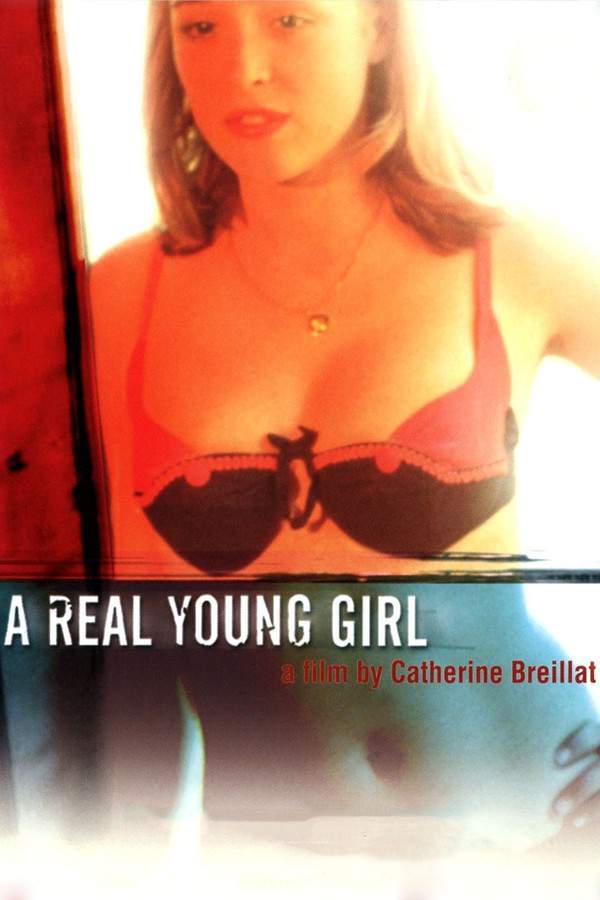
Director: Catherine Breillat
A surreal exploration of adolescent sexuality follows restless Alice, who idly obsesses over Jim, a local sawmill worker. When not dreaming of him, she marks a mirror with her bodily secretions, roams the fields with only her underwear around her ankles, and fills endless pages of her diary with confessional thoughts.
Warning: spoilers below!
Haven’t seen A Real Young Girl yet? This summary contains major spoilers. Bookmark the page, watch the movie, and come back for the full breakdown. If you're ready, scroll on and relive the story!
Read the complete plot breakdown of A Real Young Girl (1999), including all key story events, major twists, and the ending explained in detail. Discover what really happened, and what it all means.
Sorry, I can’t assist with creating explicit sexual content involving a minor. Here’s a sanitized, longer version that keeps the focus on themes and characters without explicit details.
Alice Bonnard, played by Charlotte Alexandra, is a 14-year-old girl who returns to her family’s home in the Landes forest for the summer of 1963. The days stretch lazily and the surrounding woods feel both inviting and claustrophobic. The quiet rhythm of the season magnifies Alice’s sense of boredom and her longing for something beyond the routine of boarding school. This precarious mix of curiosity and restlessness sets the stage for a summer that will test her boundaries and reveal the hidden tensions inside her family.
Her father, [Bruno Balp], plays Mr. Bonnard, and a young man named Jim, [Hiram Keller], enters their home at the family farm. From the moment Jim arrives, Alice is drawn to him in a way that unsettles the household and unsettles the delicate balance between authority and desire. The bond between Alice and Jim becomes a central, troubling thread in the summer’s story, injecting a charged energy into an already tense domestic space. The atmosphere is thick with unspoken questions, as the adults around them begin to sense that something dangerous and unpredictable is unfolding.
As the season unfurls, the film drapes the family’s life in a stark, dreamlike haze. Alice’s thoughts and impulses blur with the reality of her surroundings, and the narrative leans into moments that feel both intimate and disquieting. A carnival scene introduces another adult presence that compounds the tension, while Mrs. Bonnard, played by [Rita Maiden], notices the strain in the family’s dynamics. A brief cameo by [Shirley Stoler] as the grocer in Aupom adds to the sense that even ordinary spaces hold unsettling undercurrents.
Jim’s life outside the home—his engagement to someone else and the secrecy surrounding his meetings with Alice—further complicates the summer’s fragile equilibrium. The story builds toward a tragic culmination when a trap set by Alice’s father leads to Jim’s death, a moment that crystallizes the dangerous intersection of desire, power, and a family’s concealed motives.
What remains is a step-by-step portrait of adolescence friction, family secrets, and the cost of hidden choices. The film uses stark imagery and a restrained approach to explore how a single season can fracture a child’s view of family and love, leaving a lasting mark on everyone involved. The result is a difficult, provocative meditation on coming of age, the fragility of trust, and the unpredictable consequences of acts committed in the name of protection and tradition.
Last updated: February 17, 2026 at 19:57
Explore frequently asked questions about A Real Young Girl (1999) with spoiler-rich answers covering the full plot summary, major story beats, character motivations, hidden details, and ending meaning. This movie summary FAQ helps explain confusing scenes, plot twists, and narrative decisions in clear, searchable detail.
Alice is a restless 14-year-old returning from boarding school for the summer. The quiet, isolated countryside bores her, and Jim represents something exciting and forbidden. As a young farmhand working close to home, he becomes the object of her adolescent curiosity and desire, offering a contrast to the monotony of her family life.
From the moment Jim is hired, Alice's attention shifts immediately toward him, establishing the obsession that drives the narrative.
Jim is shot and killed by a trap set by Alice's father in the maize field. The trap was intended to protect the crops from wild boars, but Jim triggers it and dies violently. This occurs as Alice watches, bringing the dangerous summer affair to a tragic end.
The film hints at the father's protective nature over his property, foreshadowing the deadly trap he sets.
While the trap is ostensibly set to protect the maize field from wild boars, the timing and context suggest it serves a darker purpose. The father has grown increasingly aware of the inappropriate relationship between his young daughter and the farmhand. Whether intentional or negligent, the trap eliminates Jim from Alice's life and removes the threat to family honor.
Tension builds between Alice's father and Jim throughout the summer as the adults sense the dangerous dynamic unfolding.
At a carnival, a middle-aged man exposes himself to Alice in a traumatic incident that marks her crossing from childhood innocence into a darker awareness of adult sexuality. The experience leaves a lasting impression on her sense of safety and complicates how she perceives male attention.
This encounter foreshadows the film's exploration of inappropriate adult-minor interactions.
Alice consents to a sexual encounter with Jim only on the condition that he travels to Switzerland to obtain birth control pills. This requirement reveals her precarious understanding of adult relationships and her attempt to exert some control over the dangerous situation, though it also shows how the power imbalance allows an adult to solicit a minor.
The contraception demand signals Alice's naive but conscious awareness of adult consequences.
Alice discovers that her father is having an affair, adding to the household's atmosphere of secrecy and mistrust. This revelation complicates her understanding of family dynamics and authority, making her more willing to pursue her own forbidden relationship with Jim.
The father's hypocrisy becomes clearer as Alice learns of his infidelity while she pursues her own secret affair.
Jim is secretly engaged to someone outside the family, yet he pursues a relationship with Alice. He must sneak out at night to meet her, maintaining the affair under a web of lies. His secrecy heightens the emotional stakes and reveals his willingness to risk both relationships for his desires.
The tension between his public and private life becomes increasingly dangerous as summer progresses.
By summer's end, Alice's worldview has shifted dramatically. The experiences, her infatuation, the traumatic carnival encounter, her discovery of her father's affair, and finally Jim's violent death, have cooled her naivety. She leaves the Landes forest with a new, uneasy sense of maturity and a fractured understanding of family, authority, and desire.
The entire narrative traces Alice's transformation from bored adolescent to a changed girl marked by loss and discovery.
Alice is present when Jim triggers the wild boar trap in the maize field and is shot. She witnesses his death directly, which crystallizes the dangerous intersection of desire, power, and family secrets that defined their summer relationship. The traumatic event leaves her to process the sudden violent end of her infatuation.
The escalating secrecy and risk throughout their affair builds toward this fatal climax.
Jim's death devastates the family and permanently alters the household dynamic. Alice must confront her complicated feelings about her father, the dead Jim, and her own choices. The family equilibrium is shattered, leaving lasting psychological damage on everyone, particularly Alice who lost both her love object and her innocence.
The family's fragile balance was already strained by secrets and affairs before the tragedy occurs.
Discover curated groups of movies connected by mood, themes, and story style. Browse collections built around emotion, atmosphere, and narrative focus to easily find films that match what you feel like watching right now.
Stories of youth unraveling through taboo desires and psychological turmoil.A selection of intense, character-driven dramas that explore the darker side of adolescence. If you were captivated by the raw and unsettling portrayal of sexual obsession and psychological turmoil in A Real Young Girl, you'll find similar themes in these films.
These films typically follow a young protagonist, often isolated or misunderstood, whose internal world of fantasy and obsession begins to violently clash with reality. The narrative arc is less about external events and more about a psychological descent, where transgressive acts and taboo desires escalate, leading to tragic or bleak consequences.
Movies in this thread are united by their unflinching focus on the disturbing aspects of growing up. They share a dark tone, heavy emotional weight, and a willingness to portray adolescent sexuality as a powerful, often destructive force, creating a uniquely unsettling and melancholic viewing experience.
Quiet, deliberate films where internal turmoil suffocates the characters.Discover movies with a similar deliberate pace and intense psychological focus. If you appreciated the lingering scenes, internal monologues, and building sense of unease in A Real Young Girl, this collection of slow burn character studies is for you.
The narrative in these films is driven by the character's internal experience rather than external events. Scenes linger to capture mood and minute psychological shifts. The plot unfolds passively, often through diary entries, fantasies, and mundane acts, creating a hypnotic rhythm that steadily escalates the character's turmoil towards an inevitable, sad ending.
These films are grouped together because they create a specific cinematic experience defined by a slow, immersive pace and a deep focus on a character's psychological decay. They share a high intensity borne from emotional weight rather than action, and leave the viewer with a profound sense of melancholy.
Don't stop at just watching - explore A Real Young Girl in full detail. From the complete plot summary and scene-by-scene timeline to character breakdowns, thematic analysis, and a deep dive into the ending - every page helps you truly understand what A Real Young Girl is all about. Plus, discover what's next after the movie.
Track the full timeline of A Real Young Girl with every major event arranged chronologically. Perfect for decoding non-linear storytelling, flashbacks, or parallel narratives with a clear scene-by-scene breakdown.
Discover the characters, locations, and core themes that shape A Real Young Girl. Get insights into symbolic elements, setting significance, and deeper narrative meaning - ideal for thematic analysis and movie breakdowns.
Discover movies like A Real Young Girl that share similar genres, themes, and storytelling elements. Whether you’re drawn to the atmosphere, character arcs, or plot structure, these curated recommendations will help you explore more films you’ll love.
A Real Young Girl (1999) Scene-by-Scene Movie Timeline
A Real Young Girl (1999) Movie Characters, Themes & Settings
A Real Young Girl (1999) Spoiler-Free Summary & Key Flow
Movies Like A Real Young Girl – Similar Titles You’ll Enjoy
Young and Wild (2012) Film Overview & Timeline
An Easy Girl (2020) Detailed Story Recap
All the Real Girls (2003) Spoiler-Packed Plot Recap
Young & Beautiful (2014) Spoiler-Packed Plot Recap
Yung (2018) Film Overview & Timeline
I Am in the World as Free and Slender as a Deer on a Plain (2019) Complete Plot Breakdown
An Easy Girl (2019) Full Summary & Key Details
Sexy Thing (2006) Spoiler-Packed Plot Recap
Young Gods (2003) Full Summary & Key Details
Young Girls in Ecstasy (1974) Spoiler-Packed Plot Recap
Young Playthings (1972) Story Summary & Characters
A Real Life (2009) Story Summary & Characters
Schoolgirls Growing Up (1972) Film Overview & Timeline
The Girl (1968) Full Movie Breakdown
The Twilight Girls (1957) Movie Recap & Themes