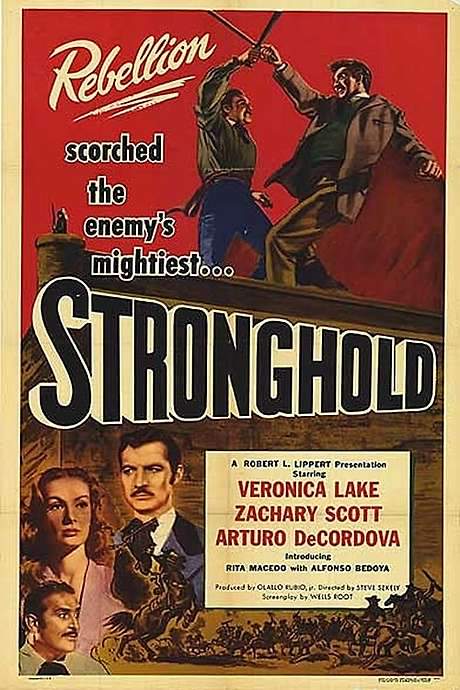
Señora Stevens and her American daughter Maria Stevens depart the United States for Mexico, accompanied by their loyal servant Caesar. The journey begins with a shuddering shock: upon landing, the trio is seized by the bandit Ignacio López, a menace who forces them toward danger. Seizing a moment, Señora Stevens feigns a collapse, allowing Caesar to strike and the women to slip away, a narrow escape that foreshadows the treacherous path ahead.
They seek refuge at an estate owned by Don Pedro Álvarez, a longtime friend of Señora Stevens. There, the truth unfolds: Álvarez is a staunch ally of Benito Juárez, committed to opposing Maximilian’s rule. The encounter sets in motion a delicate balance of loyalty and survival, as Pedro secretly tests the limits of his alliance and the fate of Maria hangs in the balance.
Pedro dispatches Señora Stevens to Taxco, but Maria is held hostage until a shipment of silver can be brokered for supplies. The slow arrival of silver, accompanied by Maria’s maid Lupe bearing a note from Don Miguel Navarro, signals a shifting chessboard: Navarro’s interests converge with the Stevens fortune, and Pedro is drawn deeper into a web where every move could cost lives. The note urges Maria to bring Pedro along when she’s released, a demand that complicates loyalties and raises the stakes for everyone involved.
As the silver finally reaches its destination, a weary Maria grows more sympathetic to Pedro’s plight, especially after he defends her against Navarro’s encroaching authority. During the perilous journey to Taxco, Navarro’s forces strike, but Pedro’s own troops mount a fierce counterattack, turning the ambush into a resounding display of resolve. Pedro’s safety becomes a fragile commodity in a landscape torn by war and shifting allegiances.
In Taxco, Navarro extends an invitation to a ball, a public display that masks private reckonings. On the way, Pedro abducts Maria briefly, a move that Navarro counters by recapturing her, intensifying the personal drama that threads through the enmity between Maximilian’s regime and its opponents. Maria steps into the orbit of power, meeting Emperor Maximilian and Carlotta, and she voices a humanitarian plea for the poor, hoping to influence those in power to ease the suffering she has glimpsed.
Lupe’s warning—that Maria’s mother has died—lands with a heavy weight, and the Empress secretly orders guards to dispatch Pedro by hanging, intending for Maria to marry Navarro and secure the Stevens fortune. The trap tightens when Pedro is arrested at Señora Stevens’ funeral, only to escape, forcing Navarro to unleash a grim plan: a cavern is blown up in a desperate bid to trap them all, threatening the lives of countless mine workers.
The plot spirals toward a climactic surge of courage as Pedro stands on the gallows, and peasants rally to rescue him. The moment becomes a catalyst, igniting a broader revolution against Maximilian that sweeps through the region and reshapes the fate of everyone involved. In the end, the clash between personal loyalties, political ideals, and the human cost of war crystallizes into a stirring portrait of resilience and resistance.