Plot Explained Spoilers guaranteed!
Plot Explained

Browse by genre

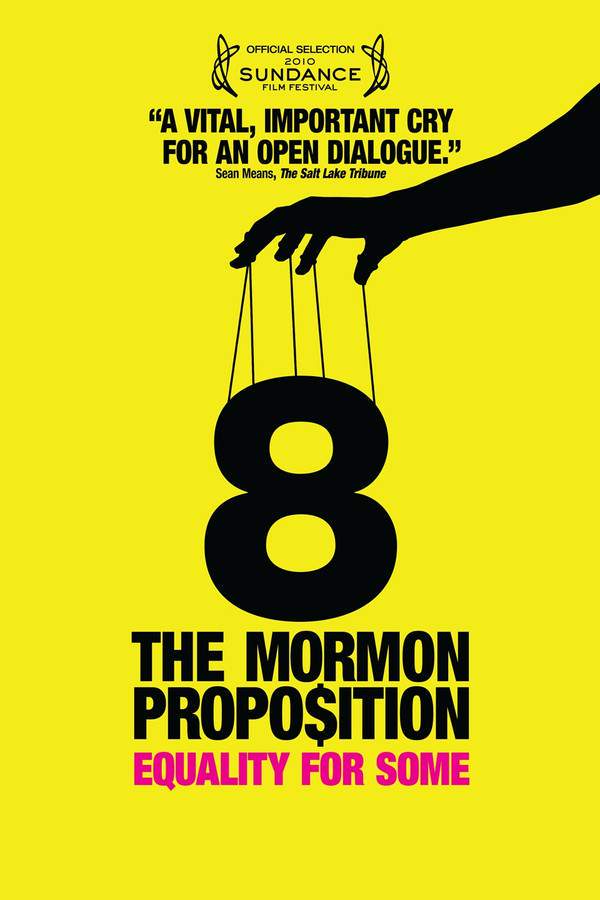
8: The Mormon Proposition (2010) movie poster

Timeline

8: The Mormon Proposition (2010) Timeline Explained – Every Event in Order

Release, runtime and language
2010 · 80 min · English
Directed by
Steven Greenstreet, Reed Cowan

This documentary explores the Mormon Church’s involvement in the campaign to pass Proposition 8, a pivotal California ballot initiative that ignited a national discussion about same-sex marriage. Director Reed Cowan shares his personal experiences growing up gay within the Mormon faith in Utah, offering a poignant look at the issue. The film features compelling testimonies and examines the significant impact of this campaign on the LGBTQ+ community.

On this page (5)
  1. 1 Events in order (15)
  2. 2 Timeline questions answered
  3. 3 Movie threads
  4. 4 Movies like 8: The Mormon Proposition
  5. 5 Every angle

15 events in order · contains spoilers

8: The Mormon Proposition Timeline: Events in Chronological Order

Every key event of 8: The Mormon Proposition (2010) in order, scene by scene, with when and where it takes place. Use it to untangle flashbacks, time jumps and parallel storylines, to refresh your memory before the sequel or to find the exact scene you are thinking of.

  1. Mormon Prophet's Command

    In a decisive moment, Mormon Prophet Thomas S. Monson issued a call from Salt Lake City, urging Mormons worldwide to take action regarding Proposition 8. This heartfelt command was crafted using a secretive language from Mormon temple ceremonies, rallying the faithful to support the controversial measure.

    Where
    Salt Lake City, Utah
  2. Financial Contributions Surge

    Following Monson's call, a significant outpouring of financial support materialized from Mormons across the United States. Within just a few days, over thirty million dollars was funneled into California, demonstrating the Church's strong commitment to the cause.

    Where
    California
  3. Evangelicals' Struggles

    Before the Mormons joined the fight, evangelicals were battling unsuccessfully against marriage equality. However, the entry of the Mormon Church marked a turning point that invigorated the movement, shifting the tide in favor of Proposition 8.

  4. Media Campaign Launch

    The Mormon Church launched an extensive media campaign supported by expensive public relations efforts. This barrage of misleading television and radio ads, accompanied by a vigorous door-to-door campaign, was orchestrated by the Mormon National Organization for Marriage to sway Californian voters.

    Where
    California
  5. Passage of Proposition 8

    Proposition 8 passed California's ballot by a narrow margin, with Mormons claiming significant credit for the victory. This triumph marked a critical moment for the Church, solidifying their political influence in the state.

    Where
    California
  6. Backlash Against Mormons

    In the aftermath of the ballot's passage, LGBT activists escalated their protests, directing their anger towards Mormon temples nationwide. This response highlighted the backlash that the Church faced from the very communities affected by its actions.

    Where
    Mormon Temples Nationwide
  7. Reed Cowan's Investigation

    Documentary producer Reed Cowan began collecting secret audio recordings and documents that exposed the Church's extensive efforts to undermine LGBT rights. His experiences as a former Mormon missionary fueled his determination to reveal the truth behind the campaign.

  8. Barrick-Jones Family Legacy

    Tyler Barrick and Spencer Jones, whose lineage traces back to early Mormon leaders, confronted the painful legacy of their family as they fought for marriage equality. Their ancestors, persecuted for polygamy, now found themselves facing discrimination from their own community.

  9. Tragic Impact on LGBT Youth

    The documentary highlighted the dire plight of homeless LGBT youth in Utah, revealing that many had been disowned by their families after coming out. This alarming statistic underscored the profound social implications of the Church's stance on marriage equality.

    Where
    Utah
  10. Buttars's Controversial Remarks

    Mormon Bishop and Senator D. Chris Buttars made headlines when he compared gay individuals to terrorists in a shocking interview. His derogatory comments incited public outrage and drew increased attention to the Church's opposition to LGBT rights.

    Where
    Utah
  11. Media Coverage of Buttars's Comments

    Following Buttars's inflammatory statements, major media outlets began extensively covering the backlash. Outlets like Forbes and The Rachel Maddow Show reported on growing public disapproval, resulting in thousands of emails sent to government officials demanding accountability.

    Where
    Media Outlets Nationwide
  12. Reed Cowan's Warning

    Cowan expressed fears that the Mormon Church's involvement in politics could jeopardize its tax-exempt status. He emphasized the need for citizens to be aware of the influence behind ballot measures, particularly those gaining unexpected momentum.

  13. Highlighting Human Rights Abuses

    The film exposed systemic human rights abuses within the Church, including reports of extreme conversion therapies. Such practices, aimed at 'curing' homosexuality, revealed the darker implications of the Church's policy towards LGBT individuals.

  14. The Suicide of Stuart Matis

    In a tragic reflection of the pain faced by gay Mormons, Stuart Matis took his life outside a California Mormon Church during the campaign against marriage equality. His story became emblematic of the real human toll surrounding Proposition 8.

    Where
    California
  15. Documentary's Release and Impact

    *8: The Mormon Proposition* drew significant attention during its release, stimulating dialogue around human rights and equality. Cowan's efforts not only document the Church's involvement but also serve as a call to action for vigilance against similar political maneuvers in the future.

Last updated: October 27, 2024 at 22:14

Was this helpful?

Timeline questions answered

8: The Mormon Proposition Timeline Explained: Your Questions Answered

When does it happen, and why in that order? The questions people ask about the chronology of 8: The Mormon Proposition (2010): time jumps, flashbacks, cause and effect between scenes and the correct order of events, each answered with spoilers.

Q1

Why did Mormon Prophet Thomas S. Monson call for action on Proposition 8?

Mormon Prophet Thomas S. Monson issued a decisive call from Salt Lake City, urging millions of Mormons worldwide to take action to ensure Proposition 8's passage. The call was crafted using secretive language from Mormon temple ceremonies, which carries significant weight within the faith. This wasn't merely a suggestion, it was presented as a religious command that many members felt compelled to follow.

  • thomas s monson
  • prophet
  • call to action
  • proposition 8
  • mormon church
Q2

How were Mormons able to funnel thirty million dollars into California so quickly?

Within days of Monson's command, hundreds of thousands of Mormons across the United States contributed approximately thirty million dollars to the Yes on 8 campaign. The Church's hierarchical structure and authoritative command from the Prophet created a sense of religious obligation among members. This massive financial mobilization was coordinated through the Mormon National Organization for Marriage, which orchestrated both the funding and the grassroots get-out-the-vote efforts.

  • thirty million dollars
  • funding
  • california
  • donations
  • mormon church
Q3

Why were evangelicals failing against marriage equality before Mormons joined the campaign?

Before the Mormon Church became involved, evangelical groups were actively fighting against marriage equality but were losing ground in California. The religious right lacked the organizational infrastructure, financial resources, and centralized leadership needed to mount an effective campaign. Once the Mormons entered with their massive funding and coordinated grassroots network, they provided the missing elements, money, organization, and credibility, that turned the tide in favor of Proposition 8.

  • evangelicals
  • religious right
  • marriage equality
  • campaign
  • proposition 8
Q4

Why is the Barrick-Jones family's connection to Joseph Smith significant?

Tyler Barrick and Spencer Jones are direct descendants of Fredrick G. Williams, a close associate of Joseph Smith, the founder of the Mormon Church. This historical connection adds profound irony to their situation, their ancestors were persecuted for practicing polygamy, yet generations later, the same Church that defended polygamy was actively fighting to deny them the right to marry. Their story represents a painful cycle of discrimination from the very institution that shaped their family history.

  • tyler barrick
  • spencer jones
  • joseph smith
  • fredrick g williams
  • polygamy
Q5

Why is the Church's opposition to same-sex marriage ironic given its history with polygamy?

The opposition is deeply ironic because the Mormon Church itself historically practiced polygamy, which was considered an alternative form of marriage. Former missionary Reed Cowan explicitly noted his disbelief that a church which 'worships the practice of alternative marriage' would become the leading force against marriage equality. The Church's ancestors were persecuted by the U.S. government for polygamy, yet the institution now advocates for denying marriage rights to another group, a parallel the documentary highlights as a profound betrayal.

  • polygamy
  • irony
  • mormon church history
  • alternative marriage
  • discrimination
Q6

Who was Stuart Matis and why did his suicide impact the debate?

Stuart Matis was a gay Mormon man who tragically took his own life on the steps of a California Mormon Church during the Church's active campaign against Proposition 8. His suicide became a devastating symbol of the real human cost of the Church's political stance against marriage equality. The documentary uses his story to illustrate the psychological harm inflicted on LGBT individuals when their own faith community actively campaigns against their basic civil rights.

  • stuart matis
  • suicide
  • lgbt
  • mormon church
  • proposition 8
Q7

What were 'Spencer's boys' mentioned in the documentary?

'Spencer's boys' refers to a clandestine group of gay BYU students who allegedly met secretly with Mormon Prophet Spencer W. Kimball. The documentary makes the claim that these covert meetings occurred, though the exact nature and outcome of these interactions remains part of the Church's disputed history. This revelation suggests high-level awareness within the Church regarding the struggles of gay members decades before the Proposition 8 debate.

  • spencers boys
  • byu
  • spencer w kimball
  • gay students
  • secret meetings
Q8

What human rights abuses at BYU were exposed in the film?

The documentary revealed that BYU, under Church oversight, enforced extreme practices on gay men including electric shock therapy and frontal lobotomies. These so-called 'conversion therapies' were intended to change sexual orientation and were carried out by Mormon security personnel at the university. These accounts represent some of the most disturbing examples of institutional abuse directed at LGBT individuals within the Church's own educational system.

  • byu
  • electric shock therapy
  • lobotomy
  • conversion therapy
  • human rights abuses
Q9

Why did Senator D. Chris Buttars's comments cause such massive backlash?

Mormon Bishop and Utah Senator D. Chris Buttars compared gay individuals to radical terrorists and claimed they represent 'the greatest threat to America.' He also made derogatory remarks about gay people engaging in 'pig sex.' These inflammatory statements triggered coordinated responses from LGBTQ+ advocacy organizations including HRC and GLAAD. The backlash was so severe it resulted in thirty thousand emails to the Utah Senate President, crashed the Utah Senate computer server for three days, and ultimately forced Buttars to resign as chair of Utah's Senate Judiciary Committee.

  • d chris buttars
  • backlash
  • terrorist
  • comments
  • utah senate
Q10

Why could the Church's political involvement threaten its tax-exempt status?

Documentary producer Reed Cowan emphasized that the Church's direct involvement in political campaigns, particularly the massive financial contributions and organized get-out-the-vote efforts, could jeopardize its tax-exempt status as a religious organization. Non-profit religious institutions are generally prohibited from participating in political campaigns, and the documented thirty-million-dollar mobilization represented a significant departure from that boundary. Cowan warned that if the Church escaped consequences for this, it would set a dangerous precedent for other groups to purchase political influence.

  • tax exempt status
  • political involvement
  • irs
  • reed cowan
  • influence
Q11

What is the connection between Proposition 8 and Utah's homeless LGBT youth?

The documentary highlighted that a significant portion of Utah's homeless teen population are LGBT individuals who were disowned by their families after coming out. This crisis represents one of the devastating real-world consequences of the Church's teachings and political activism against LGBTQ+ rights. The hundreds of homeless LGBT youth in Utah serve as a tragic indicator of the harm caused when religious institutions actively promote discrimination against queer individuals.

  • homeless youth
  • utah
  • lgbt
  • family rejection
  • discrimination
Q12

What backlash did Mormon temples face after Proposition 8 passed?

After Proposition 8 passed by a narrow margin, LGBT activists directed their anger toward Mormon temples across the nation. The Church, which had claimed credit for the victory, quickly found itself facing significant public backlash and protests at temples nationwide. This response highlighted the unintended consequences of the Church's very public political involvement, a sharp irony given that the Church then complained about being persecuted for its actions.

  • mormon temples
  • backlash
  • protests
  • lgbt activists
  • proposition 8

Movie threads

More Movies Like 8: The Mormon Proposition, by Mood & Story

Curated lists built around what makes 8: The Mormon Proposition tick: the same mood, the same kind of story or the same emotional payoff. Each list explains why these movies belong together.

Documentaries Exposing Power and Propaganda like 8: The Mormon Proposition

Documentaries that expose how institutions wield power and shape public opinion. For viewers who found 8: The Mormon Proposition compelling, this section highlights movies like it that investigate institutional power, political influence, and propaganda. These similar documentary stories share an investigative spirit and a focus on how public opinion is shaped, perfect for those seeking eye-opening exposés.

  • investigative
  • urgent
  • exposing
  • infuriating
  • somber
  • political
  • Tone: urgent, dark, exposing
  • Pacing: steady, methodical
Why these movies?

The story pattern: These films typically follow a journalistic or personal investigation into a hidden or denied aspect of a powerful institution. The narrative builds by methodically presenting evidence, insider accounts, and historical context, often culminating in a stark revelation about the impact of these actions on vulnerable communities or democratic processes.

Why they belong together: Movies are grouped here because they share a core mission of investigative exposure, a dark and urgent tone, and a structured, evidence-based approach to storytelling. They all aim to inform and provoke the audience by revealing systemic manipulations.

Somber Human Rights Advocacy Documentaries like 8: The Mormon Proposition

Heavy yet vital stories of social injustice and the fight for civil rights. If you were moved by the heavy emotional weight and advocacy in 8: The Mormon Proposition, explore these movies like it. This collection features similar documentaries with a somber mood focusing on civil rights, LGBTQ+ issues, and social injustice, for viewers seeking impactful stories of struggle and resilience.

  • somber
  • tragic
  • melancholic
  • urgent
  • infuriating
  • advocacy
  • Tone: somber, tragic, advocatory
  • Pacing: steady, reflective
Why these movies?

The story pattern: The narrative pattern revolves around a specific injustice, often legal or systemic, and explores its profound human cost through personal testimonies and historical analysis. The journey is one of loss and tragedy, but it also chronicles resistance, activism, and the enduring fight for dignity and equality, leading to a mixed or bittersweet conclusion.

Why they belong together: These films are united by their heavy emotional weight, a dark and somber mood, and a central focus on civil rights battles. They balance the tragedy of injustice with the purpose of advocacy, creating a powerful and draining viewing experience.

If you liked this

Movies Like 8: The Mormon Proposition

Similar movies to 8: The Mormon Proposition: the same genre, themes or kind of story. Each one comes with its own plot summary, timeline and ending explained.

Browse all movie summaries

Every angle

8: The Mormon Proposition (2010) Explained: Plot, Timeline & Characters

Everything about 8: The Mormon Proposition in one place: what happens in the plot summary, the timeline in chronological order, the characters and meaning and a spoiler-free summary. What's After the Movie adds the cast, box office and post-credit scenes.

Coming soon on iOS and Android

The Plot Explained Movie Summary App

Plot summaries, endings explained and timelines on your phone. Catch up on any movie in minutes, save your favorites and never miss a twist again.

Be the first to know when we launch. Your email stays private, always.

Learn more about the app