









Plot Explained Spoilers guaranteed!
Plot Explained

Browse by genre

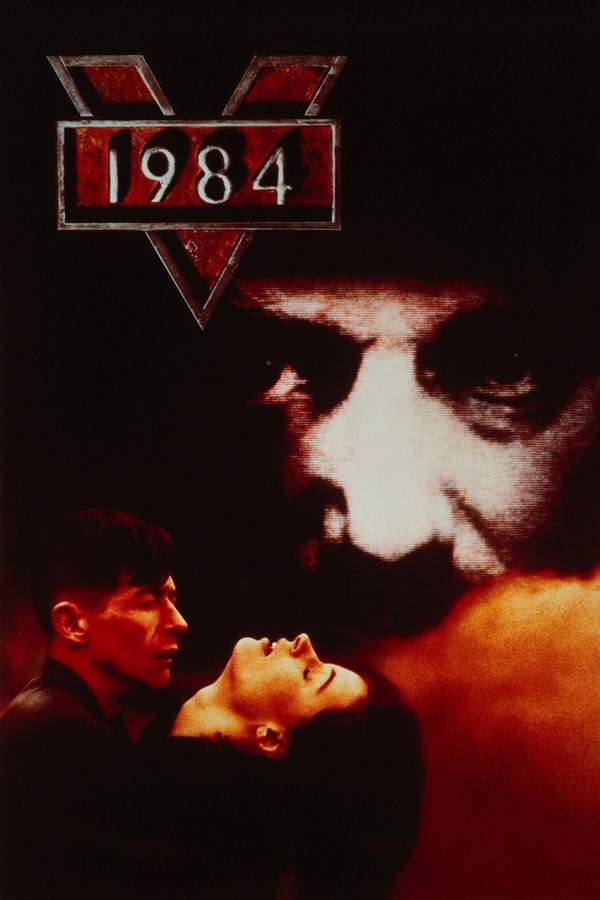
1984 (1985) movie poster

Timeline

1984 (1985) Timeline Explained – Every Event in Order

Release, runtime and language
1985 · 113 min · English
Directed by
Michael Radford
Starring
John Hurt, Cyril Cusack, Richard Burton, Andrew Wilde, Anthony Benson, David Cann

In a chilling dystopian future, Winston Smith struggles against an oppressive regime led by the omnipresent Big Brother. As a low-ranking Party member, Winston works at the Ministry of Truth, where he alters historical records to align with the Party's current propaganda. Dissatisfied with his existence and yearning for freedom, he begins a forbidden love affair with Julia, finding temporary solace in their rebellion. However, in a society where every action and thought is monitored, their defiance risks severe consequences and a confrontation with the Party's iron grip.

On this page (6)
  1. 1 Where to watch
  2. 2 Events in order (14)
  3. 3 Timeline questions answered
  4. 4 Movie threads
  5. 5 Movies like 1984
  6. 6 Every angle

Where to watch

Where to Watch 1984 (1985)

Where can you watch 1984? Stream, rent or buy it in the US, including on Fawesome, Kanopy and Tubi TV: current JustWatch availability with up-to-date prices.

Streaming availability powered by JustWatch

14 events in order · contains spoilers

1984 Timeline: Events in Chronological Order

Every key event of 1984 (1985) in order, scene by scene, with when and where it takes place. Use it to untangle flashbacks, time jumps and parallel storylines, to refresh your memory before the sequel or to find the exact scene you are thinking of.

  1. The Dystopian Setting

    In April 1984, the world is devastated by the aftermath of the second world war and the Atomic Wars. The story unfolds in the grim totalitarian superstate of Oceania, specifically in the decaying city of London, where freedom and individuality are suppressed entirely.

    When
    April 1984
    Where
    London
  2. Winston Smith's Routine

    Winston Smith, a middle-aged official in the Ministry of Truth, endures a monotonous life of rewriting history to align with the Party's mandates. The abysmal conditions of his small flat reflect his oppressed existence under the vigilant eye of the Thought Police.

    Where
    Ministry of Truth, Oceania
  3. Propaganda and Public Rallies

    Winston participates in public rallies at Victory Square, where manipulated films and false news regale citizens with Oceania's triumphs. The Party uses these forums to unify the populace under the leadership of Big Brother, who remains a shadowy figure.

    Where
    Victory Square
  4. Winston's Secret Diary

    Haunted by his past and yearning for personal freedom, Winston begins to document his forbidden thoughts in a diary. This act, considered a severe crime of 'thoughtcrime,' signifies his first bold step towards rebellion against the totalitarian regime.

  5. Meeting Julia

    Winston encounters Julia, a fellow Party worker, who ignites a passion within him. Their first clandestine meeting occurs in the remote countryside, where they abandon their fears and share intimate moments away from the oppressive watch of the telescreens.

    Where
    Countryside
  6. The Affair Blossoms

    Winston and Julia continue their illicit affair in a rented room above a pawn shop. They briefly escape the Party's grasp, enjoying stolen moments of intimacy, freedom, and a life enriched by contraband goods procured by Julia from the black market.

    Where
    Above a pawn shop
  7. Thought Police Raid

    Their blissful reprieve comes to a shocking end when the Thought Police raid their rented flat. Winston and Julia are arrested due to a hidden telescreen, revealing the treachery of Charrington, the elder shop proprietor, who is an agent for the regime.

    When
    June 1984
    Where
    Pawn Shop
  8. Torture in the Ministry of Love

    Winston is taken to the Ministry of Love, a fortress-like building that houses the Party's brutal methods of interrogation. He faces relentless psychological torment and brainwashing at the hands of O'Brien, who had previously appeared to be an ally.

    Where
    Ministry of Love
  9. Learning Doublethink

    O'Brien tutors Winston on the principles of 'doublethink,' a practice that forces individuals to hold contradictory beliefs. This indoctrination aims to erase personal truth and replace it with the Party's constructed reality, dismantling Winston's mindset.

  10. Confrontation in Room 101

    In a chilling climax, Winston is taken to Room 101, where O'Brien subjects him to his ultimate fear. Confronted with a cage of rodents, the horrifying experience breaks his psychological resolve, leading him to betray Julia in a moment of despair.

    Where
    Room 101
  11. Rehabilitation and Release

    After enduring profound psychological torture, Winston undergoes rehabilitation and is released back into society. Stripped of his rebellious thoughts and individuality, he returns to a life dictated by the Party, now a compliant shell of his former self.

    Where
    Chestnut Tree Café
  12. Encounter with Julia Again

    In the Chestnut Tree Café, Winston has a chance meeting with Julia, who has also been brainwashed. Their interaction reflects the profound emptiness of their existence, as they share hollow words about their mutual betrayal and lost love.

    Where
    Chestnut Tree Café
  13. TV Confession

    Winston watches a telescreen as a news broadcast showcases his confession of crimes against the state, revealing his complete subjugation. In a moment of despair, he implores the populace for forgiveness, reflecting on his irreversible transformation.

  14. Acceptance of Fate

    As news breaks of Oceania's military triumphs, Winston feels a tearful moment of gratitude towards Big Brother. His thoughts culminate in a chilling acceptance of his fate, demonstrating the extent of the Party's control over his identity and existence.

Last updated: May 26, 2025 at 22:02

Was this helpful?

Timeline questions answered

1984 Timeline Explained: Your Questions Answered

When does it happen, and why in that order? The questions people ask about the chronology of 1984 (1985): time jumps, flashbacks, cause and effect between scenes and the correct order of events, each answered with spoilers.

Q1

Why does Winston start keeping a secret diary?

Winston begins writing in a secret diary as his first act of rebellion against the Party. Haunted by fragmented memories of his troubled childhood and dissatisfied with his oppressive daily existence, he feels compelled to document his forbidden thoughts. The diary represents his need to preserve some form of personal truth in a world where the Party controls all historical records and demands that citizens accept whatever reality the Party constructs.

Foreshadowing: Earlier in the film, Winston's bleak apartment and monotonous routine at the Ministry of Truth establish his deep unhappiness and yearning for individual expression.

  • winston smith
  • diary
  • rebellion
  • thoughtcrime
  • first act of defiance
Q2

What is doublethink and how does the Party use it?

Doublethink is the Party's doctrine that allows people to consciously hold two contradictory beliefs at the same time and believe both to be true. O'Brien explains to Winston that it means the power to hold two opposing views in one's mind and accept both as fact. The Party uses doublethink to control reality itself, citizens must believe whatever the Party declares, even when it contradicts what they personally witnessed or knew to be true yesterday.

  • doublethink
  • party ideology
  • control
  • contradictory beliefs
  • orwellian concept
Q3

Why does O'Brien torture Winston when he seemed like an ally?

O'Brien was never an ally, he was a high-ranking member of the Inner Party who deliberately posed as a dissident to trap rebellious Party members. His initial friendliness toward Winston was an elaborate sting operation. O'Brien reveals this deception during Winston's torture, explaining that he has been watching Winston for years and that his apparent sympathy was part of a carefully orchestrated plan to identify and eliminate thoughtcriminals.

Foreshadowing: O'Brien's initial contact with Winston at the rally and his mysterious note about meeting in the dreamsphere were calculated moves to draw out potential rebels.

  • obrien
  • inner party
  • torture
  • betrayal
  • ministry of love
  • trap
Q4

Why does Winston betray Julia in Room 101?

In Room 101, Winston is confronted with his worst fear: a cage of ferocious rats. O'Brien threatens to release them onto his face unless Winston renounces Julia. Despite his love for her, Winston's psychological breaking point arrives and he screams for Julia to be subjected to the rats instead. This moment represents the Party's ultimate victory, they have destroyed his capacity for genuine human connection and forced him to sacrifice the one person he truly loved.

  • room 101
  • rat torture
  • betrayal
  • julia
  • psychological breaking
  • winston failure
Q5

What is Room 101 and why is it used for torture?

Room 101 is the Ministry of Love's most feared location, containing each prisoner's individual worst fear, whatever will psychologically destroy them entirely. O'Brien explains that not everyone reaches Room 101; only those whose resistance remains unbroken despite extensive torture. The Party designed it to break the human will completely by confronting victims with their deepest terrors, making the mere survival of the body worthless compared to the destruction of the mind.

  • room 101
  • torture method
  • fear
  • ministry of love
  • psychological weapon
Q6

Why does Mr. Charrington betray Winston and Julia?

Mr. Charrington, the seemingly friendly shop owner who rents them the hidden room above his shop, is actually a member of the Thought Police in disguise. His entire persona was an elaborate trap designed to catch thoughtcriminals. The hidden telescreen in the room transmitted their every word and action back to the Party, making their arrest inevitable. This betrayal demonstrates the Party's pervasive surveillance and the impossibility of truly hiding anything in Oceania.

  • mr charrington
  • thought police
  • hidden telescreen
  • trap
  • betrayal
  • pawn shop
Q7

What happens to Julia after her arrest?

Julia is arrested alongside Winston and taken to the Ministry of Love for interrogation and reconditioning. When Winston later encounters her at the Chestnut Tree Café, she has been fundamentally transformed, her spirit broken and her love for Winston extinguished. She tells him matter-of-factly that she no longer feels anything for him and that she would do anything to avoid being tortured again, demonstrating the Party's effectiveness at destroying individual will.

  • julia
  • fate after arrest
  • reconditioning
  • brainwashing
  • chestnut tree cafe
Q8

Why does Winston accept Big Brother at the end?

Winston's acceptance of Big Brother represents his complete psychological destruction. After enduring extreme torture in Room 101 and being forced to betray Julia, his sense of self and personal truth have been erased. The Party has successfully implanted a false reality in his mind. His final tearful declaration of love for Big Brother is genuine, his rebellion has been entirely eliminated and he now feels authentic gratitude toward the Party for accepting him back.

  • big brother acceptance
  • final scene
  • psychological destruction
  • broken will
  • fate
Q9

How does the Party maintain absolute control over its citizens?

The Party maintains control through multiple interconnected mechanisms: constant surveillance via telescreens, the Thought Police who arrest people for thoughtcrimes, systematic rewriting of history to make all past facts flexible, the doctrine of doublethink allowing citizens to accept contradictions, public rallies and propaganda films, and the brutal torture and reconditioning of dissidents. The Party also deliberately maintains perpetual war and economic scarcity to keep citizens dependent and focused on survival rather than rebellion.

  • party control
  • surveillance
  • thought police
  • propaganda
  • doublethink
  • totalitarianism
Q10

Why does Winston cry when he sees the Big Brother broadcast?

Winston cries during the telescreen broadcast showing Oceania's military victory and his own confession because he has been fully broken psychologically. These tears do not represent sadness but rather the intense emotional gratitude he feels toward Big Brother for allowing him to exist after his crimes. His psychological destruction is complete, he now experiences authentic love and loyalty toward the Party that destroyed his individuality and murdered his true self.

  • tears
  • confession scene
  • psychological breakdown
  • emotional manipulation
  • victory broadcast
Q11

What is the significance of the Chestnut Tree Café?

The Chestnut Tree Café serves as a gathering place for those who have been vaporized, citizens who were arrested, tortured, and released back into society as broken shells of their former selves. When Winston returns there after his rehabilitation, he becomes part of this community of hollow people who have lost all capacity for genuine thought or emotion. Their presence represents the Party's ultimate success: not just killing dissidents, but transforming them into compliant non-persons who appear alive but have no authentic identity.

  • chestnut tree cafe
  • vaporized citizens
  • broken people
  • rehabilitation
  • empty existence

Movie threads

More Movies Like 1984, by Mood & Story

Curated lists built around what makes 1984 tick: the same mood, the same kind of story or the same emotional payoff. Each list explains why these movies belong together.

Dystopian Dread: Movies about oppressive control like 1984

Stories where oppressive systems crush the human spirit with chilling precision. If you were gripped by the psychological horror of 1984, this list features movies like it that explore themes of totalitarianism, mass surveillance, and the crushing of rebellion. These films share a bleak tone and heavy emotional weight, creating a similar feeling of claustrophobic despair.

  • oppressive
  • dystopian
  • claustrophobic
  • paranoid
  • despairing
  • grim
  • Tone: bleak, terrifying
  • Pacing: steady, methodical
Why these movies?

The story pattern: Narratives in this thread typically follow a protagonist who awakens to the injustices of their society and attempts a small act of defiance. This rebellion is inevitably discovered by the omnipresent system, leading to their capture, psychological breakdown, and forced acceptance of the very power they sought to escape. The arc is one of tragic, inevitable defeat.

Why they belong together: Movies are grouped here based on their shared focus on the mechanics of absolute power and the psychological destruction of dissent. They create a cohesive experience through a consistently bleak tone, high intensity, and a narrative structure that offers no hope, leaving the viewer with a profound sense of despair.
Stories of doomed resistance with bleak endings like 1984

Stories where the fight for freedom is destined to fail from the start. For viewers who appreciated the tragic narrative of rebellion in 1984, this collection gathers movies with similar stories of hopeless defiance. These films share a steady pacing that builds to an inevitable, bleak conclusion, exploring the heavy themes of fighting a battle that cannot be won.

  • hopeless
  • tragic
  • grim
  • melancholic
  • despairing
  • somber
  • Tone: bleak, tragic
  • Pacing: steady, inevitable
Why these movies?

The story pattern: The narrative pattern involves a character finding a spark of humanity or defiance—often through a forbidden relationship—in an inhuman world. This spark leads them to challenge the status quo, but their efforts are quickly uncovered. The conflict culminates not in a heroic last stand, but in their utter psychological and physical subjugation, reinforcing the system's invincibility.

Why they belong together: These movies are united by the core narrative of a futile struggle. They share a profoundly bleak ending feel, a heavy emotional weight, and a steady, inevitable pacing that makes the protagonist's defeat feel unavoidable. The emotional resonance comes from the tragedy of hope being systematically extinguished.

If you liked this

Movies Like 1984

Similar movies to 1984: the same genre, themes or kind of story. Each one comes with its own plot summary, timeline and ending explained.

Browse all movie summaries

Every angle

1984 (1985) Explained: Plot, Timeline & Characters

Everything about 1984 in one place: what happens in the plot summary, the timeline in chronological order, the characters and meaning and a spoiler-free summary. What's After the Movie adds the cast, box office and post-credit scenes.

Coming soon on iOS and Android

The Plot Explained Movie Summary App

Plot summaries, endings explained and timelines on your phone. Catch up on any movie in minutes, save your favorites and never miss a twist again.

Be the first to know when we launch. Your email stays private, always.

Learn more about the app