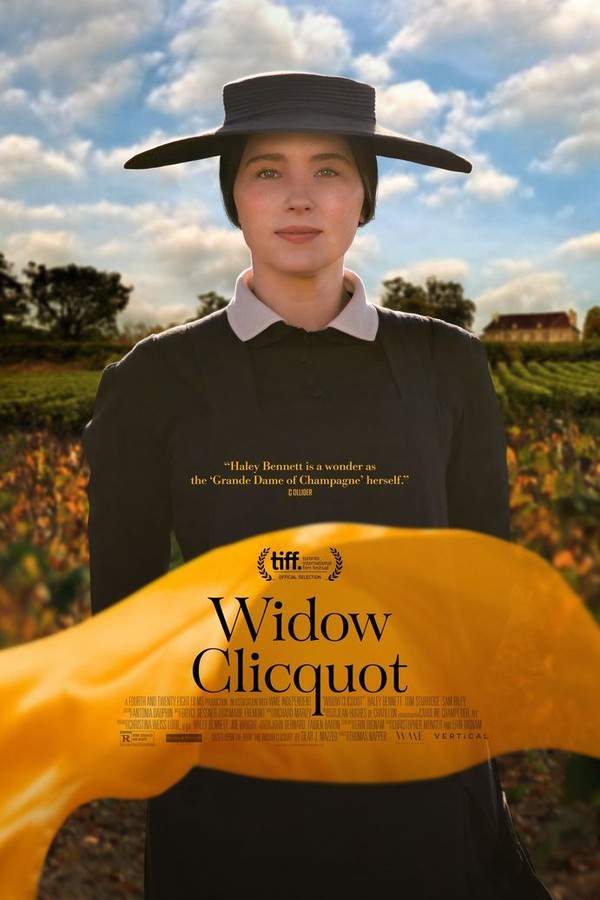
The story follows Barbe-Nicole Ponsardin, known as Widow Clicquot, as she builds a champagne empire in the late 1700s. Facing significant challenges and breaking through societal barriers, she demonstrates remarkable resilience and ingenuity in establishing a lasting legacy.
Find where to stream, rent, or buy Widow Clicquot (2024) in the US with current JustWatch availability, up-to-date pricing, and platform listings for subscription, rental, and digital purchase options.
Warning: spoilers below!
Haven’t seen Widow Clicquot yet? This summary contains major spoilers. Bookmark the page, watch the movie, and come back for the full breakdown. If you're ready, scroll on and relive the story!
Read the complete plot breakdown of Widow Clicquot (2024), including all key story events, major twists, and the ending explained in detail. Discover what really happened, and what it all means.
In Napoleonic France, Barbe-Nicole Ponsardin Clicquot, Haley Bennett, is widowed by the early death of her husband François, an unsuccessful winemaker. Instead of selling off the vineyards, she resolves to use her own money to revive the flailing winery, determined to honor his memory and keep the lineage intact. She confronts a world that underestimates a woman’s claim to a thriving business, and she refuses to walk away from the land that defined their family.
Her bold vision leads her to adopt unconventional planting techniques, a move that invites skepticism from workers and from her father-in-law Philippe, who doubts whether radical methods can ever yield reliable results. Yet Barbe-Nicole remains steadfast, blending practical grit with a steady flair for experimentation, slowly reshaping the winery’s fate even as the pressures of war and embargoes tighten around them. She envisions a sparkling product that could rewrite their fortunes, and the idea of a pink champagne starts to crystallize in her plans.
The breakthrough comes when the wine gains the attention of the Clicquots’ friend, wine merchant Louis Bohne, Sam Riley. Together, they dream of reaching markets that have long resisted Napoleon’s strict embargoes. Their collaboration becomes a daring partnership, as they work to smuggle the new creation to Amsterdam, hoping to spark demand in a city hungry for novelty and luxury despite the political strain. The venture embodies a defiant optimism, a belief that quality can outpace restrictions.
But the voyage from bottle to market is perilous. The Amsterdam shipment is lost, a devastating setback that tests Barbe-Nicole’s resolve. To keep the winery afloat, she begins selling off personal possessions and shrinking the household to conserve every resource. Yet resilience is a deeply rooted habit by now, and soon Louis finds a path for a portion of the product to reach Russia, where the wine’s sweetness and charm win admirers in a climate far from home. This new frontier proves pivotal, especially as it unfolds in the lead-up to the Great Comet of 1811, a celestial omen that seems to echo the turning tides of the era.
With Napoleon finally exiled, the political chaos loosens its grip on trade and new opportunities emerge. Barbe-Nicole and Louis press their advantage, expanding sales in Russia more earnestly and with greater ambition than before. The wine’s reputation grows, and what began as a stubborn attempt to preserve a family legacy blossoms into a burgeoning business that spans continents and seasons of uncertainty.
Yet success draws scrutiny. Barbe-Nicole’s ascent unsettles many of her male peers, who challenge her authority in a system that has long constrained women from owning or steering a business of such scale. She faces a courtroom trial grounded in a law designed to prevent women from owning enterprises. Her accusers argue that her unwillingness to marry Louis—viewed as the social norm of the time—allows her to continue controlling the business as a widow. In response, Barbe-Nicole delivers a pointed rebuke, defending her autonomy and the merit of her work with a clarity that resonates beyond the courtroom.
Louis publicly declares his devotion, proposing marriage as a personal and professional alliance, but Barbe-Nicole remains resolute in her choice to chart her own path. She rejects the proposal, asserting that her commitment to the winery must stand on its own terms, free from pressure or expectation. The confrontation becomes a defining moment, crystallizing her as a figure who navigates tradition and autonomy with quiet, unwavering authority.
As the narrative moves toward its close, epistolary and card-based epilogues reveal the lasting arc of her decision. Barbe-Nicole never remarries, and the winery endures as a testament to a founder who steered it through crisis and skepticism alike. The story closes with the foreshadowing of a dynasty: the Veuve Clicquot champagne house rises from these early trials to become a lasting emblem of resilience, ingenuity, and a woman’s enduring influence on an industry long shaped by men.
Last updated: March 05, 2026 at 18:39
Explore frequently asked questions about Widow Clicquot (2024) with spoiler-rich answers covering the full plot summary, major story beats, character motivations, hidden details, and ending meaning. This movie summary FAQ helps explain confusing scenes, plot twists, and narrative decisions in clear, searchable detail.
After her husband François dies, Barbe-Nicole chooses to keep the family vineyards rather than sell them off. She uses her own personal savings to invest in the flailing winery, determined to honor his memory and preserve the family lineage. This decision sets her on the path to building what would eventually become the Veuve Clicquot champagne empire.
Early in the film, her attachment to the land is established as she refuses to abandon her husband's legacy.
She uses her own personal savings to finance the struggling winery when no one else would invest in it. This was remarkable for the time because women in Napoleonic France had very limited rights to own or operate businesses. Her own money became the capital that kept the vineyards alive and allowed her to pursue innovative methods.
The film establishes early that she has personal wealth from her dowry that she can control as a widow.
Barbe-Nicole develops a pink champagne, which was an unusual and innovative product for the time. This pink champagne impressed wine merchant Louis Bohne and became the foundation for her breakthrough business strategy. The novelty of the product gave them something unique to sell in markets that were otherwise blocked by Napoleon's embargoes.
The pink champagne is introduced as her creative vision for distinguishing their product from competitors.
The shipment of champagne smuggled to Amsterdam was lost, delivering a devastating financial blow to the winery. To survive, Barbe-Nicole was forced to sell off her personal possessions and reduce her household expenses to conserve every resource. This setback nearly destroyed the business but she persisted.
The risky smuggling venture is presented as a desperate gamble that could go either way.
After the Amsterdam disaster, Louis Bohne managed to get a portion of their champagne to Russia, where the sweet wine found popularity in St. Petersburg and Moscow. This proved crucial because the Russian market became a lifeline during the embargo era. When Napoleon was exiled after 1814, they expanded seriously into Russia, which became central to the business's growth.
The timeline notes that the wine reached Russia before the Great Comet of 1811, establishing it as a key market.
Her success as a female business owner in a male-dominated industry attracted backlash. She was brought to trial under a French law designed to prevent women from owning enterprises. Male competitors challenged her right to control the winery, arguing that a widow should not be allowed to operate such a large business without a husband.
The film builds tension as her success grows, showing increasing resentment from male peers.
Louis publicly proposes marriage, offering a personal and professional partnership that was socially expected. Barbe-Nicole declines, choosing to maintain her independence and control over the winery on her own terms. She asserts that her commitment to the business must stand alone, free from the pressure to marry to validate her authority. She never remarries.
The film shows her prioritizing the winery's independence throughout, even when advice to marry would have been easier.
She adopts novel planting techniques that her workers and father-in-law Philippe consider risky and radical. These methods were unconventional for the time and faced skepticism from those around her. However, her willingness to experiment helped stabilize the vineyard and laid the foundation for future success.
Her father-in-law Philippe doubts her methods early on, setting up tension around her choices.
The Great Comet of 1811 serves as a historical marker in the timeline. The film notes that before the comet appeared, Barbe-Nicole's wine was already gaining traction in Russia. The celestial event is used as a period marker rather than a plot device, helping viewers understand the historical context of her achievements.
The timeline references the comet as a marker of the era rather than a symbolic element.
The epilogue reveals that Barbe-Nicole never remarried and that the winery she built endured through decades of uncertainty. It eventually became the famous Veuve Clicquot champagne house, named after her title as widow (veuve). Her legacy of resilience and innovation in a male-dominated industry continues to this day as one of the world's most recognized champagne brands.
The film's title itself hints at the enduring nature of her legacy.
Napoleon's strict embargoes made it extremely difficult to sell French wine in foreign markets. Barbe-Nicole and Louis resorted to smuggling their champagne to bypass these restrictions. The Amsterdam venture was one attempt to reach closed markets, but when it failed, they pivoted to Russia, which proved more accessible and became their breakthrough market.
The embargo is established early as a major obstacle to selling their product.
Still wondering what the ending of Widow Clicquot (2024) really means? Here’s a spoiler-heavy breakdown of the final scene, major twists, and the deeper themes that shape the film’s conclusion.
In the ending of Widow Clicquot, Barbe Nicole stands firm in her identity and her dreams, refusing to bow to societal expectations or the silencing laws of her time. Throughout the story, her journey is one of resilience, where she fights against prejudice and patriarchal controls to keep her late husband's vineyard alive. When faced with Louis Bohne’s marriage proposal in court, she chooses her independence over societal approval or personal security. Her refusal is not just about rejecting marriage; it’s a declaration of her commitment to her craft, her legacy, and her own sense of self. By saying no, she affirms that her passion and her visions are more valuable than conforming to the expectations of a society that seeks to diminish her. The film ends with her remaining true to her principles, carrying forward her late husband's dream with pride and integrity, demonstrating that her success was rooted in her authenticity and unwavering dedication. Her story is a powerful testament to the strength and resilience of a woman who refused to be defined by others, and who chose her path despite all the barriers placed before her.
Last updated: June 25, 2025 at 08:44
Discover curated groups of movies connected by mood, themes, and story style. Browse collections built around emotion, atmosphere, and narrative focus to easily find films that match what you feel like watching right now.
Stories of innovators who overcome systemic barriers to build a legacy.If you enjoyed the story of Barbe-Nicole Ponsardin in Widow Clicquot, explore more movies about determined founders who overcame barriers. These similar historical dramas and biopics showcase female entrepreneurship and the tenacious journey of building a lasting business empire.
These narratives typically follow a linear, goal-oriented path where a protagonist faces a series of escalating business and societal challenges. The central conflict often involves overcoming patriarchal structures, economic crises, or personal loss. The arc is one of steadfast perseverance, marked by clever problem-solving and culminating in a legacy of success.
Movies in this thread share a core theme of defiant resilience in the face of institutional obstacles. They mix a steady, procedural pacing with a consistently hopeful tone, celebrating ingenuity and dogged determination. The emotional journey is grounded but ultimately uplifting.
Uplifting period dramas about individuals who persevere through adversity.Fans of Widow Clicquot will appreciate these similar inspiring historical dramas. Discover other movies with a steady pace and hopeful tone, featuring tenacious characters who overcome grief and societal barriers to achieve greatness in their respective fields.
The narrative pattern centers on a singular protagonist navigating a specific historical context. The journey is defined by a series of setbacks—personal, professional, or societal—which are met with resilience and ingenuity. The story unfolds at a deliberate pace, allowing for character development and world-building, and concludes with a satisfying, legacy-celebrating resolution.
These films are grouped by their shared mood of determined optimism within a historical setting. They balance the weight of realistic challenges with an ultimately uplifting and empowering tone. The steady pacing and medium emotional intensity create a compelling yet accessible viewing experience focused on triumph.
Don't stop at just watching - explore Widow Clicquot in full detail. From the complete plot summary and scene-by-scene timeline to character breakdowns, thematic analysis, and a deep dive into the ending - every page helps you truly understand what Widow Clicquot is all about. Plus, discover what's next after the movie.
Track the full timeline of Widow Clicquot with every major event arranged chronologically. Perfect for decoding non-linear storytelling, flashbacks, or parallel narratives with a clear scene-by-scene breakdown.
Discover the characters, locations, and core themes that shape Widow Clicquot. Get insights into symbolic elements, setting significance, and deeper narrative meaning - ideal for thematic analysis and movie breakdowns.
What really happened at the end of Widow Clicquot? This detailed ending explained page breaks down final scenes, hidden clues, and alternate interpretations with expert analysis and viewer theories.
Discover movies like Widow Clicquot that share similar genres, themes, and storytelling elements. Whether you’re drawn to the atmosphere, character arcs, or plot structure, these curated recommendations will help you explore more films you’ll love.
Widow Clicquot (2024) Scene-by-Scene Movie Timeline
Widow Clicquot (2024) Movie Characters, Themes & Settings
Widow Clicquot (2024) Ending Explained & Theories
Widow Clicquot (2024) Spoiler-Free Summary & Key Flow
Movies Like Widow Clicquot – Similar Titles You’ll Enjoy
Lady J (Mademoiselle de Joncquières) (2019) Story Summary & Characters
Marguerite (2016) Ending Explained & Film Insights
A Woman's Life (2017) Full Summary & Key Details
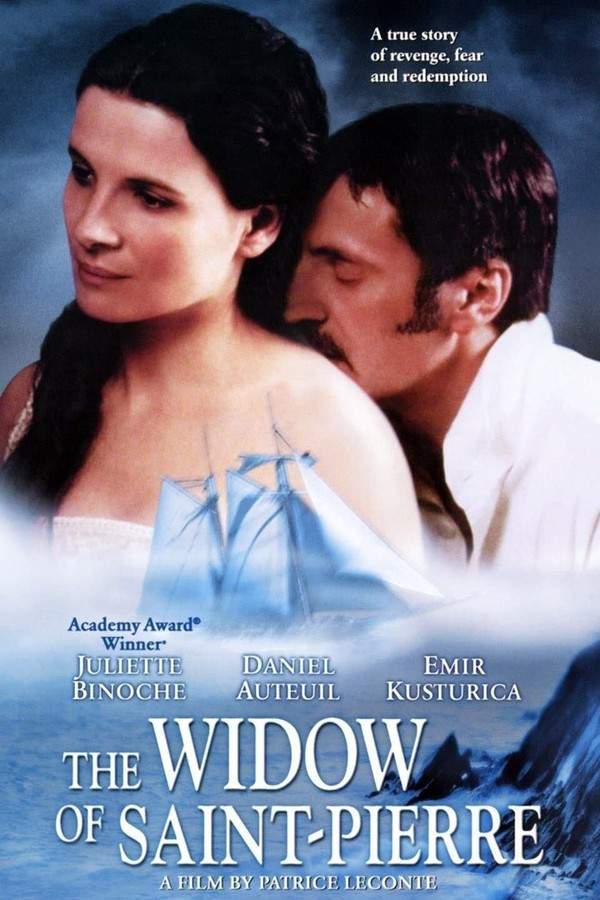
The Widow of Saint-Pierre (2001) Complete Plot Breakdown
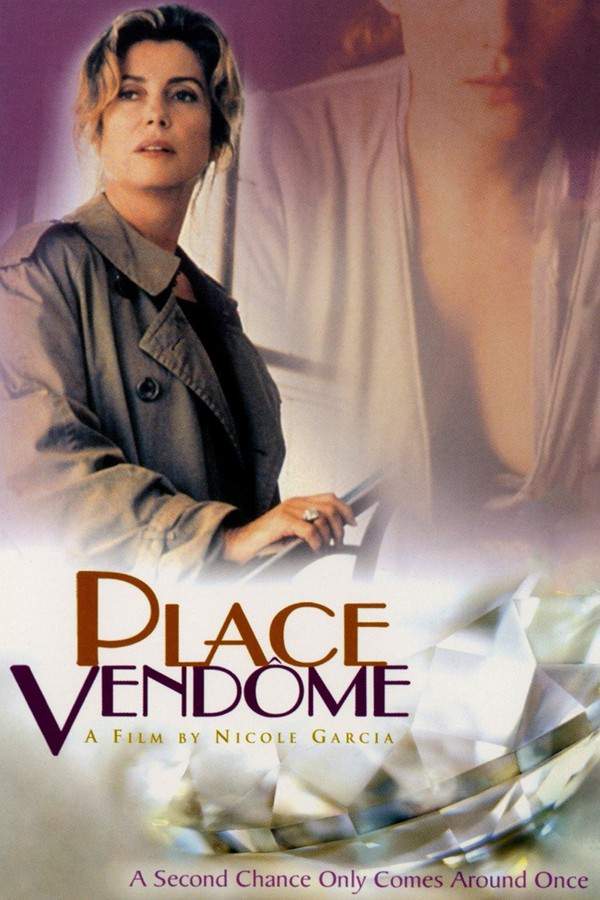
Place Vendôme (2000) Complete Plot Breakdown
The Château (2002) Full Summary & Key Details
The Woman Who Drinks (2001) Movie Recap & Themes
Widow and Rich No Longer a Bitch (2006) Full Movie Breakdown
Chanel Solitaire (1981) Full Summary & Key Details
The Widow’s Might (1918) Story Summary & Characters
Victoire (2023) Ending Explained & Film Insights
Champagne (1928) Full Summary & Key Details
The Widow from Monte Carlo (1935) Detailed Story Recap
Cocktail Hour (1933) Movie Recap & Themes
Femmes femmes (1974) Movie Recap & Themes