Plot Explained Spoilers guaranteed!
Plot Explained

Browse by genre

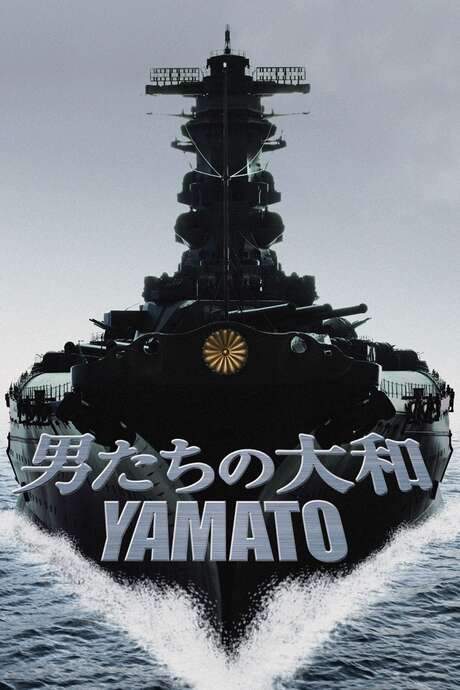
Yamato (2005) movie poster

Plot Summary

Yamato (2005) Plot Summary Explained

Release, runtime and language
2005 · 143 mins · Japanese
Directed by
Junya Satō
Starring
Tatsuya Nakadai, Hisashi Igawa, Shinobu Terajima, Ken'ichi Matsuyama, Takashi Sorimachi, Jun'ichi Haruta

Directed by Junya Sato and adapted from Jun Henmi’s book, the film frames its narrative today before launching a series of flashbacks that follow the crew of the World War II Japanese battleship Yamato. Though never released in the United States, reviewers who have seen it liken the sweeping military epic to Titanic and Saving Private Ryan.

On this page (5)
  1. 1 What happens: full plot
  2. 2 Plot questions answered
  3. 3 Movie threads
  4. 4 Movies like Yamato
  5. 5 Every angle

Full plot summary · contains spoilers

What Happens in Yamato: Full Plot Summary

The whole story of Yamato (2005) explained, from the opening scene to the final frame: every key event, every twist and what it all adds up to. Read it as a quick recap before the sequel, to check a scene you missed, or to finally understand what really happened.

The film opens with a glimpse of the Asahi Shimbun's special expedition to the wreckage of the Yamato in 1999. The story then transitions to the present day on April 6, 2005, where a woman named Makiko Uchida is visiting the Yamato Museum in Kure, Hiroshima. She is on a quest to find a boat that will take her to the site where the Yamato sank, aiming to pay tribute to the crew on the sixtieth anniversary of the ship's final battle. During her search, she encounters Katsumi Kamio, a survivor of the Yamato who has since become a fisherman. Upon learning that Makiko is the adopted daughter of Petty Officer First Class Mamoru Uchida, who was a cherished crew member and close friend he thought went down with the ship, he agrees to take her. Despite being confirmed deceased a year ago, Kamio’s hope that Uchida survived reignites.

As they journey to the location aboard Kamio’s fishing boat, accompanied by his teenage apprentice Atsushi, the narrative shifts back and forth between their present voyage and Kamio’s vivid memories of his time serving as an air defense crewman on the Yamato during World War II.

In the spring of 1944, Kamio and a group of young cadets, most of whom are mere teenagers, are assigned to the Yamato. They endure strict training under the watchful eyes of Petty Officers Uchida, Shohachi Moriwaki (played by Takashi Sorimachi), and Karaki, who have all been part of the crew since its commissioning in 1941. The situation escalates in October 1944, when the Yamato sets sail with a large Japanese fleet for a confrontation against American forces in the Battle of Leyte Gulf. The ship endures significant hits during the battle, resulting in the loss and injury of numerous crew members. After sustaining these damages, the Yamato returns to Japan for repairs while Uchida recuperates in a hospital after losing his left eye during the combat.

As the story unfolds into March 1945, whispers of an impending mission against an expected Okinawa invasion circulate among the crew, leading to a brief period of shore leave. During this time, Kamio visits his home, only to find that his mother has perished while shielding his girlfriend, Taeko Nozaki (played by Yu Aoi), during an air raid in Kure. Taeko confesses her love for him, giving him a special amulet for protection just as he prepares to head to Okinawa.

Taking advantage of his shore leave, Uchida sneaks away from the hospital to rejoin the crew. Meanwhile, they receive a briefing from Vice-Admiral Ryūnosuke Kusaka about Operation Ten-Go which will likely turn into a suicide mission. With no air cover, the Japanese forces are at great risk of Allied attacks, making their chances of reaching Okinawa exceedingly slim. Tensions flare amongst the crew as some deem the mission ill-fated, but they are ultimately rallied by an officer, emphasizing that the Yamato—being Japan's last active battleship—must make every effort to protect the homeland.

On the fateful morning of April 7, the Yamato, along with its escorts, initializes battle stations as Task Force 58 detects them and deploys strike planes to intercept. As U.S. aircrafts storm in, the crew springs into action with their anti-aircraft defenses. Yet, the overwhelming numbers of enemy planes prove too much, leading to severe damage on the Yamato from bombings and torpedoes. Kamio, Uchida, and Moriwaki strive to operate a portside anti-aircraft battery, even as they witness many crew members, including Karaki, fall in battle. When it becomes clear that the ship is sinking, orders are given to abandon ship by Vice-Admiral Seiichi Itō and Captain Kōsaku Aruga. Though they choose to remain on board, Uchida and Moriwaki force Kamio to abandon his post despite his reluctant desire to stay with them to the end. As the ship begins to capsize and ultimately explodes after its aft magazine detonates, Kamio finds himself fighting for survival.

Following the tragic sinking, the remaining vessels attempt to rescue survivors, but Kamio is unable to save his friend Tetsuya Nishi despite having promised his mother to keep watch over him. In a heart-wrenching moment, Moriwaki ties Kamio to be hoisted aboard a rescue boat, swimming away from safety to drown himself.

The narrative fast-forwards to the present, where an older Kamio suffers a heart attack but is revived by Makiko and Atsushi. He shares the haunting memories from the war's final days, conveying the sorrow of not being able to protect those he loved, including Taeko, who succumbed to radiation poisoning following the atomic bombing of Hiroshima while she was forced to work at a munitions plant. Despite this tragedy, she had the chance to see him one last time before her death, referring to his boat as Asukamaru.

As they reach the coordinates of the sinking the next day, a poignant ceremony takes place. Makiko scatters Uchida’s ashes while Kamio presents her with a dagger that Uchida entrusted him with during the battle—the dagger that was an invaluable gift from Admiral Isoroku Yamamoto when the Yamato served as his flagship. The three individuals reflect on their shared history and experiences before making their way back to Japan following the respectful memorial.

In the end credits, viewers see Makiko placing flowers at a dedicated memorial for all those who perished in that fateful encounter.

Last updated: October 02, 2026 at 03:21

Was this helpful?

Plot questions answered

Yamato Plot Explained: Your Questions Answered

The questions people ask most about Yamato (2005): what happens in the confusing scenes, why the characters do what they do, the twists, hidden details and what the ending means. Each answer contains spoilers.

Q1

Why did Mamoru Uchida sneak out of the hospital to rejoin the Yamato?

Uchida had lost his left eye during the Battle of Leyte Gulf and was supposed to be recovering, but he escaped to rejoin his crew because Operation Ten-Go was about to begin and he refused to let his men sail into a suicide mission without him. As a seasoned petty officer who had served on the Yamato since its commissioning in 1941, he felt a deep responsibility to stand with Kamio, Moriwaki, and the young cadets he had trained. His choice shows the bond between the crew outweighed his own survival.

  • uchida
  • hospital escape
  • operation ten-go
  • yamato crew
  • kamio
  • moriwaki
Q2

Why was Operation Ten-Go considered a suicide mission?

Operation Ten-Go sent the Yamato and a small escort fleet to Okinawa with no air cover and almost no fuel for a return voyage, meaning the crew was expected to fight to the death rather than retreat. Vice-Admiral Ryūnosuke Kusaka's briefing made it clear the Allied forces would overwhelm them before they could reach the island. The Yamato, as Japan's last active battleship, was being sacrificed to stall the American advance and defend the homeland.

  • operation ten-go
  • suicide mission
  • yamato
  • okinawa
  • no air cover
  • vice-admiral kusaka
Q3

Why did Moriwaki tie Kamio to a rescue boat instead of escaping with him?

As the Yamato was sinking, Moriwaki physically tied Kamio to a line so he would be hoisted aboard a rescue vessel, then swam away from safety and let himself drown. Moriwaki had already accepted that he would die with the ship, but he wanted at least one of their young cadets to survive and carry the story forward. His act saved Kamio's life at the cost of his own, reflecting the same protective instinct Uchida and Karaki had shown toward the younger crew.

  • moriwaki
  • kamio
  • rescue boat
  • sinking yamato
  • sacrifice
  • tie
Q4

What is the significance of the dagger that Admiral Yamamoto gave to the Yamato?

The dagger was a personal gift from Admiral Isoroku Yamamoto to the Yamato when the ship served as his flagship, making it a symbol of Japanese naval pride and the crew's connection to their highest commander. Uchida entrusted it to Kamio during the final battle, and Kamio kept it for sixty years before passing it to Makiko at the memorial ceremony. The dagger represents the unbroken bond between the men who served together and the legacy they left behind.

  • yamamoto dagger
  • yamato flagship
  • uchida
  • kamio
  • makiko
  • memorial
Q5

Why couldn't Kamio save Tetsuya Nishi after the Yamato sank?

Kamio had promised Nishi's mother that he would look after her son, but during the chaos of the sinking, Kamio was himself thrown overboard, tied to a rescue line by Moriwaki, and unable to reach Nishi in the debris-filled water. The overwhelming scale of the disaster, burning oil, drowning sailors, and disorienting chaos made individual rescues nearly impossible. Nishi's death became one of Kamio's deepest sources of survivor guilt, which he carried for the rest of his life.

Foreshadowing: Kamio's promise to Nishi's mother is established during their earlier training scenes, making the failure to save him feel inevitable once the battle turns catastrophic.

  • kamio
  • tetsuya nishi
  • survivor guilt
  • rescue
  • sinking
  • promise
Q6

How did Taeko die after the war ended?

Taeko Nozaki survived the air raid that killed Kamio's mother but was later forced to work at a munitions plant in Hiroshima, where she was exposed to radiation from the atomic bombing. She developed radiation poisoning and died from the aftermath, though not before reuniting with Kamio one final time and calling his fishing boat 'Asukamaru.' Her death extended the film's tragedy well beyond the sinking of the Yamato, showing that survival did not guarantee safety.

Foreshadowing: The Kure air raid that killed Kamio's mother foreshadows the larger pattern of civilian sacrifice that ultimately claims Taeko as well.

  • taeko nozaki
  • radiation poisoning
  • hiroshima
  • atomic bomb
  • asukamaru
  • munitions plant
Q7

Why did Katsumi Kamio believe Mamoru Uchida might have survived the sinking?

Kamio knew Uchida had been ordered off the ship before it went down, and the chaos of the rescue operations left no reliable way to confirm who had actually survived. Although Uchida was officially listed as dead and Makiko was told he had been killed, Kamio clung to the hope that his close friend had somehow made it, which is why he agreed so readily to take Makiko to the wreck site. His hope, even after sixty years, reveals the depth of their bond and the uncertainty that haunted many families of fallen sailors.

  • kamio
  • uchida
  • survivor hope
  • sinking
  • confirmed dead
  • makiko
Q8

Why did the Yamato sink despite being the largest battleship ever built?

The Yamato was overwhelmed by Task Force 58, which launched hundreds of aircraft in coordinated bombing and torpedo runs that exploited the ship's lack of air cover. Without fighter support, anti-aircraft gunners like Kamio, Uchida, and Moriwaki could only do so much against waves of attacking planes. The combination of bombs and torpedoes eventually caused the aft magazine to detonate, tearing the ship apart as it capsized. The Yamato's size and armor were no match for sustained carrier-based air power.

  • yamato sinking
  • task force 58
  • torpedo
  • magazine detonation
  • anti-aircraft
  • air cover
Q9

Why did Makiko visit the Yamato Museum in Kure on the sixtieth anniversary?

Makiko was the adopted daughter of Petty Officer Mamoru Uchida, and she wanted to honor him on the sixtieth anniversary of the Yamato's final battle. She was searching for a boat that would take her to the exact coordinates where the ship sank so she could scatter her father's ashes at his final resting place. Her pilgrimage turned into a much larger journey of remembrance when she met Kamio, Uchida's closest surviving friend.

  • makiko uchida
  • yamato museum
  • kure
  • ashes
  • anniversary
  • memorial
Q10

Why did Uchida and Moriwaki choose to stay on the Yamato as it sank?

When Vice-Admiral Seiichi Itō and Captain Kōsaku Aruga gave the order to abandon ship, both officers chose to remain on board and go down with the vessel, as was traditional for senior naval commanders. Uchida and Moriwaki forced Kamio to leave against his will precisely because they were committed to dying with the Yamato and wanted at least one of the young cadets to live. Their refusal to abandon ship was both a matter of honor and a deliberate sacrifice to give the younger generation a chance.

  • uchida
  • moriwaki
  • abandon ship
  • vice-admiral ito
  • captain aruga
  • honor
Q11

Why does Yamato alternate between 2005 and World War II?

The film uses a frame narrative so that the present-day voyage to the wreck site gives emotional weight to Kamio's WWII memories, letting viewers experience his trauma both as it happened and as it has haunted him for sixty years. The flashbacks reveal what the younger Kamio went through, while the 2005 scenes show how those experiences shaped the man he became. This structure also connects the historical tragedy to living memory, turning the memorial voyage into a form of healing for Kamio, Makiko, and Atsushi.

  • frame narrative
  • present day
  • 2005
  • wwii flashbacks
  • kamio memories
  • structure
Q12

What happens to Petty Officer Karaki during the final battle?

Petty Officer Karaki, one of the three seasoned petty officers who had trained the young cadets since 1941, is killed while serving at an anti-aircraft battery during the overwhelming American air assault. His death happens in front of Kamio, Uchida, and Moriwaki, stripping the young crew of one of its pillars. Karaki's fall signals that even the most experienced sailors could not survive the mission, reinforcing how hopeless Operation Ten-Go truly was.

  • karaki
  • petty officer
  • anti-aircraft
  • killed in action
  • final battle
Q13

How did Uchida lose his eye during the Battle of Leyte Gulf?

Uchida lost his left eye while operating at his post aboard the Yamato during the intense combat at Leyte Gulf, where the ship took significant damage and many crew members were killed or wounded. The injury was severe enough to send him to a hospital in Japan for recovery, but he later escaped to rejoin the crew before Operation Ten-Go. His missing eye became a lasting symbol of the physical and emotional cost the war had already extracted from him before the final mission.

  • uchida
  • left eye
  • battle of leyte gulf
  • injury
  • hospital
  • wounded
Q14

Why did Taeko give Kamio an amulet before he left for Okinawa?

Taeko had just confessed her love for Kamio and learned that he was being sent on a mission that was widely understood to be a one-way trip, so she gave him a protective amulet as a final expression of her devotion. The amulet carried both their romantic bond and her desperate hope that he would return alive. Its emotional weight is felt throughout the film, since Kamio's survival makes the amulet one of the few tangible connections left to Taeko after her death from radiation sickness.

Foreshadowing: The amulet becomes a symbol of Taeko's love and the fragile hope that haunts Kamio long after the war.

  • taeko
  • amulet
  • kamio
  • protection
  • okinawa
  • farewell

Movie threads

More Movies Like Yamato, by Mood & Story

Curated lists built around what makes Yamato tick: the same mood, the same kind of story or the same emotional payoff. Each list explains why these movies belong together.

Wartime memory dramas like Yamato

Films that cut between today's quiet grief and yesterday's violent past. If you liked Yamato's structure of present-day reflection woven into WWII flashbacks, these movies echo that same frame. Explore wartime memory dramas that use quiet memorial journeys to confront trauma, mixing slow reflective scenes with explosive combat and finding catharsis through remembrance rather than victory.

  • memory
  • remembrance
  • frame narrative
  • contemplative
  • haunting
  • somber
  • Tone: melancholic, reflective
  • Pacing: variable, slow reflective stretches and violent peaks
Why these movies?

The story pattern: A witness, survivor, or descendant travels in the present while the film cross-cuts into the war they are remembering. The two timelines inform each other: present-day silences are charged by what we know happened, and the flashback violence is filtered through the survivor's guilt or grief. The plot is rarely a thriller and more a slow emotional excavation, often ending not with answers but with a ritual of remembrance that lets both timelines finally rest.

Why they belong together: They share a structural DNA: a memorial or commemorative frame on one side, visceral combat on the other. They tend to favor variable pacing, heavy emotional weight, bittersweet or melancholic tones, and a sense that history is being carried rather than simply recounted. The mood is somber, contemplative, and cathartic, with haunting images and quiet grief holding the action scenes in tension.

If you liked this

Movies Like Yamato

Similar movies to Yamato: the same genre, themes or kind of story. Each one comes with its own plot summary, timeline and ending explained.

Browse all movie summaries

Every angle

Yamato (2005) Explained: Plot, Timeline & Characters

Everything about Yamato in one place: what happens in the plot summary, the timeline in chronological order, the characters and meaning and a spoiler-free summary. What's After the Movie adds the cast, box office and post-credit scenes.

Coming soon on iOS and Android

The Plot Explained Movie Summary App

Plot summaries, endings explained and timelines on your phone. Catch up on any movie in minutes, save your favorites and never miss a twist again.

Be the first to know when we launch. Your email stays private, always.

Learn more about the app