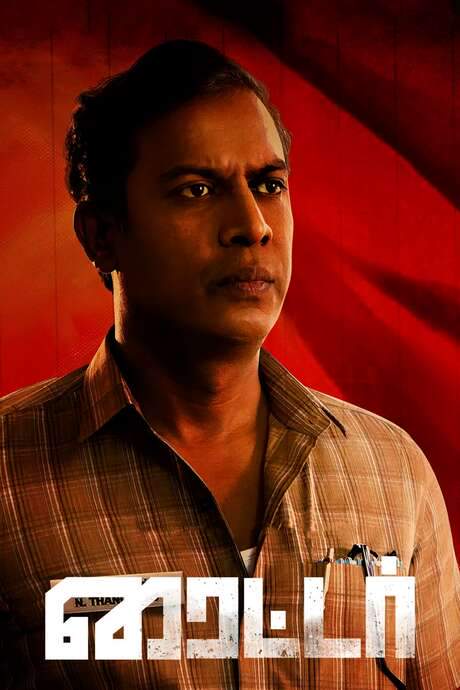
A new recruit, police constable Arivazhagan, reports for duty at the Tiruverumbur police station in Tiruchirappalli, where he is mentored by head constable Thangaraj, the station writer. Thangaraj is a complicated figure: a bigamist who has entered into a second marriage with a much younger woman to produce an heir, and a vocal advocate for a union to represent lower-rank officers. This bold move irks the police inspector, who disciplines him by transferring him to the Thiruvallikeni police station in Chennai. The shift marks a drastic change in Thangaraj’s life, taking him from a relatively familiar home turf to a city where power and secrecy often go hand in hand.
In Chennai, Thangaraj is relegated to routine, almost menial duties, and he reconnects with Raja, a former convict who keeps to the station premises and does odd jobs. On his first day, Thangaraj is assigned to guard Devakumar, a PhD student who is illegally detained in a nearby marriage hall. Devakumar attempts to escape but is captured by the hall manager and Thangaraj. The station staff refuse to disclose any case details, and Inspector Perumal, along with head constable Manickam, forces Devakumar to sign a set of documents. Devakumar’s location is shuffled repeatedly, with Deputy Commissioner Trivedi Sharma revealed as being involved—an old acquaintance of Thangaraj who visits the case with an air of complicity.
As Thangaraj and Raja watch over Devakumar, the detainee tearfully recounts his story. In a flashback, Devakumar’s life unfolds: a backward-community man from Thirukkattupalli near Tiruchirappalli, he lives with his elder brother Xavier, sister-in-law, and their son. After a family quarrel, he returns to Chennai only to be seized by the police, who also seize his cellphone. A junior journalist, seeking material for a social-issues piece about police detentions and the union movement, becomes entangled in Devakumar’s fate when Thangaraj accidentally exposes the detention to him, and the journalist publishes it as a scoop. The newspaper report infuriates Sharma, who orders Thangaraj to craft a crime scene designed to implicate Devakumar, unaware that Thangaraj himself had leaked the information.
As the case spirals, Devakumar is labeled a Naxalite and arrested, while Thangaraj grapples with growing guilt. He persuades Xavier to come to Chennai to meet his brother and asks him to seek help from lawyer Marudhamuthu. The lawyer discovers how secretive the police are about the case and initially cannot get an audience with Devakumar. Meanwhile, Sharma, Perumal, and Manickam intensify their pressure on Devakumar, and a brutal beating ensues as they probe his supposed motives and connections. Thangaraj secretly places a phone in Devakumar’s cell to enable him to speak with Marudhamuthu, a pivotal act that shifts the balance of power and reveals that Devakumar was a sociology PhD student at Madras University studying police mental health and the rising suicides within the force. An RTI filed by a lawyer, Anwar, seeks the relevant information for his thesis, further complicating the case.
Behind these events lies a painful backstory involving Saranya, who is rejected for a Tamil Nadu Police riding team by Sharma due to caste considerations. Saranya’s rejection is framed as a prejudice issue, and she is forced into a stable maintenance role at the stables. Sharma visits the stables, but when Saranya insists on riding a horse in front of him, his anger erupts and he beats her; she dies by suicide soon after. This act of caste-based retaliation haunts the officers and becomes a motive for the mounting tension that threads through the investigation.
Feeling the weight of these injustices, Thangaraj decides to help Devakumar escape and ultimately surrender in court under a different case, a gambit designed to outmaneuver the corrupt officers who want him silenced. The escape is not without danger, but Thangaraj navigates numerous obstacles to ensure Devakumar can flee to safety and seek legal protection. A few months later, Thangaraj faces consequences of his actions: he is jailed, and in a letter to Arivazhagan, he recounts the events that followed Devakumar’s escape. Sharma, Perumal, and Manickam locate Devakumar and abduct him; Devakumar is shot dead by Thangaraj, a moment that haunts him with guilt. In a dramatic confrontation, Sharma threatens to shoot Thangaraj, but Thangaraj disarms him and shoots Sharma dead in front of Perumal and Manickam, a shocking turn that exposes the rot at the heart of the force.
The aftermath leaves Thangaraj gravely wounded and hospitalised, while Xavier, having learned the truth, is left to pick up the pieces. The letters and revelations gradually push the survivor, Arivazhagan, to continue the fight for a police-union case that aims to bring accountability to the force and protect the lower ranks from coercive tactics. In the end, Arivazhagan resolves to honor Thangaraj’s sacrifice, keeping the advocacy for reform alive and ensuring that the chain of accountability does not break. The film closes on a note of unresolved moral tension, emphasizing that the pursuit of justice can come at a high personal cost, yet it remains a crucial and ongoing effort for those who believe in reform from within.