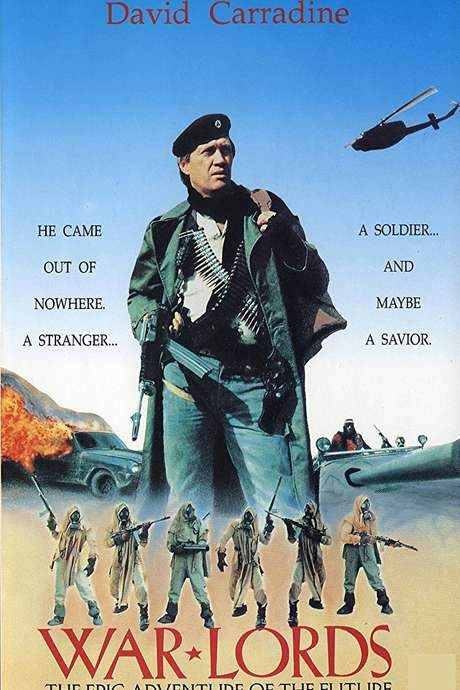
In a scorched, post-apocalyptic Earth in the year 2087, rain has been a memory for fifty years, turning water into a precious, almost sacred resource. The small, isolated outpost of Lost Wells clings to life on the edge of a desolate landscape, its every breath watched by those who guard its secret water source. At the heart of the town, Bruce Dern plays Ethan, a Moses-like guru who also serves as the town’s quiet center of guidance, while Catherine Mary Stewart portrays Angie, the last schoolteacher on the planet who teaches amid the ruins in a repurposed school bus that functions as a classroom. The community remains deliberately close-lipped about how they endure, carefully shielding the truth from outsiders and passing down dated rituals and practical wisdom from a faded world.
The town itself is an evocative enclave: a Mobil service station encircled by a wall of old, rusted cars, creating a makeshift perimeter that separates this tiny sanctuary from the harsh wilderness beyond. Inside that tiny world, learning continues with stubborn stubbornness, and one of the few relics of civilization is a complete, unabridged book on etiquette by Emily Post, a symbol of a social order that once existed and now anchors the town’s cultural memory. Emily Post’s guide stands as a fragile link to a more orderly past, a reminder of the values they still cling to even as the world around them has collapsed.
A dangerous, fanatical cult of pseudo-religious renegades, led by Derek Abernathy, emerges from the shadows. Derek relies on the brutal logic of a book inspired by the infamous Charles Manson, and his group quickly deduces that Lost Wells harbors a vital water source—enough to tempt conquest and control. Derek’s crusade for power is a direct threat to the town’s precarious existence, and the villagers quickly realize they cannot face this force alone.
Facing an overpowering threat, the people of Lost Wells hire mercenaries who dwell in a distant city, hoping their firepower and discipline can tip the balance. The hired group includes Julius Carry as Nitro and Anthony James as Ten Watt, fierce fighters who bring a different kind of certainty to the town’s defenses. They are joined by Michael Paré as George Landon, a leader whose experience and strategic mind help organize a counteroffensive against Derek’s forces. Together, the villagers and these mercenaries craft a plan to defend the water at stake and the people who depend on it.
As the siege tightens, alliances form and testing moments of courage reveal the limits and resilience of each character. Ethan’s steady, almost prophetic presence provides a moral compass for the group, while Angie’s practical knowledge keeps the town’s scholastic flame alive, passing on lessons that matter far beyond the classroom. The dynamic between the community’s traditions and the mercenaries’ hard-edged pragmatism creates a careful balance between hope and peril, moral restraint and ruthless action.
The ensuing confrontation is not merely a clash of force but a test of will, resourcefulness, and the willingness to sacrifice for a shared lifeline. The defense becomes a portrait of a fragmented human story—a circle of survivors who, despite their unlikely unity, push toward a fragile salvation. The film’s landscape, populated by stark desert skies and cramped, improvised fortifications, underscores how fragile civilization can be when resources are scarce and danger is constant. The tension remains high as every decision can alter the fate of Lost Wells and the people who call it home.
Throughout the struggle, the narrative keeps its focus on the human dimension: the stubborn hope of Angie in a world without easy answers, the guiding certainty of Ethan’s leadership, the calculated pragmatism of George Landon, and the brutal resolve of the cult’s followers led by Derek Abernathy. The mercenaries’ presence raises questions about loyalty, duty, and what people are willing to fight for when water is the only true currency. In the end, the town’s defense hinges on a rare combination of courage, strategy, and the stubborn refusal to surrender the life they have built in the harshest of environments.