


Plot Explained Spoilers guaranteed!
Plot Explained

Browse by genre

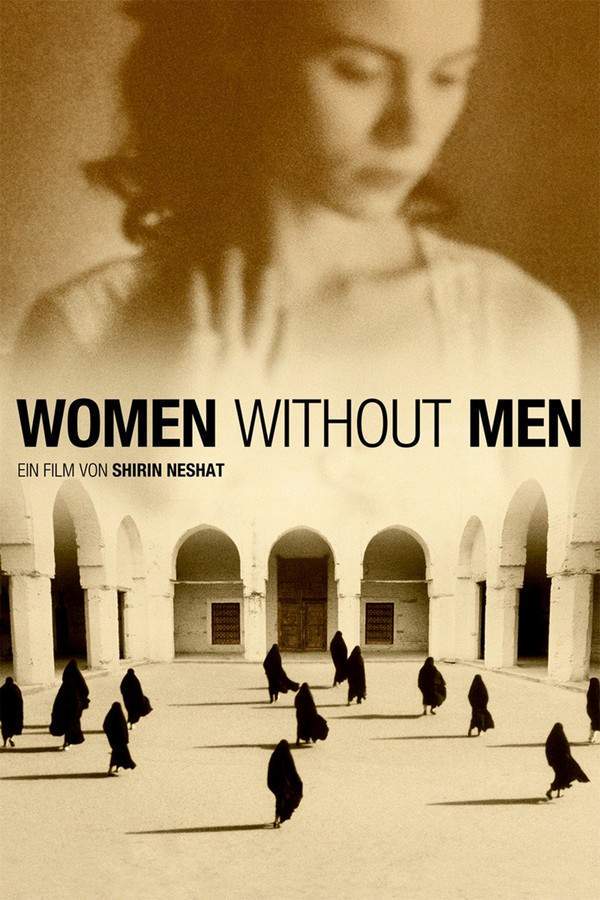
Women Without Men (2010) movie poster

Timeline

Women Without Men (2010) Timeline Explained – Every Event in Order

Release, runtime and language
2010 · 95 min · Persian
Directed by
Shirin Neshat, Shoja Azari

Following World War II, in Iran, the lives of four women become intertwined against the backdrop of a pivotal historical moment: the CIA-backed coup that overthrew the democratically elected government and restored the Shah’s power. This debut feature explores their experiences, portraying a poignant and evocative portrait of female resilience and the fading of hope during a time of political turmoil and profound societal change.

On this page (6)
  1. 1 Where to watch
  2. 2 Events in order (14)
  3. 3 Timeline questions answered
  4. 4 Movie threads
  5. 5 Movies like Women Without Men
  6. 6 Every angle

Where to watch

Where to Watch Women Without Men (2010)

Where can you watch Women Without Men? Stream, rent or buy it in the US, including on Darkroom and Kanopy: current JustWatch availability with up-to-date prices.

Streaming availability powered by JustWatch

14 events in order · contains spoilers

Women Without Men Timeline: Events in Chronological Order

Every key event of Women Without Men (2010) in order, scene by scene, with when and where it takes place. Use it to untangle flashbacks, time jumps and parallel storylines, to refresh your memory before the sequel or to find the exact scene you are thinking of.

  1. Opening Adhaan and rooftop jump

    The film opens with the sound of the Adhaan as a woman stands on a rooftop contemplating suicide. She leaps in slow motion, triggering a flashback that frames Munis's struggle against oppression. The moment establishes a somber, ritual atmosphere that resonates throughout the story.

    When
    Opening
    Where
    Rooftop
  2. Munis resists an arranged marriage

    Munis rejects the idea of a husband while her tyrannical brother, Amir Khan, pushes her toward a visiting suitor and orders her to cook for them. He threatens that if she leaves the house, he will break her legs. This scene establishes the control she faces within her family.

    When
    Early
    Where
    Munis' home
  3. Protests erupt in the streets

    Protests fill the streets with chants in support of Mosaddegh and against Britain. Munis and Faezeh discuss the demonstrations, with Faezeh sneering at the protesters yet secretly wondering about involvement. The moment connects political upheaval to the women's personal lives.

    When
    Daytime
    Where
    Tehran streets
  4. Zarin the prostitute in the brothel

    Zarin, a prostitute, prepares for a client at the brothel, while the madam hounds her to take another customer. She sobs as she waits, overwhelmed by exploitation, and a "faceless" client appears in her perspective before she escapes. The scene exposes the vulnerability of women trapped in exploitation.

    When
    Unspecified
    Where
    Brothel
  5. Fakhri confronts her marriage

    Fakhri, a wealthy military wife, attends a ceremony where her husband Sadr is honored. They argue about an old flame Abbas who has returned, and she expresses fatigue and a desire to leave. The conflict outlines the strain of a loveless, traditional marriage.

    When
    Daytime
    Where
    Military ceremony
  6. Fakhri buys a mystical villa; Zarin found

    After leaving the event, Fakhri travels to a secluded villa she buys, a space thick with dust and mystery. In the garden she spots Zarin unconscious by a river, and a man carries her inside. The scene juxtaposes luxury with ruin and signals new, fragile alliances.

    When
    Night
    Where
    Fakhri's villa
  7. Love-spell ritual and Munis' awakening

    In Amir Khan's house, Faezeh engages with a diviner to cast a love spell on Amir Khan. Through a surreal twist, Munis' voice calls from the ground, and Faezeh digs her out before Munis steps into the water of a howz. The sequence blends magical realism with political yearning.

    When
    Night
    Where
    Amir Khan's house and the howz
  8. Munis explores a second fantasy as a revolutionary

    Munis steps out into the city as part of an underground Communist scene, wearing a black chador among a crowd shouting 'Long live freedom.' She is drawn to a radical message and a pamphlet handed to her, signaling a shift from personal oppression to collective action.

    When
    Daytime
    Where
    Tehran street
  9. Faezeh's dream and awakening at Fakhri's cottage

    Faezeh prays as the gardener notices her, then a dreamlike sequence brings Munis' voice back to the surface. In the morning she awakens at Fakhri's cottage, lying next to Zarin, and walks out with a more liberated stance.

    When
    Dream sequence / Morning
    Where
    Fakhri's cottage
  10. Tudeh meeting and coup news

    A meeting of Tudeh members occurs as an announcement declares Mosaddegh's government illegal and a coup is looming. They distribute flyers and plan actions while protests continue in the streets. The political climate grows increasingly dangerous.

    When
    Night
    Where
    Tudeh gathering
  11. Garden party ambitions and ominous omen

    Fakhri announces she wants to open the garden doors for a party, which is met with mixed feelings from Faezeh and Zarin. Later, a tree crashes through a window, foreshadowing danger and the garden's political fragility. Munis narrates the garden's turning and weight of oppression.

    When
    Night
    Where
    Fakhri's villa / garden
  12. Protests clash; Munis sheds the chador

    A clash erupts between Shah supporters and Mossadegh supporters as gunshots ring out. Munis joins the Mossadegh camp and sheds her chador, signaling a louder public role in resistance. The line between observer and participant blurs in the street conflict.

    When
    Daytime
    Where
    City streets
  13. Raid and tragedy at the garden party

    Gardener returns with Zarin, now ill again, to the villa. Police raid the garden party and the Tudeh publishing and wedding spaces, arresting and beating dissidents. Munis's ally kills a soldier in a scuffle, and Zarin's death casts a pall over the gathering.

    When
    Night
    Where
    Fakhri's villa / garden party site
  14. Final rooftop fall and a somber farewell

    As Zarin's death is mourned and crackdown intensifies, Munis meditates that death is not difficult, only its imagining. The film closes with Munis tumbling from the rooftop in slow motion, symbolizing a final, melancholic gesture of lost freedom.

    When
    End
    Where
    Rooftop

Last updated: November 22, 2025 at 15:57

Was this helpful?

Timeline questions answered

Women Without Men Timeline Explained: Your Questions Answered

When does it happen, and why in that order? The questions people ask about the chronology of Women Without Men (2010): time jumps, flashbacks, cause and effect between scenes and the correct order of events, each answered with spoilers.

Q1

Why does Munis stand on the rooftop and jump at the beginning of the film?

Munis jumps from the rooftop after her brother Amir Khan cuts off her only connection to the outside world, the radio, and threatens to break her legs if she leaves the house. The film presents this as her response to relentless domestic oppression, where she is forced to prepare for a suitor she does not want and live under constant control. The opening is actually a flash-forward, showing the tragic outcome of her resistance against patriarchal authority.

Foreshadowing: The opening rooftop scene is preceded by the Adhaan, the Islamic call to prayer, establishing the ritualistic constraints that define Munis's life.

  • munis
  • rooftop
  • suicide
  • amir khan
  • oppression
  • brother control
Q2

Does Munis actually die when she jumps, or does she survive?

The film presents this as ambiguous. After Faezeh digs her out of the garden, where Amir buried her after she supposedly jumped, Munis emerges alive and walks into the water of the howz (ritual pool). This magical realist sequence suggests she may have been buried alive, or that the entire event was symbolic rather than literal. Later, Munis appears in the city as a revolutionary, indicating she survives in some form.

Foreshadowing: The love-spell ritual that Faezeh performs creates the supernatural mechanism for Munis's resurrection, blurring reality and myth.

  • munis death
  • buried alive
  • survival
  • magical realism
  • howz
Q3

What happens to Zarin at the end of the film?

Zarin dies at the garden party after falling ill with fever. She had been in poor health throughout the film, having worked in a brothel and suffered exploitation. During the police raid on Fakhri's villa, Zarin is already deceased or dies shortly after, with Faezeh discovering her body and Fakhri kneeling beside her in grief. Her death marks one of the film's tragic losses.

Foreshadowing: Zarin repeatedly falls ill and sweats profusely throughout the film, foreshadowing her fragile health and eventual death.

  • zarin death
  • garden party
  • police raid
  • fever
  • prostitute
Q4

Why does Faezeh dig Munis out of the ground?

Faezeh consults a woman with 'divine powers' to cast a love spell on Amir Khan. During the ritual, she hears Munis's voice calling from beneath the ground and digs her out, believing Munis is still alive beneath the surface. This sequence uses magical realism to suggest that Munis's spirit or will to survive transcends the literal death imposed by her brother.

Foreshadowing: The diviner's powers provide the supernatural mechanism that allows Munis to return, making the magical realist twist feel earned within the film's logic.

  • faeza
  • love spell
  • digging
  • munis
  • magical realism
  • diviner
Q5

What is the Tudeh party and why is it significant in the story?

The Tudeh Party of Iran was the Communist Party, which was legal but increasingly persecuted during the political turmoil of 1953. The film shows Tudeh members holding secret meetings, distributing flyers, and planning resistance against the Shah's regime. Munis becomes involved with them, joining their underground activities. The Tudeh gatherings represent the hope for political change that parallel the women's personal struggles for freedom.

Foreshadowing: The Tudeh meetings are repeatedly raided by police, building tension toward the final crackdown that destroys both the political movement and the garden party.

  • tudeh
  • communist party
  • iran
  • political resistance
  • mossadegh
  • underground
Q6

Why does Fakhri leave her husband General Sadr?

Fakhri leaves because her marriage has become intolerable. At a military ceremony, her husband Sadr demands fidelity while threatening to take another wife if she cannot satisfy him sexually. He also suspects her of having feelings for Abbas, an old flame who has returned to Tehran. Fakhri admits she is exhausted by the dynamic and withdraws from the marriage, eventually finding refuge at the secluded villa where she encounters Zarin.

Foreshadowing: Sadr's cruel assertion about taking another wife directly motivates Fakhri's departure and her search for a different kind of life.

  • fakhri
  • general sadr
  • marriage
  • abbas
  • divorce
  • military wife
Q7

What happens during the police raid at the garden party?

Police raid Fakhri's garden party while also attacking the Tudeh publishing room and a separate Tudeh wedding gathering. At the villa, the raid destroys the festive atmosphere, arresting and beating guests. A young Tudeh operative is captured and brutalized. Most critically, Munis's close friend kills a soldier during the chaos, and Zarin dies either during or immediately after the raid, marking the violent end of both personal and political hope.

Foreshadowing: Earlier, a tree crashes through a window at the villa, foreshadowing the destructive force that will later arrive through the police raid.

  • police raid
  • garden party
  • tudeh
  • arrest
  • violence
  • crackdown
Q8

What does Munis's final narration about death and freedom mean?

Munis narrates that 'death is not difficult. It is imagining it that is difficult' and reflects that 'what we were all looking for was finding a new shape, a new way towards freedom.' This closing monologue encapsulates the film's themes, the characters sought freedom through various means (political activism, escape from oppression, spiritual transcendence), but the cost was immense. The final slow-motion fall from the rooftop symbolizes the end of an era of hope and the crushing of that yearning for freedom.

Foreshadowing: This narration directly echoes the opening rooftop scene, creating a circular structure that frames the entire narrative as a meditation on sacrifice and loss.

  • final narration
  • freedom
  • death
  • rooftop
  • symbolism
  • ending meaning
Q9

Why does Zarin walk into the river wearing a white chador?

Zarin walks toward a river at daybreak, discards her white chador, and steps into the water. This act represents her rejection of the anonymity and invisibility that have defined her life as a prostitute. Walking into the river can be read as an attempt at spiritual purification or rebirth, washing away the exploitation and trauma she has endured. The white chador contrasts with the black chadors worn by other women, marking her as distinct and her act as rebellious.

Foreshadowing: Earlier, Zarin scrubs her body raw and bleeding at the bathhouse, showing her desperate need to feel clean in a world that dehumanizes her.

  • zarin
  • river
  • chador
  • purification
  • rebirth
  • escape
Q10

What is the historical context of the coup mentioned in the film?

The film is set during the 1953 Iranian coup d'état, when the CIA orchestrated the overthrow of Prime Minister Mohammad Mosaddegh, who had nationalized Iran's oil industry. The coup restored the Shah's absolute power, ending Iran's brief experiment with democracy. The protests, Tudeh meetings, and political tensions in the film all occur against this backdrop of colonial resistance and Western intervention. The chant 'Long live Mosaddegh, Death to Britain' echoes the real historical events.

Foreshadowing: The film explicitly references the British move to declare Mosaddegh's government illegal and stage a coup during a Tudeh meeting scene.

  • 1953 coup
  • mosaddegh
  • shah
  • cia
  • iran
  • britain
  • political history
Q11

Why does Munis join the communist underground movement?

After escaping her brother's control and experiencing the magical realist resurrection, Munis ventures into Tehran's streets and encounters a crowd led by a young man chanting about freedom. She receives a pamphlet and becomes enthralled by the revolutionary message. This marks her transformation from a victim of domestic oppression to a participant in collective political action, she moves from fighting her personal cage to joining the fight against systemic oppression.

Foreshadowing: Her earlier resistance to her brother's control and the radio that connected her to the outside world foreshadow her attraction to organized political resistance.

  • munis
  • communist
  • underground
  • revolution
  • chador
  • political activism
Q12

What does the garden at Fakhri's villa represent in the film?

The garden serves as a symbol of both hope and fragility. Fakhri wants to open its doors to host a party, a gesture of hospitality and openness. However, the garden is also where Amir buries Munis, where Zarin is carried unconscious, and where the final tragedy occurs. The crashing tree and police raid destroy the garden's utopian potential, representing how personal freedom and political hope are crushed by violence and repression.

Foreshadowing: Mun narrates about 'the garden's turning' and the weight of oppression, explicitly connecting the garden to the film's thematic concerns.

  • garden
  • villa
  • symbolism
  • freedom
  • party
  • repression
  • fakhri

Movie threads

More Movies Like Women Without Men, by Mood & Story

Curated lists built around what makes Women Without Men tick: the same mood, the same kind of story or the same emotional payoff. Each list explains why these movies belong together.

Dreamlike historical dramas like Women Without Men

Stories where political turmoil and personal struggles unfold in a slow, poetic haze. Explore movies like Women Without Men that blend historical events with a poetic, melancholic tone. If you appreciated the slow, dreamlike portrayal of political turmoil and personal resilience, you'll find similar immersive and character-driven stories here.

  • melancholic
  • dreamlike
  • historical
  • poetic
  • sorrowful
  • contemplative
  • Tone: melancholic, dark, poetic
  • Pacing: slow, deliberate, immersive
Why these movies?

The story pattern: Narratives in this thread often follow individuals or small groups navigating significant historical moments. The plot is secondary to the atmosphere and character introspection, unfolding at a measured pace that allows the weight of the era and its injustices to settle deeply. Stories tend to be linear or woven together simply, focusing on emotional truth over complex plotting.

Why they belong together: These films are grouped by their shared aesthetic and emotional approach to history. They prioritize a specific mood—a blend of sorrow, defiance, and a hazy, almost surreal atmosphere—over narrative thrills, creating a cohesive viewing experience for those seeking deeply atmospheric and thoughtful historical fiction.


Movies about female resilience like Women Without Men

Films about women forging paths of defiance and survival against overwhelming patriarchal or political forces. Find films similar to Women Without Men that explore themes of female resilience and defiance against patriarchal control or political oppression. These stories often feature heavy emotional weight and a dark tone, focusing on the personal cost of seeking freedom.

  • defiant
  • oppressive
  • claustrophobic
  • political unrest
  • sorrowful
  • resilience
  • Tone: dark, defiant, sorrowful
  • Pacing: steady, character-driven
Why these movies?

The story pattern: The narrative pattern involves women confronting and navigating restrictive power structures. Their journeys are often internal and psychological, marked by moments of defiance, tragedy, and survival rather than outright victory. Endings are frequently bittersweet or sad, reflecting the immense difficulty of overcoming deeply entrenched systems.

Why they belong together: These movies are united by their core thematic focus on women's struggles for autonomy and their portrayal of resilience as a complex, often painful, process. They share a dark tone and heavy emotional weight, creating a powerful and coherent group for viewers interested in this specific thematic exploration.

If you liked this

Movies Like Women Without Men

Similar movies to Women Without Men: the same genre, themes or kind of story. Each one comes with its own plot summary, timeline and ending explained.

Browse all movie summaries

Every angle

Women Without Men (2010) Explained: Plot, Timeline & Characters

Everything about Women Without Men in one place: what happens in the plot summary, the timeline in chronological order, the characters and meaning and a spoiler-free summary. What's After the Movie adds the cast, box office and post-credit scenes.

Coming soon on iOS and Android

The Plot Explained Movie Summary App

Plot summaries, endings explained and timelines on your phone. Catch up on any movie in minutes, save your favorites and never miss a twist again.

Be the first to know when we launch. Your email stays private, always.

Learn more about the app