





Plot Explained Spoilers guaranteed!
Plot Explained

Browse by genre

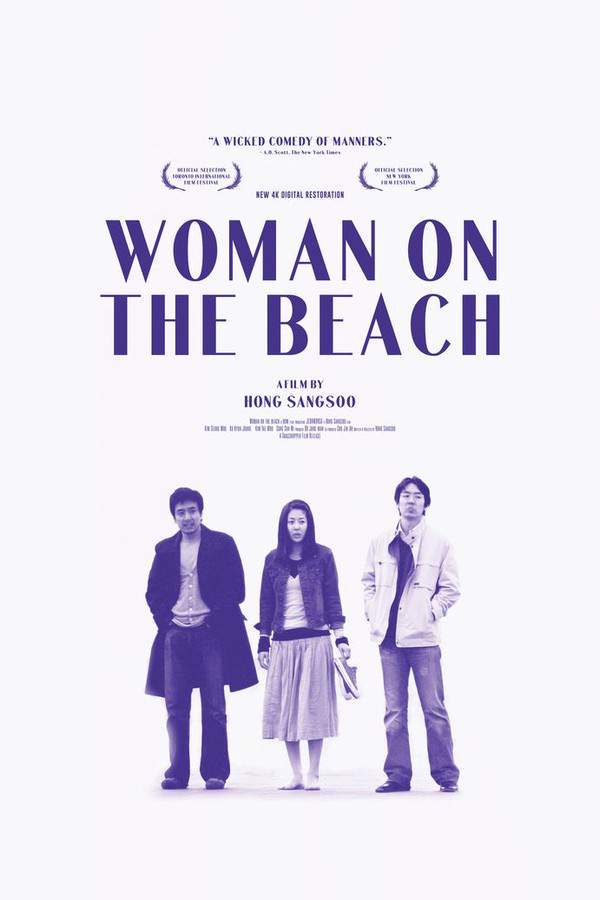
Woman on the Beach (2008) movie poster

Timeline

Woman on the Beach (2008) Timeline Explained – Every Event in Order

Release, runtime and language
2008 · 100 min · Korean
Directed by
Sang-soo Hong

A screenwriter seeking inspiration travels to a coastal town, where he becomes involved in a complex situation. Drawn to his friend's girlfriend, he embarks on a passionate and forbidden romance. This entanglement tests his creative pursuits and forces him to confront difficult questions about his values and the boundaries of friendship.

On this page (6)
  1. 1 Where to watch
  2. 2 Events in order (13)
  3. 3 Timeline questions answered
  4. 4 Movie threads
  5. 5 Movies like Woman on the Beach
  6. 6 Every angle

Where to watch

Where to Watch Woman on the Beach (2008)

Where can you watch Woman on the Beach? Stream, rent or buy it in the US, including on AsianCrush, Fandor and Cineverse: current JustWatch availability with up-to-date prices.

Streaming availability powered by JustWatch

13 events in order · contains spoilers

Woman on the Beach Timeline: Events in Chronological Order

Every key event of Woman on the Beach (2008) in order, scene by scene, with when and where it takes place. Use it to untangle flashbacks, time jumps and parallel storylines, to refresh your memory before the sequel or to find the exact scene you are thinking of.

  1. The Road Trip Begins

    Film director Kim Jung-rae embarks on a road trip with his friend Won Chang-wook from Seoul to Shinduri, a beautiful coastal resort town. Initially hesitant, Chang-wook agrees to join only on the condition that his companion brings along singer Kim Mun-suk.

    Where
    Seoul
  2. Mun-suk's Relationship Status

    During the journey, Kim Mun-suk clarifies her feelings, stating she doesn't perceive herself as Chang-wook's girlfriend. This revelation creates an unexpected shift in dynamics, prompting a deeper connection between her and Jung-rae.

  3. Reflections on the Past

    As they travel, Mun-suk shares memories of living in Germany, discussing her past relationships with Europeans. This confession disturbs both Jung-rae and Chang-wook, causing tension among the trio as feelings of jealousy arise.

  4. Disappointment and Critique

    Feeling unnerved by Jung-rae's reaction to her stories, Mun-suk expresses her disappointment by stating, 'You're not like your films.' This comment leaves Jung-rae questioning his artistic persona and emotional identity.

  5. A Romantic Encounter

    On the beach, a romantic moment develops between Mun-suk and Jung-rae as they share a passionate kiss. This pivotal encounter marks a turning point in their relationship, leading them to spend the night together in a hotel room.

    Where
    Shinduri Beach
  6. Returning to Seoul

    After a night of intimacy, the trio makes their way back to Seoul. However, Jung-rae begins to withdraw from the emotional connection he established with Mun-suk, leading to feelings of confusion and regret.

    Where
    Shinduri
  7. Flirting with New Faces

    Just two days after returning, Jung-rae finds himself at the beach again, attempting to flirt with two women. One of them resembles Mun-suk, leading him to reflect on his previous encounters and desires.

    Where
    Shinduri Beach
  8. Seduction of Choi Sun-hee

    Introducing himself as a film director, Jung-rae pitches an interview for his screenplay to Choi Sun-hee, successfully seducing her in a manner similar to his earlier encounter with Mun-suk. This interaction intensifies his internal conflict regarding love and art.

    Where
    Beachside Motel
  9. Unexpected Visitor

    While spending the night with Sun-hee, Jung-rae is startled when Mun-suk shows up, pounding on his motel room door. In a panic, he discreetly ushers Sun-hee out to avoid confrontation, deepening his emotional turmoil.

    Where
    Beachside Motel
  10. Hangover and Regret

    The next morning, Jung-rae finds Mun-suk passed out at his door, suffering from a hangover. This moment of vulnerability further complicates his emotional entanglement with both women and highlights his ongoing struggles.

  11. Fabricating a Story

    In an attempt to mend their relationship, Jung-rae concocts a story about his night with Sun-hee. However, his dishonesty is palpable, alienating both Mun-suk and Sun-hee as he tries to navigate his feelings.

  12. Heading Back to Seoul

    Realizing the emotional distance he has created, Jung-rae decides to return to Seoul alone. This decision reflects his sense of failure in both personal and creative realms, pushing him towards a moment of self-reflection.

    Where
    Seoul
  13. Creative Breakthrough

    As Jung-rae travels back to the city, he experiences a sudden creative breakthrough for his screenplay. This inspiration emerges from the chaos of his recent relationships, indicating a potential shift in his artistic narrative.

Last updated: November 15, 2024 at 16:44

Was this helpful?

Timeline questions answered

Woman on the Beach Timeline Explained: Your Questions Answered

When does it happen, and why in that order? The questions people ask about the chronology of Woman on the Beach (2008): time jumps, flashbacks, cause and effect between scenes and the correct order of events, each answered with spoilers.

Q1

Why does Jung-rae pull away from Mun-suk after their night together?

Jung-rae retreats emotionally after sleeping with Mun-suk because he recognizes he's betrayed his friend Won Chang-wook. Rather than confronting his guilt, he chooses to distance himself, which reflects his pattern of avoiding emotional responsibility. His withdrawal also stems from fear of genuine intimacy, he prefers the fantasy of romance to the complicated reality of sustaining a relationship.

Foreshadowing: Earlier, Mun-suk's comment that Jung-rae is 'not like his films' hints at his tendency to construct idealized versions of love and life that differ from his actual behavior.

  • Jung-rae
  • Mun-suk
  • emotional withdrawal
  • guilt
  • betrayal
Q2

Why does Jung-rae go back to the beach and pursue Sun-hee?

Jung-rae returns to Shinduri Beach because he's unable to process his feelings for Mun-suk and instead repeats his behavior by seeking a similar woman. When he sees Sun-hee, who resembles Mun-suk, he's drawn to recreating the same romantic encounter, suggesting a pattern of using women to fill an emotional void rather than confronting his actual feelings.

Foreshadowing: The moment he spots one of the two women on the beach who 'bears a resemblance to Mun-suk' foreshadows his tendency to chase echoes of his previous connection.

  • Jung-rae
  • Sun-hee
  • repetition
  • beach
  • patterns
Q3

What does Mun-suk mean when she tells Jung-rae, 'You're not like your films'?

Mun-suk is disappointed that Jung-rae, despite making films about miracles and meaningful human connections, reacts to her stories about past relationships with European men with the same narrow-minded judgment she'd expect from anyone. She hoped the artist behind movies about connection would be more open-minded and emotionally mature than his actual persona.

Foreshadowing: This critique planted early in the film explains why Jung-rae later fabricates stories, he's aware he doesn't live up to the values his art explores.

  • Mun-suk
  • Jung-rae
  • films
  • artistic persona
  • disappointment
Q4

Why does Jung-rae lie to Mun-suk about his night with Sun-hee?

Jung-rae invents a cover story because he wants to maintain his connection with Mun-suk while avoiding accountability for his actions. His lie reflects his tendency to avoid difficult truths and his belief that he can manipulate situations to get what he wants without facing consequences. However, the lie is transparent to both women, further demonstrating his failure to bridge the gap between his art and his real behavior.

Foreshadowing: His pattern of seducing women using his identity as a film director foreshadows this moment of deception.

  • Jung-rae
  • lie
  • deception
  • Sun-hee
  • Mun-suk
Q5

Why does Mun-suk show up at Jung-rae's motel room?

Mun-suk travels to the beach motel because she's still emotionally invested in Jung-rae despite his withdrawal. Her late-night arrival, pounding on the door, demonstrates she's not willing to accept his rejection passively. She's likely seeking clarification and hoping to rekindle what they shared, showing her vulnerability and emotional stake in the relationship.

Foreshadowing: Earlier tension about her past relationships and Jung-rae's cold response foreshadows her desperate attempt to reach him.

  • Mun-suk
  • motel
  • confrontation
  • emotions
Q6

Why does Jung-rae react badly to Mun-suk's stories about Germany?

Both Jung-rae and Chang-wook are unsettled by Mun-suk's disclosure of her past relationships with European men because it challenges their assumptions about her. Jung-rae likely feels insecure about whether he can satisfy her compared to her previous experiences, while the revelation also introduces anxiety about her worldliness and independence. This反应 reveals his underlying insecurity and small-mindedness despite his artistic exterior.

Foreshadowing: This moment establishes Jung-rae's inability to live up to his own artistic ideals, setting up the later thematic payoff.

  • Mun-suk
  • Germany
  • past relationships
  • jealousy
  • insecurity
Q7

What is the significance of Jung-rae's screenplay 'About Miracles'?

Jung-rae is writing a film called 'About Miracles' that explores 'the intriguing ties that bind everyday life,' paralleling his own story. The irony is that while his art deals with meaningful human connections, his personal life is marked by shallow, repeating encounters without genuine miracles. His eventual creative breakthrough comes from the chaos of his failed relationships, suggesting art imitates life, but his life produces art rather than real connection.

Foreshadowing: His inability to create meaningful relationships mirrors his struggle to write something genuine about miracles.

  • screenplay
  • About Miracles
  • creative breakthrough
  • art
  • irony
Q8

Why does Jung-rae choose to seduce Sun-hee, who resembles Mun-suk?

Jung-rae is drawn to Sun-hee specifically because she resembles Mun-suk, he's chasing a repeat of the connection he had, rather than engaging with a new person. This choice reveals his emotional superficiality: he projects his unmet desires onto a physical echo rather than dealing with the actual woman or his unresolved feelings. It demonstrates his pattern of seeking idealizations rather than authentic relationships.

Foreshadowing: His earlier romantic encounter with Mun-suk on the beach directly informs this repeat behavior.

  • Sun-hee
  • Mun-suk
  • resemblance
  • projection
  • repetition
Q9

What does Jung-rae's ending creative breakthrough mean?

Jung-rae experiences a sudden creative breakthrough for his screenplay as he returns to Seoul, suggesting his failed romantic entanglements have somehow inspired his art. However, this comes at the cost of alienating both women and returning to Seoul alone. The ending is ambiguous, his artistic success is hollow because it emerged from personal failure, reflecting the film's theme that his art and life are disconnected.

Foreshadowing: The irony of creating art about miracles while failing to create real-life miracles with the people around him culminates here.

  • creative breakthrough
  • ending
  • Seoul
  • art
  • irony
  • ambiguity
Q10

Why does Jung-rae pursue a relationship with his friend's companion?

Jung-rae pursues Mun-suk despite her traveling with his friend Won Chang-wook because he's drawn to her immediately and acts on impulse without considering the consequences for their friendship. His behavior suggests he prioritizes immediate romantic fulfillment over loyalty, and he lacks the moral grounding to resist temptation. This betrayal sets in motion his pattern of emotional dishonesty and avoidance throughout the film.

Foreshadowing: The dynamic is established early when Chang-wook insists on bringing Mun-suk along, foreshadowing the conflict that will emerge.

  • Jung-rae
  • Chang-wook
  • friendship
  • betrayal
  • Mun-suk

Movie threads

More Movies Like Woman on the Beach, by Mood & Story

Curated lists built around what makes Woman on the Beach tick: the same mood, the same kind of story or the same emotional payoff. Each list explains why these movies belong together.

Movies about flawed artists like Woman on the Beach

Stories of creative individuals whose passions fuel both their art and their personal ruin. For viewers who liked the introspective and morally complex artist in Woman on the Beach. This list features similar movies about creative individuals—writers, painters, musicians—whose pursuit of inspiration leads them into messy, often selfish romantic entanglements and personal downfalls.

  • introspective
  • selfish
  • regretful
  • passionate
  • uncomfortable
  • creative block
  • Tone: melancholic, introspective
  • Pacing: steady, character-driven
Why these movies?

The story pattern: Narratives in this thread often follow a creative protagonist, frequently blocked or searching, who becomes intensely involved with a person who serves as their muse. This relationship is charged with passion but is ultimately transactional and destructive, forcing the artist to confront their own ego and the ethical cost of their work.

Why they belong together: These films are grouped by their shared focus on the archetype of the flawed artist, the theme of creative block, and the exploration of how personal relationships are sacrificed for artistic gain. They share a melancholic, character-driven tone and a focus on internal conflict over external plot.


Melancholic seaside dramas like Woman on the Beach

Emotional stories where the isolating seaside setting mirrors internal turmoil. If you enjoyed the lonely, windswept beach setting and melancholic mood of Woman on the Beach, explore these similar movies. This collection highlights films where the coastal environment intensifies feelings of isolation, romantic entanglement, and personal reflection.

  • melancholic
  • lonely
  • atmospheric
  • contemplative
  • regretful
  • seaside
  • Tone: melancholic, lonely, regretful
  • Pacing: steady, atmospheric
Why these movies?

The story pattern: The narratives are typically linear and character-focused, unfolding in a quiet, off-season coastal town. The setting acts as a pressure cooker for emotions, isolating characters and amplifying their regrets, desires, and existential dilemmas. The pace is often steady, allowing the atmosphere to sink in.

Why they belong together: Movies in this thread share a specific atmospheric quality where the seaside setting is integral to the mood. They are united by a melancholic tone, a sense of emotional drift, and a focus on intimate, often fraught relationships against a backdrop of natural beauty and isolation.

If you liked this

Movies Like Woman on the Beach

Similar movies to Woman on the Beach: the same genre, themes or kind of story. Each one comes with its own plot summary, timeline and ending explained.

Browse all movie summaries

Every angle

Woman on the Beach (2008) Explained: Plot, Timeline & Characters

Everything about Woman on the Beach in one place: what happens in the plot summary, the timeline in chronological order, the characters and meaning and a spoiler-free summary. What's After the Movie adds the cast, box office and post-credit scenes.

Coming soon on iOS and Android

The Plot Explained Movie Summary App

Plot summaries, endings explained and timelines on your phone. Catch up on any movie in minutes, save your favorites and never miss a twist again.

Be the first to know when we launch. Your email stays private, always.

Learn more about the app