




Plot Explained Spoilers guaranteed!
Plot Explained

Browse by genre

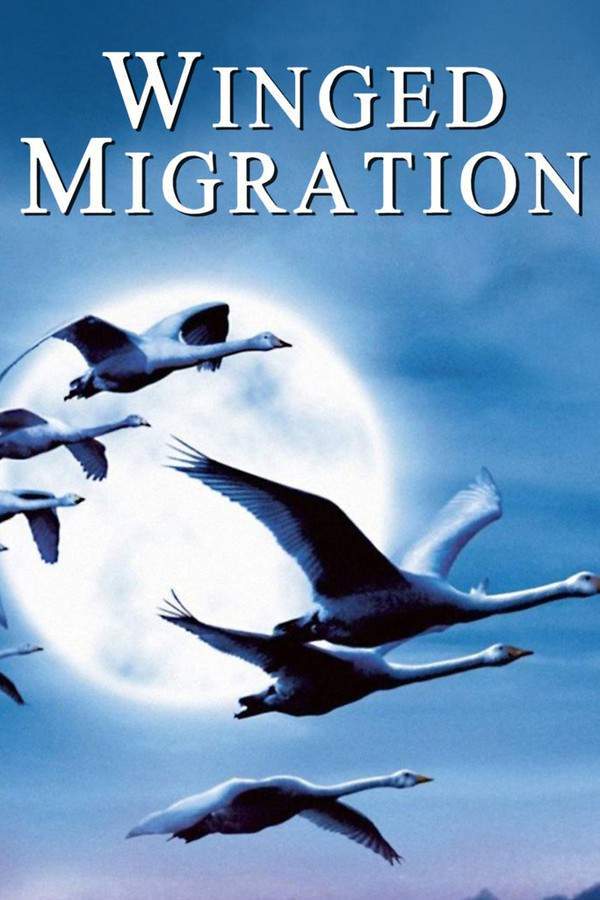
Winged Migration (2003) movie poster

Timeline

Winged Migration (2003) Timeline Explained – Every Event in Order

Release, runtime and language
2003 · 89 min · French
Directed by
Jacques Cluzaud, Jacques Perrin, Michel Debats
Starring
Jacques Perrin

This documentary follows the incredible winter migrations of various bird species across seven continents, filmed over four years. Through stunning visuals and sparse narration, the film highlights the challenges these birds face during their journeys, including difficult terrains, human-created dangers, and encounters with predators. It’s a powerful and moving portrayal of their resilience and determination to survive.

On this page (5)
  1. 1 Where to watch
  2. 2 Events in order (15)
  3. 3 Timeline questions answered
  4. 4 Movie threads
  5. 5 Every angle

Where to watch

Where to Watch Winged Migration (2003)

Where can you watch Winged Migration? Stream, rent or buy it in the US, including on YouTube Free, Amazon Video and Apple TV Store: current JustWatch availability with up-to-date prices.

Streaming availability powered by JustWatch

15 events in order · contains spoilers

Winged Migration Timeline: Events in Chronological Order

Every key event of Winged Migration (2003) in order, scene by scene, with when and where it takes place. Use it to untangle flashbacks, time jumps and parallel storylines, to refresh your memory before the sequel or to find the exact scene you are thinking of.

  1. Spring Arrival in Europe

    The film opens in Europe as winter fades into spring. The riverside comes alive with various birds, including European robins, cuckoos, and kingfishers, bringing a sense of renewal and vibrancy to the scene.

    When
    Spring
    Where
    Europe
  2. Greylag Geese's Arrival

    A flock of Greylag geese arrives but is startled into flight by a curious child. In a dramatic moment, one goose gets caught in a net, creating a tense scene before the child frees it, allowing it to reunite with its flock as night descends.

    When
    Evening
    Where
    Riverside, Europe
  3. Common Crane and White Storks

    The story shifts to the Common crane visiting a nearby farm, where it is startled by an elderly lady. Meanwhile, White storks take to rooftops for breeding, showcasing the diversity of bird life in the region.

    Where
    Farm, Europe
  4. Barnacle Geese and Whooper Swans

    The film captures the beautiful sight of Barnacle geese gliding across coastlines. Simultaneously, whooper swans are spotted majestically flying toward Japan, illustrating the vast migration routes of these birds.

    Where
    Coastlines
  5. Japanese Cranes' Mating Ritual

    In Japan, a group of Japanese cranes perform an exquisite mating ritual, showcasing their graceful movements as part of their courtship. Concurrently, Bar-headed geese race against an avalanche in the Himalayas, highlighting the dangers faced during migration.

    Where
    Japan
  6. Bald Eagle Observes Geese

    The perspective shifts to North America, where a Bald eagle perches above the Grand Canyon. It observes a flock of Canada geese heading north, setting the stage for a series of dramatic events.

    Where
    Grand Canyon, North America
  7. Chaos at Grand Canyon

    As the Canada geese pause for a break, chaos erupts when a herd of wild horses spooks them. This leads to the frantic scene of a lost goose, illustrating the unpredictability of nature.

    Where
    Grand Canyon, North America
  8. Courtship of Clark's Grebe

    The film highlights the charming courtship of Clark's grebe, showcasing their synchronized movements and the delicate nature of their bond. Subsequently, American white pelicans arrive, adding to the lively avian activity.

    Where
    Lake, North America
  9. Spring Thriving in the Arctic

    As summer peaks in the Arctic, Common eiders dive into the water while Puffins skillfully evade Great skuas. The scene captures the essence of this vibrant ecosystem, alive with activity as various birds raise their young.

    When
    Summer
    Where
    Arctic
  10. Return Journey of Barnacle Geese

    As autumn approaches, Barnacle geese embark on their return journey, facing tumultuous weather. They land on a navy vessel for safety, demonstrating the challenges of their migration.

    When
    Autumn
    Where
    Open Waters
  11. Challenges in Migration

    The Canada and Snow geese navigate through towering redwoods as winter sets in, confronting hunters who threaten their survival. This perilous journey highlights the struggles faced by migrating birds.

    When
    Winter
    Where
    North America
  12. Great White Pelicans Gather

    Various wading birds gather along coastlines for sustenance, and Great white pelicans form large groups in vast wetlands. Their interactions exemplify the rich biodiversity existing in these environments.

    Where
    Wetlands
  13. Life in the Amazon Rainforest

    The narrative transitions to the Amazon rainforest, where vibrant Macaws navigate through daily downpours. Among them, a Hyacinth macaw escapes captivity, signifying resilience amidst adversity.

    Where
    Amazon Rainforest
  14. Breeding in the Antarctic

    In the Antarctic Ocean, Rockhopper penguins and Black-browed albatross return yearly to breed on the Falkland Islands. The encounter with predators highlights the challenges faced during the breeding season.

    Where
    Falkland Islands
  15. Cycle of Life Returns to Europe

    As the narrative concludes, the riverside awakens in Europe once more. The Eurasian robin and the same child observe the flock of Greylag geese, including the lone survivor, tying back to the beginning of the film.

    When
    Spring
    Where
    Europe

Last updated: November 16, 2024 at 17:35

Was this helpful?

Timeline questions answered

Winged Migration Timeline Explained: Your Questions Answered

When does it happen, and why in that order? The questions people ask about the chronology of Winged Migration (2003): time jumps, flashbacks, cause and effect between scenes and the correct order of events, each answered with spoilers.

Q1

Why does the same goose from the beginning appear at the end of the film?

The goose that was caught in the net at the start and freed by the child is the lone survivor that returns at the end. This creates a circular narrative structure, showing the bird successfully completing its migration cycle. The film returns to the same European riverside to demonstrate the continuity of the migration journey and the resilience of individual birds against all the dangers they face.

Foreshadowing: Earlier in the film, this same goose was freed by a child after getting tangled in a net, establishing the connection that pays off at the end.

  • greylag goose
  • survivor
  • migration cycle
  • circular narrative
  • return journey
Q2

How do birds navigate during their migration across continents?

The film demonstrates birds using various methods to navigate: following geographic landmarks like coastlines and mountain ranges, using celestial cues from the sun and stars, and relying on innate biological instincts. The documentary shows species like the Barnacle geese flying in precise formations and the Bar-headed geese crossing the Himalayas by following ridgelines that help them navigate treacherous terrain.

  • bird navigation
  • migration routes
  • instincts
  • geographic landmarks
  • celestial navigation
Q3

What dangers do migrating birds encounter on their journeys?

Migrating birds face numerous threats throughout their journeys. The film showcases natural dangers like predators (Great skuas hunting Puffins, Giant petrels preying on hatchlings in the Antarctic), harsh weather conditions, and physical obstacles like avalanches in the Himalayas. Man-made dangers include hunters in North America, nets that trap birds, and urban environments. The documentary also shows birds encountering dangerous terrain crossings and having to make emergency landings, such as the Barnacle geese landing on a navy vessel to escape a storm.

Foreshadowing: Early scenes establish human-related dangers when a goose gets caught in a net, setting up the ongoing threat humans pose to migratory birds.

  • predators
  • hunting
  • weather
  • storms
  • natural dangers
  • human threats
Q4

Why do the Barnacle geese land on a navy ship during their migration?

The Barnacle geese encounter severe stormy weather during their autumn return journey across open waters. Forced to find immediate shelter, they land on a passing navy vessel as an emergency measure. This demonstrates how migrating birds must adapt to unexpected weather events and make quick decisions when conditions become dangerous, sometimes relying on unusual temporary resting spots to survive.

  • barnacle geese
  • navy vessel
  • storm
  • emergency landing
  • weather survival
Q5

How do Bar-headed geese survive flying over the Himalayas?

Bar-headed geese undertake one of the most challenging migration routes by crossing the Himalayan mountain range. The film shows them racing against avalanches, utilizing strong thermal updrafts to gain altitude and conserve energy. Their physiological adaptations allow them to fly at extremely high altitudes where oxygen is scarce, making their crossing of the Himalayas one of the most remarkable feats of avian migration.

  • bar-headed geese
  • himalayas
  • high altitude
  • avalanche
  • extreme migration
Q6

Why do King penguins gather in large groups during breeding season?

King penguins gather in large colonies on Antarctic islands as a survival strategy against predators. The film explains that clustering together reduces individual risk from predators like Giant petrels - the sheer numbers make it harder for any single bird to be targeted. This colonial breeding behavior also provides benefits for finding mates and collectively caring for hatchlings in the harsh Antarctic environment.

  • king penguins
  • colony
  • breeding
  • predator defense
  • Antarctic islands
Q7

How does the Hyacinth macaw escape from captivity in the Amazon?

The documentary shows a Hyacinth macaw that was captured in a wooden cage aboard a boat in the Amazon rainforest. The bird manages to escape and return to the wild, though the film does not show the specific mechanism of its escape. This moment highlights the ongoing issue of wildlife trafficking in the Amazon region and the resilience of birds attempting to regain their freedom.

  • hyacinth macaw
  • amazon
  • captivity
  • escape
  • wildlife trafficking
Q8

Why do Japanese cranes perform their elaborate mating dance?

Japanese cranes engage in elaborate synchronized dances as part of their courtship behavior to attract mates. The film showcases this ritual in Japan, where the cranes' graceful movements strengthen pair bonds between mates. These mating rituals are crucial for successful breeding and occur each spring as part of the annual cycle, demonstrating how migration and breeding are tightly linked in the birds' life cycles.

  • japanese cranes
  • mating ritual
  • courtship
  • breeding
  • spring migration
Q9

What triggers birds to begin their seasonal migration?

Birds begin their migrations triggered by changing environmental cues, primarily the shift in seasons and availability of food sources. As summer ends and autumn approaches in the Arctic, food becomes scarce, prompting birds to begin their southward journey. Conversely, the arrival of spring and the thawing of ice create favorable conditions in northern breeding grounds, triggering the northward migration. The film shows this cycle completing as birds return to their breeding grounds in time for spring.

  • seasonal migration
  • food availability
  • spring
  • autumn
  • breeding grounds
Q10

Why do so many bird species migrate to the Arctic during summer?

Birds migrate to the Arctic during summer because the season provides optimal breeding conditions - extended daylight hours for foraging, abundant food sources from thawing waters, and relatively few predators in the tundra. The film shows the remarkable moment when ice thaws and hatchlings emerge across the Arctic, including Whooper swans, Common loons, Sandhill cranes, Snowy owls, and Snow geese. This mass arrival creates one of nature's most vibrant ecosystems during the brief summer window.

  • arctic breeding
  • summer migration
  • tundra
  • hatchlings
  • extended daylight
Q11

How do birds coordinate their flight formations during migration?

Many migratory birds like geese and swans fly in V-shaped formations to conserve energy. Each bird flies slightly ahead of the one behind it, benefiting from the updraft created by the bird's wings. This aerodynamic efficiency allows flocks to travel greater distances with less fatigue. The documentary shows species like Whooper swans and Barnacle geese maintaining these precise formations across thousands of miles of migration routes.

  • flight formation
  • v-shape
  • energy conservation
  • flock coordination
  • migratory behavior
Q12

Why are migrating birds vulnerable to hunting in North America?

Migrating birds become vulnerable to hunting when they pass through regions where hunting is permitted, particularly in North America. The film shows Canada and Snow geese navigating through redwoods while facing hunters who threaten their survival. Migration corridors concentrate large numbers of birds in predictable locations, making them easier targets. This human-created danger adds significant mortality risk to birds already exhausted from their long journeys.

  • hunting
  • north america
  • canada geese
  • snow geese
  • migration corridors

Movie threads

More Movies Like Winged Migration, by Mood & Story

Curated lists built around what makes Winged Migration tick: the same mood, the same kind of story or the same emotional payoff. Each list explains why these movies belong together.

Meditative nature documentaries like Winged Migration

Visually immersive, contemplative explorations of the natural world and its cycles. Explore movies like Winged Migration that use breathtaking cinematography to capture the peaceful and powerful rhythms of nature. If you enjoyed the immersive, quiet observation of animal life and natural cycles, these films offer a similar serene and contemplative experience.

  • awe-inspiring
  • contemplative
  • serene
  • immersive
  • melancholic
  • hopeful
  • Tone: hopeful, contemplative, bittersweet
  • Pacing: steady, immersive
Why these movies?

The story pattern: Stories in this thread are observational rather than heavily narrated. They follow natural patterns—migrations, seasons, life cycles—using visual storytelling to create an emotional and philosophical connection to the subject, often with minimal dialogue.

Why they belong together: They are grouped by their shared focus on stunning visual immersion, a serene and steady pacing that encourages reflection, and a tone that balances awe with a gentle, often bittersweet, awareness of the natural world's fragility and power.


Bittersweet survival journeys like in Winged Migration

Stories of resilience where hope and hardship are intertwined on a difficult path. Discover movies with a similar emotional core to Winged Migration, where the focus is on a difficult journey of survival that is both hopeful and heartbreaking. If you were moved by the resilience and sacrifices of the migratory birds, these stories explore similar themes of endurance against the odds.

  • hopeful
  • melancholic
  • resilient
  • poignant
  • determined
  • emotional
  • Tone: hopeful, bittersweet, melancholic
  • Pacing: steady, journey-focused
Why these movies?

The story pattern: The narrative follows a linear progression of a challenging journey, highlighting moments of peril, loss, and perseverance. The ending acknowledges the achievement of survival but also remembers the cost, creating a deeply resonant emotional impact.

Why they belong together: They share a specific emotional mix: a hopeful tone grounded in the strength of their subjects, a steady pacing that builds emotional weight, and a bittersweet ending feel that acknowledges the price of survival without diminishing the triumph.

Every angle

Winged Migration (2003) Explained: Plot, Timeline & Characters

Everything about Winged Migration in one place: what happens in the plot summary, the timeline in chronological order, the characters and meaning and a spoiler-free summary. What's After the Movie adds the cast, box office and post-credit scenes.

Coming soon on iOS and Android

The Plot Explained Movie Summary App

Plot summaries, endings explained and timelines on your phone. Catch up on any movie in minutes, save your favorites and never miss a twist again.

Be the first to know when we launch. Your email stays private, always.

Learn more about the app