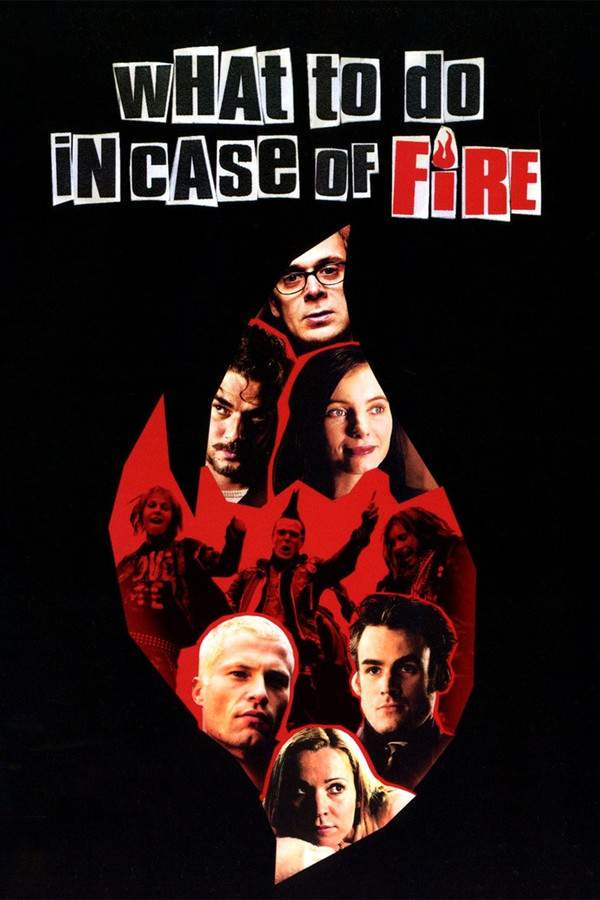
Year: 2002
Runtime: 101 min
Language: German
Director: Gregor Schnitzler
A group of former radicals in Berlin are brought back together for a risky mission: stealing damaging video evidence from the authorities. As they attempt the heist, they grapple with their shared history, current personal challenges, and the repercussions of their past actions. The experience forces them to examine their revolutionary ideals and consider whether to embrace a renewed sense of purpose or move forward with their lives.
Warning: spoilers below!
Haven’t seen What to Do in Case of Fire yet? This summary contains major spoilers. Bookmark the page, watch the movie, and come back for the full breakdown. If you're ready, scroll on and relive the story!
Trace every key event in What to Do in Case of Fire (2002) with our detailed, chronological timeline. Perfect for unpacking nonlinear stories, spotting hidden connections, and understanding how each scene builds toward the film’s climax. Whether you're revisiting or decoding for the first time, this timeline gives you the full picture.
Last updated: November 19, 2024 at 18:10
Find frequently asked questions about the What to Do in Case of Fire (2002) timeline, including chronological order, nonlinear jumps, cause-and-effect links, and scene sequence clarifications. This timeline FAQ helps explain when key events happen, how moments connect, and why the story unfolds in that specific order.
The bomb they created in 1987 was hidden in a vacant villa in Grunewald with a timer mechanism designed to activate later. However, the timer malfunctioned, causing the explosive to remain dormant for an astonishing 12 years until a real estate broker and potential buyer accidentally triggered it in the present day.
The timeline explicitly mentions the timer malfunction when the bomb is concealed in 1987, setting up the later explosion.
When the dormant bomb finally exploded in the villa, it injured a real estate broker and a potential buyer. Because the bomb was linked to their old revolutionary activities from 1987, the police launched a manhunt for the original 'terrorists' - Tim and Hotte - blaming them for the explosion and labeling them as dangerous radicals again.
Facing potential arrest and a smear campaign by authorities, the remaining rebels devised the infiltration plan to accomplish three goals: reclaim their lost propaganda footage from the evidence room, clear their names of the terrorism accusations, and rewrite the controversial story of their past actions. The plan involved posing as a television news crew to gain access.
Hotte hid inside the crate containing the second homemade bomb to ensure it was properly placed in the evidence room. However, after positioning the device, he found himself trapped when the emergency exit door jammed. Without his wheelchair and forced to use a dolly, he couldn't escape on his own, and his attempts to contact his fellow rebels initially failed because everyone was preoccupied.
During the confrontation in the evidence room, Tim managed to handcuff Manowsky to the cage and considered leaving the bomb with him. However, his comrades convinced him not to commit murder. Despite their revolutionary past and the provocation from Manowsky's condescending lecture about their 'outdated ideals,' Tim ultimately chose not to kill and instead tossed the keys back to the officer before escaping.
The rebels smuggled a second homemade bomb into the evidence room, disguised as a Trojan horse inside a crate from their old building. While Hotte was trapped inside and the group was focused on escaping, the bomb was left in the evidence room. Manowsky ultimately chose to leave the bomb where it was, destroying the evidence against the rebels rather than risk detonation.
The plan was to place the bomb alphabetically by location, which later allowed Manowsky to make his pivotal choice.
Tim ignites the crucial propaganda film they had retrieved, asking 'What do you do if there's a fire?' His companions respond 'Let it burn!' This symbolic act represents their readiness to let go of their revolutionary past, embrace their identity as rebels willing to take daring risks, and move forward into an uncertain future. It marks an ambiguous farewell to their youthful ideals rather than a clear victory.
Flo, Tim's ex-lover, has seemingly abandoned her radical ways for a life of tranquility. When the group reconnects, she shares her distressing circumstances, forcing her to reckon with the ramifications of her youthful choices. Her transformation represents one of the different paths former rebels can take - some clinging to ideals while others seek normalcy.
Maik, once a passionate rebel, became a creative director who exploits radical imagery for commercial advertising. This represents the film's satirical commentary on how revolutionary ideals get commodified and commercialized. His character embodies the tension between authentic radicalism and its co-optation by consumer culture.
After being handcuffed by Tim and lectured about his 'stubborn attachment to outdated ideals,' Manowsky experiences a change of heart. Watching the rebels escape with a water cannon while Henkel expresses doubt, Manowsky wrestles with empathy for his former counterparts and his old values. He makes the pivotal choice to leave the incriminating bomb in the evidence room, destroying evidence against them rather than stopping their escape.
The disguise as a TV news crew was essential because it provided a plausible reason to access restricted areas of police headquarters, particularly the evidence room. Henkel, the Bonn technocrat focused on public relations, guided the fake 'TV crew' through the precinct, creating the opportunity to reach the damning material. This scheme exploited the tensions between traditional policing methods and modern PR-focused law enforcement.
Discover curated groups of movies connected by mood, themes, and story style. Browse collections built around emotion, atmosphere, and narrative focus to easily find films that match what you feel like watching right now.
A group of former activists reunites for one last high-stakes mission.For viewers who enjoyed What to Do in Case of Fire, this section features movies about former activists and radicals reuniting for a final, high-stakes mission. These films often blend heist or thriller elements with the emotional weight of confronting one's past and the complicated dynamics of a found family tested by time.
The narrative pattern involves a disruptive event pulling a disbanded group back into action, forcing them to reconcile their past ideals with their present circumstances. The plot often centers on a physical mission that serves as a metaphor for resolving their ideological and personal conflicts.
Movies in this group share a focus on collective character arcs, the tension between nostalgia and current reality, and a compelling mix of high-stakes action with introspective drama about the compromises of adulthood.
A tense, high-stakes heist driven by personal history and redemption.If you liked the blend of a tense, fast-paced heist and the emotional weight of personal history in What to Do in Case of Fire, explore these similar movies. They feature high-stakes missions driven by character motivations, where the success of the plan is intertwined with the characters' search for redemption or closure.
The heist plot serves as the engine for exploring complex character relationships and unresolved personal history. The suspense comes not just from the risk of failure, but from the emotional consequences for the characters involved, often leading to a morally complex or bittersweet resolution.
These films are grouped by their unique combination of a tightly-plotted, suspenseful heist narrative with a significant focus on character development, moral ambiguity, and the emotional reasons behind the mission.
Don't stop at just watching - explore What to Do in Case of Fire in full detail. From the complete plot summary and scene-by-scene timeline to character breakdowns, thematic analysis, and a deep dive into the ending - every page helps you truly understand what What to Do in Case of Fire is all about. Plus, discover what's next after the movie.
Read a complete plot summary of What to Do in Case of Fire, including all key story points, character arcs, and turning points. This in-depth recap is ideal for understanding the narrative structure or reviewing what happened in the movie.
Discover the characters, locations, and core themes that shape What to Do in Case of Fire. Get insights into symbolic elements, setting significance, and deeper narrative meaning - ideal for thematic analysis and movie breakdowns.