Plot Explained Spoilers guaranteed!
Plot Explained

Browse by genre

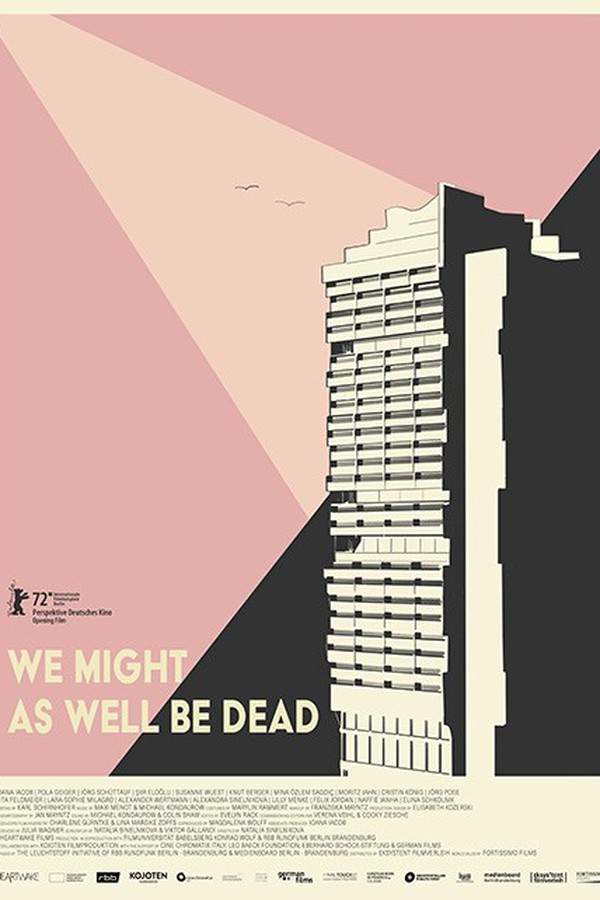
We Might As Well Be Dead (2023) movie poster

Characters & Themes

We Might As Well Be Dead (2023) Characters, Setting & Themes Explained

Release, runtime and language
2023 · 93 min · German
Echo score 83
Directed by
Natalia Sinelnikova
Starring
Ioana Iacob, Siir Eloglu, Knut Berger, Susanne Wuest, Felix Jordan, Jörg Schüttauf

A dog's disappearance throws a seemingly perfect high-rise community into chaos, triggering a disturbing spiral of paranoia and fear. Security officer Anna struggles to maintain order as the situation intensifies, forcing her to confront unsettling truths about her neighbors and the hidden anxieties within their utopian environment. The escalating crisis tests her resilience and challenges her perception of safety and trust.

On this page (6)
  1. 1 Characters explained (4)
  2. 2 Where & when it takes place
  3. 3 Themes & meaning (3)
  4. 4 Character & meaning questions
  5. 5 Movie threads
  6. 6 Every angle

4 main characters · contains spoilers

We Might As Well Be Dead Characters Explained: Who Is Who

The main characters of We Might As Well Be Dead (2023), heroes and villains: what drives them, how they change over the course of the story and what each of them reveals about the film's bigger ideas.

  • Anna Wilczynska

    played by Ioana Iacob

    Anna serves as the community's gatekeeper, overseeing the residents' interactions and broadcasting vital information. Her deep care for her daughter and the community fuels her efforts to restore peace amid rising paranoia. Despite her good intentions, Anna grapples with the growing mistrust of those around her.

    • 👩‍👧 Mother
    • 🏡 Caretaker
  • Iris Anna Wilczynska

    played by Pola Geiger

    Iris is Anna's teenage daughter, whose belief in a malevolent curse jeopardizes her mental well-being and strains her relationship with her mother. As she succumbs to isolation and fear, her character arc highlights the impact of external chaos on youth and family dynamics.

    • 👧 Secluded
    • 😨 Fearful
  • Wolfram Mantel

    played by Moritz Jahn

    Wolfram is an aspiring poet caught in the community's web of paranoia. His character symbolizes the vulnerability of individuals in a collective space as he becomes a scapegoat for the residents' fears. His artistic aspirations clash with the harsh reality of being mistrusted and ultimately ostracized.

    • ✍️ Poet
    • 🌀 Scapegoat
  • Gerti Posner

    played by Jörg Schüttauf

    Gerti is a resident whose attachment to his lost dog ignites initial conflicts within the community. His fervent claims and panic about the mysterious disappearance amplify the anxiety among residents, illustrating how personal loss can trigger widespread fear.

    • 🐕 Dog Owner
    • 🌪️ Troubled

Last updated: October 22, 2024 at 23:11

Was this helpful?

Setting

Where and When Does We Might As Well Be Dead Take Place?

The setting of We Might As Well Be Dead (2023): the year and time period, the places and locations, and how they shape the characters, the mood and the tension of the story.

Time period

The film's events appear to unfold in contemporary times, reflecting modern societal issues concerning community trust, paranoia, and the effects of isolation. The characters' interactions and circumstances resonate with familiar current-day themes, though no specific timeframe is detailed.

Location

high-rise residential building, fenced forest

The story unfolds in a high-rise residential building nestled within a serene, fenced forest, providing a peaceful retreat for its inhabitants. Known for its harmonious atmosphere, this community values joyful celebrations and a collective living experience. However, the tranquil setting quickly becomes a backdrop for anxiety and paranoia as events take a dark turn.

  • 🏡 Community
  • 🌳 Nature

Last updated: October 22, 2024 at 23:11

Was this helpful?

3 major themes

We Might As Well Be Dead Meaning: Themes & Message Explained

What is We Might As Well Be Dead (2023) really about? The emotional, social and philosophical themes the film keeps returning to, its symbolism and the message beneath the surface.

  • Suspicion

    The theme of suspicion permeates the narrative as fear and uncertainty take hold of the community. Incidents like the missing dog lead to paranoia, causing residents to question each other's motives. This atmosphere undermines their once harmonious existence, illustrating how quickly trust can erode in a tightly-knit environment.

  • Family Strain

    Anna's relationship with her daughter Iris showcases the theme of family strain exacerbated by external pressures. As Iris's fear of the supposed curse grows, Anna struggles to maintain both her authority and her daughter's trust. Their conflict symbolizes the challenges families face amid societal tensions.

  • Community Dynamics

    The film explores the dynamics of community living, highlighting the balance between safety and suspicion. Initial communal joy deteriorates into fear and isolation as residents band together in misguided attempts to protect themselves. The shift from unity to division reflects the fragile nature of human relationships in close quarters.

Last updated: October 22, 2024 at 23:11

Was this helpful?

Character & theme questions

We Might As Well Be Dead Characters & Meaning: Your Questions Answered

The questions people ask about We Might As Well Be Dead (2023): who the characters really are, their relationships, what the symbols mean, where it takes place and what the movie is really about. Each answer contains spoilers.

Q1

What kind of building and environment does the story take place in?

The story unfolds in a high-rise residential building surrounded by a fenced forest, creating a serene and isolated retreat for its inhabitants. This setting is designed to feel peaceful and harmonious, with the community valuing celebrations and collective living. The contrast between the tranquil exterior and the psychological tension that develops inside creates an unsettling atmosphere.

  • high-rise
  • residential building
  • forest setting
  • community
  • isolation
Q2

When does the movie take place?

The film is set in contemporary times, reflecting modern societal issues around community trust, paranoia, and the effects of isolation. While no specific year is given, the circumstances and character interactions resonate with familiar present-day themes of urban living and social anxiety.

  • contemporary
  • modern
  • time period
  • present day
Q3

What does the movie say about suspicion and trust?

The film explores how quickly trust can erode in a tightly-knit community. When the dog goes missing, residents begin questioning each other's motives, and this suspicion spreads like wildfire. The theme illustrates how fear can undermine even the most harmonious environments, showing that paranoia can collapse social bonds that took years to build.

  • suspicion
  • trust
  • paranoia
  • fear
  • community trust
Q4

How does the movie portray community living?

The movie depicts community living as a delicate balance between safety and suspicion. Initially, residents enjoy a unified, joyful existence together, but this quickly deteriorates into fear and isolation as they band together in misguided attempts to protect themselves. The transformation from unity to division reflects how fragile human relationships are in close quarters.

  • community
  • unity
  • division
  • social dynamics
  • togetherness
Q5

What family conflicts does the movie explore?

The movie focuses on the strain between Anna and her teenage daughter Iris, which worsens due to external pressures within the community. As Iris becomes convinced of a malevolent curse, her mental well-being declines, creating tension between her need for reassurance and Anna's struggle to maintain both authority and trust. This conflict symbolizes how societal tensions can fracture family relationships.

  • family
  • mother daughter
  • Iris
  • Anna
  • trust
  • generational conflict
Q6

Who is Anna and what is her role in the community?

Anna Wilczynska serves as the community's gatekeeper and security officer, responsible for overseeing resident interactions and broadcasting important information. She deeply cares for both her daughter Iris and the community itself, driving her efforts to restore peace as paranoia spreads. Despite her good intentions, she increasingly struggles with the growing mistrust of those around her.

  • Anna
  • security officer
  • gatekeeper
  • community leader
  • mother
Q7

Who is Iris and why is she significant?

Iris is Anna's teenage daughter whose belief in a malevolent curse threatens her mental stability and strains her relationship with her mother. As she withdraws into isolation and fear, her character arc highlights how external chaos and community paranoia can deeply affect young people, making her a poignant representation of vulnerability in times of social unrest.

  • Iris
  • daughter
  • curse
  • teenager
  • mental health
  • fear
Q8

Who is Wolfram and what does he represent?

Wolfram is an aspiring poet who becomes a scapegoat for the community's fears as paranoia intensifies. His character symbolizes the vulnerability of individuals within a collective space, especially those who are different or non-conforming. His artistic nature clashes with the harsh reality of being mistrusted and ultimately ostracized by his neighbors.

  • Wolfram
  • poet
  • scapegoat
  • outsider
  • artist
  • ostracization
Q9

What is Gerti's importance in the story?

Gerti is a resident whose attachment to his lost dog triggers the initial conflict within the community. His frantic claims and panic about the mysterious disappearance amplify the existing anxiety among residents, illustrating how personal loss can become a catalyst for widespread fear and collective suspicion.

  • Gerti
  • dog
  • lost pet
  • trigger
  • panic
  • resident
Q10

How does paranoia escalate in the community?

The paranoia escalates methodically from a single incident (the missing dog) into full-blown community-wide suspicion and fear. The steady pacing shows how one person's panic can spread through a close-knit community, turning neighbors against each other and transforming a peaceful living environment into one defined by anxiety and mutual distrust.

  • paranoia
  • escalation
  • fear
  • spreading
  • anxiety
  • community breakdown
Q11

What is the movie saying about utopian communities?

The film presents a seemingly perfect high-rise community that descends into chaos, suggesting that utopian environments are fragile and can collapse under pressure. The story argues that the appearance of harmony can mask underlying anxieties and that true safety requires confronting uncomfortable truths rather than succumbing to fear and suspicion.

  • utopia
  • dystopia
  • perfect community
  • illusion
  • collapse
  • social order

Movie threads

More Movies Like We Might As Well Be Dead, by Mood & Story

Curated lists built around what makes We Might As Well Be Dead tick: the same mood, the same kind of story or the same emotional payoff. Each list explains why these movies belong together.

Movies about collapsing utopias like We Might As Well Be Dead

Stories where seemingly perfect communities crack under pressure and fear. If you liked the social breakdown in We Might As Well Be Dead, explore these other movies where seemingly perfect communities unravel. These films often feature hidden anxieties, social paranoia, and a tense examination of what happens when utopian ideals are tested by fear and suspicion.

  • social unease
  • claustrophobic
  • paranoid
  • suspenseful
  • mistrustful
  • dystopian
  • Tone: tense, unsettling
  • Pacing: steady, methodical
Why these movies?

The story pattern: Narratives in this thread typically begin with a stable, orderly community that is disrupted by an incident or discovery. This triggers a chain reaction of doubt, leading to scapegoating, the rise of mob mentality, and the exposure of the system's underlying oppressive or fragile nature. The journey is one of collective disillusionment.

Why they belong together: These films are grouped together because they share a core premise of a constructed society failing. They create a specific mood of social unease and claustrophobia, using a contained setting to explore themes of control, conformity, and the fear of the 'other' within a group.


Movies with creeping societal paranoia like We Might As Well Be Dead

Films where a creeping sense of distrust infects a group from within. Fans of the anxious, mistrustful atmosphere in We Might As Well Be Dead will enjoy these similar stories. These films feature a steady build of tension as collective fear takes hold, exploring themes of scapegoating, community breakdown, and the psychological distress caused by pervasive suspicion.

  • paranoid
  • anxious
  • suspenseful
  • unsettling
  • mistrustful
  • psychological tension
  • Tone: tense, anxious
  • Pacing: steady, slow burn
Why these movies?

The story pattern: The narrative pattern involves a catalyst that introduces doubt into a social group. This doubt festers and multiplies, leading to irrational behavior, the search for a scapegoat, and the breakdown of rational discourse. The plot is driven by interpersonal suspicion rather than external action, focusing on the psychological unraveling of the community.

Why they belong together: These movies are united by their primary focus on the emotion of paranoia as a collective experience. They share a similar tone of tension and a steady pacing that allows the fear to metastasize naturally. The viewing experience is consistently unsettling and psychologically engaging.

Every angle

We Might As Well Be Dead (2023) Explained: Plot, Timeline & Characters

Everything about We Might As Well Be Dead in one place: what happens in the plot summary, the timeline in chronological order, the characters and meaning and a spoiler-free summary. What's After the Movie adds the cast, box office and post-credit scenes.

Coming soon on iOS and Android

The Plot Explained Movie Summary App

Plot summaries, endings explained and timelines on your phone. Catch up on any movie in minutes, save your favorites and never miss a twist again.

Be the first to know when we launch. Your email stays private, always.

Learn more about the app