Plot Explained Spoilers guaranteed!
Plot Explained

Browse by genre

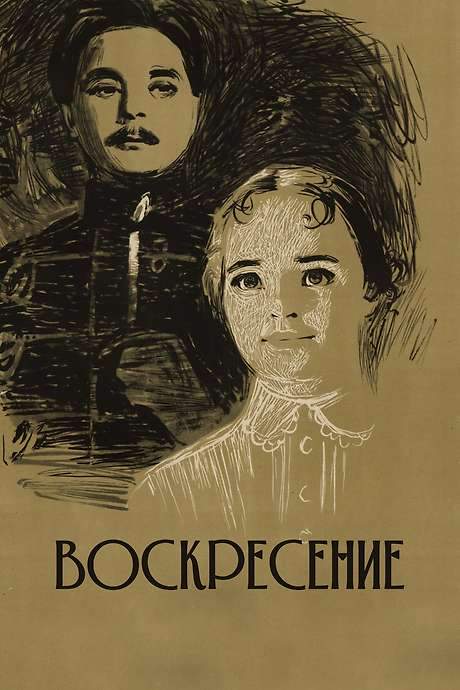
We Live Again (1934) movie poster

Characters & Themes

We Live Again (1934) Characters, Setting & Themes Explained

Release, runtime and language
1934 · 85 mins · English
Directed by
Rouben Mamoulian
Starring
Ethel Griffies, Fredric March, C. Aubrey Smith, Leonid Kinskey, Morgan Wallace, Sam Jaffe

Nekhludoff, a Russian aristocrat serving as a juror, learns that the defendant, the young Katusha, is a woman he once seduced and abandoned, a fate he partly caused. Determined to atone, he battles his own conscience and the legal system, seeking redemption for both Katusha and himself.

On this page (7)
  1. 1 Characters explained (7)
  2. 2 Where & when it takes place
  3. 3 Themes & meaning (3)
  4. 4 Character & meaning questions
  5. 5 Movie threads
  6. 6 Movies like We Live Again
  7. 7 Every angle

7 main characters · contains spoilers

We Live Again Characters Explained: Who Is Who

The main characters of We Live Again (1934), heroes and villains: what drives them, how they change over the course of the story and what each of them reveals about the film's bigger ideas.

  • Prince Dmitri Nekhlyudov (Fredric March)

    A once- carefree nobleman whose reckless liaison with Katusha triggers a chain of guilt, separation, and a desperate search for atonement. His mounting remorse drives him to intervene in the case and pursue reconciliation, even at the cost of his own social standing. He embodies the tension between privilege and moral responsibility.

    • 💎 Noble
    • 💔 Guilt
    • 🕊️ Redemption
  • Katusha Maslova (Anna Sten)

    An innocent servant whose life spirals into poverty and prostitution after her affair with Dmitri. She bears the weight of society's judgment and the tragedy of her child's death, yet she remains resilient. Her evolving feelings toward Dmitri shape the emotional core of the story, and her eventual stance on forgiveness drives the final act.

    • 🌹 Innocence
    • 🧭 Resilience
    • 🕊️ Complex
  • Aunt Marie (Ethel Griffies)

    An elder relative within Dmitri's aristocratic circle, representing the traditional family and social expectations. Her presence anchors the household's propriety and the pressures placed on Dmitri and Katusha. She embodies the intergenerational dynamics of privilege and duty.

    • 👵 Family
    • 🏰 Aristocracy
    • 💬 Gossip
  • Missy Kortchagin (Jane Baxter)

    Dmitri's fiancée and the daughter of a wealthy judge, symbolizing social status and the pressure to maintain appearances. Her engagement frames the intersect of romance, duty, and class politics. Her reactions reflect the era's expectations of women within elite circles.

    • 💃 Socialite
    • 🎭 Facade
    • 🏛️ Power
  • Prince Kortchagin (C. Aubrey Smith)

    A noble figure connected to the court and Missy’s social world, representing the authority and influence of the upper class. His position highlights the tension between personal desire and the demands of social rank. His presence underscores the interplay between law, privilege, and perception.

    • 👑 Power
    • ⚖️ Authority
  • Judge (Edgar Norton)

    The presiding jurist whose courtroom decisions influence Katusha’s fate. His role embodies the complexity of justice within a system colored by class and reputation. His authority sets the stage for the tension between law and mercy that drives the narrative.

    • ⚖️ Justice
    • 🏛️ Courtroom
  • The Colonel (Morgan Wallace)

    An authoritative prison official figure whose presence reflects the coercive power of the penal system. He represents the machinery of punishment and the harsh realities awaiting those sent to exile. His presence frames the film's exploration of redemption within confinement.

    • 🎖️ Authority
    • 🏢 Prison system

Last updated: October 04, 2025 at 15:16

Was this helpful?

Setting

Where and When Does We Live Again Take Place?

The setting of We Live Again (1934): the year and time period, the places and locations, and how they shape the characters, the mood and the tension of the story.

Time period

Late 19th century

The narrative unfolds in the era of Tsarist Russia, when class lines are sharply drawn and the law is intertwined with aristocratic power. Noble privilege and servitude dictate relationships, and exile to Siberia looms as a severe consequence for those deemed morally compromised. This period's social mores drive the tragedy and highlight the possibility of moral awakening.

Location

Moscow, Siberia

The story moves from Moscow's aristocratic circles to the harsh landscape of Siberia, reflecting the rigid social order of Tsarist Russia. Moscow serves as the hub of power, courtly intrigue, and public judgment, while the Siberian border becomes a stark symbol of punishment and potential redemption. The settings juxtapose opulence and exile, underscoring how geography and class shape fate.

  • 🇷🇺 Russia
  • 🏙️ Moscow
  • 🧭 Siberia

Last updated: October 04, 2025 at 15:16

Was this helpful?

3 major themes

We Live Again Meaning: Themes & Message Explained

What is We Live Again (1934) really about? The emotional, social and philosophical themes the film keeps returning to, its symbolism and the message beneath the surface.

  • Love & Redemption

    Love is tested by guilt and social codes, pushing characters toward acts of forgiveness or prideful denial. Dmitri's remorse for abandoning Katusha fuels his pursuit of redemption, even at great personal cost. Katusha's resilience and vulnerability reveal how love can endure hardship and social scorn. The final reunion on the Siberian border embodies the possibility that true forgiveness can redefine a life.

  • Justice & Hypocrisy

    The courtroom and jury dynamics expose a gap between official justice and human mercy. Katusha is convicted through legal phrasing and social prejudice, illustrating how language and status influence verdicts. Dmitri's attempts to intervene reveal how power can bend justice toward pity or punishment. The film critiques a system that punishes the vulnerable while often leniencies toward the powerful go unchecked.

  • Appearances & Social Masks

    Society demands propriety, creating facades that govern relationships and choices. Dmitri's involvement with Katusha disrupts his aristocratic image and Missy Kortchagin's social circle, exposing the hollowness of appearances. Katusha's fall from grace underscores how quickly public masks can crumble. The narrative argues that breaking these masks is essential to authentic redemption.

Last updated: October 04, 2025 at 15:16

Was this helpful?

Character & theme questions

We Live Again Characters & Meaning: Your Questions Answered

The questions people ask about We Live Again (1934): who the characters really are, their relationships, what the symbols mean, where it takes place and what the movie is really about. Each answer contains spoilers.

Q1

Where does the story take place?

The narrative unfolds primarily in two contrasting locations: Moscow and Siberia. Moscow serves as the hub of aristocratic power, court intrigue, and public judgment, representing the elite social circles where the characters' fates are decided. Siberia functions as the remote frontier of exile and punishment, symbolizing both the harsh consequences of social transgression and the potential for redemption beyond the rigid class structures of Tsarist Russia.

  • moscow
  • siberia
  • setting
  • russian aristocracy
  • exile
Q2

What time period is the movie set in?

The story is set in late 19th century Tsarist Russia, a period defined by rigid class divisions between nobility and peasantry. This era was characterized by aristocratic privilege, servant-status servitude, and severe legal consequences like Siberian exile for those deemed morally compromised. The social mores of this time directly drive the tragedy and create the conditions for the characters' moral awakening.

  • tsarist russia
  • 19th century
  • late 1800s
  • historical setting
Q3

What is the main theme of the movie?

The central theme explores love tested by guilt and the possibility of redemption through moral awakening. Dmitri's remorse for abandoning Katusha fuels his pursuit of atonement, while Katusha's resilience reveals how love can endure hardship and social scorn. The film argues that true forgiveness can redefine a life, even after profound betrayal and suffering.

  • love
  • redemption
  • forgiveness
  • guilt
  • atonement
Q4

How does the movie portray Russian society?

The film delivers a sharp critique of Tsarist society by exposing the gap between official justice and human mercy. The courtroom scenes demonstrate how legal language and social prejudice convict the vulnerable while leniency often goes unchecked for the powerful. This critique extends to the aristocratic class, whose privilege protects them from consequences that destroy others.

  • justice
  • society
  • hypocrisy
  • critique
  • class system
Q5

What role do appearances play in the story?

Society demands propriety and creates facades that govern relationships and choices throughout the film. Dmitri's involvement with Katusha disrupts his aristocratic image and exposes the hollowness of upper-class appearances. Katusha's rapid fall from grace demonstrates how quickly public masks can crumble, and the narrative suggests that breaking these masks is essential to authentic redemption.

  • appearances
  • society
  • masks
  • propriety
  • class image
Q6

Who is Dmitri Nekhlyudov?

Dmitri Nekhlyudov is a Russian aristocrat whose reckless affair with the servant Katusha triggers a chain of devastating consequences. Driven by mounting guilt, he pursues redemption by intervening in her legal case, even at the cost of his social standing. He embodies the tension between aristocratic privilege and moral responsibility, representing the possibility of moral awakening within the ruling class.

  • dmitri
  • nekhludov
  • nobleman
  • aristocrat
  • guilt
Q7

Who is Katusha Maslova?

Katusha Maslova is a young servant woman whose life unravels after her affair with Dmitri, leading to pregnancy, job loss, infant death, and eventual descent into prostitution. Despite bearing the weight of society's judgment and personal tragedy, she remains resilient. Her evolving feelings toward Dmitri and her decision about forgiveness drive the emotional core of the narrative.

  • katusha
  • servant
  • innocence
  • resilience
  • suffering
Q8

What does Siberia represent in the movie?

Siberia represents both punishment and potential redemption within the harsh penal system of Tsarist Russia. As a remote exile destination, it symbolizes the ultimate consequence for those deemed morally compromised by society. However, the Siberian border also becomes the setting for the characters' reunion, suggesting that redemption can only be achieved by leaving behind the corrupt social structures of Moscow.

  • siberia
  • exile
  • punishment
  • redemption
  • penal system
Q9

Who is Missy Kortchagin and what is her role?

Missy Kortchagin is Dmitri's fiancée, the daughter of a wealthy judge, symbolizing social status and the pressure to maintain elite appearances. Her engagement represents the intersection of romance, duty, and class politics within Tsarist high society. Her reactions and presence reflect the era's strict expectations of women in aristocratic circles.

  • missy
  • fiancee
  • social status
  • class
  • aristocratic expectations
Q10

How does the legal system work in the movie?

The legal system depicted in the film reflects the intertwined nature of aristocratic power and justice in Tsarist Russia. Noble privilege directly influences how cases are decided, with the powerful often receiving leniency while the vulnerable face harsh punishment. The courtroom becomes a stage where language and social status determine verdicts more than actual evidence of wrongdoing.

  • legal system
  • court
  • justice
  • privilege
  • verdict

Movie threads

More Movies Like We Live Again, by Mood & Story

Curated lists built around what makes We Live Again tick: the same mood, the same kind of story or the same emotional payoff. Each list explains why these movies belong together.

Moral Redemption Stories like We Live Again

Characters weighed by guilt seek forgiveness through self-sacrifice and personal transformation. If you were moved by the moral struggle in We Live Again, explore more movies about atonement and redemption. These films feature characters burdened by guilt who embark on difficult journeys to seek forgiveness, often set against a backdrop of social injustice.

  • guilt-ridden
  • morally conflicted
  • determined
  • somber
  • introspective
  • emotionally draining
  • Tone: dark, morally conflicted
  • Pacing: steady, deliberate
Why these movies?

The story pattern: The narrative typically begins with a character's past transgression coming to light, triggering a deep crisis of conscience. This leads to a deliberate, often difficult journey to make amends, which serves as the central plot. The story explores themes of responsibility, sacrifice, and whether true redemption is possible after causing great harm.

Why they belong together: These films are grouped by their shared focus on a specific character arc: the path from moral blindness to ethical awakening. They share a serious, introspective tone and place a heavy emotional weight on the protagonist's internal struggle and their external actions toward atonement.


Grim Social Critique Dramas like We Live Again

Stories exposing rigid class systems that crush individuals and moral compromises for survival. For viewers who appreciated the social critique in We Live Again, this collection features similar movies about class injustice and personal downfall. These dramas explore how societal structures lead to tragedy, focusing on characters trapped by their circumstances.

  • oppressive
  • melancholic
  • desperate
  • somber
  • social critique
  • tragic downfall
  • Tone: dark, oppressive, somber
  • Pacing: steady, methodical
Why these movies?

The story pattern: The plot is frequently triggered by a seduction or betrayal that exposes the fragility of a character's social standing. The narrative then meticulously charts their downward spiral—often involving poverty, loss, and degradation—as a direct consequence of an unjust system. The conflict is both internal (despair, resilience) and external (fighting against societal norms).

Why they belong together: These movies are united by their dark, critical portrayal of society and its impact on the individual. They share a steady, deliberate pacing that allows the weight of injustice to build, and a high emotional intensity derived from witnessing a character's suffering under systemic pressure.

If you liked this

Movies Like We Live Again

Similar movies to We Live Again: the same genre, themes or kind of story. Each one comes with its own plot summary, timeline and ending explained.

Browse all movie summaries

Every angle

We Live Again (1934) Explained: Plot, Timeline & Characters

Everything about We Live Again in one place: what happens in the plot summary, the timeline in chronological order, the characters and meaning and a spoiler-free summary. What's After the Movie adds the cast, box office and post-credit scenes.

Coming soon on iOS and Android

The Plot Explained Movie Summary App

Plot summaries, endings explained and timelines on your phone. Catch up on any movie in minutes, save your favorites and never miss a twist again.

Be the first to know when we launch. Your email stays private, always.

Learn more about the app