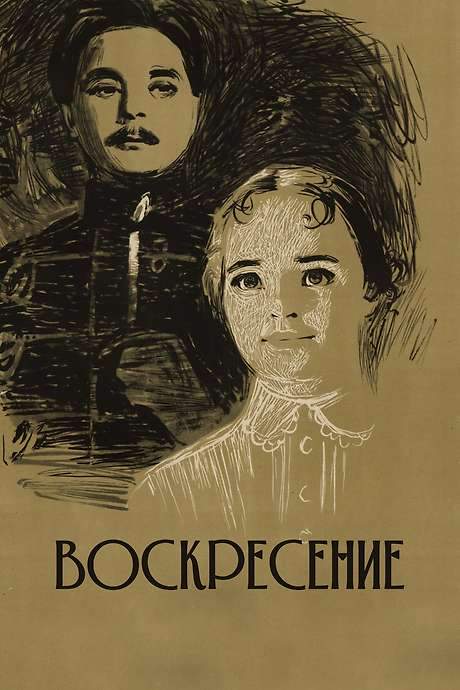
A sweeping drama of desire, guilt, and renewal unfolds in tsarist Russia as Russian Prince Dmitri Nekhlyudov seduces innocent Katusha Maslova, a maid in the service of his aunts. They spend the night together in the greenhouse, and when dawn comes, the prince leaves without a note—only money—leaving Katusha humiliated and hopeful, yet broken by his sudden departure.
When Katusha becomes pregnant, she is fired, and when the baby is born, it dies and is buried unbaptized. The tragedy compounds the social stigma she faces, casting a long shadow over her future and forcing her to confront a world that offers little mercy. Her fall from grace is steep and unforgiving, a stark portrait of how society treats women in precarious positions.
Katusha then travels to Moscow, where she sinks into prostitution, poverty, and degradation, her life compressed by the harshness of circumstance and a system that seems to have forgotten her name. The story exposes the vulnerability of those at the bottom of the social ladder, as she struggles to survive amid danger and exploitation, all while clinging to a shred of dignity and a desire for a better future.
Dmitri, now engaged to Missy Kortchagin, the daughter of the wealthy judge Prince Kortchagin, is summoned for jury duty in his fiancée's father’s court, where a murder trial captivates the city. The shocking twist comes when Katusha Maslova is among the defendants, turning the courtroom into a battlefield of conscience and consequence. The jury’s initial belief in her innocence dissolves as the charges unfold.
The case hinges on a line of reasoning that places responsibility on Katusha for “giving the powder to the merchant Smerkov without intent to rob,” yet the jurors’ failure to specify “without intent to kill” seals her fate with a five-year hard labor sentence in Siberia. The verdict is a harsh reminder of how precision in law can intersect with personal prejudice, and it leaves a scar on everyone involved.
Overcome by guilt for having abandoned her years earlier, the once-cold nobleman resolves to redeem both himself and Katusha. He makes a valiant but initially futile attempt to win her release, pleading for forgiveness and proposing marriage as a pathway to freedom. When she refuses, anger tinges her judgment, and she recoils from the possibility of forgiveness that would hinge on his pledge to redeem her wound with a new life.
Katusha’s friends argue that she should seize the chance for happiness, predicting that he will return to her side. In a bold turn, Dmitri frees his serfs, renounces his engagement, and trails after her to the border of Siberia, determined to join her there and begin again. This moment marks a deliberate shift from self-preservation to self-sacrificing love, as he seeks to share the burden of exile and rebuild what was lost.
This time, he arrives with a plan and a promise: to live again together, not as master and servant but as two people who choose each other anew. On the border where prisoners are processed, he finally appears, having divided his land among his loyal servants to ensure a shared future. With forgiveness, help, and love as his aim, he hopes to walk beside Katusha once more, offering a chance for redemption and a life rebuilt from the ruins of their past.