Plot Explained Spoilers guaranteed!
Plot Explained

Browse by genre

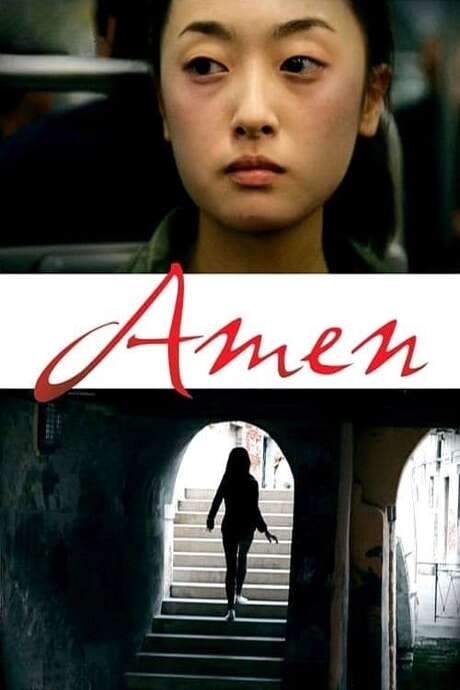
Amen (2013) movie poster

Plot Summary

Amen (2013) Plot Summary Explained

Release, runtime and language
2013 · 165 mins · Malayalam
Loading streaming availability…
Directed by
Lijo Jose Pellissery
Starring
Fahadh Faasil, Makrand Deshpande, Chemban Vinod Jose, Joy Mathew, Kalabhavan Mani, Indrajith Sukumaran

Solomon, a musician, is deeply in love with Soshanna, a young woman from a wealthy family. The film follows Solomon’s journey as he overcomes various challenges and obstacles to ultimately win her hand in marriage. It's a story about love, perseverance, and navigating social differences.

On this page (5)
  1. 1 Where to watch
  2. 2 What happens: full plot
  3. 3 Plot questions answered
  4. 4 Movie threads
  5. 5 Every angle
Loading streaming availability…

Full plot summary · contains spoilers

What Happens in Amen: Full Plot Summary

The whole story of Amen (2013) explained, from the opening scene to the final frame: every key event, every twist and what it all adds up to. Read it as a quick recap before the sequel, to check a scene you missed, or to finally understand what really happened.

During World War II, a high-ranking officer in the Waffen-SS with the SS Hygiene Institute begins to wrestle with the consequences of his own scientific work. He develops procedures intended to purge disease and pests, a dual-purpose program aimed at public health and sanitation, yet he soon discovers a horrific twist: the same method he helped devise to combat typhus—based on a hydrogen cyanide formulation known as Zyklon B—has become a tool for mass murder in extermination camps. This realization shatters his sense of purpose and pushes him to confront the unimaginable scale of Nazi atrocities.

As he struggles to process what he has helped enable, he seeks a moral reckoning by sounding the alarm to those in power who could halt the killings. His appeals reach the Catholic leadership, but the response from the hierarchy is cautious and tepid, offering little in the way of concrete action or condemnation. The only person who seems moved by the moral crisis is Riccardo Fontana, a young Jesuit priest who joins in trying to raise awareness about the fate of Europe’s Jews. Together, they attempt to draw attention to the horrors unfolding, but the channels of influence at the Vatican prove limited, and even appeals directed at the pope fail to produce a decisive moral stand.

Driven by a sense of urgency, the officer travels to Rome in person, hoping to confront the pontiff directly. By then, however, the German grip on the city tightens and the deportation machine begins to move with brutal efficiency. The Nazis begin rounding up Italian Jews to be transported to the death camps, and Fontana makes a desperate bid to halt the deportations. He pleads for intervention at the train stations, but the pope remains steadfast in his position, insisting that appearing publicly could imperil Christians living under Nazi rule. In a striking act of solidarity, Fontana places the yellow Star of David on himself and presents himself for transport with the Jews, choosing the path of witness rather than retreat.

At the camp, Fontana is confronted by the head of the facility, known to outsiders as the Doctor—an influential figure who wields power over life and death within the camp. Despite recognizing the collapse of the regime and the fated outcome for the prisoners, the Doctor allows Fontana to remain near the crematorium and even to work there, a line between mercy and complicity that becomes increasingly blurred. Eventually, the Doctor orders Fontana to be gassed, sealing his fate as a martyr who chose to remain with his people to the end. The officer who sought to intervene urges onward attempts to rescue Fontana, but the Doctor escorts him away from the scene, leaving Fontana and the remaining prisoners to face the unthinkable.

Beyond the gates, the horror continues to unfold as a mass grave is dug and burned. The Doctor, still at large within the German network, probes the officer for any contacts that might help him escape Germany. In a moment of resolve, the officer returns home and gathers the documentary evidence of the atrocities—evidence meant to compel the Allied powers to act. He brings his findings to the Allies, hoping to trigger decisive intervention. Yet the wheels of justice move slowly, and he is arrested. In his cell, after a formal review of the charges against him, he is found to have died by hanging, an end that underscores the perilous and enigmatic nature of his moral reckoning.

In the aftermath, the Doctor is seen reaching out to a Cardinal in Rome, seeking assistance to flee the country. He declares himself a physician who merely practices medicine, hoping to appeal to a sense of professional decency that might still exist within the church hierarchy. The Cardinal agrees to help arrange egress to Argentina, signaling a fragile thread of possible escape and a faint hope of saving at least some witness to the world.

This stark narrative unfolds with a measured, restrained tone that keeps the focus on the ethical tension at the heart of resistance and complicity. It chronicles how individuals on opposite sides of the power spectrum—one a military functionary haunted by his own creation, the other a priest who chooses solidarity with the persecuted—navigate a landscape where institutions falter, conscience is tested, and the cost of truth is a path paved with danger and sacrifice. The story ultimately considers how evidence, courage, and the limits of institutional power collide, forcing characters to decide how and whether to act when the unimaginable becomes undeniable.

Last updated: October 27, 2025 at 16:47

Was this helpful?

Plot questions answered

Amen Plot Explained: Your Questions Answered

The questions people ask most about Amen (2013): what happens in the confusing scenes, why the characters do what they do, the twists, hidden details and what the ending means. Each answer contains spoilers.

Q1

Why did Kurt Gerstein join the SS?

Gerstein was assigned to the SS Hygiene Institute, where he worked on water purification and vermin destruction programs. His role involved developing a hydrogen cyanide compound called Zyklon B to combat typhus. He joined the SS believing his work served public health purposes, not realizing it would be repurposed for mass murder.

  • kurt gerstein
  • ss
  • hygiene institute
  • zyklon b
Q2

How did Gerstein discover Zyklon B was being used for mass murder?

While working at the SS Hygiene Institute on purification programs, Gerstein discovered that the same hydrogen cyanide compound he helped develop to combat typhus was being repurposed in extermination camps for mass gassing. This revelation shocked him and became the catalyst for his moral crisis.

  • zyklon b
  • extermination camps
  • gas chambers
  • discovery
Q3

Why didn't Pope Pius XII intervene to stop the deportations?

When Gerstein and Fontana appealed to the Pope to intervene at the train stations and halt Jewish deportations, Pius XII refused. He argued that appearing publicly in German-ruled territory would endanger Christians living under Nazi rule. The Vatican's response remained cautious and tepid throughout, offering little concrete action.

  • pope pius xii
  • vatican
  • deportations
  • intervention
Q4

Why did Riccardo Fontana wear the Star of David and board the deportation train?

Fontana pleaded with the Pope to intervene at the train station to stop the deportations. When the Pope refused, Fontana made a striking act of solidarity by placing the yellow Star of David on himself and boarding the deportation train. He chose the path of witness rather than retreat, remaining with the Jews to share their fate.

  • riccardo fontana
  • star of david
  • deportation train
  • solidarity
Q5

What happened to Riccardo Fontana at the extermination camp?

At the camp, Fontana was confronted by the Doctor, the camp's head official. Despite knowing Fontana was a Catholic priest, the Doctor allowed him to work among the Jews in the crematorium. Eventually, as the war neared its end, the Doctor ordered Fontana to be gassed, turning his presence into a final act of witness.

  • riccardo fontana
  • extermination camp
  • doctor
  • gassing
Q6

Why did the Doctor allow Fontana to stay then later order him gassed?

The Doctor initially allowed Fontana to remain among the inmates and work in the crematorium, possibly viewing him as a useful presence. However, as the war ended and the regime collapsed, the Doctor ordered Fontana gassed, sealing his fate as a martyr who chose to remain with his people to the end.

  • doctor
  • fontana
  • crematorium
  • martyrdom
Q7

Why was Kurt Gerstein arrested after delivering evidence to the Allies?

After returning home, Gerstein compiled documentary evidence of Nazi atrocities and delivered it to the Allied forces, hoping to trigger decisive action. Despite his testimony about the crimes, he was arrested on charges related to his wartime activities. He was later found dead in his cell, hanging.

  • gerstein
  • allies
  • arrest
  • evidence
  • prison death
Q8

How did the Doctor manage to escape to Argentina?

In the aftermath of the war, the Doctor sought assistance from a Cardinal in Rome. He declared himself a physician who merely practiced medicine, appealing to professional decency. The Cardinal agreed to help arrange the Doctor's escape to Argentina, providing a thread of possible escape despite his role in the atrocities.

  • doctor
  • argentina
  • vatican escape
  • cardinal
Q9

What motivated Gerstein to try to stop the killings after discovering the truth?

Once Gerstein realized his work on Zyklon B had been repurposed for mass murder in extermination camps, his sense of purpose shattered. This realization drove him to seek a moral reckoning by sounding the alarm to those in power, particularly the Vatican, in an urgent attempt to halt the killings.

  • gerstein
  • moral reckoning
  • conscience
  • responsibility
Q10

What did Riccardo Fontana achieve by choosing to stay at the camp?

Fontana's act of solidarity transformed into a final witness. By remaining among the prisoners and accepting his fate at the crematorium, he became a martyr who stood with the persecuted until the end. His presence forced a confrontation with the reality of the Holocaust, even as institutional powers failed to act.

  • fontana
  • witness
  • martyrdom
  • sacrifice
  • holocaust

Movie threads

More Movies Like Amen, by Mood & Story

Curated lists built around what makes Amen tick: the same mood, the same kind of story or the same emotional payoff. Each list explains why these movies belong together.

Movies about moral reckoning like Amen

Stories where individuals confront overwhelming institutional evil and complicity. If you were moved by the urgent ethical crisis in Amen, explore these other films that feature individuals confronting overwhelming institutional evil. This collection gathers stories of moral courage and complicity in the face of historical atrocities and systemic failure, for viewers seeking similar heavy, thought-provoking dramas.

  • morally complex
  • urgent
  • desperate
  • solemn
  • oppressive
  • somber
  • Tone: dark, solemn, urgent
  • Pacing: steady, methodical
Why these movies?

The story pattern: This thread groups stories where a protagonist, often an insider, becomes acutely aware of a profound moral catastrophe perpetrated by the system they are part of. Their journey involves a frantic and often futile attempt to sound the alarm, facing denial, cowardice, and institutional inertia, leading to a climax defined by ethical despair rather than tangible victory.

Why they belong together: These films are united by their focus on the psychological and emotional toll of witnessing evil and the desperate fight for responsibility. They share a somber, oppressive mood, a steady pacing that builds dread, and an ending that is typically bleak, reflecting the difficulty of achieving justice against overwhelming odds.

Somber historical dramas like Amen

Unflinching dramas based on true events of profound human suffering. For viewers seeking films with the same solemn, heavy feel as Amen, this list features other unflinching historical tragedies. These movies are based on true events of profound suffering, told with a dark tone, steady pacing, and a commitment to emotional authenticity, perfect for those who appreciate serious, weighty cinema.

  • somber
  • solemn
  • oppressive
  • tragic
  • historical
  • serious
  • Tone: dark, bleak, solemn
  • Pacing: steady, measured
Why these movies?

The story pattern: Narratives in this thread are typically linear and character-driven, following individuals or groups through a well-documented historical catastrophe. The storytelling prioritizes emotional immersion and authenticity over complex plotting, building towards an inevitable, tragic conclusion that honors the memory of real-life events and their victims.

Why they belong together: These films share a cohesive vibe defined by their grave subject matter, dark tone, and heavy emotional weight. They are paced steadily to allow the horror and sadness to sink in, and are characterized by a complete absence of humor or lightheartedness, creating a uniformly somber and oppressive viewing experience.

Every angle

Amen (2013) Explained: Plot, Timeline & Characters

Everything about Amen in one place: what happens in the plot summary, the timeline in chronological order, the characters and meaning and a spoiler-free summary. What's After the Movie adds the cast, box office and post-credit scenes.

Coming soon on iOS and Android

The Plot Explained Movie Summary App

Plot summaries, endings explained and timelines on your phone. Catch up on any movie in minutes, save your favorites and never miss a twist again.

Be the first to know when we launch. Your email stays private, always.

Learn more about the app