Plot Explained Spoilers guaranteed!
Plot Explained

Browse by genre

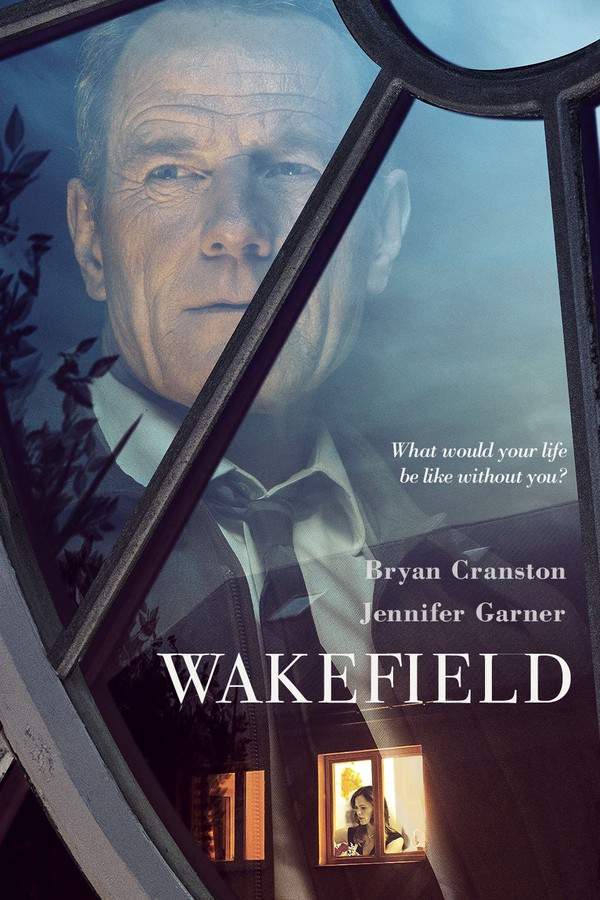
Wakefield (2017) movie poster

Plot Summary

Wakefield (2017) Plot Summary Explained

Release, runtime and language
2017 · 106 min · English
Echo score 70
Loading streaming availability…
Directed by
Robin Swicord
Starring
Jennifer Garner, Jason O'Mara, Pippa Bennett-Warner, Bryan Cranston, Beverly D'Angelo, Ellery Sprayberry

Howard Wakefield experiences a breakdown as his perfect life unravels, leading him to withdraw and live in secret within his garage attic. From his hidden vantage point, he observes his wife and children navigate life and struggle without him. A former Manhattan lawyer and loving family man, Wakefield is forced to confront a deep sense of emptiness and question his identity, and whether he can ever truly return to his former self.

On this page (6)
  1. 1 Where to watch
  2. 2 What happens: full plot
  3. 3 Plot questions answered
  4. 4 Movie threads
  5. 5 Movies like Wakefield
  6. 6 Every angle
Loading streaming availability…

Full plot summary · contains spoilers

What Happens in Wakefield: Full Plot Summary

The whole story of Wakefield (2017) explained, from the opening scene to the final frame: every key event, every twist and what it all adds up to. Read it as a quick recap before the sequel, to check a scene you missed, or to finally understand what really happened.

Howard Wakefield, Jason O'Mara, a successful attorney in New York City, is unhappy in his fifteen-year marriage to Diana, Jennifer Garner, a beautiful art curator and former dancer. Their relationship was once kept lively by flirtations with other people, a tactic Diana eventually comes to resent. One night, after a disrupted commute and a citywide power outage, Howard returns home late and becomes distracted by a raccoon slipping into their detached garage. He slips into the attic to get a perfect view of his house and watches Diana with their two daughters, Taylor and Giselle, eating dinner. He ignores her calls, amused by her clear annoyance, and when she throws his dinner plate away rather than saving it, he’s momentarily insulted. To avoid a fight, he decides to wait before entering, but exhaustion wins, and he falls asleep.

The next morning, Diana calls the police to report him missing, certain he is gone for good. Howard feels a pang of guilt as he watches her cry, yet before he can reenter the house, his overbearing mother-in-law, Babs, arrives to comfort her. An argument erupts between Babs and Diana about Howard’s whereabouts, with Diana insisting there’s no evidence he took money or ran off. After Diana leaves for work, Howard plans to deal with the fallout quietly, but he finds himself resenting the idea that she will resume her routine without him. He cleans up any traces of his presence, steals a little food from the pantry, and returns to the attic.

What begins as a clever escape gradually shifts into a more permanent detachment. Howard delights in shedding old responsibilities and revels in the perception that others would assume his wife had driven him away. He spends his days reading, puzzling, and quietly observing his family and neighbors, while sneaking food and basic amenities from his former life. He also grows a beard and long hair, moving about town as if he were a misunderstood figure, dismissed by most as homeless. Two of Dr. Sondervan’s residents, Herbert and Emily, eventually follow him back to the attic, prompting quiet reflections about the man he was and is.

As time passes, Howard revisits the memories that led to their estrangement. He recalls meeting Diana when she was dating his close friend Dirk Morrison, a fiercely competitive Wall Street trader. Through manipulation and deceit, Howard had won her away from Dirk, and he wonders whether he ever truly loved her. Yet his extended absence gives him an unsettling clarity: by simply disappearing, he has gained a troubling form of control over her life. If he had divorced her, she would have had the freedom to move on with someone else; by vanishing, he instead anchors her to a complicated, uncertain future.

With the seasons shifting from summer to fall, Howard’s perspective deepens. He realizes that his lifelong behavior—selfishness, jealousy, and a self-pitying sense of victimhood—has shaped everything. He experiences a paradoxical freedom and confinement at once: he is free from his old life, yet he feels increasingly trapped by the consequences of his choices. He comes to understand that his family may be happier without him, even as he recognizes that he has never loved Diana more deeply.

One afternoon, Diana begins a new romantic chapter with Dirk, a development that shocks Howard, who believes Dirk could have once told her the lies that fractured their relationship years ago. Rather than retreat, he resolves to pursue an honest chance to let Diana decide for herself whom she wants to be with. After tidying up and buying a new suit, he steels himself to return home. He envisions two possible reactions: joy at his return or horror at the sight of him. He pauses on the sidewalk, then gathers his courage and steps back inside.

When he finally enters the living room, he sees Diana and the daughters decorating the Christmas tree. He weighs the two possible outcomes in his mind, then makes a quiet choice that changes nothing and everything at once. He steps across the threshold and declares, "I'm home."
Last updated: October 09, 2025 at 16:18

Was this helpful?

Plot questions answered

Wakefield Plot Explained: Your Questions Answered

The questions people ask most about Wakefield (2017): what happens in the confusing scenes, why the characters do what they do, the twists, hidden details and what the ending means. Each answer contains spoilers.

Q1

Why does Howard choose to live in the garage attic instead of just leaving?

After chasing the raccoon into the attic, Howard realizes he can watch his family undetected. Rather than face Diana's anger about his late arrival, he decides to wait before entering the house. Exhaustion takes over, and he falls asleep. The next morning, when Diana calls the police and his mother-in-law arrives, Howard feels trapped by the narrative forming around him. Rather than explain himself, he retreats to the attic permanently, finding a perverse freedom in being invisible while his family assumes he's gone.

  • howard wakefield
  • garage attic
  • disappearance
  • voyeurism
  • power outage
Q2

What triggers Howard's decision to disappear?

Howard's disappearance builds from long-standing unhappiness in his marriage and a sense of emptiness despite his successful career as a Manhattan attorney. The immediate trigger is the chaotic night of the citywide power outage, his frustrating commute, and his reluctance to face Diana after ignoring her calls. Rather than confront the conflict, he escapes into the attic, and the escape gradually becomes permanent as he discovers he prefers the freedom of invisibility to his old responsibilities.

  • howard wakefield
  • breakdown
  • marriage problems
  • escape
  • mental health
Q3

Why did Howard manipulate Diana away from Dirk in the past?

Howard recalls that when he met Diana, she was dating his close friend Dirk Morrison, a competitive Wall Street trader. Rather than compete fairly, Howard used manipulation and deceit to win her away. This memory haunts him during his time in the attic, making him question whether he ever truly loved Diana or simply needed to possess her. His disappearance forces him to confront the manipulative patterns that defined their entire relationship.

Foreshadowing: Howard's history of winning Diana through manipulation foreshadows his later realization that love should not be about control.

  • dirk morrison
  • diana wakefield
  • manipulation
  • past relationship
  • backstory
Q4

How does Howard's disappearance affect Diana emotionally?

Diana is devastated by Howard's disappearance. She immediately calls the police to report him missing, insisting there's no evidence he took money or ran off. She cries genuine tears of guilt and confusion, and her mother-in-law Babs arrives to comfort her. However, as months pass, Diana gradually adjusts to life without Howard, eventually beginning a new romantic relationship with Dirk during Christmas. Howard watches this transformation from the attic, realizing his absence has fundamentally changed everyone.

  • diana wakefield
  • emotional impact
  • grief
  • moving on
  • family struggle
Q5

Why does Diana start a relationship with Dirk when Howard is missing?

During Howard's extended absence, Diana begins a romantic relationship with Dirk Morrison, Howard's old friend and former rival for her affection. This development shocks Howard, who had always feared Dirk might reveal the lies Howard used to win Diana years ago. However, Howard ultimately sees this as an opportunity, he realizes he must give Diana the freedom to choose whom she wants, rather than controlling her through his disappearance. His decision to return is partly motivated by wanting Diana to make an honest choice.

Foreshadowing: Howard's jealousy over Dirk in the past foreshadows his emotional reaction to seeing them together.

  • diana wakefield
  • dirk morrison
  • relationship
  • love triangle
  • choice
Q6

What does Howard realize about his relationship with Diana during his time in the attic?

Through months of observation, Howard gains unsettling clarity about his marriage. He realizes that by simply disappearing, he has gained a troubling form of control over Diana's life, if he had divorced her, she would have been free to move on, but by vanishing, he anchors her to a complicated, uncertain future. He acknowledges his lifelong selfishness, jealousy, and victimhood have shaped everything, and comes to understand that he never loved Diana honestly, only possessively. He also realizes his family may actually be happier without him.

  • self-awareness
  • control
  • marriage
  • love
  • manipulation
  • jealousy
Q7

Why does Howard finally decide to return home at Christmas?

Howard decides to return after watching Diana begin a relationship with Dirk. Rather than retreat in jealousy, he resolves to give Diana an honest chance to choose for herself whom she wants to be with. He cleans himself up, buys a new suit, and prepares to tell her the truth rather than manipulate events as he always did. He imagines two possible reactions, joy or horror, but chooses to step back inside anyway, accepting that he must earn forgiveness and rebuild their relationship on honesty.

  • return home
  • christmas
  • reconciliation
  • honesty
  • decision
Q8

What does the ending of Wakefield imply about Howard's future?

The ending deliberately leaves Diana and the daughters' reaction unresolved. Howard steps across the threshold and declares "I'm home," marking the first step toward reconciliation after years of manipulation and absence. However, the narrative emphasizes the fragility of this moment, trust must be earned, and reopening a closed life carries immense risk. Howard's humility contrasts with the reality of repairing damage caused by his choices, leaving his ultimate reintegration uncertain.

  • ending
  • resolution
  • reconciliation
  • uncertain future
  • family
Q9

How does Howard's voyeurism change throughout the movie?

Howard's initial voyeurism is born from amusement and escape, he watches Diana throw away his dinner plate with annoyance and delights in her confusion. As months pass, his observation becomes more contemplative. He watches his family and neighbors, reflecting on his past decisions and gaining perspective. Eventually, his voyeurism transforms into a form of acceptance; he realizes he must stop watching and actually participate in life. The shift from observer to participant marks his psychological breakthrough.

  • voyeurism
  • observation
  • transformation
  • perspective
  • attic
Q10

Why does Howard believe his family might be better off without him?

During his time in the attic, Howard experiences a paradoxical realization: he is free from his old life but feels increasingly trapped by the consequences of his choices. Watching his family function without him, he sees that Diana and their daughters have adapted and found happiness. He recognizes that his lifelong selfishness, jealousy, and manipulative behavior brought them more harm than good. This painful acceptance becomes a turning point in his decision to either remain hidden or attempt genuine reconciliation.

  • self-worth
  • family happiness
  • sacrifice
  • mental state
  • growth

Movie threads

More Movies Like Wakefield, by Mood & Story

Curated lists built around what makes Wakefield tick: the same mood, the same kind of story or the same emotional payoff. Each list explains why these movies belong together.

Slow-burn claustrophobic dramas like Wakefield

Stories where internal turmoil creates a cage, trapping the protagonist in slow-building dread. For viewers who appreciated the suffocating psychological tension of Wakefield. This list features movies like Wakefield that explore themes of isolation and internal collapse, focusing on slow-paced, character-driven narratives where the main character's mind becomes their own prison.

  • claustrophobic
  • psychological
  • slow burn
  • unsettling
  • observational
  • tense
  • Tone: melancholic, tense, unsettling
  • Pacing: slow burn, observational
Why these movies?

The story pattern: The narrative typically follows a character's descent into a self-imposed or psychologically-induced confinement. The conflict is primarily internal, driven by obsession, paranoia, or a breakdown, with external action taking a backseat to the meticulous observation of a crumbling psyche.

Why they belong together: Movies in this group share a specific atmospheric blend: a deliberate, slow pacing that allows tension to simmer, a melancholic or tense tone, and a heavy emotional weight centered on themes of mental health and isolation.

Movies about identity crisis similar to Wakefield

Character studies where a protagonist's sense of self unravels, questioning their reality and motives. If you liked Wakefield's exploration of a man questioning his identity and abandoning his life, these films offer similar journeys. Discover movies like Wakefield that focus on characters undergoing severe personal breakdowns and the unsettling consequences of their self-destructive choices.

  • introspective
  • identity crisis
  • unsettling
  • paradoxical
  • emotional manipulation
  • self-discovery
  • Tone: melancholic, introspective, paradoxical
  • Pacing: slow, character-driven
Why these movies?

The story pattern: The plot revolves around a character who deliberately walks away from or sabotages their established life. The journey is one of paradoxical self-discovery through destruction, filled with emotional manipulation and leading to an ambiguous endpoint where reintegration or redemption is uncertain.

Why they belong together: These films are united by a heavy emotional weight, a moderate narrative complexity that delves into psychological motivation, and a melancholic tone. They feature protagonists on a deeply introspective, often unsettling path of self-examination.

If you liked this

Movies Like Wakefield

Similar movies to Wakefield: the same genre, themes or kind of story. Each one comes with its own plot summary, timeline and ending explained.

Browse all movie summaries

Every angle

Wakefield (2017) Explained: Plot, Timeline & Characters

Everything about Wakefield in one place: what happens in the plot summary, the timeline in chronological order, the characters and meaning and a spoiler-free summary. What's After the Movie adds the cast, box office and post-credit scenes.

Coming soon on iOS and Android

The Plot Explained Movie Summary App

Plot summaries, endings explained and timelines on your phone. Catch up on any movie in minutes, save your favorites and never miss a twist again.

Be the first to know when we launch. Your email stays private, always.

Learn more about the app