Plot Explained Spoilers guaranteed!
Plot Explained

Browse by genre

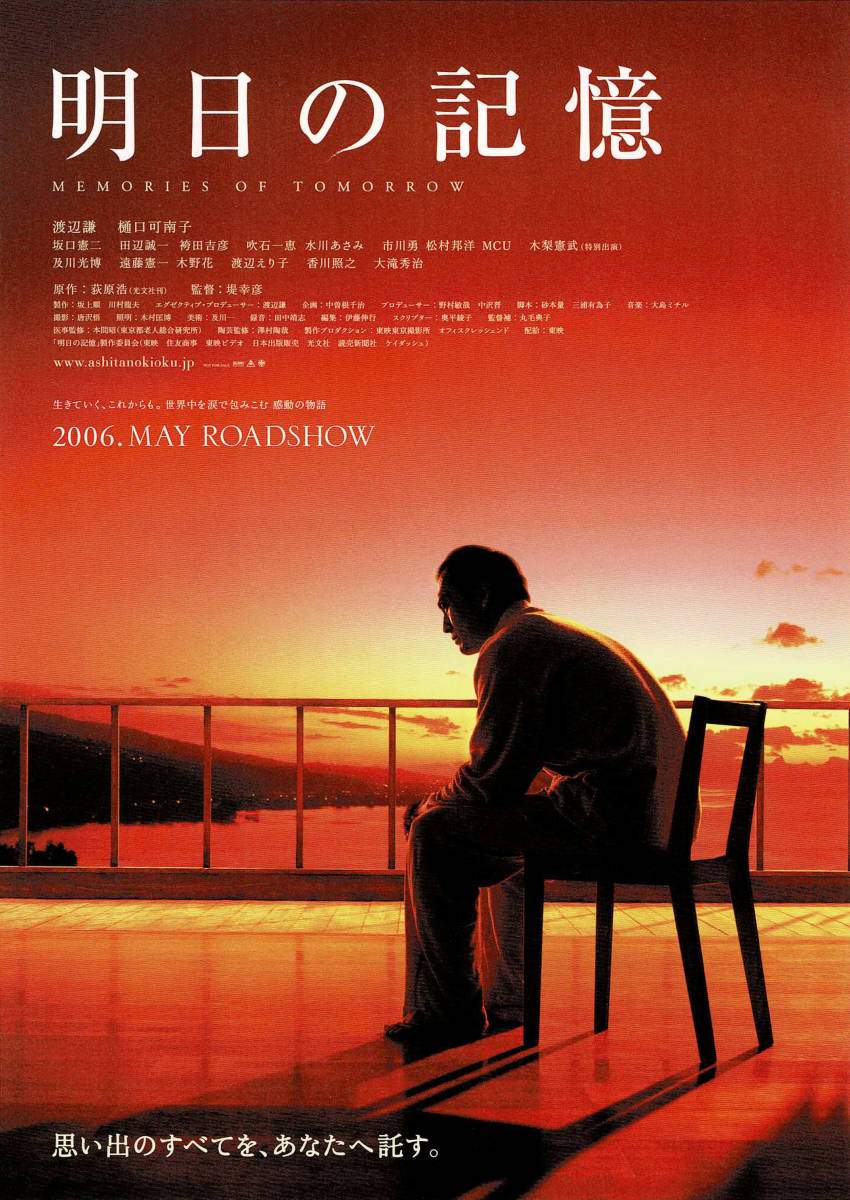
Voices in the Wind (2020) movie poster

Timeline

Voices in the Wind (2020) Timeline Explained – Every Event in Order

Release, runtime and language
2020 · 139 mins · Japanese
Directed by
Nobuhiro Suwa
Starring
Hidetoshi Nishijima, Fusako Urabe, Makiko Watanabe, Kei Ishibashi, Tomokazu Miura, Toshiyuki Nishida

Following a devastating tsunami that struck Japan eight years prior, Haru embarks on a poignant journey back to her hometown. The natural disaster left deep scars, and she seeks answers about the family she lost in the flood. Her travels are filled with experiences as she confronts the lasting impact of the tragedy and searches for closure.

On this page (4)
  1. 1 Events in order (15)
  2. 2 Timeline questions answered
  3. 3 Movie threads
  4. 4 Every angle

15 events in order · contains spoilers

Voices in the Wind Timeline: Events in Chronological Order

Every key event of Voices in the Wind (2020) in order, scene by scene, with when and where it takes place. Use it to untangle flashbacks, time jumps and parallel storylines, to refresh your memory before the sequel or to find the exact scene you are thinking of.

  1. Jan Foley begins life on Guadalupe

    An amnesiac Czech pianist, Jan Foley, lives under a new identity on the island of Guadalupe. He works for refugee smuggler Angelo and struggles to recall his past life while keeping a low profile among the refugee community. His sense of self remains elusive as he tends to the piano and the memories it stirs.

    When
    1940s
    Where
    Guadalupe
  2. El Hombre's piano music unsettles the refugees

    A brooding man known as El Hombre sits trance-like at the piano and plays a somber melody. His music drifts into the room where Anna Hoffmann, Dr. Hoffman, and Marya reside, stirring memories and emotions they try to suppress. The haunting performance becomes a subtle link to a shared past.

    When
    present
    Where
    Guadalupe refugee camp
  3. Governor's notice spurs a destructive act

    The governor's warning about 'murder boats' prompts a grim response from El Hombre, who uses the sign as justification to destroy Angelo's fishing boat. The act heightens tension and mistrust among the refugees, particularly inciting Angelo's anger and fear. The island atmosphere thickens with danger and suspicion.

    When
    present
    Where
    Guadalupe
  4. Angelo's brothers vow to kill the stranger

    Angelo's brothers, Luigi and Marco, resent the enigmatic newcomer and vow that he must be dealt with. Their hostility adds a volatile undercurrent to life on the island and foreshadows a violent confrontation. The refugee community grows tenser as loyalties fray.

    When
    present
    Where
    Guadalupe
  5. Prague: Nazis ban The Moldau but Volny risks everything

    In Nazi-occupied Prague, authorities permit Jan Volny to perform only if The Moldau is excluded. Defying the ban, Volny ends his concert with a four-minute paraphrase of the piece, knowing it will draw the Nazis’ wrath. He arranges for the Hoffmans to smuggle Marya out, risking their safety and his own future.

    When
    Nazi-occupied Prague
    Where
    Prague
  6. Volny is captured and tortured

    Before he can complete his plan to flee, Volny is seized by the Nazis and subjected to unspeakable violence, which deranges him. The torture leaves lasting psychological scars that color his later life as El Hombre. His spirit is broken, and his memory of himself becomes blurred.

    When
    pre-escape
    Where
    Prague
  7. Escape and voyage to Guadalupe

    Volny overpowers guards on the way toward a concentration camp and escapes. He travels to Lisbon, then hides on Angelo’s fishing boat that sails to Guadalupe. The arduous journey cements his disconnection from his past and sets the stage for a new, memory-shattered life.

    When
    late 1940s
    Where
    Lisbon and aboard Angelo's boat to Guadalupe
  8. Amnesia settles on Guadalupe: he becomes El Hombre

    Upon arrival, he cannot recall his name or identity and is dubbed El Hombre by those around him. The trauma of his past saturates his present, making him a haunting, enigmatic figure among the refugees. He moves through the island with diminished memory and a heavy, unresolved history.

    When
    present
    Where
    Guadalupe
  9. Marya's illness and Anna's guilt surface

    Marya's condition worsens, and Anna Hoffmann blames herself for forcing her to leave their homeland. Anna recalls the harsh conditions that drove them into exile and wrestles with responsibility and remorse. The personal losses deepen the refugees' emotional burdens.

    When
    present
    Where
    Guadalupe
  10. Marya is drawn to the piano

    Marya, enchanted by El Hombre's music, rises from her bed and moves toward the sound of the piano. She descends toward the street and collapses there, the music leaving a lasting, haunting impression on her fading strength. The moment underscores the powerful pull of memory and art.

    When
    present
    Where
    Guadalupe
  11. Memory begins to return as El Hombre touches the crucifix

    As Marya lies nearby, El Hombre approaches and traces the crucifix around her neck. In that contact, fragments of his past surface and his memory begins to come back, hinting at a shared history with Marya. The moment signals a possible reopening of old wounds and reunions.

    When
    present
    Where
    Guadalupe
  12. Hoffmans seek Marya; El Hombre hides

    The Hoffmans come looking for Marya, pressing for news of her whereabouts. El Hombre slips into the shadows to avoid discovery, underscoring the precarious balance between memory, identity, and the danger that surrounds them. The search tightens the emotional and physical threat on everyone.

    When
    present
    Where
    Guadalupe
  13. Violence erupts as Luigi confronts Angelo

    Angelo hears shots and discovers Luigi, armed, standing over El Hombre’s body. In the ensuing confrontation, Luigi stabs Angelo with an ice pick, wounding him while the危机 around El Hombre deepens. The violent clash exposes the deadly stakes of exile and vengeance.

    When
    present
    Where
    Angelo's residence
  14. El Hombre vanishes into the shadows

    Amid the chaos, El Hombre disappears from view, leaving the others to contend with the consequences of memory, violence, and fear. His absence heightens the tension and the sense that the past remains elusive. The island remains unsettled as the search for him continues.

    When
    present
    Where
    Guadalupe
  15. Marya dies; El Hombre's plea and future hope

    Marya dies at the Hoffmans’ bedside, and El Hombre cradles her lifeless body, pleading for her to return. She had believed he would one day come for her, a hope that lingers in the quiet aftermath. The ending leaves a haunting sense of unresolved longing and possible reunion in the future.

    When
    present
    Where
    Hoffmans' room

Last updated: October 01, 2025 at 12:55

Was this helpful?

Timeline questions answered

Voices in the Wind Timeline Explained: Your Questions Answered

When does it happen, and why in that order? The questions people ask about the chronology of Voices in the Wind (2020): time jumps, flashbacks, cause and effect between scenes and the correct order of events, each answered with spoilers.

Q1

Who is El Hombre and what is his real identity?

El Hombre is actually Jan Volny, a renowned Czech pianist from Nazi-occupied Prague. After being captured and tortured by the Nazis for defying their ban on performing "The Moldau," he suffered such severe psychological trauma that he lost his memory. He escaped from the Nazis, made his way to Lisbon, and stowed away on Angelo's fishing boat to Guadalupe, where he became known as El Hombre.

Foreshadowing: His trance-like piano playing and fragmented memories hint at a musical past rooted in classical training.

  • el hombre identity
  • jan volny
  • czech pianist
  • amnesia
  • memory loss
Q2

Why does El Hombre destroy Angelo's fishing boat?

El Hombre destroys Angelo's boat after seeing the governor's warning about "murder boats", vessels that promise to take refugees to the United States but actually abandon passengers to die at sea. The warning triggers his traumatic memories of escape and betrayal, and in a moment of fury mixed with paranoia, he destroys what represents another false promise of salvation.

Foreshadowing: The earlier mention of "murder boats" warning establishes the desperate mistrust among refugees.

  • el hombre destroys boat
  • murder boats
  • refugee desperation
  • angelo boat
Q3

What happened to Jan Volny after his concert in Prague?

After performing a forbidden piece by Smetana at his concert in Nazi-occupied Prague, Jan Volny was arrested by the Nazis. He was subjected to horrific torture that unhinged his mind and erased his memory. He later managed to overpower his guards and escape during transport toward a concentration camp, ultimately reaching Lisbon and boarding Angelo's boat to Guadalupe.

Foreshadowing: His defiance in playing "The Moldau" directly leads to his capture and the torture that destroys his identity.

  • jan volny tortured
  • prague concert
  • nazi occupation
  • the moldau
  • volny capture
Q4

What is the connection between El Hombre and Marya?

El Hombre and Marya are actually husband and wife. In Prague, Marya Volny was forced to flee with the Hoffmans while Jan stayed behind, planning to follow. His capture and torture caused him to lose all memory of her, including his own name. Marya recognizes nothing of her husband in the amnesiac stranger, yet she is drawn to his piano music, the same music that connected them in their past life.

Foreshadowing: Marya's insistence that "he would come back for her" foreshadows their tragic connection.

  • marya volny husband
  • el hombre wife
  • memory loss
  • married couple reunion
Q5

What are the "murder boats" mentioned in the movie?

"Murder boats" refers to vessels that advertise passage to the United States as asylum but deliberately abandon their passengers at sea, leaving them to perish. The governor's warning about these boats highlights the deadly traps facing refugees desperate to escape their circumstances, adding another layer of danger to the characters' precarious situation.

Foreshadowing: This warning directly triggers El Hombre's destructive act against Angelo's boat.

  • murder boats
  • refugee boats
  • asylum deception
  • sea danger
Q6

Why can't El Hombre remember his own name or identity?

El Hombre cannot remember his past because the torture he endured at the hands of the Nazis caused severe psychological trauma that resulted in amnesia. This trauma-induced memory loss is a central tragedy of the film, his identity as Jan Volny, beloved pianist and devoted husband, is completely erased by the brutality he suffered.

Foreshadowing: The fragmented memories that surface when he touches Marya's crucifix hint at the identity buried beneath his trauma.

  • amnesia
  • memory trauma
  • nazi torture
  • identity loss
  • psychological damage
Q7

Why is "The Moldau" important in the story?

"The Moldau" is a symphonic poem by Czech composer Bedřich Smetana that represents Czech national identity and cultural pride. In Nazi-occupied Prague, the Nazis banned its performance as part of their suppression of Czech culture. Jan Volny defied this ban by ending his concert with a four-minute paraphrase of the piece, an act of resistance that ultimately led to his capture and torture.

Foreshadowing: This act of musical defiance sets the tragic events in motion.

  • the moldau
  • bedrich smetana
  • czech music
  • nazi occupation
  • musical resistance
Q8

Why does Marya collapse while listening to the piano?

Marya is drawn out of bed by the haunting sound of El Hombre's piano playing, a melody connected to her past life with her husband. The music evokes powerful memories and emotions that overwhelm her failing health. She wanders toward the street and collapses, the emotional and physical strain proving too much for her weakened condition.

Foreshadowing: The piano music serves as a powerful link between her past and present, foreshadowing their ultimate connection.

  • marya collapses
  • piano music
  • emotional breakdown
  • health decline
Q9

What happens to Marya at the end of the movie?

Marya dies at the Hoffmans' bedside. El Hombre, having recovered fragments of his memory, cradles her lifeless body and pleads for her to return to him, words that mirror what Marya had always believed, that he would one day come back for her. The ending leaves their reunion unfulfilled, with El Hombre holding onto hope despite his loss.

Foreshadowing: Her belief that "he would come" foreshadows his presence at her death, though too late for recognition.

  • marya death
  • el hombre plea
  • tragic ending
  • final scene
Q10

Why are Luigi and Marco determined to kill El Hombre?

Luigi and Marco, Angelo's brothers, hate El Hombre because he destroyed their brother's fishing boat, their family's primary livelihood. Their hostility is further fueled by the general tension among refugees, and they vow to eliminate the stranger who has caused such destruction. This animosity culminates in Luigi confronting and shooting El Hombre.

Foreshadowing: The brothers' earlier vow to "deal with" the stranger sets up the violent climax.

  • luigi marco
  • angelo brothers
  • boat destruction
  • revenge
  • violent confrontation

Movie threads

More Movies Like Voices in the Wind, by Mood & Story

Curated lists built around what makes Voices in the Wind tick: the same mood, the same kind of story or the same emotional payoff. Each list explains why these movies belong together.

Movies about grief-stricken journeys like Voices in the Wind

Characters undertaking solemn quests to process profound loss and reclaim their identity. If you were moved by the solemn quest in Voices in the Wind, this list features similar movies where characters undertake emotional journeys to process profound loss and confront fractured memories. These stories share a heavy emotional weight and a melancholic tone, exploring themes of survival guilt and displacement in the aftermath of tragedy.

  • melancholic
  • somber
  • haunting
  • nostalgic
  • tragic
  • introspective
  • Tone: melancholic, somber
  • Pacing: slow, reflective
Why these movies?

The story pattern: Stories in this thread follow protagonists who are compelled to travel, either physically or mentally, in the wake of a devastating personal or collective loss. The plot is less about external action and more about the internal process of revisiting traumatic memories, seeking answers, and attempting to piece together a shattered sense of self, often leading to bittersweet or sad realizations.

Why they belong together: These films are grouped together because they share a core narrative of a grief-stricken pilgrimage. They prioritize emotional depth over plot speed, creating a consistent mood of somber reflection and a heavy, melancholic atmosphere that resonates with viewers seeking profound, character-driven dramas about healing and memory.


Atmospheric trauma dramas like Voices in the Wind

Stories where a oppressive atmosphere mirrors a character's deep internal psychological wounds. For viewers who appreciated the oppressive, haunting atmosphere of Voices in the Wind, this collection features movies where the setting and mood directly reflect a character's profound psychological trauma. These slow-burn dramas use a deliberate pace to build a deeply melancholic and somber experience, often culminating in a sad or bleak ending.

  • oppressive
  • haunting
  • somber
  • psychological
  • desperate
  • tragic
  • Tone: melancholic, oppressive, haunting
  • Pacing: slow burn, atmospheric
Why these movies?

The story pattern: The narrative pattern involves a character grappling with severe, often wartime or disaster-related, trauma. The story unfolds slowly, focusing on the lingering psychological effects rather than a fast-paced plot. The atmosphere itself—be it a refugee camp, a desolate landscape, or a memory-haunted mind—becomes a central character, creating a sense of inescapable dread and sorrow that culminates in a tragic realization of irrevocable loss.

Why they belong together: These films are united by their masterful use of atmosphere as a narrative tool to explore trauma. They share a slow, deliberate pace, a high level of emotional intensity, and a consistently melancholic tone. The similarity lies in the immersive, oppressive feeling that makes the viewer inhabit the character's psychological pain.

Every angle

Voices in the Wind (2020) Explained: Plot, Timeline & Characters

Everything about Voices in the Wind in one place: what happens in the plot summary, the timeline in chronological order, the characters and meaning and a spoiler-free summary. What's After the Movie adds the cast, box office and post-credit scenes.

Coming soon on iOS and Android

The Plot Explained Movie Summary App

Plot summaries, endings explained and timelines on your phone. Catch up on any movie in minutes, save your favorites and never miss a twist again.

Be the first to know when we launch. Your email stays private, always.

Learn more about the app