Plot Explained Spoilers guaranteed!
Plot Explained

Browse by genre

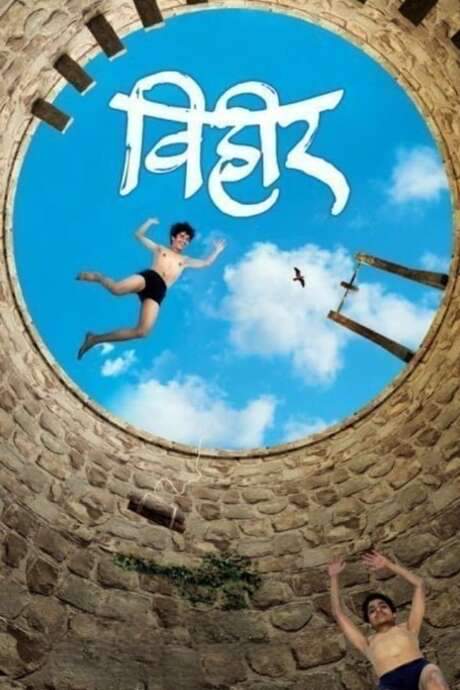
Vihir (2009) movie poster

Timeline

Vihir (2009) Timeline Explained – Every Event in Order

Release, runtime and language
2009 · 118 mins · Marathi
Directed by
Umesh Vinayak Kulkarni
Starring
Mohan Agashe, Jyoti Subhash, Girish Kulkarni, Madan Deodhar, Alok Rajwade

Two adolescent cousins, Sameer and Nachiket, are close friends who wrestle with unconventional views on life and family. Their bond is kept alive through letters in which they describe daily events and personal reflections. After years apart, they finally reunite when Sameer travels to Nachiket’s village with his mother and sister for a family wedding, confronting the changes that time and differing outlooks have brought.

On this page (4)
  1. 1 Events in order (11)
  2. 2 Timeline questions answered
  3. 3 Movie threads
  4. 4 Every angle

11 events in order · contains spoilers

Vihir Timeline: Events in Chronological Order

Every key event of Vihir (2009) in order, scene by scene, with when and where it takes place. Use it to untangle flashbacks, time jumps and parallel storylines, to refresh your memory before the sequel or to find the exact scene you are thinking of.

  1. Introduction of Sameer and Nachiket

    Sameer, a boy from the city, visits his cousin Nachiket in a village with his mother and sister for a family wedding. The two boys, who are best friends, reconnect and begin to observe their surroundings with curiosity. They explore the village and note the differences in their outlooks on life and family relationships.

  2. Observing Family Dynamics

    Sameer and Nachiket spend time analyzing the behavior of people in the household, trying to understand the complexities of family relationships. Their observations reveal the contrasting attitudes of the family members and deepen their reflections on life and connection.

  3. Discussion of Life Perspectives

    Nachiket shares his unconventional outlook on life with Sameer, explaining his detached and solitary attitude towards his family. Sameer finds Nachiket's perspective strange and begins to question their differing philosophies and approaches to life.

  4. Playing and Swimming in the Well

    The boys engage in playful activities like playing hide and seek and swimming in the village well. Nachiket, unfamiliar with swimming, uses a wooden support while Sameer prepares for an upcoming school swimming competition, highlighting their friendship and innocence.

    Where
    village well
  5. Sameer's Departure

    As Sameer prepares to leave after the visit, he intends to return home and compete in a swimming event. Their last moments together are filled with the usual playful interaction, emphasizing their bond before separation.

    Where
    village
  6. Nachiket's Drowning and Shock

    When Sameer returns after two days, he learns that Nachiket has drowned in the well. The news shocks and devastates Sameer, who struggles to accept his friend's sudden death and begins to search for answers and truth behind the tragedy.

    Where
    village well
  7. Sameer's Search for Nachiket

    Unable to accept Nachiket's death, Sameer believes his friend is hiding somewhere, akin to their game of hide and seek. He begins a relentless search through various places, searching for a sign or a clue of Nachiket’s presence.

    Where
    various locations
  8. Running Away and Meeting the Shepherd

    Feeling overwhelmed, Sameer runs away from home and takes a train to a stone quarry. There, he encounters a nomadic shepherd who shares philosophical insights about life, loss, and seeing with the 'eyes of the heart'.

    Where
    stone quarry
  9. Realization and Return to the Well

    Inspired by the shepherd's stories and Nachiket's words, Sameer recalls his friend's perspective on hiding and seeking and rushes back to the village. He finds Nachiket at the well, symbolically understanding the deeper meaning of presence beyond physical existence.

    Where
    village well
  10. Reunion and Reflection

    Sameer and Nachiket share a final moment, laughing and swimming together in the well, symbolizing acceptance of Nachiket's death. Sameer learns that love and memory remain alive through the 'eyes of the heart', transcending physical absence.

    Where
    village well
  11. Journey Back Home

    Having found peace and understanding, Sameer returns home by bus, feeling satisfied and enlightened. The story concludes with him embracing a new perspective on life and loss, carrying the memory of his friend.

    Where
    home

Last updated: August 19, 2025 at 05:16

Was this helpful?

Timeline questions answered

Vihir Timeline Explained: Your Questions Answered

When does it happen, and why in that order? The questions people ask about the chronology of Vihir (2009): time jumps, flashbacks, cause and effect between scenes and the correct order of events, each answered with spoilers.

Q1

Why does Nachiket appear distant and aloof towards his family?

Nachiket explains his unusual outlook to Sameer during their conversations - he values independence, introspection, and prefers staying detached from societal constraints. This philosophy makes him seem distant to his family members and even to Sameer, who finds this attitude confusing. Nachiket's choice to remain solitary isn't about rejecting others but about his genuine belief in maintaining inner peace through separation from worldly expectations.

Foreshadowing: Earlier in the film, the boys observe their family members' behaviors and discuss family dynamics, which triggers Nachiket's explanation about his perspective on relationships.

  • Nachiket personality
  • family relationships
  • independence
  • detachment
Q2

How does Nachiket drown in the well if he was using a wooden support?

The exact circumstances of the drowning are left somewhat ambiguous. Nachiket didn't know how to swim and always relied on a wooden support to stay afloat during their swimming sessions. It's suggested that during a moment when Sameer was away (after his departure back home), Nachiket went to the well alone and somehow the wooden support failed him or he slipped beneath the water unexpectedly. The tragedy happens off-screen, emphasizing the sudden and unexpected nature of the loss.

Foreshadowing: The wooden support is shown as both a safety measure and a limitation for Nachiket, making his reliance on it a subtle hint at vulnerability.

  • Nachiket death
  • well incident
  • tragedy
  • drowning
Q3

Why does Sameer refuse to accept Nachiket's death and go searching for him?

Sameer cannot process the sudden traumatic loss of his best friend. His mind clings to their childhood games of hide and seek, where finding each other was always part of the fun. Rather than accepting the finality of death, Sameer convinces himself that Nachiket is hiding somewhere, playing a game with him. This psychological response to grief drives his desperate search across various locations, seeking any sign that his friend might still be alive.

Foreshadowing: The boys' playful games of hide and seek earlier in the story establish the psychological framework Sameer uses to process his loss.

  • grief denial
  • search for truth
  • hide and seek
  • acceptance
Q4

What does the shepherd mean by 'seeing with the eyes of the heart'?

The shepherd tells Sameer a story about recognizing a lost lamb not by its physical appearance but by looking with the heart - understanding that true recognition and connection come from love and inner perception rather than just visual identification. This metaphor teaches Sameer that understanding and finding someone who has passed away doesn't require physical presence - love and memory allow us to 'see' those we've lost through emotional and spiritual connection rather than physical sight.

Foreshadowing: This philosophical concept echoes earlier moments when the boys tried to understand people around them through observation and reflection.

  • spiritual insight
  • shepherd story
  • love beyond death
  • inner vision
Q5

Is the scene where Sameer finds Nachiket at the well real or symbolic?

The final reunion scene is clearly symbolic rather than literal. Sameer has learned through his journey and the shepherd's wisdom that love transcends physical death. The vision of swimming and laughing with Nachiket in the well represents Sameer's emotional acceptance of his friend's death - he now understands that Nachiket lives on through his heart and memories. The film uses this almost allegorical moment to show Sameer has found peace through this spiritual understanding rather than literal resurrection.

Foreshadowing: The shepherd's story about the eyes of the heart directly sets up this final symbolic scene of finding Nachiket through love and memory.

  • symbolic ending
  • vision
  • spiritual acceptance
  • afterlife
Q6

What is the significance of Nachiket using a wooden support in the well?

The wooden support represents Nachiket's vulnerability and dependence despite his philosophical stance of independence. It creates a poignant contrast - the boy who preaches detachment and self-reliance physically needs help to stay afloat. This detail also makes his drowning more tragic because even with the support, tragedy still struck. The wooden support becomes a symbol of the fragility of life and the gap between philosophical beliefs and physical reality.

Foreshadowing: The wooden support is introduced during their swimming sessions, with Sameer preparing for a swimming competition while Nachiket relies on the support.

  • wooden support
  • symbolism
  • vulnerability
  • well scene
Q7

Why does Sameer run away to the stone quarry after learning about Nachiket's death?

Sameer runs away because he cannot cope with the overwhelming grief and confusion. The stone quarry represents a journey into the unknown - both geographically and emotionally. By leaving home, he's attempting to escape his pain and find answers or meaning. His spontaneous train journey to the distant quarry leads him to the shepherd, which becomes the turning point in his grief journey. The running away is both an act of desperation and the beginning of his spiritual awakening.

Foreshadowing: Sameer's earlier quest to search for Nachiket in various places builds up to this more drastic action of running away.

  • running away
  • grief journey
  • stone quarry
  • escape
Q8

What is the significance of Sameer's swimming competition?

The swimming competition serves as a contrast between Sameer and Nachiket's relationship to water and life. Sameer is confident in swimming and has an upcoming competition representing his school, while Nachiket cannot swim at all and relies on a wooden support. This parallel reflects their different approaches to life - Sameer is more confident and engaged with the world (like a swimmer), while Nachiket is more cautious and detached (like someone who needs support). After the tragedy, the competition becomes irrelevant to Sameer, showing how his priorities have completely shifted.

Foreshadowing: The swimming competition is mentioned early in their reunion, establishing the different comfort levels between the two boys.

  • swimming
  • competition
  • contrast between characters
  • different approaches
Q9

How does the game of hide and seek connect to the story's theme?

Hide and seek serves as the central metaphor for the entire film. The boys play this game innocently throughout their childhood, but after Nachiket's death, Sameer's inability to accept the loss transforms the game into a literal grief quest. He believes Nachiket is truly hiding and searches desperately to find him. The shepherd's wisdom helps Sameer realize that in life and death, people 'hide' from physical sight but can always be 'found' through the eyes of the heart - through love and memory. The game encapsulates the film's message about finding those who are no longer physically present.

Foreshadowing: The game is introduced early as their favorite childhood activity, setting up the metaphorical layer that emerges after the tragedy.

  • hide and seek
  • metaphor
  • grief
  • death
  • memory
Q10

What does the title 'Vihir' mean in the context of the film?

'Vihir' is a Marathi word that typically refers to a well or pond - the central location where the boys swim and where the tragic drowning occurs. The title is significant because the well represents both the innocence of childhood (their swimming sessions) and the place of ultimate loss. The well also becomes the symbolic location of Sameer's spiritual resolution when he finds peace at the end. The simplicity of the title reflects the film's understated, poetic approach to storytelling.

Foreshadowing: The well is introduced early as their playground and becomes the focal point of both joy and tragedy throughout the narrative.

  • title meaning
  • Marathi word
  • well symbolism
  • setting

Movie threads

More Movies Like Vihir, by Mood & Story

Curated lists built around what makes Vihir tick: the same mood, the same kind of story or the same emotional payoff. Each list explains why these movies belong together.

Melancholic films about grief like Vihir

Stories where characters navigate loss with quiet, introspective reflection. If you were moved by the quiet, introspective handling of loss in Vihir, this section finds movies with a similar emotional core. These stories explore grief and mourning with a slow, melancholic pace and a heavy emotional weight, often leading to a bittersweet resolution.

  • somber
  • grieving
  • poignant
  • contemplative
  • introspective
  • nostalgic
  • Tone: melancholic, somber, poignant
  • Pacing: slow, reflective
Why these movies?

The story pattern: Narratives in this thread typically begin with a significant loss that shatters a character's world. The plot then follows the internal, often non-linear, emotional journey rather than external action. The focus is on quiet moments of memory, regret, and the slow, painful process of learning to live with absence, usually culminating in a nuanced, bittersweet form of acceptance rather than a simple happy ending.

Why they belong together: Movies are grouped here based on their shared focus on the theme of grief, a consistently melancholic and somber tone, and a deliberate, slow pacing that allows the emotional weight to settle. The viewing experience is defined by introspection and a poignant, heavy-hearted atmosphere.


Bittersweet coming-of-age stories like Vihir

Stories of adolescence where growing up is intertwined with a profound sense of loss. For viewers who appreciated Vihir's portrayal of adolescence shadowed by loss, this section collects similar poignant coming-of-age films. These movies often feature young protagonists confronting heavy themes, leading to a maturation process that is thoughtful, melancholic, and ultimately bittersweet.

  • nostalgic
  • poignant
  • introspective
  • somber
  • coming-of-age
  • loss of innocence
  • Tone: bittersweet, nostalgic, poignant
  • Pacing: slow, character-driven
Why these movies?

The story pattern: The narrative pattern follows young characters whose worldview is fundamentally changed by a catalytic event—often a death or a painful separation. The story charts their internal journey from a state of innocence or naive friendship to a more complex, somber understanding of life. The arc is less about triumph and more about the irrevocable loss of childhood's simplicity, ending on a note of sober acceptance.

Why they belong together: These films are united by their focus on adolescence as a time of poignant transition, a melancholic or bittersweet emotional tone, and the thematic exploration of lost innocence. They share a moderate narrative complexity that delves into the psychological impact of growing up under difficult circumstances.

Every angle

Vihir (2009) Explained: Plot, Timeline & Characters

Everything about Vihir in one place: what happens in the plot summary, the timeline in chronological order, the characters and meaning and a spoiler-free summary. What's After the Movie adds the cast, box office and post-credit scenes.

Coming soon on iOS and Android

The Plot Explained Movie Summary App

Plot summaries, endings explained and timelines on your phone. Catch up on any movie in minutes, save your favorites and never miss a twist again.

Be the first to know when we launch. Your email stays private, always.

Learn more about the app