Plot Explained Spoilers guaranteed!
Plot Explained

Browse by genre

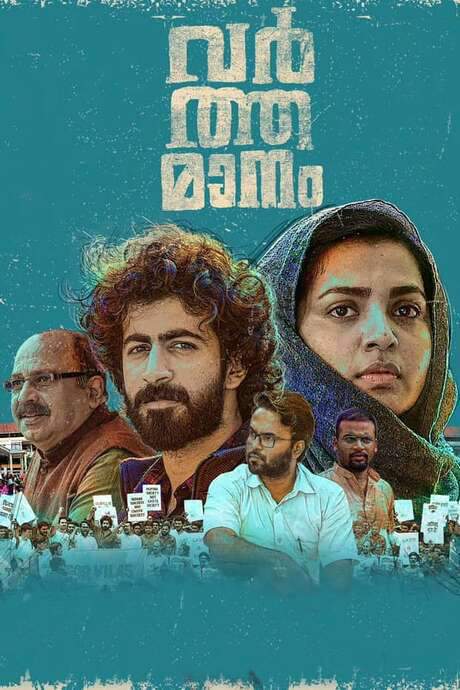
Varthamanam (2021) movie poster

Plot Summary

Varthamanam (2021) Plot Summary Explained

Release, runtime and language
2021 · 150 mins · Malayalam
Loading streaming availability…
Directed by
Sidhartha Siva
Starring
Roshan Mathew, Siddique, Parvathy Thiruvothu, Sanju Sivaram, Dain Davis, Adya Aurora

The film follows the experiences of students in northern districts facing displacement based on their religious affiliation. Forced off campus, they choose to resist, determined to challenge the situation. The narrative explores whether their struggle will spark a wider revolution and what challenges they will face along the way.

On this page (5)
  1. 1 Where to watch
  2. 2 What happens: full plot
  3. 3 Plot questions answered
  4. 4 Movie threads
  5. 5 Every angle
Loading streaming availability…

Full plot summary · contains spoilers

What Happens in Varthamanam: Full Plot Summary

The whole story of Varthamanam (2021) explained, from the opening scene to the final frame: every key event, every twist and what it all adds up to. Read it as a quick recap before the sequel, to check a scene you missed, or to finally understand what really happened.

Faiza Sufiya arrives at Delhi University as a research student, embarking on a study of Abdurahiman Sahib, a freedom fighter from Malabar. On campus she quickly crosses paths with Amal and a group of students who express their views with a clear and often sharp political stance. Her roommate, Tulsa, is from a Scheduled Caste and stands out as the first from her community to pursue higher education. The university campus becomes a stage for heated debate and marching protests, with Faiza and her friends rallying alongside those demanding rights for Rohan, another student from the same community who faces the system’s indifference.

Amid the bustle of classrooms and seminars, the students share moments of ordinary life as they attend Tulsa’s brother’s wedding, a brief respite from the charged atmosphere of campus politics. Yet the sense of impending conflict remains, because the activists are acutely aware of the rising anti-fascist pressure that threatens anyone who speaks out. When Faiza leads a seminar, the ideological fault lines on campus widen, and the fascists intensify their pressure.

The campus atmosphere shifts dramatically after a tragedy: Tulsa’s brother is killed in connection with a case involving cow protection, a incident that exposes the brutal consequences of bigotry and communal tension. The loss hits hard, and the students who have stood with Tulsa—led by Faiza and her circle—unite more closely to defend her and to honor the memory of her family. Their solidarity grows into a broader movement: they decide to stage a skit that highlights the hardships faced by marginalized communities, with the support of Pothuvaal. The plan is simple in aim but risky in execution: use the power of theater to educate and awaken their peers to injustice.

But the act of protest invites retaliation. The fascists attack the group by undermining their credibility and turning the campus against them, painting Faiza as an anti-nationalist and branding the whole effort as dangerous. Faced with mounting accusations and pressure, Faiza becomes the prime target, and the group finds themselves on the run to protect her reputation and safety. The situation escalates quickly: Faiza is arrested by the police, though the arrest is not officially recorded at first, and the truth of her detention begins to leak through the media and public attention.

With the help of Amal, Aadarsh, and Pothuvaal, along with Faiza’s grandfather—himself a freedom fighter—the circle fights to bring Faiza back into the light. The mass media’s spotlight forces the police to acknowledge what happened, and Faiza is produced in court, turning the case into a public struggle over the meaning of justice and the price of dissent. In a dramatic culmination, the fascists attempt to derail the skit at the last moment by arresting several of its participants. Despite their odds, Amal and Aadarsh carry on with the performance, and just as the show seems to be cut short, Faiza herself arrives at the stage. With calm resolve, she completes the skit, delivering a powerful final act that juxtaposes art and activism, truth and fear, in a moment that resonates beyond the campus.

The film closes on a note that underscores resilience in the face of intimidation. It is a story about how a diverse group of students, driven by justice and guided by memory—of freedom fighters and the generations that followed—uses culture and solidarity to challenge oppression. It paints a portrait of campus life where courage, friendship, and creative expression become instruments of resistance, reminding us that demonstrations of truth can endure even when the air is thick with hostility.
Last updated: October 01, 2025 at 10:25

Was this helpful?

Plot questions answered

Varthamanam Plot Explained: Your Questions Answered

The questions people ask most about Varthamanam (2021): what happens in the confusing scenes, why the characters do what they do, the twists, hidden details and what the ending means. Each answer contains spoilers.

Q1

Why was Tulsa's brother killed in the movie?

Tulsa's brother was killed in connection with a cow protection case. This tragic incident exposes the brutal consequences of bigotry and communal tension, showing how marginalized communities face violence based on religious prejudices. His death becomes a pivotal moment that deepens the students' resolve to challenge injustice.

Foreshadowing: Earlier campus tensions and the rising anti-fascist pressure hinted at the dangerous environment faced by students from minority communities.

  • tulsa brother death
  • cow protection violence
  • communal violence
  • student activism
Q2

Why was Faiza branded an anti-nationalist?

Faiza was targeted because she was a visible leader of the student protests advocating for marginalized communities. The fascists on campus needed a central figure to discredit, so they fabricated accusations labeling her anti-nationalist. This character assassination was a strategic attempt to undermine the entire movement and silence dissent by attacking its most prominent voice.

Foreshadowing: The fascists' opposition intensified after Faiza's seminar, which sparked strong reactions and marked a turning point in campus politics.

  • faiza arrest
  • anti-nationalist label
  • political persecution
  • student protest suppression
Q3

What was the skit the students planned and why was it significant?

The skit was a theatrical performance designed to highlight the hardships faced by marginalized communities in society. With support from Pothuvaal, the students used theater as a tool to educate their peers, provoke empathy, and mobilize campus opinion. Performing it became an act of cultural resistance, an attempt to awaken consciousness through art despite the danger of retaliation.

Foreshadowing: The decision to stage the skit emerged after Tulsa's brother's death, as the students sought a powerful way to honor her family and amplify their message.

  • skit performance
  • theater protest
  • student activism art
  • cultural resistance
Q4

How did media pressure lead to Faiza's release?

After Faiza's arrest was kept unofficial by police, her allies including Amal, Aadarsh, Pothuvaal, and her grandfather (a former freedom fighter) mobilized media attention. The widespread publicity forced the police to acknowledge her detention and produce her in court. This public struggle transformed her case into a broader debate about justice and dissent.

Foreshadowing: The group's coordinated effort to find Faiza and expose the truth mirrors the earlier campus activism that challenged authority.

  • media coverage
  • faiza court appearance
  • police custody
  • public pressure
Q5

Why were the fascist students opposed to the protests?

The fascist faction on campus represented oppressive forces that sought to silence voices advocating for marginalized communities. They opposed protests demanding rights for Rohan and other students from scheduled castes because these movements threatened their ideological dominance. Their resistance ranged from discrediting activists to orchestrating arrests, demonstrating how fascist elements within educational institutions work to maintain status quo power structures.

Foreshadowing: The ideological fault lines were visible from early campus debates, with the fascists growing more aggressive after Faiza's seminar.

  • fascist opposition
  • campus politics
  • student rights movement
  • marginalised community support
Q6

What role does Faiza's grandfather play in the story?

Faiza's grandfather is himself a freedom fighter from the generation of Abdurahiman Sahib, the historical figure she researches. He joins the effort to locate and rescue Faiza after her arrest, bringing his experience in resistance struggles. His involvement connects the present student movement to the legacy of historical freedom fighters, reinforcing the theme that the fight for justice spans generations.

Foreshadowing: Faiza's research on Abdurahiman Sahib establishes the connection between historical and contemporary activism from the beginning.

  • faiza grandfather
  • freedom fighter legacy
  • generational resistance
  • historical connection
Q7

Why was Rohan's case significant to the student movement?

Rohan was a student from a scheduled caste who faced the system's indifference due to his community background. His case became a rallying point for activists organizing protests for his rights. The movement to support Rohan represented the broader struggle of marginalized communities seeking equal treatment within the educational system, and it helped unite students around issues of social justice.

Foreshadowing: The protests for Rohan's rights occurred early in the film, establishing the political charged atmosphere that would escalate throughout the narrative.

  • rohan case
  • scheduled caste student
  • student rights
  • caste discrimination education
Q8

What motivated the students to continue protesting despite threats?

The students were driven by commitment to justice, solidarity with marginalized communities, and resistance against fascist oppression. The murder of Tulsa's brother deepened their resolve, transforming personal grief into collective action. Their shared values, friendship, and belief in using culture and creative expression as instruments of resistance sustained them through intimidation, arrests, and violence.

Foreshadowing: The narrative establishes early that the activists were acutely aware of rising anti-fascist pressure yet chose to speak out anyway.

  • student courage
  • protest motivation
  • solidarity movement
  • resistance spirit
Q9

How did completing the skit despite arrests represent a victory?

Even though the fascists orchestrated last-minute arrests of several skit participants to derail the performance, Amal and Aadarsh carried on with a partial performance. When Faiza arrived on stage mid-performance and completed the skit, it symbolized that oppression cannot silence truth. The successful completion demonstrated resilience, collective action, and the power of art to overcome fear, making the skit's finish a triumphant moment.

Foreshadowing: The buildup to the skit, the planning with Pothuvaal, and the group going on the run all led to this climactic moment of defiance.

  • skit completion
  • faiza stage
  • protest victory
  • resilience symbolism
Q10

Why did the campus become a battleground between activists and fascists?

The Delhi University campus reflected broader societal divisions in India. Students from marginalized communities like Tulsa and Rohan faced systemic indifference and violence. When politically active students organized protests demanding their rights, fascists on campus viewed this as a threat to their ideology. The campus thus became a microcosm of larger national conflicts between oppressive forces and those resisting injustice.

Foreshadowing: The film establishes early that Faiza's seminar sparked reactions that widened ideological fault lines on campus.

  • campus politics
  • university activism
  • ideological conflict
  • social division education

Movie threads

More Movies Like Varthamanam, by Mood & Story

Curated lists built around what makes Varthamanam tick: the same mood, the same kind of story or the same emotional payoff. Each list explains why these movies belong together.

Defiant student movement movies like Varthamanam

Stories of student activists risking everything to challenge powerful, unjust systems. If you liked Varthamanam, explore more movies about student activism and political resistance. These films share a tense, high-intensity mood, featuring young protagonists who organize against oppressive systems, facing threats and personal tragedy while building movements of solidarity and hope.

  • urgent
  • tense
  • defiant
  • hopeful
  • oppressive
  • anxious
  • Tone: tense, defiant, hopeful
  • Pacing: steady, escalating
Why these movies?

The story pattern: Stories in this thread typically follow a group of students who become politically awakened by injustice. The narrative escalates from initial protests to severe retaliation from authorities, often involving personal loss and imprisonment, culminating in a defiant, public act of resistance that tests their resolve but reaffirms their cause.

Why they belong together: These films are grouped by their core conflict: youthful idealism clashing with rigid, oppressive power structures. They share a consistently high emotional weight and tense tone, driven by the urgent, high-risk nature of the protagonists' activism and the heavy theme of fighting for justice against overwhelming odds.

Movies about hope after tragedy like Varthamanam

Characters endure profound personal tragedy but find strength in collective action. For viewers who appreciated the emotional journey of Varthamanam, this section collects films that balance heavy themes of loss and trauma with an ultimately hopeful and resilient ending. These movies explore how personal tragedy can fuel a collective fight for a better future.

  • resilient
  • hopeful
  • tragic
  • tense
  • cathartic
  • solidarity
  • Tone: heavy, tense, ultimately hopeful
  • Pacing: steady, character-driven
Why these movies?

The story pattern: The narrative pattern involves a triggering personal tragedy that deepens the protagonist's commitment to a larger cause. The story navigates the raw pain of loss while methodically building towards a cathartic act of resistance or healing, proving that hope can persist even in the darkest of times.

Why they belong together: These films are united by their specific emotional arc: they subject characters to immense sorrow but ultimately celebrate the human capacity for resilience and hope through unity. The shared experience is one of enduring heavy emotional weight while being carried forward by a steady, determined pace towards a meaningful, positive resolution.

Every angle

Varthamanam (2021) Explained: Plot, Timeline & Characters

Everything about Varthamanam in one place: what happens in the plot summary, the timeline in chronological order, the characters and meaning and a spoiler-free summary. What's After the Movie adds the cast, box office and post-credit scenes.

Coming soon on iOS and Android

The Plot Explained Movie Summary App

Plot summaries, endings explained and timelines on your phone. Catch up on any movie in minutes, save your favorites and never miss a twist again.

Be the first to know when we launch. Your email stays private, always.

Learn more about the app