Plot Explained Spoilers guaranteed!
Plot Explained

Browse by genre

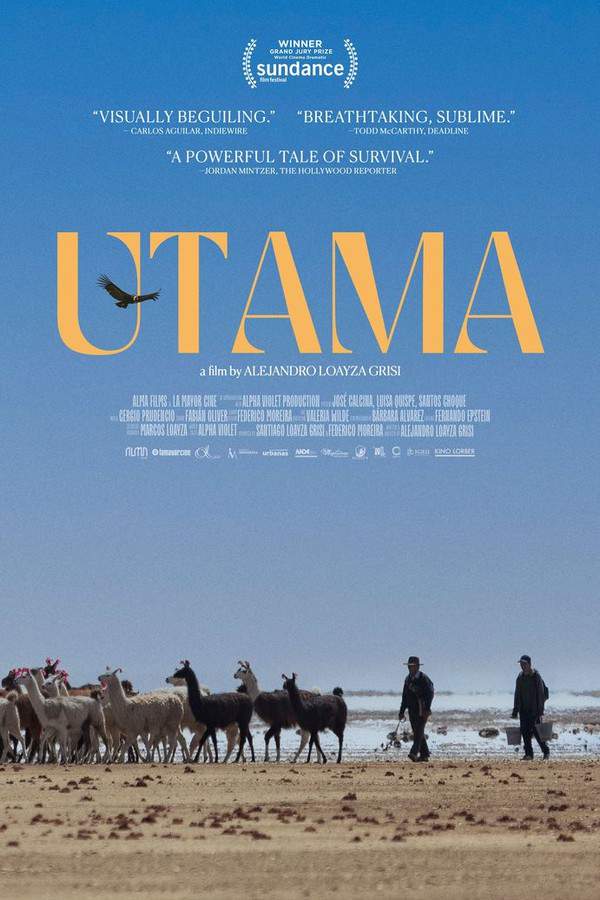
Utama (2022) movie poster

Plot Summary

Utama (2022) Plot Summary Explained

Release, runtime and language
2022 · 87 min · Spanish
Echo score 77
Loading streaming availability…
Directed by
Alejandro Loayza Grisi
Starring
Candelaria Quispe, Félix Ticona, Jorge Yucra Nogales, José Calcina, Juan Carlos Calcina, Luisa Quispe

In Bolivia’s arid highlands, a Quechua couple, Virginio and Sisa, grapple with a severe drought that threatens their traditional way of life. Faced with the possibility of losing everything, they must decide whether to stay and fight for their land or move to the city to be with family. Their grandson, Clever, arrives with unsettling news about the environmental damage plaguing the region, forcing them to confront issues of cultural identity and the challenges of survival.

On this page (6)
  1. 1 Where to watch
  2. 2 What happens: full plot
  3. 3 Plot questions answered
  4. 4 Movie threads
  5. 5 Movies like Utama
  6. 6 Every angle
Loading streaming availability…

Full plot summary · contains spoilers

What Happens in Utama: Full Plot Summary

The whole story of Utama (2022) explained, from the opening scene to the final frame: every key event, every twist and what it all adds up to. Read it as a quick recap before the sequel, to check a scene you missed, or to finally understand what really happened.

An elderly couple, fluent in Quechua, resides in the Altiplano, an arid high plateau amidst the majestic Andes. The sick Virginio, portrayed by José Calcina, is aware that his days are numbered and chooses to conceal his deteriorating health from his devoted wife, Sisa, played by Luisa Quispe. Their enduring bond is reflected in the rich tapestry of their shared experiences, spent primarily tending to their llamas. Nestled within the embrace of towering mountains, Virginio often gazes sorrowfully at the sky, desperately yearning for rain.

As the parched earth remains unforgiving and their village well runs dry, Sisa embarks on a daily trek to the river—an arduous journey frequented by women from neighboring communities who flock to the last remaining spring. One fateful day, their grandson Clever, portrayed by Santos Choque, pays them a visit, bringing tidings from the city. During this encounter, the elderly couple engages in a conspicuous argument in their native Quechua, while Clever attempts to bridge the gap by conversing with them in Spanish. His intention is clear: he wants his grandparents to abandon their rural life and relocate to the city, where the ailing Virginio can receive necessary medical attention.

In a poignant moment, Clever and Virginio venture into the mountains alongside other villagers to perform a ritual aimed at invoking rain. However, after the ceremony, the villagers become frustrated as they deliberate the ongoing drought, with many contemplating a move to the city as a potential solution. During one of his days of herding, Virginio tragically collapses. Clever discovers him and hurriedly brings him back to a distressed Sisa, who implores Virginio to reveal the truth behind his mysterious cough. Caught in a web of concern for his beloved wife, Virginio fears leaving Sisa alone and would prefer her to join him in the afterlife rather than uproot her to the city.

An argument ensues between Clever and Virginio, highlighting the tension between their desires and fears, leading to Clever storming out of the village. Yet, he soon returns with a doctor in tow, who attempts to persuade Virginio to seek treatment in the city. Despite the mounting pressure, Virginio stoically declines, choosing to remain silent about his impending death. In the shadows of his life, he encounters poignant reminders of mortality: a dehydrated llama, a soaring condor, and the bittersweet news that Clever is about to become a father—a revelation he overhears.

In a touching farewell, Virginio discreetly prepares a tin box that holds precious photos and tokens of gold for Clever. The day before he peacefully succumbs in his sleep, he bestows this box—and his cherished hat—upon Clever. At Virginio's funeral, the neighboring villagers gather to pay their respects, marking the end of an era. As Clever prepares to return to the city, he exchanges heartfelt goodbyes with Sisa, who requests that he visit her often. Left to face her solitude, the widowed Sisa tends to the llamas under a dramatically thunderous sky, a testament to the resilience of life amidst loss.
Last updated: December 03, 2024 at 14:27

Was this helpful?

Plot questions answered

Utama Plot Explained: Your Questions Answered

The questions people ask most about Utama (2022): what happens in the confusing scenes, why the characters do what they do, the twists, hidden details and what the ending means. Each answer contains spoilers.

Q1

Why does Virginio hide his illness from Sisa?

Virginio conceals his terminal illness from Sisa because he fears leaving her alone. He would rather have her join him in death than force her to uproot her life and move to the city alone. His love for her drives him to protect her from the painful knowledge of his impending death, even as his health rapidly deteriorates.

Foreshadowing: Earlier, Virginio gazes sorrowfully at the sky yearning for rain, hinting at his deeper resignation to fate.

  • virginio illness
  • dying alone
  • love and sacrifice
  • elderly couple
Q2

Why does Virginio refuse to go to the city for treatment?

Virginio refuses treatment because he prioritizes dying on his ancestral land over extending his life in the city. He has lived his entire life on the Altiplano tending his llamas, and leaving would mean abandoning everything he knows. His refusal represents a deeper choice to maintain dignity and connection to his homeland rather than accept a life disconnected from his roots.

Foreshadowing: The ritual for rain shows Virginio's deep ties to his land and community.

  • treatment refusal
  • homeland
  • traditional life
  • dignity in death
Q3

Why does Clever want his grandparents to move to the city?

Clever wants his grandparents to relocate because he worries about Virginio's health and wants the ailing old man to receive proper medical care in the city. Additionally, the drought has made their traditional way of life increasingly difficult, and Clever likely believes urban living would provide better opportunities and security for his aging grandparents.

Foreshadowing: The village well running dry foreshadows the economic and environmental pressures driving younger generations to cities.

  • clever
  • city life
  • drought
  • generational conflict
  • medical care
Q4

What is the tin box Virginio gives to Clever?

The tin box is Virginio's inheritance gift to his grandson. It contains precious photos and bits of gold that Virginio has saved over his lifetime. By giving this to Clever before his death, Virginio passes on his legacy, blessings, and love, symbolizing the continuation of family bonds across generations even after he is gone.

Foreshadowing: Virginio overhears that Clever is about to become a father, making the inheritance preparation emotionally significant.

  • inheritance
  • tin box
  • gold
  • family legacy
  • passing down
Q5

Why does the film end with rain after Virginio dies?

The rain that comes after Virginio's death represents the cycle of life and death continuing despite loss. It fulfills the couple's long-held hope for rain to save their land, arriving too late for Virginio but offering renewal for Sisa. The thundering sky symbolizes nature's indifference and its eventual mercy, while Sisa's resilience under this rain shows life persisting even through profound grief.

Foreshadowing: Virginio's desperate gaze toward the sky hoping for rain establishes this theme throughout the film.

  • rain
  • death and renewal
  • ending symbolism
  • cycle of life
  • bittersweet ending
Q6

What is the significance of Virginio giving his hat to Clever?

Virginio's hat represents his identity and role as the family patriarch and shepherd. By giving it to Clever, Virginio symbolically passes on his responsibilities and blessings to the next generation. This act marks Clever as the inheritor of the family's legacy, connecting the younger generation to their ancestral heritage despite the cultural divide between them.

Foreshadowing: The hat exchange occurs alongside the tin box preparation, showing Virginio's deliberate planning for his passing.

  • hat
  • passing of responsibility
  • patriarch
  • legacy
  • blessing
Q7

Why do the villagers debate leaving for the city after the rain ritual?

After the rain ritual fails, villagers become frustrated and debate moving to the city because the drought has made their traditional lifestyle unsustainable. The ritual's failure symbolizes the broader environmental collapse forcing indigenous communities to abandon ancestral lands. This reflects the central conflict between preserving traditional rural life and accepting modern urban alternatives for survival.

Foreshadowing: Sisa's daily trek to distant springs already shows the severity of the water crisis.

  • drought
  • urbanization
  • tradition vs modernity
  • environmental collapse
  • village exodus
Q8

What do the condor and dehydrated llama represent in the film?

The condor and dehydrated llama are motifs representing death and the natural cycle of life in Andean culture. Virginio encounters these symbols as he nears death, reinforcing his awareness of mortality. The condor, a sacred bird in Andean tradition, often symbolizes death and the transition between worlds. The dying llama reflects the harsh environment claiming life, paralleling Virginio's own decline.

Foreshadowing: These death encounters occur after Virginio collapses, signaling his approaching end.

  • condor
  • llama
  • death symbolism
  • Andean culture
  • nature symbolism
Q9

Why does Sisa choose to stay in the village after Virginio's death?

Sisa chooses to remain on the Altiplano because this land represents her entire life and identity. Like Virginio, she cannot imagine abandoning her home and llamas for an unfamiliar city life. Her decision to stay demonstrates the deep-rooted connection indigenous people have to their ancestral lands, choosing solitude and tradition over displacement and modernity.

Foreshadowing: Throughout the film, Sisa consistently tends to her duties despite hardships, showing her unwavering commitment to her way of life.

  • sisa staying
  • widowed
  • ancestral land
  • indigenous identity
  • resilience
Q10

Why is the Quechua language conflict between Clever and his grandparents significant?

The language barrier represents the cultural disconnect between generations. While Virginio and Sisa speak only Quechua, Clever communicates with them in Spanish and acts as a mediator. This reflects how modernization and urbanization cause younger generations to abandon indigenous languages and traditions. The argument in Quechua between the elderly couple shows their cultural identity remains intact, even as external forces pressure them to change.

Foreshadowing: Clever's attempts to speak Spanish with them highlight his distance from their traditional lifestyle.

  • quechua
  • language barrier
  • cultural identity
  • generational divide
  • indigenous culture
Q11

Why does Virginio collapse while herding in the mountains?

Virginio collapses because his illness has progressed significantly, and the physical exertion of herding in the harsh high-altitude environment becomes too much for his deteriorating body. This moment marks the turning point where his condition can no longer be hidden, forcing Clever to confront the severity of his grandfather's health and accelerating the film's emotional climax.

Foreshadowing: Virginio's persistent cough has been present throughout, and his weakened state is evident in his difficulty performing daily tasks.

  • collapse
  • illness progression
  • herding
  • health decline
  • mountain scene

Movie threads

More Movies Like Utama, by Mood & Story

Curated lists built around what makes Utama tick: the same mood, the same kind of story or the same emotional payoff. Each list explains why these movies belong together.

Meditative cultural survival movies like Utama

Quiet, reflective stories about communities holding onto ancestral ways of life. If you appreciated the quiet reverence and cultural depth of Utama, this list features similar movies like Utama. These are slow-paced, atmospheric dramas that explore themes of cultural identity, tradition, and survival against the pressures of modernization and environmental change.

  • meditative
  • solemn
  • atmospheric
  • nostalgic
  • resilient
  • cultural
  • Tone: melancholic, solemn, reflective
  • Pacing: slow, meditative, atmospheric
Why these movies?

The story pattern: Narratives in this thread often center on a specific community, family, or individual whose ancestral way of life is under threat. The conflict is usually environmental, societal, or generational. The plot follows their daily rhythms and struggles, emphasizing quiet perseverance over dramatic action, and culminates in a poignant reflection on loss and endurance.

Why they belong together: These films are grouped together because they share a profound respect for cultural specificity, a meditative and often melancholic tone, and a focus on the quiet drama of survival. They prioritize atmosphere and emotional authenticity over complex plotting, creating a deeply immersive and reflective viewing experience.

Movies about endurance in harsh landscapes like Utama

Stories of human resilience set against vast, unforgiving environments. For viewers who were captivated by the Altiplano's stark beauty in Utama, this thread collects similar movies like Utama. These films feature powerful, almost antagonistic natural settings where characters face a battle for survival, leading to bittersweet and emotionally resonant conclusions.

  • lonely
  • atmospheric
  • resilient
  • solemn
  • harsh beauty
  • meditative
  • Tone: melancholic, bittersweet, solemn
  • Pacing: slow, contemplative, immersive
Why these movies?

The story pattern: The narrative pattern follows characters, often isolated or elderly, as they confront a direct threat from their natural surroundings—be it drought, cold, or isolation. The central journey is one of pure endurance, testing the limits of the human spirit. The endings often acknowledge loss and hardship but find a sliver of hope in the characters' unbroken will or the enduring beauty of the land itself.

Why they belong together: These movies share a symbiotic relationship between character and setting, where the landscape dictates the pace and mood of the story. They are united by a slow, contemplative pace that allows the environment to breathe, a melancholic tone born of struggle, and a bittersweet emotional core that balances heaviness with resilience.

If you liked this

Movies Like Utama

Similar movies to Utama: the same genre, themes or kind of story. Each one comes with its own plot summary, timeline and ending explained.

Browse all movie summaries

Every angle

Utama (2022) Explained: Plot, Timeline & Characters

Everything about Utama in one place: what happens in the plot summary, the timeline in chronological order, the characters and meaning and a spoiler-free summary. What's After the Movie adds the cast, box office and post-credit scenes.

Coming soon on iOS and Android

The Plot Explained Movie Summary App

Plot summaries, endings explained and timelines on your phone. Catch up on any movie in minutes, save your favorites and never miss a twist again.

Be the first to know when we launch. Your email stays private, always.

Learn more about the app