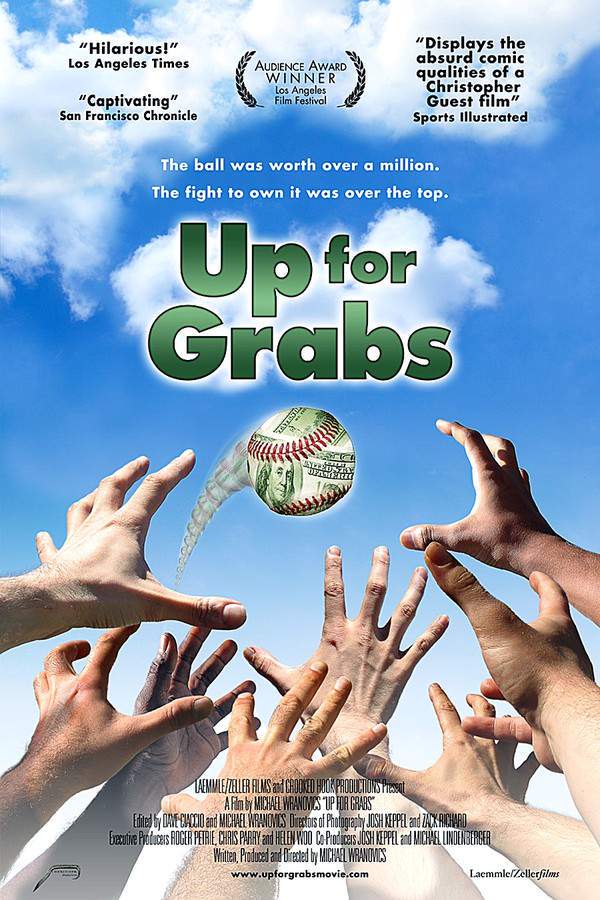
Up for Grabs is a witty, 88-minute mockumentary that uses a real-life baseball moment to spotlight the people and personalities tangled in a high-stakes relic of sports history. The story centers on Barry Bonds’ record-setting 73rd home run of the 2001 season, a ball that rockets into the right-field bleachers at PacBell Park in San Francisco and becomes the spark for a far-reaching comedy of manners.
As the ball lands in the crowd, a frenzied scramble erupts. Amid the chaos, Patrick Hayashi stands apart with a sheepish grin, quietly observing the melee while the pile of fans swirls around him. He eventually lifts the ball up for a TV camera, revealing that he has secured the precious keepsake. Security moves in quickly, escorting him to the bowels of the ballpark to authenticate the find and confirm that this is indeed the famed #73.
The narrative quickly widens its lens to include competing claims that expose the film’s central tension. Alex Popov, owner of Smart Alec’s restaurant in Berkeley, loudly proclaims that he caught the ball on the fly and accuses Hayashi of stealing it from the bottom of the scrum. Compelling video footage captured by a local news team appears to show the ball landing in Popov’s glove, providing a critical piece of evidence that propels the story toward a San Francisco Superior Court trial.
What unfolds on screen is not a straight documentary about the ball’s journey but a textured social satire that follows the people around the event. The film traces the arc from the moment the ball leaves the bat through the courtroom proceedings and toward a dramatic auction, where the ball ultimately changes hands to the highest bidder. Rather than merely recounting a famous baseball moment, the film shifts focus to the quirks, ambitions, and rivalries of the individuals who become entwined in its legend.
Styled as a playful homage to Christopher Guest’s mockumentaries—Waiting for Guffman, Best in Show, and others—Up for Grabs leans into character-driven humor and intricate dynamics more than the event itself. The result is a portrait of a media-saturated world where a single baseball can illuminate fame, fortune, and the peculiar human foibles that surface under bright lights and bright cameras. The film treats its subject with a steady, observational calm, inviting the audience to consider how a simple souvenir can become a symbol of much larger dramas without losing sight of its campy, affectionate core.