Plot Explained Spoilers guaranteed!
Plot Explained

Browse by genre

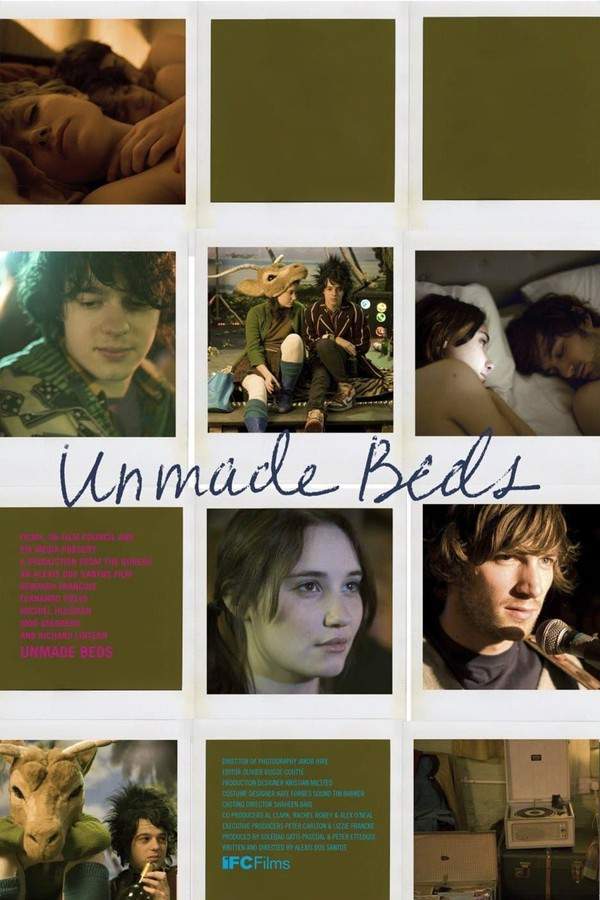
Unmade Beds (1976) movie poster

Timeline

Unmade Beds (1976) Timeline Explained – Every Event in Order

Release, runtime and language
1976 · 77 mins · English
Loading streaming availability…
Directed by
Amos Poe
Starring
Robert Gordon, Patti Astor, Debbie Harry, Eric Mitchell, Duncan Hannah, Kitty Sondern

The debut feature from Poe unfolds in a loosely sketched style that mirrors its protagonist, Rico, a self‑styled loner drifting through 1976 New York while dreaming of the mid‑60s Paris New Wave scene. As an unsuccessful photographer, he wanders daily, yearning for genuine connection even as his dialogue drips with inauthentic prose.

On this page (6)
  1. 1 Where to watch
  2. 2 Events in order (10)
  3. 3 Timeline questions answered
  4. 4 Movie threads
  5. 5 Movies like Unmade Beds
  6. 6 Every angle
Loading streaming availability…

10 events in order · contains spoilers

Unmade Beds Timeline: Events in Chronological Order

Every key event of Unmade Beds (1976) in order, scene by scene, with when and where it takes place. Use it to untangle flashbacks, time jumps and parallel storylines, to refresh your memory before the sequel or to find the exact scene you are thinking of.

  1. Rico's Paris dream and NYC boredom

    Rico is a bored, hard-drinking photographer in New York City who craves a Parisian artistic life. He sees his camera as a weapon, loading it with 'bullets of film' to shoot memories and fantasies rather than people. His longing for romance and meaning threads through the opening scenes as he wanders the city.

    Where
    New York City
  2. Love hunting and street encounters

    As Rico searches for affection and artistic validation, he has several fleeting encounters with women that hint at his restless pursuit of connection. Each meeting brushes up against his French fantasies and his desire for something more meaningful. The scenes foreground his charm and vulnerability in the urban setting.

    Where
    New York City
  3. Debt and the search for Angel

    Rico presses a stranger on a street corner for the location of Angel, the name of his dead dog, in a bid to settle the debt he owes to vague criminal associates. The moment underscores the danger dogging his romantic and artistic adventures. A shadowy pressure from the underworld starts to close in.

    Where
    New York City street
  4. The shooting upends the scene

    Before the search for Angel can resolve into safety, Rico is shot, an event that abruptly interrupts his wandering and drags the film into a grimmer reality. The act of violence propels the story into the hands of new players who will take over the plot. The incident marks a turning point in the narrative.

    Where
    New York City streets
  5. Introduction of Paul Orsalino and Jeanne Moreau

    Paul Orsalino and Jeanne Moreau enter the story, shifting the focus from Rico's isolated wanderings to a new dynamic. Their presence reshapes the plot as romance and memory begin to intertwine with the film's frame. The tone becomes more stylized and self-referential.

    Where
    New York City
  6. A scene of love between new leads

    Paul and Jeanne stage a love scene that foregrounds performance and interplay between memory and desire. It serves as a bridge to the film's flashback structure, inviting the audience to piece together Rico's fate. The scene blurs the lines between fiction and memory.

    Where
    New York City
  7. Flashback sequence begins

    The narrative shifts into flashbacks, returning to Rico and weaving his past with the events from the present. The sequence reintroduces Rico within a new montage that blends images, dialogue, and mood. Viewers are invited to reconstruct the timeline from remembered moments.

  8. End of the flashback: still photographs

    The film cycles to still black-and-white photographs of Rico and Paul, accompanied by their dialogue and somber piano music. The montage functions as a lyrical coda, compressing the story into static memories. It emphasizes themes of memory, longing, and the fragility of time.

  9. Return to present: Rico's refrain

    The screen returns to the present film with Rico whistling and singing One for My Baby (and One More for the Road). The moment ties the memory back to the current narrative voice and mood. It hints at the ongoing pull of nostalgia and longing.

  10. Final gangster-play on an East Village fire escape

    Jeanne and Paul lavishly perform as gangsters on an East Village, Manhattan fire escape, lending the finale a stylized noir flourish. The scene frames the characters in bravado and parody, contrasting with Rico's earlier vulnerability. The film closes on a bold, theatrical image.

    Where
    East Village, Manhattan

Last updated: February 18, 2026 at 23:46

Was this helpful?

Timeline questions answered

Unmade Beds Timeline Explained: Your Questions Answered

When does it happen, and why in that order? The questions people ask about the chronology of Unmade Beds (1976): time jumps, flashbacks, cause and effect between scenes and the correct order of events, each answered with spoilers.

Q1

Why is Rico looking for Angel if the dog is dead?

Rico uses Angel as a pretense to locate someone who owes him money or can connect him to his criminal associates. The dead dog serves as a cover story, asking a stranger for directions to find a deceased pet raises less suspicion than admitting he's trying to track down debtors. His vague criminal associates have closed in on him, and this desperate search ultimately leads to his shooting.

Foreshadowing: Earlier scenes establish Rico's mounting pressure from underworld figures, with his wandering lifestyle masking growing danger.

  • rico
  • angel dog
  • debt
  • criminal associates
  • shot
Q2

Why is Rico shot while searching for Angel?

Rico is shot because his inquiry draws attention from dangerous people. When he presses a stranger for the location of Angel, he inadvertently puts himself in a vulnerable position. The strangers he approaches may have connections to the criminal associates he owes money to, making the act of asking around itself a fatal mistake.

Foreshadowing: The timeline notes the shadowy underworld pressure closing in on Rico before the shooting occurs.

  • rico
  • shot
  • shooting
  • angel
  • street
Q3

Why does the film shift focus to Paul and Jeanne after Rico is shot?

The shooting marks a narrative turning point where the film literally passes the plot to new protagonists. This structural choice reflects the film's theme of artistic disconnection, Rico's story ends violently, and his artistic fantasy gives way to Paul and Jeanne who take over the narrative. The shift also enables the flashback sequence that follows, allowing the film to explore Rico's past through their perspective.

Foreshadowing: The introduction of Paul and Jeanne in timeline item 5 precedes the shooting, signaling they will become central to the story's continuation.

  • paul Orsalino
  • jeanne moreau
  • narrative shift
  • protagonist change
Q4

What does the ending scene with Paul and Jeanne on the fire escape mean?

The final scene shows Paul and Jeanne performing as gangsters on a Manhattan fire escape, which functions as a stylized noir parody. This theatrical play contrasts sharply with Rico's earlier vulnerability and violent end. The performative nature of their gangster game reflects the film's broader exploration of inauthenticity, characters act out fantasies rather than living genuine lives. It also returns the narrative to the present after the extended flashback, closing on an image of playful performance rather than resolution.

Foreshadowing: Earlier dialogue establishes Rico's penchant for inauthentic prose and fantasy, setting up this final display of performed identity.

  • fire escape
  • paul
  • jeanne
  • ending
  • gangster
  • performance
Q5

Why does Rico owe money to criminal associates?

The film keeps the exact nature of Rico's debt vague, reflecting his overall sense of aimless drift and poor life decisions. As a struggling photographer who treats his work as artistic pursuit rather than profession, he has likely accumulated debts through的生活方式 choices. The criminal associates represent the consequences of his inauthentic living, his fantasy of artistic freedom has entangled him with dangerous real-world creditors.

Foreshadowing: The opening scenes establish Rico's hard-drinking, wandering lifestyle with no clear financial stability.

  • rico
  • debt
  • criminal
  • money
  • associates
Q6

What is the significance of Rico treating his camera as a weapon?

The metaphor of loading his camera with 'bullets of film' to shoot memories and fantasies positions photography as Rico's form of aggression and control in an otherwise powerless existence. Rather than using actual violence, he captures moments as if conquering them. This reflects his frustrated artistic ambition, he wants to possess meaningful experiences but lacks the means or courage to engage with reality directly. The weapon imagery also foreshadows the literal violence that ultimately finds him.

Foreshadowing: The opening establishes Rico's camera as his primary tool for chasing an artistic reality he cannot otherwise attain.

  • rico
  • camera
  • weapon
  • photography
  • metaphor
Q7

Why does Rico want to live in Paris so badly?

Rico dreams of Paris because he associates it with the French New Wave artistic movement and a more authentic creative existence. His life in 1976 New York feels empty, he's a bored photographer going through motions rather than living meaningfully. Paris represents the romantic ideal of artistic freedom and bohemian identity that his current existence lacks. His inauthentic dialogue and constant yearning suggest he's chasing an aesthetic rather than genuine connection, making his Paris fantasy itself part of his disconnection from reality.

Foreshadowing: The opening establishes Rico's longing for romance and meaning as central to his character before any specific details emerge.

  • rico
  • paris
  • artistic dream
  • french new wave
  • yearning
Q8

What is the purpose of the flashback structure in the film?

The flashback structure allows the film to explore Rico's past and loves after his story appears to conclude with the shooting. By shifting to Paul and Jeanne, who initiate a love scene that becomes a bridge to memory, the film creates space for retrospective exploration. The still black-and-white photographs that follow function as a lyrical coda, compressing the story into static memories. This structure reflects the film's themes of memory, longing, and the fragility of time, Rico's life becomes something to be looked back on rather than lived forward.

Foreshadowing: The transition from the love scene to flashback is signaled by the changing tone and the shift toward memory and mood.

  • flashback
  • memory
  • structure
  • narrative
  • retrospective
Q9

What is the significance of Rico whistling 'One for My Baby' at the end?

Rico whistling and singing 'One for My Baby (and One More for the Road)' as the film returns to the present creates a sense of ongoing longing and nostalgia. The song, a classic barroom ballad about drowning sorrows, reinforces Rico's character as a man drowning in fantasy while reality passes him by. The refrain 'One for My Baby' connects to his endless pursuit of affection and meaning. The return to this musical moment after the flashback sequence ties memory to the present mood, suggesting his yearning persists beyond the narrative events.

Foreshadowing: The earlier scenes establish Rico's persistent longing for connection and meaning as his defining emotional state.

  • rico
  • song
  • whistling
  • ending
  • nostalgia
  • one for my baby
Q10

Who are Paul Orsalino and Jeanne Moreau in the story?

Paul Orsalino and Jeanne Moreau appear as new characters who take over the narrative after Rico's shooting. Paul, played by Eric Mitchell, and Jeanne, played by Patti Astor, become the focus of a charged love scene that bridges into the film's flashback sequence. Their relationship represents a shift from Rico's isolated wandering to a more dynamic interpersonal dynamic. They serve as both romantic leads and the audience through which Rico's past is remembered, making them vehicles for the film's retrospective mode.

Foreshadowing: Their introduction in timeline item 5 precedes the love scene that triggers the flashback structure.

  • paul Orsalino
  • jeanne moreau
  • love scene
  • relationship
  • new protagonists

Movie threads

More Movies Like Unmade Beds, by Mood & Story

Curated lists built around what makes Unmade Beds tick: the same mood, the same kind of story or the same emotional payoff. Each list explains why these movies belong together.

Meditative urban drifters like Unmade Beds

Quiet stories of aimless souls wandering through cityscapes, searching for connection. A collection of movies like Unmade Beds that capture the quiet, aimless wandering of artistic souls in the city. If you enjoyed the melancholic mood and loose narrative following a loner through 1970s New York, you'll find similar low-intensity character studies here.

  • melancholic
  • aimless
  • introspective
  • urban
  • dreamlike
  • observational
  • Tone: melancholic, introspective
  • Pacing: slow, meandering
Why these movies?

The story pattern: Narratives in this thread tend to be loosely structured, mirroring the protagonist's lack of direction. The journey is internal and emotional, driven by small moments of observation and fleeting interactions rather than a traditional plot. Endings are often ambiguous, leaving the character's search for meaning unresolved.

Why they belong together: These movies are grouped by their shared focus on mood and atmosphere over complex plotting. They feature protagonists who are observers of life, often artists or dreamers, navigating urban environments with a sense of disconnection. The viewing experience is defined by a slow, melancholic, and dreamlike quality.
Movies about artists and their fantasies like Unmade Beds

Films exploring the gap between artistic dreams and mundane reality. Discover films similar to Unmade Beds that explore the world of artistic longing. If you liked the theme of a photographer dreaming of a more romantic Parisian life while adrift in New York, this thread features other stories about the gap between creative fantasy and reality.

  • artistic
  • daydreaming
  • unrequited love
  • nostalgic
  • introspective
  • romantic
  • Tone: nostalgic, bittersweet
  • Pacing: slow, character-driven
Why these movies?

The story pattern: The narrative follows a character whose rich inner world of artistic fantasy clashes with their external, often mundane, life. The plot may be loose, focusing on the character's internal struggles with authenticity, unrequited love, and the desire for a more meaningful existence. The resolution often leaves the tension between dream and reality open-ended.

Why they belong together: These films share a thematic core about the artistic temperament and the loneliness that can accompany a life of observation and creation. They feature protagonists who are more comfortable in their fantasies than in real-world connections, creating a specific mood of romantic melancholy and gentle sadness.

If you liked this

Movies Like Unmade Beds

Similar movies to Unmade Beds: the same genre, themes or kind of story. Each one comes with its own plot summary, timeline and ending explained.

Browse all movie summaries

Every angle

Unmade Beds (1976) Explained: Plot, Timeline & Characters

Everything about Unmade Beds in one place: what happens in the plot summary, the timeline in chronological order, the characters and meaning and a spoiler-free summary. What's After the Movie adds the cast, box office and post-credit scenes.

Coming soon on iOS and Android

The Plot Explained Movie Summary App

Plot summaries, endings explained and timelines on your phone. Catch up on any movie in minutes, save your favorites and never miss a twist again.

Be the first to know when we launch. Your email stays private, always.

Learn more about the app