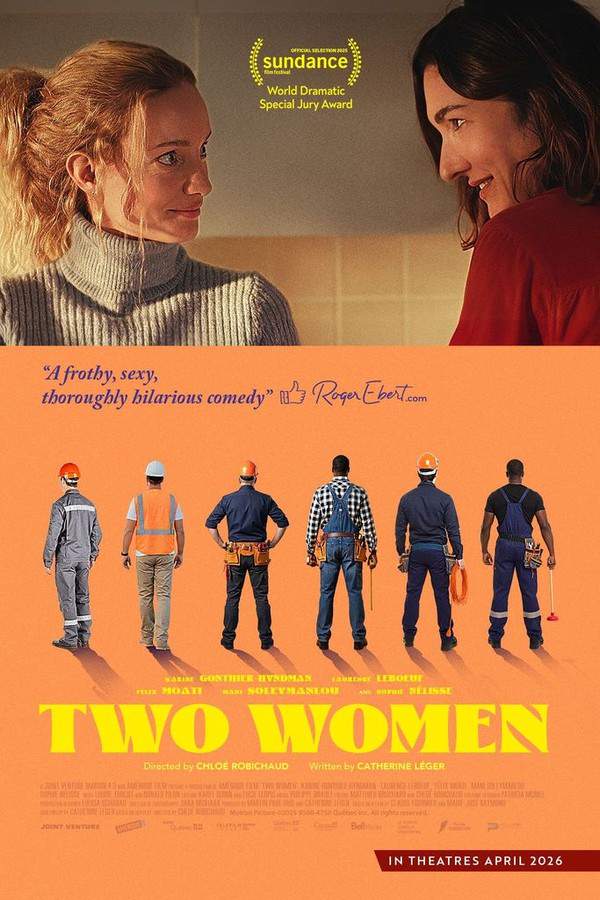
Violette struggles through a fraught maternity leave while Florence battles depression. Both women, despite successful careers and families, feel like failures. Florence’s first act of infidelity forces her to confront hidden desires, and when pleasure is no longer a priority, an affair with a delivery driver becomes a radical act of self‑discovery.
Warning: spoilers below!
Haven’t seen Two Women yet? This summary contains major spoilers. Bookmark the page, watch the movie, and come back for the full breakdown. If you're ready, scroll on and relive the story!
Trace every key event in Two Women (2026) with our detailed, chronological timeline. Perfect for unpacking nonlinear stories, spotting hidden connections, and understanding how each scene builds toward the film’s climax. Whether you're revisiting or decoding for the first time, this timeline gives you the full picture.
Last updated: May 05, 2026 at 10:08
Find frequently asked questions about the Two Women (2026) timeline, including chronological order, nonlinear jumps, cause-and-effect links, and scene sequence clarifications. This timeline FAQ helps explain when key events happen, how moments connect, and why the story unfolds in that specific order.
Violette asks Florence about the mysterious crow noise because she's searching for any sign of life or excitement in her monotonous routine. The crow's cry represents something out of the ordinary in her otherwise sexless marriage and repetitive days caring for her daughter. When Florence denies it, Violette wonders if she's missing out on something, a moment that plants the seed for her later sexual awakening.
The crow sound initially seems like mere background noise but becomes a symbol of the women's eventual break from their routine lives.
Florence stops taking antidepressants because she wants to feel more alive and adventurous, believing her medication is dampening her emotions and desires. She explicitly tells Violette she wants to become bolder and experience life fully. This decision directly leads to her fling with a handyman and her impulsive behavior at the bar where she cuts her wrist.
Stopping antidepressants sets the stage for Florence's radical transformation and her influence on Violette's choices.
Violette stops breastfeeding as a symbolic act of reclaiming her identity beyond motherhood. Following Florence's lead, she wants to explore her own desires and sexuality rather than continuing to define herself solely through caring for her daughter. This decision marks her first concrete step toward the sexual experiments she undertakes with Florence.
The choice to stop breastfeeding directly enables Violette's sexual awakening and the changes in her marriage.
David secretly takes Florence's antidepressants because he wants to justify his own lack of libido and avoid confronting his failures in the relationship. When he learns about Florence's infidelity, rather than addressing the marriage issues directly, he uses her medication as an excuse, claiming his own reduced desire is chemically induced rather than a choice or emotional disconnect.
David's secret medication use foreshadows his collapse at the hockey game when he mixes alcohol with the drugs.
During a hockey game, David kisses Eli (Benoit's affair partner) and then collapses from mixing alcohol with the antidepressants he's been secretly taking. This dramatic moment forces all the hidden infidelities into the open, the entangled web of affairs among David, Eli, Florence, and Benoit becomes impossible to ignore, triggering the couples to confront their marriages.
The collapse mirrors David's emotional unraveling and sets up the mutual confessions that follow.
Florence tells Violette that monogamy benefits men as a provocative challenge to the conventional marriage structure both women have been trapped in. Having felt sexually neglected and emotionally dismissed in her own marriage, Florence uses this statement to justify her desire for sexual exploration and to encourage Violette to question her own assumptions about fidelity and fulfillment.
This conversation directly inspires Violette to join Florence in pursuing sexual experiments with others.
Violette and Florence engage with tradesmen and a female window cleaner as deliberate acts of reclaiming sexual agency. Both women feel invisible and unfulfilled in their marriages, and these encounters represent their attempt to feel desired and to explore desires they've suppressed. The experiments are framed as a search for connection and empowerment outside their conventional family roles.
These explorations directly lead to the couples' confrontations and the reshaping of their relationships.
Benoit and Violette choose to reconcile after learning of each other's infidelity because they decide the foundation of their relationship is worth fighting for. Unlike Florence and David who separate, they view the crisis as an opportunity to address what was broken and to rebuild their marriage with new honesty. Their ending represents a conscious choice to work through their issues rather than abandon the relationship.
Their decision contrasts with Florence and David's path, showing different outcomes from similar revelations.
Florence and David separate because the revelations about infidelity and David's passive acceptance of it have fundamentally broken their trust. Unlike Violette and Benoit who choose to rebuild, Florence decides she needs independence to continue her journey of self-discovery. Their separation represents the cost of questioning norms, while it leads to personal liberation for Florence, it also means the end of her marriage.
The separation sets the stage for the film's mixed ending where both couples take different paths.
The crow's persistent cry throughout Violette's daily routine symbolizes the monotony and entrapment she feels in her marriage. When she first asks Florence about it, she's grasping for any indication that life exists beyond her responsibilities. The sound threads through her breastfeeding and childcare moments, representing the nagging sense that something is missing, which eventually leads her to follow Florence's path toward sexual awakening.
The crow functions as an early motif for the women's eventual break from their confined lives.
Discover curated groups of movies connected by mood, themes, and story style. Browse collections built around emotion, atmosphere, and narrative focus to easily find films that match what you feel like watching right now.
Intimate dramas exploring the quiet fractures in contemporary relationships.Discover movies like Two Women that explore the quiet fractures in modern relationships. These intimate dramas follow characters navigating marital dissatisfaction, personal fulfillment, and the complex realities of contemporary partnerships.
These narratives typically follow characters who appear successful on the surface but grapple with profound dissatisfaction in their intimate relationships. The stories unfold through emotional revelations rather than dramatic events, focusing on internal conflicts, secret desires, and the difficult choices between stability and personal fulfillment.
These films share a focus on the quiet crises of modern relationships, blending melancholic introspection with candid emotional honesty. They feature steady pacing that allows for character depth, medium emotional intensity, and bittersweet tones that reflect the complexity of adult relationships and personal choices.

Stories of women reclaiming their identity through transformative personal crises.Find movies similar to Two Women about women's personal transformations and emotional awakenings. These character studies explore female identity, personal crises, and the journey toward self-discovery in modern life.
These stories typically center on women at transitional points in their lives, often triggered by personal crises or profound dissatisfaction. The narrative follows their emotional and psychological journey as they challenge prescribed roles, confront hidden desires, and ultimately redefine their sense of self and purpose beyond societal expectations.
These films share a focus on women's internal emotional journeys and personal transformations. They combine introspective character development with themes of identity, freedom, and self-realization, often featuring melancholic yet hopeful tones, steady pacing for emotional depth, and medium intensity that balances personal drama with meaningful growth.
Don't stop at just watching - explore Two Women in full detail. From the complete plot summary and scene-by-scene timeline to character breakdowns, thematic analysis, and a deep dive into the ending - every page helps you truly understand what Two Women is all about. Plus, discover what's next after the movie.
Read a complete plot summary of Two Women, including all key story points, character arcs, and turning points. This in-depth recap is ideal for understanding the narrative structure or reviewing what happened in the movie.
Discover the characters, locations, and core themes that shape Two Women. Get insights into symbolic elements, setting significance, and deeper narrative meaning - ideal for thematic analysis and movie breakdowns.