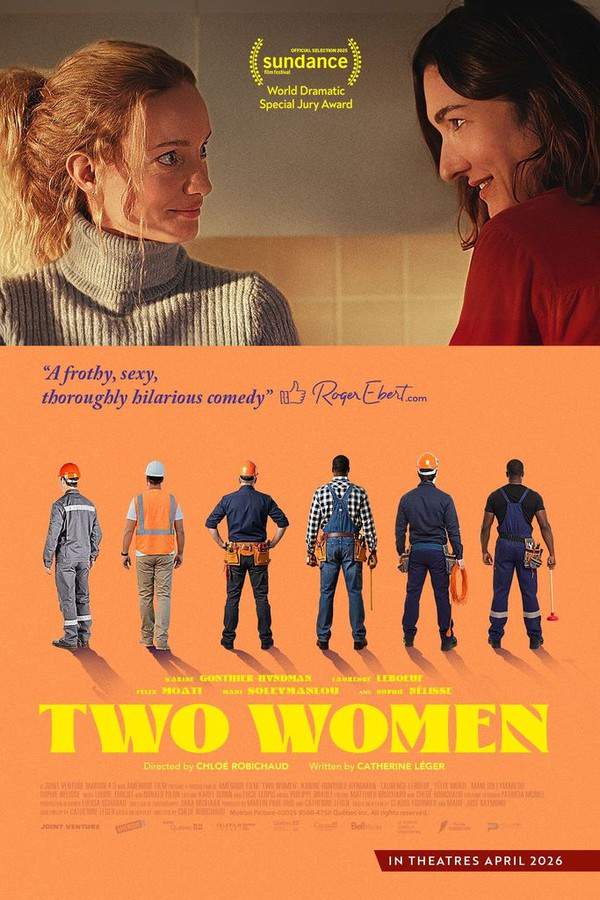
Violette, Laurence Leboeuf and Florence live in adjacent apartments, each juggling a child and a sexless marriage while their daily routines unfold in close proximity. The quiet rhythm of their lives is punctuated by a persistent sound—the cry of a crow—that threads its way through Violette’s days as she breastfeeds and tends to her daughter. When she finally asks Florence about the strange noise, she wonders aloud if it’s Florence engaged in secret sex or exhibitionism. Florence denies any such activity, but the curiosity and tension of the moment plant a seed: a spark of possibility that change might be on the horizon.
That seed grows as Florence decides to stop taking antidepressants and to become more adventurous, a shift that includes sleeping with a handyman and even a moment of danger at a bar when she unintentionally cuts her wrist. She shares a provocative view with Violette: monogamy, she argues, is an invention used to benefit men. This blunt assertion pushes Violette to re-evaluate her own choices; she makes the bold decision to stop breastfeeding and to explore Florence’s lead toward a different kind of freedom.
Together, the two women begin to pursue sexual experiments, engaging with tradesmen and a female window cleaner in a search for connection and agency. Florence’s partner, David, becomes aware of her infidelity, yet he adopts a passive stance, even attempting to justify his own lack of libido by secretly taking her antidepressants unprescribed. The dynamics within Benoit’s life remain unsettled, as he remains unaware of Violette’s actions and her history while continuing his own affair with Eli, though he is not satisfied with how she feels about him.
A hockey game becomes a turning point: during a moment shared with Benoit and Eli, David kisses Eli, and soon after collapses from mixing alcohol with his medication. The revelations cascade as Benoit and Violette learn of each other’s infidelity, and Florence also uncovers the truths about David and Eli. The emotional fallout reshapes their relationships and priorities.
In the end, Benoit and Violette decide to rekindle their marriage, choosing to rebuild what they had. Florence and David, confronted with the consequences of their choices, part ways, marking a clear separation of paths born from a willingness to question norms and seek personal truth. The film presents a quietly challenging meditation on love, fidelity, motherhood, and the boundaries we navigate within intimate partnerships, framed through the intimate lives of two neighbors who dare to redefine what a relationship can mean.