Year: 1930
Runtime: 79 mins
Language: English
Director: Robert Z. Leonard
A witty take on marriage and divorce, the story follows a housewife who leaves her selfish husband. Years later she reappears at a party as a stylish socialite, unseen by her ex who is courting another woman. He soon discovers the glamorous woman is his former wife, prompting a clever confrontation.
Warning: spoilers below!
Haven’t seen Let Us Be Gay yet? This summary contains major spoilers. Bookmark the page, watch the movie, and come back for the full breakdown. If you're ready, scroll on and relive the story!
Read the complete plot breakdown of Let Us Be Gay (1930), including all key story events, major twists, and the ending explained in detail. Discover what really happened—and what it all means.
Kitty Brown, Norma Shearer, is a devoted housewife who spends little time on her own appearance, prioritizing her husband’s comfort over any personal vanity. Bob, Rod La Rocque, is embarrassed by Kitty’s plain, homemade clothes and the way she steadily makes his life easy, almost invisible in the social whirl around him. This quiet dynamic sets the tone for a marriage built on care but strained by appearances, with Kitty’s warmth contrasting against Bob’s craving for a more polished image and a more traditional show of regard.
When Bob’s latest girlfriend enters their life, Kitty greets the situation with grace, choosing politeness over anger and pretending she has long known about the affair. Inside, she is wounded and heartbroken, and her restraint isn’t enough to keep the cracks from widening. She refuses to accept Bob’s apology, and the couple’s relationship slowly unthreads until their marriage dissolves, leaving Kitty to navigate the aftermath with dignity and a hard-earned sense of self-preservation.
Three years slip by, and Bob begins courting Diane, Sally Eilers. Diane, supported by her formidable grandmother, Mrs. Bouccicault, Marie Dressler, represents a different social horizon—one that looks down on the instability of Bob and Kitty’s past. Mrs. Bouccicault’s sway in local society makes her opposed to the match, yet she has a plan that could tilt the balance of control in the lives involved. Her scheme centers on Kitty herself, using Kitty as a tool to test the loyalties and ambitions of those around Diane.
Mrs. Bouccicault invites Kitty to spend a weekend at her home, essentially inviting Kitty to help stir the pot. By design, Kitty has transformed herself into a striking, fashionable woman, and Mrs. Bouccicault hopes Kitty will act as a catalyst to disrupt Diane’s engagement to Bruce, Raymond Hackett. The other weekend guests—Townley, Gilbert Emery; Madge Livingston, Hedda Hopper; and Wallace, Tyrell Davis—watch with a mix of curiosity and confusion as Bob and Kitty move through their familiar roles with a renewed, but uneasy, chemistry.
As the weekend unfolds, Kitty continues to flirt with each arriving male guest, all while articulating a cynical view of marriage that unsettles Diane and unsettles Bob in turn. Townley, dazzled by Kitty’s renewed allure, becomes a point of tension as Bob arrives and discovers Townley hiding in the bathroom to avoid confrontation. The moment crystallizes the doubleness of their relationship: a man who longs to reclaim what he once had, and a woman who has learned to protect herself, even as old feelings threaten to overturn the fragile balance.
The mood shifts when Wallace arrives bearing a poem for Kitty, another reminder of the gulf between outward charm and inner truth. Disgust and anger propel Bob away, and soon Mrs. Bouccicault comes to tell Kitty that Bob has just become engaged to Diane, a revelation that stings with irony for anyone who remembers the compromise and conflict of the past. The weekend ends with a tangible sense that the future remains unsettled, no matter the social performance on display.
The following day, Kitty overhears plans for a yacht trip with Townley, and the idea of leaving everything behind becomes a tempting escape. Yet the domestic side of life intrudes: the nanny arrives with Kitty and Bob’s children, and the children themselves—especially Bobby, Dickie Moore—are overjoyed to see their father. This moment brings a warmth back into the picture, a reminder of why their family once worked and why it might still be possible to repair what was broken.
In the emotional climax, Bob confesses that he still feels married to Kitty, and Diane, unable to reconcile with the idea of a broken home, breaks off the engagement. Kitty admits she does not want him either, bidding him farewell. Yet love lingers in the tension between them. Bob pleads for another chance, and Kitty, with tears in her eyes, reveals that she still loves him and asks him to take her back. The film closes on the uncertain note of whether their renewed bond can withstand the tests of time, pride, and the moral weight of the past, while leaving the door open to a possible second chance built on a shared history and a tentative, fragile hope.
Last Updated: October 09, 2025 at 11:28
Discover curated groups of movies connected by mood, themes, and story style. Browse collections built around emotion, atmosphere, and narrative focus to easily find films that match what you feel like watching right now.
Stories of high society where sharp wit masks deeper emotional wounds.If you enjoyed the sophisticated wit and social commentary of Let Us Be Gay, explore more movies like it. This list features comedies and dramas where sharp dialogue, social etiquette, and clever characters drive narratives about love, betrayal, and transformation within polished settings.
These stories often revolve around social gatherings, parties, or specific social circles where characters are forced to confront their pasts or hidden truths. The plot is propelled by dialogue and character revelation rather than overt action, culminating in a confrontation or realization that is emotionally resonant yet intellectually satisfying.
These films are grouped together because they share a specific tonal blend of witty comedy and poignant drama, a focus on character-driven social dynamics, and a sophisticated, sometimes cynical, view of human relationships. The pacing is steady, allowing for character development and the gradual buildup of emotional stakes.
Stories where past lovers reunite, but the path forward is uncertain.Fans of Let Us Be Gay's exploration of a fractured marriage and its cautious reunion will enjoy these similar stories. Discover movies about ex-lovers reconnecting, where the focus is on emotional growth, the weight of the past, and the delicate hope for a new beginning.
The narrative pattern typically involves a separation caused by betrayal or incompatibility, followed by a period of individual growth. The reunion is often accidental or forced, leading to a series of confrontations and revelations. The ending is bittersweet or cautiously hopeful, emphasizing that reconciliation is a choice and a process, not a simple solution.
These movies share a core narrative arc of separation and reunion, a focus on the emotional complexity of forgiving past hurts, and a bittersweet tone that balances hope with the sobering reality of history. The emotional journey is central, prioritizing character development over external plot mechanics.
Don't stop at just watching — explore Let Us Be Gay in full detail. From the complete plot summary and scene-by-scene timeline to character breakdowns, thematic analysis, and a deep dive into the ending — every page helps you truly understand what Let Us Be Gay is all about. Plus, discover what's next after the movie.
Track the full timeline of Let Us Be Gay with every major event arranged chronologically. Perfect for decoding non-linear storytelling, flashbacks, or parallel narratives with a clear scene-by-scene breakdown.
Discover the characters, locations, and core themes that shape Let Us Be Gay. Get insights into symbolic elements, setting significance, and deeper narrative meaning — ideal for thematic analysis and movie breakdowns.
Get a quick, spoiler-free overview of Let Us Be Gay that covers the main plot points and key details without revealing any major twists or spoilers. Perfect for those who want to know what to expect before diving in.
Visit What's After the Movie to explore more about Let Us Be Gay: box office results, cast and crew info, production details, post-credit scenes, and external links — all in one place for movie fans and researchers.
Discover movies like Let Us Be Gay that share similar genres, themes, and storytelling elements. Whether you’re drawn to the atmosphere, character arcs, or plot structure, these curated recommendations will help you explore more films you’ll love.
Let Us Be Gay (1930) Scene-by-Scene Movie Timeline
Let Us Be Gay (1930) Movie Characters, Themes & Settings
Let Us Be Gay (1930) Spoiler-Free Summary & Key Flow
Movies Like Let Us Be Gay – Similar Titles You’ll Enjoy
La Cage aux Folles (1979) Movie Recap & Themes
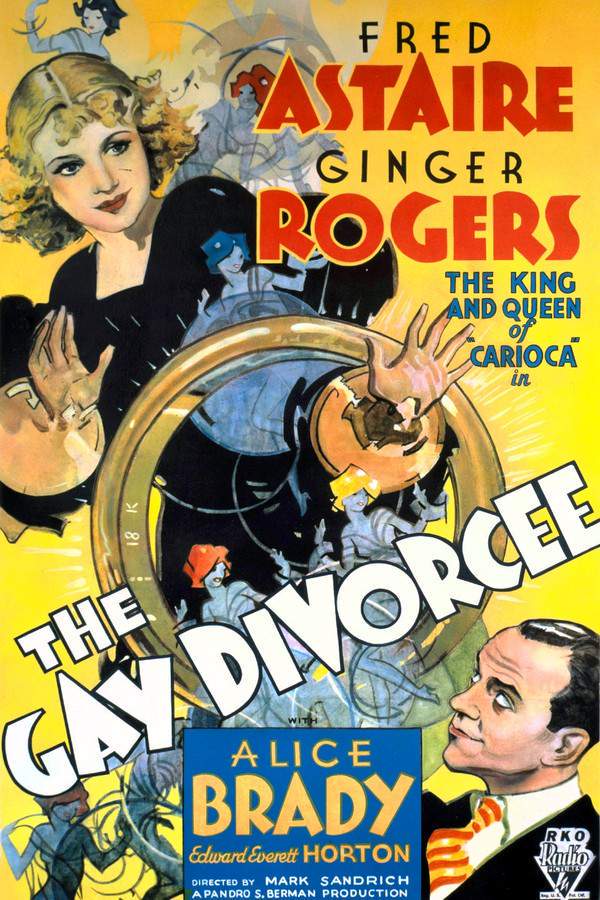
The Gay Divorcee (1934) Spoiler-Packed Plot Recap
Let’s Be Friends (2005) Plot Summary & Ending Explained
So Long Letty (1929) Story Summary & Characters
The Gay Bride (1934) Full Summary & Key Details
Our Betters (1933) Movie Recap & Themes
Lonely Wives (1931) Ending Explained & Film Insights
Ex-Lady (1933) Detailed Story Recap
Why Not! (1977) Ending Explained & Film Insights
Forsaking All Others (1934) Ending Explained & Film Insights
Why Change Your Wife? (1920) Ending Explained & Film Insights
Bachelor Apartment (1931) Full Movie Breakdown
We’re Not Married! (1952) Spoiler-Packed Plot Recap
Let’s Make It Legal (1951) Detailed Story Recap
Wife, Husband and Friend (1939) Ending Explained & Film Insights