Plot Explained Spoilers guaranteed!
Plot Explained

Browse by genre

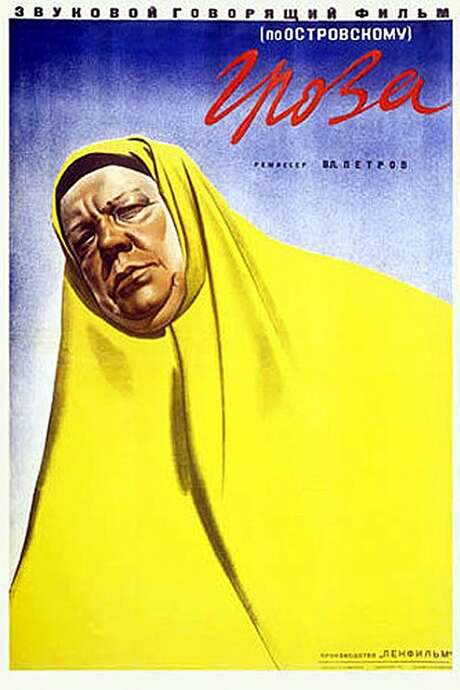
Thunderstorm (1934) movie poster

Timeline

Thunderstorm (1934) Timeline Explained – Every Event in Order

Release, runtime and language
1934 · 85 mins · Russian
Directed by
Vladimir Petrov
Starring
Mikhail Zharov, Mikhail Tsaryov, Mikhail Tarkhanov, Varvara Massalitinova, Irina Zarubina, Alla Tarasova

Adapted from Aleksandr Ostrovsky’s play “The Storm”, the film follows Katerina in a Volga town. She marries the violent drunk Tikhon and enters the world of merchants known as the “dark kingdom”. Dominated by her mother‑in‑law Kabanikha, she is tormented until, in Tikhon’s absence, she meets Boris, a man who offers the freedom she longs for.

On this page (5)
  1. 1 Events in order (14)
  2. 2 Timeline questions answered
  3. 3 Movie threads
  4. 4 Movies like Thunderstorm
  5. 5 Every angle

14 events in order · contains spoilers

Thunderstorm Timeline: Events in Chronological Order

Every key event of Thunderstorm (1934) in order, scene by scene, with when and where it takes place. Use it to untangle flashbacks, time jumps and parallel storylines, to refresh your memory before the sequel or to find the exact scene you are thinking of.

  1. Prologue: Haunting at the Zhou mansion hospital

    Two children stumble into the former Zhou mansion, now a Catholic hospital. Inside, two disturbed patients are cared for by nuns while an elderly man, old Mr Zhou, visits. Through nurses' remarks, it is revealed that three people died there ten years earlier and the house is considered haunted. The prologue ends with the older woman collapsing at the window.

    When
    Ten years before 1925
    Where
    Zhou mansion hospital
  2. Lu Gui reveals the forbidden affair to Sifeng

    In the Zhou drawing room, Lu Gui tells Sifeng about Fanyi's secret affair with Zhou Ping. Sifeng is shocked because she herself is secretly in love with Ping. The conversation exposes the danger of scandal within the family and foreshadows the tragedy to come.

    When
    Summer 1925 (Act I)
    Where
    Zhou drawing room
  3. Ping and Fanyi's unsettling complexity; medicine demanded

    Zhou Ping enters with a tense air, while Fanyi shows mixed feelings about the family's expectations. Puyuan orders Fanyi to drink a traditional medicine to cure her 'mental imbalance', and she reluctantly obeys under his authority. Ping watches, uneasy, as the power of tradition cements its grip on the household.

    When
    Summer 1925 (Act I)
    Where
    Zhou drawing room
  4. Shiping memory and Ping's parentage

    Puyuan fondly recalls Shiping, Ping's supposed birth mother, and displays her photograph in the drawing room. He rebukes Ping for his drinking and loose conduct, underscoring the entrenched hypocrisy of the family. The memory hints at a hidden lineage that will explode later.

    When
    Summer 1925 (Act I)
    Where
    Zhou drawing room
  5. Dahai's arrival and confrontation

    Lu Dahai, Shiping's son who does not yet know Puyuan is his father, arrives at the Zhou house to challenge the master's exploitation. Ping confronts him, Dahai insults the Zhou family, and Ping punches Dahai while servants eject him. Mrs Lu exits with Dahai, revealing the volatile clash between class, loyalty, and the family's secrets.

    When
    Act II (afternoon)
    Where
    Zhou house
  6. Ping contemplates leaving for the country

    In the afternoon, Ping privately meets Sifeng in the drawing room and tells her of his plan to leave the family and work in the countryside with his father. Sifeng begs him not to go, but he remains torn between love and duty. The moment deepens the rift between them and raises the stakes of their secrecy.

    When
    Act II (afternoon)
    Where
    Zhou drawing room
  7. Mrs Lu's arrival and Shiping's identity hint

    Mrs Lu, Sifeng's mother, arrives for an appointment with Fanyi and recognizes herself in Shiping's photograph, though she does not disclose this to Sifeng. She keeps her truth hidden to protect the fragile peace of the household. The exchange foreshadows the buried past that will erupt with fatal consequences.

    When
    Act II (afternoon)
    Where
    Zhou house / drawing room
  8. Ping and Sifeng's clandestine meeting

    Zhou Ping secretly meets Sifeng in the drawing room and declares his intention to leave his home for good. Sifeng pleads for him to stay despite the social costs. The lovers' resolve tightens the web of secrets binding the Zhou family.

    When
    Act II (afternoon)
    Where
    Zhou drawing room
  9. Midnight visit and escape path

    Late at night, Zhou Ping climbs through Sifeng's window for a private embrace. Dahai suddenly enters with a pistol, forcing a confrontation that drives the lovers to flee into the rain. The family races after them into a storm that mirrors the coming catastrophe.

    When
    Midnight (Act III)
    Where
    Sifeng's room / Zhou mansion
  10. 2am confrontation and torn loyalties

    Back in the Zhou living room, Fanyi confronts Ping and accuses him of conspiring with his father. She begs him to take her away and, in a fit of rage, tears up Shiping's picture. The illusion of family order fractures as guilt and rage spill over.

    When
    2am (Act IV)
    Where
    Zhou living room
  11. Pregnancy, flight plan, and hidden truths

    Sifeng reveals she is pregnant with Ping's child, intensifying the urgency to flee. Mrs Lu attempts to stop them, aware of the social and familial dangers, while the brothers wrestle with what they owe to each other. The escape plan becomes a desperate gamble against an unbridgeable past.

    When
    2am (Act IV)
    Where
    Zhou house
  12. Revelation of half-siblings and mother's identity

    Puyuan enters and, unaware of the full romance, learns that Mrs Lu is Ping's mother and that Sifeng and Ping are half-siblings. A hushed, catastrophic truth settles over the room as the last chance for reconciliation vanishes.

    When
    2am (Act IV)
    Where
    Zhou living room
  13. Tragedy erupts: electrocution and suicide

    The escape degenerates into tragedy as Sifeng and Zhou Chong are electrocuted by a broken live wire while fleeing the house. Ping, overwhelmed by desperation, shoots himself, leaving the family to confront their ruin. The house remains haunted by the revelation of their hidden lineage.

    When
    2am (Act IV)
    Where
    Zhou grounds / exterior
  14. Epilogue: ten years later at the hospital

    In a hospital ten years later, old Mr Zhou asks about the old woman and laments the lack of news about Lu Dahai. He remains haunted by the past as he stares into the fire, a man defined by his losses. The tragedy continues to echo through the present, long after the events have ended.

    When
    Ten years later (Epilogue)
    Where
    Hospital (former Zhou mansion)

Last updated: October 09, 2025 at 11:04

Was this helpful?

Timeline questions answered

Thunderstorm Timeline Explained: Your Questions Answered

When does it happen, and why in that order? The questions people ask about the chronology of Thunderstorm (1934): time jumps, flashbacks, cause and effect between scenes and the correct order of events, each answered with spoilers.

Q1

Why does Zhou Puyuan force Fanyi to drink the traditional medicine?

Zhou Puyuan forces Fanyi to drink the medicine as a way to control her and assert his authority over the household. He claims she has a 'mental imbalance' that needs curing, using the guise of traditional remedy to mask hisdomination. This medical ritual is a weaponized display of power, Fanyi refuses initially, but Puyuan uses his position to force her compliance. The scene establishes the coercive climate of the Zhou household and foreshadows how Puyuan manipulates family members to maintain control.

Foreshadowing: Earlier, Puyuan corrects Ping's indulgences and rebukes him for habits that show contempt for convention, establishing his pattern of authoritative control.

  • Zhou Puyuan
  • Fanyi
  • medicine
  • control
  • household
Q2

Who is Shiping and why does her photograph matter?

Shiping is Zhou Ping's birth mother and was Puyuan's former lover. Puyuan keeps her photograph displayed in the drawing room and speaks of her fondly, but the truth of her identity is hidden from most of the family. The photograph becomes significant when Mrs. Lu recognizes herself in the picture, revealing that she is actually Shiping, Ping's true mother. This buried truth about Ping's parentage ultimately shatters the family when discovered, as it means Ping and Sifeng are half-siblings.

Foreshadowing: Puyuan rebukes Ping for drinking and loose conduct while gazing at Shiping's photo, hinting at his hypocrisy and the hidden lineage.

  • Shiping
  • photograph
  • Ping
  • mother
  • lineage
Q3

Why are Sifeng and Zhou Ping half-siblings?

Sifeng and Ping are half-siblings because Mrs. Lu, Sifeng's mother, is actually Ping's birth mother. She kept this secret throughout the story, even recognizing herself in Shiping's photograph but saying nothing. Puyuan, unaware of Mrs. Lu's true identity, confirms in the living room that Mrs. Lu is Ping's mother. This revelation comes too late, Sifeng and Ping have already fallen in love and Sifeng is pregnant with his child. The hidden truth transforms their romantic relationship into incest, devastating all involved.

Foreshadowing: Mrs. Lu recognizes herself in Shiping's photograph during Act II but keeps her truth hidden to protect the household's fragile peace.

  • Sifeng
  • Ping
  • half-siblings
  • Mrs Lu
  • incest
Q4

How do Sifeng and Zhou Chong die at the end?

Sifeng and Zhou Chong die by electrocution while fleeing the Zhou house. During the escape attempt after the truth about their shared bloodline is revealed, both step onto a broken, electrified wire on the grounds outside. The tragedy unfolds in the rain as the family's pursuit of truth becomes a race against disaster. Their deaths, combined with Ping's suicide, complete the catastrophic unraveling of the Zhou family.

Foreshadowing: The earlier scene shows the family racing after the lovers into a storm that mirrors the coming catastrophe.

  • Sifeng
  • Chong
  • electrocution
  • death
  • escape
Q5

Why does Zhou Ping shoot himself at the end?

Zhou Ping commits suicide after witnessing the electrocution of Sifeng and Chong and being overwhelmed by the devastating revelation that he and Sifeng are half-siblings. The truth shatters his world, his love for Sifeng has been revealed as incestuous, she was pregnant with his child, and two people have just died trying to escape. Unable to bear the guilt, the family ruin, and the loss of everything he cared about, Ping takes his own life with the pistol Dahai gave him earlier for protection.

Foreshadowing: Dahai hands Ping the pistol earlier, warning him to defend himself in a precarious moment, which ultimately becomes the instrument of his own death.

  • Ping
  • suicide
  • death
  • pistol
  • despair
Q6

Why does Lu Dahai confront Zhou Puyuan about the mine?

Lu Dahai confronts Puyuan because he is a worker advocate who wants to challenge the exploitation at Puyuan's mine. Though technically Ping's half-brother (both being sons of Puyuan), Dahai does not yet know this truth. He arrives at the Zhou house to demand accountability for the workers who fuel the mine's prosperity. The confrontation exposes the class tensions underlying the family drama and highlights the cost of wealth built on labor exploitation.

Foreshadowing: Puyuan returns from the mine with a commanding presence, establishing his power source and hinting at the exploitation that fuels the family's lifestyle.

  • Dahai
  • Puyuan
  • mine
  • workers
  • confrontation
Q7

Why does Mrs. Lu hide that she is Ping's mother?

Mrs. Lu keeps her identity as Ping's mother hidden to protect the fragile peace of the household and maintain social standing. When she sees Shiping's photograph and recognizes herself, she chooses silence rather than reveal the truth that could shatter the family. Her hidden past represents the buried secrets that trap all characters in the Zhou household. By staying silent, she believes she is protecting Sifeng and the family from scandal, but her silence ultimately enables the tragedy.

Foreshadowing: Mrs. Lu recognizes herself in Shiping's photograph but tells no one, keeping the truth buried until Puyuan reveals it inadvertently.

  • Mrs Lu
  • identity
  • secret
  • mother
  • hidden
Q8

Why does Fanyi reveal the affair to Chong?

Fanyi exposes the affair between Ping and Sifeng to Zhou Chong out of jealousy and a thirst for revenge. She is driven to disrupt what little stability remains after learning that Ping intends to leave with Sifeng. Her action is calculated to cause maximum damage, she knows the revelation will shatter the family and hurt those who have rejected her. The expose triggers the catastrophic chain of events that leads to the tragic ending.

Foreshadowing: Fanyi's isolation deepens earlier when she confronts Ping about his attachment to Sifeng, fearing it threatens the entire family's stability.

  • Fanyi
  • affair
  • Chong
  • revenge
  • expose
Q9

What causes the Zhou family's tragedy?

The Zhou family's tragedy is caused by decades of buried secrets, suppressed desires, and hypocrisy coming to light all at once. The key catalysts are: Puyuan's controlling domination over his household, the hidden truth that Mrs. Lu is Ping's birth mother, the forbidden love between Ping and Sifeng, and Fanyi's jealous exposure of the affair. When these revelations converge at 2am in the living room, the family's carefully constructed facade collapses entirely, leading to electrocution and suicide.

Foreshadowing: The prologue sets up the haunting atmosphere, with nurses revealing that three people died in the house ten years earlier, the tragedy repeats the past.

  • tragedy
  • secrets
  • family
  • revelation
  • collapse
Q10

What is the purpose of the prologue and epilogue set in the hospital?

The prologue and epilogue frame the main story by showing the consequences of the tragedy ten years later. The hospital is the former Zhou mansion, now run by Catholic nuns. In the prologue, we see two disturbed patients and learn the house is considered haunted, the past trauma has left permanent scars. In the epilogue, the elderly Mr. Zhou returns seeking resolution about the old woman and Lu Dahai, but finds none. This non-linear structure emphasizes that the family's moral failures continue to haunt the present.

Foreshadowing: The prologue ends with an older woman collapsing at the window, mirroring how the past weighs on the living.

  • prologue
  • epilogue
  • hospital
  • haunted
  • time
Q11

Why does Zhou Ping want to leave the family and go to the countryside?

Zhou Ping wants to escape his father's control and the oppressive atmosphere of the Zhou household. He contemplates leaving to work in the countryside, seeking freedom from Puyuan's domination and the hypocrisy of family life. His desire for a life outside the family's influence represents his rejection of the older generation's values and his attempt to forge an independent future with Sifeng. However, this escape plan becomes impossible once the truth about their relationship is revealed.

Foreshadowing: Ping's longing for a life free from his father's control is established early, setting up the central conflict between duty and desire.

  • Ping
  • escape
  • countryside
  • freedom
  • family
Q12

What is the "dark kingdom" in the story?

The "dark kingdom" refers to the world of merchants and wealthy families like the Zhous, where rigid traditionalism and hollow morality dominate. The description mentions this as the "dark kingdom" of merchants, a realm where appearances matter more than truth, where power is used to control and suppress, and where secrets corrode relationships. The Zhou household epitomizes this darkness: dominated by Puyuan's hypocrisy, haunted by hidden pasts, and ultimately destroyed by the very secrets that maintained its surface respectability.

Foreshadowing: The play's title "Thunderstorm" suggests this darkness builds like a storm until it breaks catastrophically.

  • dark kingdom
  • merchants
  • traditionalism
  • morality
  • hypocrisy

Movie threads

More Movies Like Thunderstorm, by Mood & Story

Curated lists built around what makes Thunderstorm tick: the same mood, the same kind of story or the same emotional payoff. Each list explains why these movies belong together.

Oppressive Family Dramas like Thunderstorm

Stories where family secrets and strict traditions suffocate personal freedom. If you felt the claustrophobic tension of Thunderstorm, explore more movies like it. These films feature complex family dynamics, moral decay, and the crushing weight of societal expectations, leading to dramatic and often devastating conclusions.

  • oppressive
  • claustrophobic
  • tragic
  • dramatic
  • somber
  • unsettling
  • Tone: dark, tragic, unsettling
  • Pacing: steady, methodical buildup
Why these movies?

The story pattern: Narratives in this thread typically center on a protagonist trapped within a rigid, often toxic family or community structure. The plot steadily builds tension as the character's desires clash with oppressive rules, culminating in a rebellion or revelation that shatters the fragile status quo, usually with tragic consequences.

Why they belong together: These movies are grouped together because they share a deeply unsettling mood, a dark tone, and a heavy emotional weight. They focus on the psychological toll of family hypocrisy and the destructive power of secrets, creating a consistent feeling of inescapable doom.


Tragic Forbidden Romances like in Thunderstorm

Love stories where passion is doomed by societal constraints and dark secrets. For viewers moved by the doomed love story in Thunderstorm, this collection highlights similar movies about illicit passions. These films explore the intense, fleeting joy of forbidden love that is crushed by overwhelming societal pressure, hypocrisy, or fate, resulting in bleak endings.

  • tragic
  • forbidden love
  • melancholic
  • dramatic
  • fatalistic
  • somber
  • Tone: dark, melancholic, somber
  • Pacing: steady, inevitable progression
Why these movies?

The story pattern: The narrative follows characters who find a passionate connection that defies their oppressive circumstances. This romance acts as a catalyst, intensifying the existing tensions and leading to a climactic confrontation with the forces that forbid it. The story arc is inherently tragic, with love providing a moment of freedom before sealing the characters' fates.

Why they belong together: These films are united by their central theme of love as both a liberating and destructive force. They share a high emotional weight, a dark tone, and a focus on the immense sadness that comes from desires that society deems unacceptable.

If you liked this

Movies Like Thunderstorm

Similar movies to Thunderstorm: the same genre, themes or kind of story. Each one comes with its own plot summary, timeline and ending explained.

Browse all movie summaries

Every angle

Thunderstorm (1934) Explained: Plot, Timeline & Characters

Everything about Thunderstorm in one place: what happens in the plot summary, the timeline in chronological order, the characters and meaning and a spoiler-free summary. What's After the Movie adds the cast, box office and post-credit scenes.

Coming soon on iOS and Android

The Plot Explained Movie Summary App

Plot summaries, endings explained and timelines on your phone. Catch up on any movie in minutes, save your favorites and never miss a twist again.

Be the first to know when we launch. Your email stays private, always.

Learn more about the app