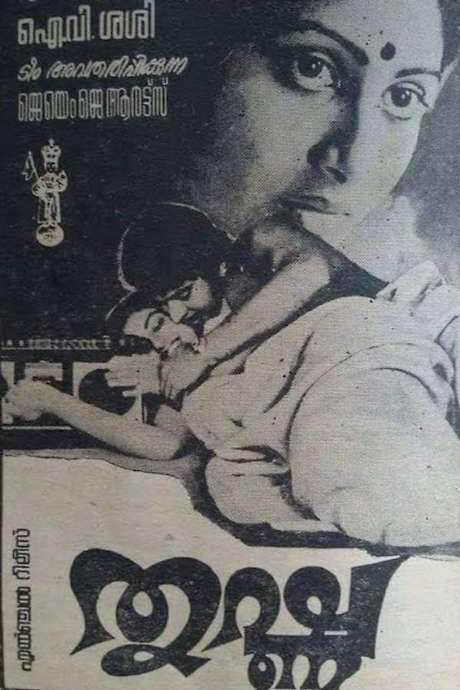
Das, Mammootty is a rich and spoiled playboy who drives to his Kodaikanal bungalow with a callgirl, Jaysree, Swapna. The place is looked after by caretaker Parameswaran, [Sankaradi], and his Tamil wife Kannamma, [Mallika Sukumaran]. To shield the family name from the moral gossip that would follow, Parameswaran has told both Jaysree and Kannamma that Jaysree is Das’s wife. Das treats Jaysree as a possession, never missing a chance to belittle her profession, and there is little to no emotional warmth beyond the physical. The atmosphere is tense yet lazy, glossy on the surface but brittle beneath.
A family friend, Panikkar, [Jose Prakash], and his clan drop by to meet “the wife,” which immediately unsettles Das. Panikkar’s wife is Chinnammu Amma, [Kaviyoor Ponnamma], and his father-in-law Rao Bahadur Shankaramenon, [Premji], add to the older generation’s perception of propriety. The Panikkar household includes two daughters: elder Nirmala, who is married to engineer Ramakrishnan, [Lalu Alex], and younger Sridevi, who is separated from her husband Vijayshankar, [Ratheesh]. Through these arrivals, the story expands beyond Das and Jaysree, widening the web of social expectations, family pride, and the unspoken grievances that haunt every interaction.
Two narrative threads begin to unfold at once. On one hand, Sridevi’s presence rekindles the music-loving side of Das, and the two spend time together, exploring shared memories and a gentler, more hopeful rhythm that softens his crusty exterior. On the other hand, Jaysree starts to perceive Gopan—Parameswaran’s son, who stays away from the bungalow and earns a living guiding foreigners—as someone who mirrors her own helplessness. Her growing attachment to Gopan deepens the emotional undertow of the house, a bond that could complicate the fragile arrangement she originally agreed to.
The turning point comes when Jaysree, after a moment of intimacy, reveals the truth about herself to Gopan, and he feels revulsion. This admission shatters the fragile veneer of their connection and forces Jaysree to confront the consequences of her choices. Across the hall, Das is equally candid with Sridevi about his womanizing ways, and he goes a step further, confessing his feelings and proposing to her. Yet Sridevi, though moved, cannot commit to a future built on that uneasy balance of attraction and obligation.
As the emotional dust settles, Jaysree makes a decisive move and leaves the house, choosing a path that takes her away from the familiar walls and into an uncertain road with Gopan. In a quiet pivot, Vijayshankar apologizes to Sridevi for his earlier insensitive behavior, and she returns to him, seeking a chance at reconciliation. The story circles back to a solitary Das, who ends up driving away from the place alone, carrying with him the lessons of vanity, longing, and the stubborn weight of consequence.
This tale, anchored in a sunlit setting and a web of family ties, probes what people owe to themselves and to others, and how love, truth, and music can coexist or fray within a tangled household. It remains faithful to its core: the uneasy balance between desire and duty, the tenderness that peeks through even when hurt and pride are loudest, and the quiet dignity of choosing a path that leads away from a life defined by domination toward one shaped by choice.