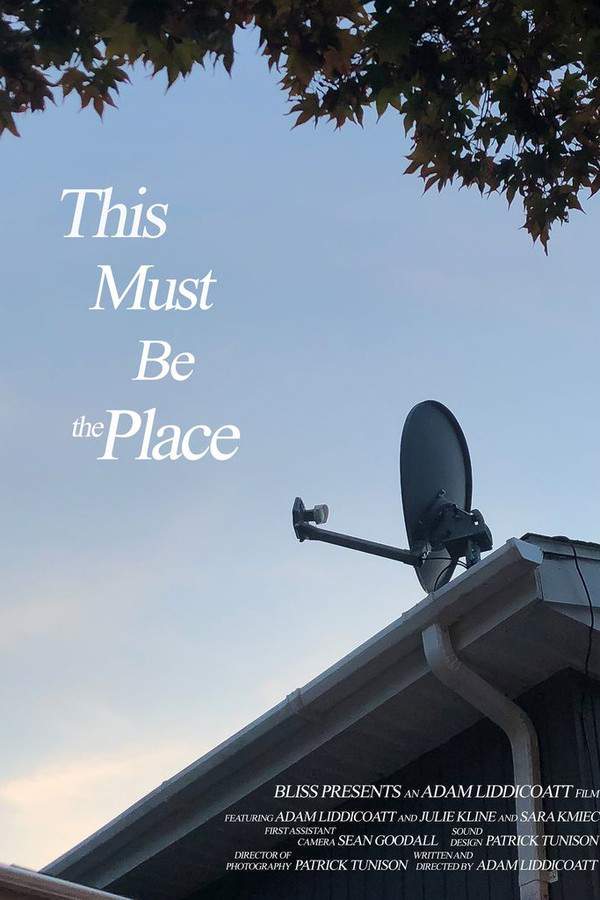
Year: 2024
Runtime: 1 h 28 m
Language: english
Following their parents' sudden death, siblings Benny and Victoria must confront a complex and fractured family dynamic. As they navigate the aftermath of loss, their differing approaches to grief and a history of sibling rivalry create tension and challenge them to find a way forward together.
Find where to stream, rent, or buy This Must Be the Place (2024) in the US with current JustWatch availability, up-to-date pricing, and platform listings for subscription, rental, and digital purchase options.
Warning: spoilers below!
Haven’t seen This Must Be the Place yet? This summary contains major spoilers. Bookmark the page, watch the movie, and come back for the full breakdown. If you're ready, scroll on and relive the story!
Trace every key event in This Must Be the Place (2024) with our detailed, chronological timeline. Perfect for unpacking nonlinear stories, spotting hidden connections, and understanding how each scene builds toward the film’s climax. Whether you're revisiting or decoding for the first time, this timeline gives you the full picture.
Last updated: October 24, 2024 at 07:53
Find frequently asked questions about the This Must Be the Place (2024) timeline, including chronological order, nonlinear jumps, cause-and-effect links, and scene sequence clarifications. This timeline FAQ helps explain when key events happen, how moments connect, and why the story unfolds in that specific order.
Cheyenne hadn't spoken to his father for three decades because his father rejected him violently when he put on goth make-up at age 15. This childhood rejection, rooted in the father's own trauma, created a deep wound that Cheyenne carried into adulthood, leading to decades of estrangement.
After reading his father's diary and learning about the horrific persecution his father suffered in Auschwitz at the hands of SS officer Alois Lange, Cheyenne felt compelled to find the man who had tormented his father. His father's lifelong obsession with Lange became Cheyenne's own quest, driven by a desire for some form of justice or closure that his father never achieved.
When Cheyenne confronted the blind Lange, Lange revealed that Cheyenne's father had been writing to him for decades. Lange recounted an incident from Auschwitz where Cheyenne's father urinated from fear, calling it a 'minor incident' compared to the actual horrors, but noted he came to admire the man's single-minded determination to dedicate his life to making Lange's existence miserable.
Cheyenne forced the elderly, blind Lange to walk naked into the salt flats as a symbolic act of revenge, mimicking how Holocaust victims were stripped and left to die in the elements. It was Cheyenne's twisted attempt to reclaim some dignity for his father and exact a form of retribution that mirrored the dehumanization his father endured at Lange's hands.
After confronting Lange and achieving a form of catharsis, Cheyenne underwent a personal transformation. He cut his iconic rock-star hair and abandoned his goth attire as a way to shed his previous identity and embrace a new chapter. This change represented his desire to move beyond the jaded, mourning person he had become and start fresh.
Cheyenne had a longstanding fear of flying, which he overcame at the end of his journey when he boarded a plane to return home. This act represented a significant personal triumph and symbolized his emerging courage to confront his past rather than avoiding it. The journey forced him to face his fears in multiple ways.
At the gun shop, a bystander delivered a chilling monologue about how a certain pistol allows people to 'kill with impunity,' and that having the license to be monsters leads to just one desire, 'to truly be monsters.' This reflection on the psychology of violence foreshadows Cheyenne's own descent into vigilante justice and raises questions about whether his quest makes him no better than the man he hunts.
Cheyenne, a wealthy former rock star, retired from music after two of his teenage fans committed suicide. The guilt and sorrow from this tragedy left him bored and jaded in his 20-year retirement in Dublin, searching for meaning in his life.
Cheyenne traveled to New York during his father's final hours to reconcile after 30 years of estrangement, but he arrived after his father had already died. The decades of silence between them meant he missed his chance for reconciliation, adding to his regret and driving his subsequent quest for closure.
Cheyenne's father spent decades obsessed with finding Alois Lange because Lange had tormented him during his time in Auschwitz. This obsession became his life's purpose, a way to confront the man who had dehumanized him and to seek some form of justice, however consuming it became. Lange noted that he came to admire this single-minded determination, even as it tormented him.
Cheyenne photographed the blind Lange and whispered that it was an injustice his father died before Lange did. This moment captured Cheyenne's belief that his father, who spent his life seeking justice, deserved to see the man who traumatized him face some consequence. The photo served as proof that Lange was still alive while his father was not.
After forcing the naked, blind Lange into the salt flats, Cheyenne and Mordecai drove away, leaving him still standing there. The film does not explicitly show Lange's fate, but the implication is that he was left helpless in the harsh environment, likely to die, a grim, ambiguous ending that leaves the question of whether this constituted justice or murder.
Discover curated groups of movies connected by mood, themes, and story style. Browse collections built around emotion, atmosphere, and narrative focus to easily find films that match what you feel like watching right now.
Characters confront historical trauma and personal guilt on a quiet journey.Movies like This Must Be the Place feature protagonists on a melancholic quest to resolve a historical wrong. These somber dramas explore the heavy legacy of trauma, guilt, and the search for a bittersweet form of closure through a steady, atmospheric narrative.
A character, often disconnected or jaded, embarks on a linear quest tied to a historical injustice. The narrative is driven by investigation and introspection rather than external conflict, leading to a personal transformation that is morally complex and emotionally resonant.
They share a melancholic tone, heavy emotional weight, and a focus on the psychological impact of confronting a traumatic past. The pacing is steady, prioritizing atmosphere and character development over plot twists, and endings are often bittersweet rather than triumphant.
Atmospheric stories of fractured families navigating loss and reconnection.If you liked the exploration of grief and estrangement in This Must Be the Place, these movies depict the complex dynamics of families forced together by loss. They are atmospheric, character-driven dramas with a heavy emotional weight and a steady, contemplative pace.
A catalyst, usually a death, forces estranged family members to coexist. The plot unfolds through tense interactions and unveiling of past grievances, exploring how individuals process loss differently. The journey is internal, leading to a fragile, often bittersweet, new understanding.
These films are united by their heavy emotional focus on grief, complex family dynamics, and a melancholic, atmospheric tone. They share a steady, deliberate pacing that allows for deep character exploration and the slow unraveling of long-held tensions.
Don't stop at just watching - explore This Must Be the Place in full detail. From the complete plot summary and scene-by-scene timeline to character breakdowns, thematic analysis, and a deep dive into the ending - every page helps you truly understand what This Must Be the Place is all about. Plus, discover what's next after the movie.
Read a complete plot summary of This Must Be the Place, including all key story points, character arcs, and turning points. This in-depth recap is ideal for understanding the narrative structure or reviewing what happened in the movie.
Discover the characters, locations, and core themes that shape This Must Be the Place. Get insights into symbolic elements, setting significance, and deeper narrative meaning - ideal for thematic analysis and movie breakdowns.